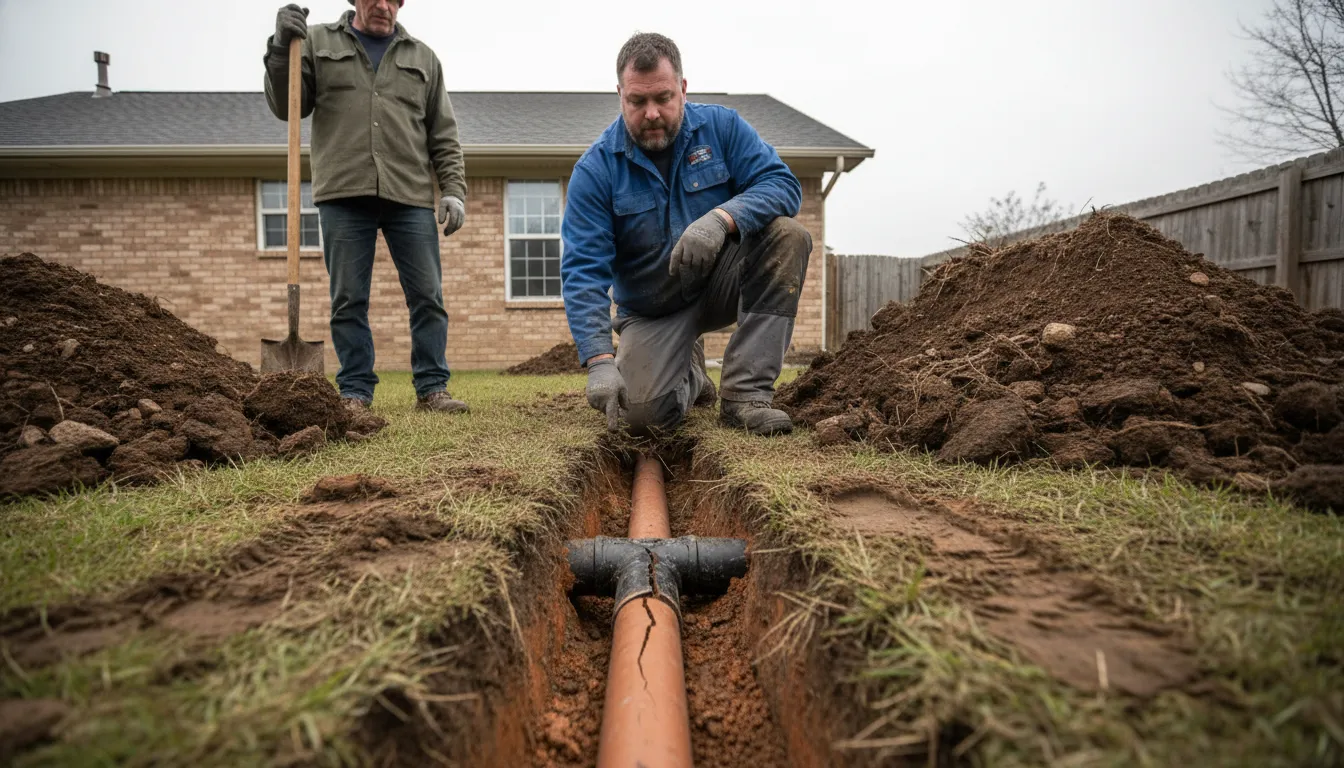
Find the Best Sewer Line Repair Companies for Your Business
No obligation • Fast responses • Nationwide coverage

Why you can trust Search a Plumber
Search a Plumber is a leading United States resource for finding and evaluating professional plumbing services. Our team researches licensing, experience, and customer feedback to create unbiased, fact-driven overviews. Companies cannot pay to change ratings or placement, ensuring homeowners get trustworthy information.
Search providers near you
Top Sewer Line Repair Companies in Rancho Santa Margarita, California Ranked
A failing sewer line is a serious issue that can disrupt your home and lead to costly property damage. In Rancho Santa Margarita, where unique local factors like soil conditions and aging infrastructure are at play, understanding your repair options is crucial. This guide explains the common causes of sewer line problems here, details the modern and traditional repair methods available, and provides the information you need to connect with skilled local professionals who can restore your property's essential plumbing function.
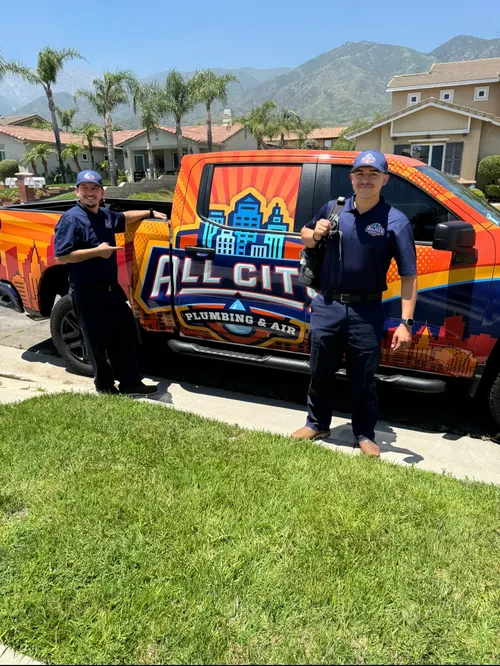
All City Plumbing, Air & Electrical
5612 E La Palma Ave, Anaheim, CA 92807
All City Plumbing, Air & Electrical is a full-service plumbing, HVAC, and electrical provider located in Anaheim, CA. They offer a wide range of services including water heater repair and installation, drain cleaning, hydro jetting, sewer line repair, leak detection, repiping, and toilet repair. Their team is licensed, bonded, and insured, with technicians who are ACE Certified and available 24/7 for emergency plumbing and HVAC needs. With over 13 years of experience serving Anaheim and surrounding areas, they use advanced technology to ensure efficient and reliable service.
Dymek's Freedom Plumbing, Inc
2921 E Miraloma Ave #17, Anaheim, CA 92806
Dymek's Freedom Plumbing, Inc is a plumbing service provider based in Anaheim, CA, offering a wide range of residential and commercial plumbing solutions. Their services include sewer camera inspections, water heater installation and repair, drain cleaning, hydro jetting, trenchless sewer repair, leak detection, repiping, and garbage disposal repairs. They utilize advanced technology such as electronic slab leak detection and sewer video inspection to diagnose and address plumbing issues efficiently. With over 25 years of experience, the company emphasizes old-fashioned values combined with modern technology and is available 24/7 for emergency plumbing needs.
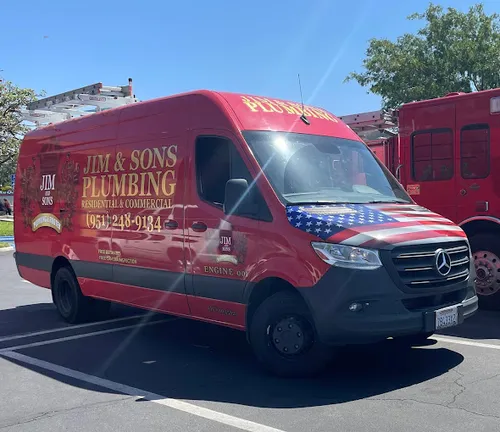
Jim & Sons Plumbing & Rooter
9345 Narnia Dr, Riverside, CA 92503
Jim & Sons Plumbing & Rooter is a family-owned plumbing company serving Riverside, CA, and the surrounding Inland Empire region. Since 1983, they have provided residential and commercial plumbing services including water heater repair and installation, drain cleaning, sewer line repair, leak detection, repiping, gas line installation, and garbage disposal repair. They specialize in trenchless sewer repair techniques such as pipe bursting and cured-in-place lining, which allow sewer line renewal without excavation, preserving landscaping and minimizing environmental impact. The company offers same-day service and is fully licensed and insured.
Plumbing Matters Rooter & Plumbing Services Incorporated
17285 Ridge Canyon Dr, Riverside, CA 92506
Plumbing Matters Rooter & Plumbing Services Incorporated is a family-owned plumbing company serving Riverside, CA, and the Inland Empire. They offer a range of services including sewer camera inspections, water heater repair and installation, drain cleaning, sewer line repair, leak detection, and toilet repair. The company uses advanced technology for leak detection and provides fully licensed and insured plumbing services. With over seven years of experience, they focus on personalized solutions and maintain open communication with customers. Plumbing Matters is available 24/7 for emergency plumbing needs.
Carlson Plumbing Pros
17150 Newhope St Suite 301-302, Fountain Valley, CA 92708
Carlson Plumbing Pros is a licensed plumbing company serving Santa Ana, CA, and the broader Orange County area. They offer a wide range of plumbing services including water heater repair, water softener installation, drain cleaning, sewer line repair, leak detection, repiping, and gas line installation. With over 20 years of experience, they provide skilled plumbing solutions and are equipped to handle emergencies with 24/7 availability.
Understanding Sewer Line Problems in Rancho Santa Margarita
Your home's main sewer line is the critical pipeline that carries all wastewater from your drains and toilets to the city's public sewer system. In Rancho Santa Margarita, these lines typically run underneath your yard, driveway, or even beneath your home's foundation. When this line is compromised, it can lead to slow drains, sewage backups, foul odors, and soggy patches in your landscaping. Identifying the root cause is the first step toward an effective fix.
Common Causes of Sewer Line Damage
Several factors specific to our region contribute to the need for sewer line repair and replacement services.
- Aging Pipe Materials: Many older neighborhoods in Orange County, including parts of Rancho Santa Margarita, were built with cast iron or vitrified clay pipes. Cast iron is prone to corrosion and rust over decades, while clay pipes have porous joints that are highly susceptible to tree root intrusion.
- Aggressive Tree Roots: Seeking water, tree roots are a leading cause of blockages and breaks in Southern California. They can infiltrate small cracks or joints in pipes, eventually growing large enough to obstruct flow or fracture the line completely 1.
- Seismic Activity and Soil Shifts: California's seismic activity can cause the ground to shift, misaligning or breaking rigid sewer pipes. Additionally, the region's expansive clay soils can swell when wet and shrink when dry, creating movement that stresses underground lines.
- General Wear and Corrosion: Even modern pipes like Orangeburg (a bituminous fiber conduit used mid-century) have a limited lifespan and can collapse or deform over time 2.
Diagnostic Step: The Sewer Camera Inspection
Before any repair begins, a professional diagnosis is non-negotiable. A sewer camera inspection involves sending a high-resolution, waterproof camera through your sewer line. This allows a technician to see the exact condition, location, and cause of the problem in real-time.
This critical step prevents unnecessary or misplaced excavation, saving you significant time and money. While it adds an upfront cost, it provides a clear roadmap for the most effective and economical repair strategy.
Modern vs. Traditional Sewer Repair Methods
Once the problem is identified, you and your plumbing professional will decide on the best repair method. The choice largely comes down to two approaches: trenchless technology or traditional excavation.
Trenchless Sewer Repair (Minimally Invasive)
Trenchless methods have revolutionized sewer line restoration by repairing or replacing the pipe with minimal disruption to your yard, driveway, or hardscape.
- Cured-in-Place Pipe (CIPP) Lining: A flexible, resin-saturated tube is inverted or pulled into the damaged pipe. It is then inflated and cured (often with steam or UV light) to form a hard, seamless "pipe within a pipe." This method seals cracks and holes and resists root intrusion.
- Pipe Bursting: This technique is used for full sewer line replacement. A conical bursting head is pulled through the old, broken pipe, fracturing it outward while simultaneously pulling a new, durable pipe (like HDPE) into place behind it.
Pros of Trenchless Repair:
- Minimal Disruption: No large trenches through your landscaping, driveway, or patio.
- Speed: Most jobs can be completed in one to two days.
- Durability: New linings and pipes are highly resistant to corrosion and roots.
- Lower Restoration Costs: Avoids the expensive task of repairing a dug-up yard or concrete 3 4.
Cons of Trenchless Repair:
- Not for Every Scenario: It may not be suitable for pipes that have completely collapsed, have severe misalignment, or are in inaccessible locations.
- Specialized Equipment: Requires trained technicians and specific technology 5 6.
Traditional Excavation (Open-Trench Repair)
This is the conventional method, involving digging a large trench to fully expose the damaged section of sewer pipe for repair or replacement.
Pros of Traditional Repair:
- Direct Access: Allows for a hands-on fix of any problem, including total collapses.
- Potentially Lower Material Costs: For very short, shallow repairs, the pipe material itself may be less expensive.
Cons of Traditional Repair:
- Major Property Disruption: Destroys lawns, gardens, sidewalks, and driveways.
- Time-Consuming: Digging, repairing, backfilling, and restoring the landscape can take many days.
- High Restoration Costs: The cost to repair the excavation site (sod, concrete, pavers) can often exceed the cost of the plumbing work itself 7.
Find the perfect sewer line repair companies for your needs
Get personalized recommendations and expert advice
Cost Considerations for Sewer Line Repair
Costs can vary widely based on the repair method, the extent of damage, access points, and local permit requirements. Here's a general breakdown to help you understand the financial landscape.
- Trenchless Sewer Repair: Often priced per linear foot. CIPP lining can range from $60 to $150 per foot, while pipe bursting might range from $100 to $250+ per foot. A typical project often falls between $3,000 and $10,000+ 8 9. While the per-foot cost can be higher than excavation, you save substantially on avoiding landscape and hardscape restoration.
- Traditional Excavation Repair: Excavation costs are also frequently calculated per foot for the pipe work, ranging from $50 to $450+, heavily dependent on depth and soil conditions. However, the final bill must include significant restoration costs-repaving a driveway or replanting a landscaped yard can add thousands, with major projects exceeding $10,000 in total 10.
- The Key Takeaway: When comparing bids, always look at the total project cost. A higher per-foot quote for a trenchless fix that includes no restoration may be far more economical than a lower per-foot excavation bid plus $8,000 in concrete and landscaping work 11 12.
Choosing a Local Rancho Santa Margarita Professional
For a project this important, selecting a qualified local specialist is essential. Look for a plumbing company with:
- Specific experience with sewer line repair and replacement.
- Proven expertise in trenchless technology (CIPP lining and pipe bursting).
- Licensed, insured, and bonded status for California.
- Transparent pricing and a willingness to perform a camera inspection first.
- Strong knowledge of local soil conditions, permit processes, and common pipe materials in Orange County.
Local providers like those serving Rancho Santa Margarita utilize advanced tools and mapping technologies to navigate and resolve these complex underground issues efficiently 13 14.
Frequently asked questions
Sources
Footnotes
-
Sewer Line Damage: Causes, Repairs, Replacement, and Responsibility - https://www.streamlineplumbing.org/blog/2024/06/sewer-line-damage-causes-repairs-replacement-and-responsibility/ ↩
-
What is Orangeburg Pipe? Everything You Need to Know - https://brinkservices.net/blog/what-is-orangeburg-pipe-everything-you-need-to-know/ ↩
-
SMWD Uses GIS for Smart Trenchless Rehab - https://www.smwd.com/CivicAlerts.aspx?AID=218 ↩
-
Trenchless Sewer Repair vs. Traditional Excavation - AQUALIS - https://aqualisco.com/trenchless-sewer-repair-vs-traditional/ ↩
-
Trenchless vs. Traditional Sewer Repair - https://sewerlinesonly.com/trenchless-vs-traditional-sewer-repair-which-is-more-cost-effective-for-lakewood-homeowners/ ↩
-
Trenchless Sewer Line Repair vs Traditional: Which Is Better - https://cactusplumbingandair.com/trenchless-sewer-line-repair-vs-traditional/ ↩
-
Trenchless Sewer Repair vs. Traditional Excavation: Which is Better? - https://alphaenvironmental.net/blog/trenchless-sewer-repair-vs-traditional-excavation-which-is-better/ ↩
-
Decoding Trenchless Sewer Repair Costs - Pipeliner Pros - https://pipelinerpros.com/trenchless-sewer-repair-cost/ ↩
-
What is the Cost of a Sewer Line Replacement in Southern ... - https://www.burgesons.com/blog/what-is-the-cost-of-a-sewer-line-replacement-in-southern-california ↩
-
Sewer Line Replacement vs Repair: A Cost-Benefit Analysis ... - https://www.alpineplumbingandair.com/sewer-line-replacement-vs-repair-a-cost-benefit-analysis-for-california-homes/ ↩
-
Is Trenchless Sewer Line Repair Cheaper? - AP Plumbing - https://applumbing.com/blog/is-trenchless-sewer-line-repair-cheaper/ ↩
-
Cost Comparison: Trenchless vs. Traditional Sewer Line Repair - https://www.advancedtrenchlesssolutions.com/blog/cost-comparison-trenchless-vs-traditional-sewer-line-repair ↩
-
Sewer Line Replacement Services Orange County 👨🔧 Barker & Sons - https://www.barkerandsonsplumbing.com/sewer-replacement-orange-county/ ↩
-
Residential Sewer Line Services in Orange County, CA - https://www.rsmplumbing.net/residential-sewer-line-services ↩