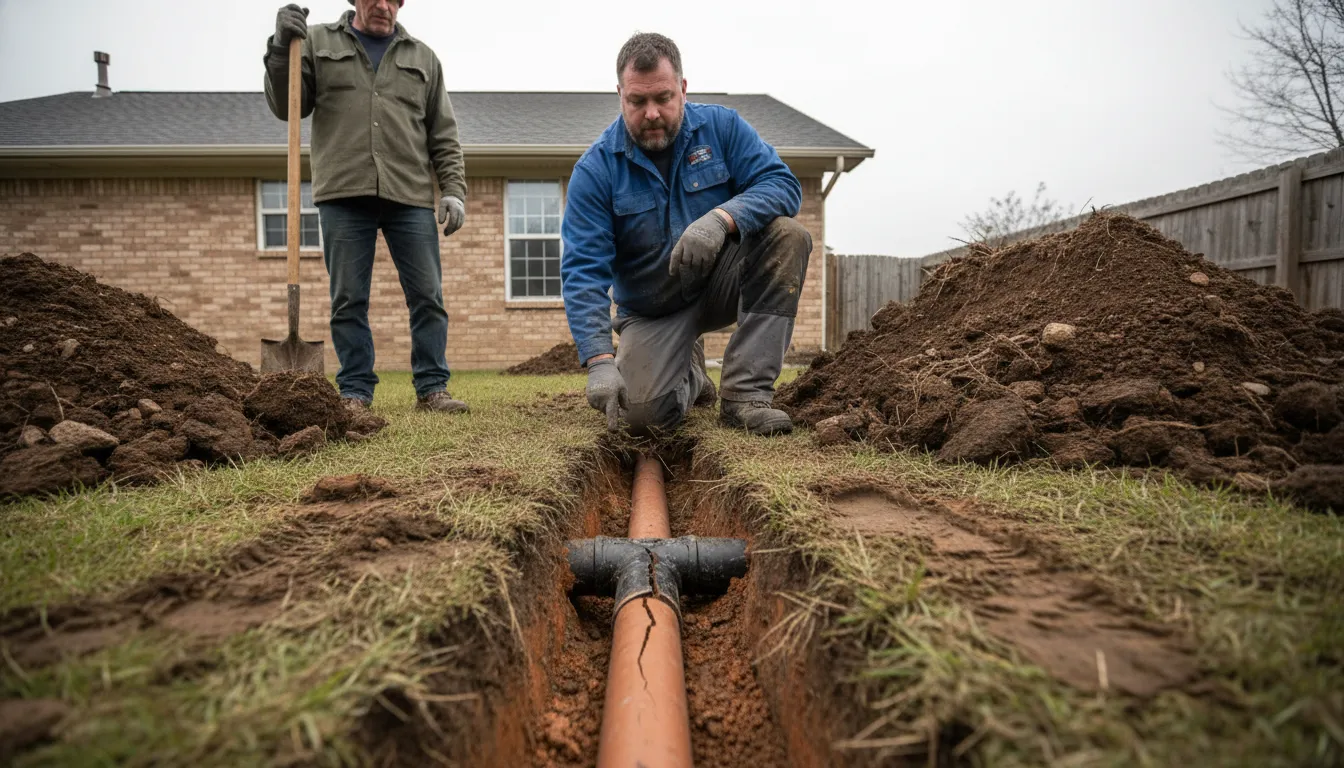
Find the Best Sewer Line Repair Companies for Your Business
No obligation • Fast responses • Nationwide coverage

Why you can trust Search a Plumber
Search a Plumber is a leading United States resource for finding and evaluating professional plumbing services. Our team researches licensing, experience, and customer feedback to create unbiased, fact-driven overviews. Companies cannot pay to change ratings or placement, ensuring homeowners get trustworthy information.
Search providers near you
Top Sewer Line Repair Companies in Poway, California Ranked
A failing sewer line is a serious issue that can disrupt your home, damage your property, and pose health risks. Sewer line repair involves diagnosing and fixing the underground pipe that carries wastewater from your home to the city's main sewer line. In Poway, this is a critical service due to the area's specific soil conditions and aging infrastructure. This guide will help you understand the common problems, repair methods, and what to consider when seeking a professional to address your sewer line issues.
All American Plumbing Inc.
14260 Garden Rd unit A601, Poway, CA 92064
All American Plumbing Inc. provides a wide range of plumbing services in San Diego, CA. Their offerings include sewer camera inspections, water heater repair and installation, drain cleaning, leak detection, gas line installation, and garbage disposal repair. The company is equipped to handle emergency plumbing situations with 24-hour availability. They emphasize employing highly trained and safety-certified plumbers to deliver reliable service. All American Plumbing is recognized locally for quality work and is considered a leading trade employer in the area.
Remedy Rooter
208 Greenfield Dr suite k, El Cajon, CA 92020
Remedy Rooter is a veteran-owned plumbing company serving San Diego, CA, with over 21 years of experience. They provide both commercial and residential plumbing services including water heater installation, drain cleaning, sewer line repair, leak detection, and gas line installation. Remedy Rooter is equipped with hydro jetting technology to effectively clear drains and remove clogs without harsh chemicals. Their team offers 24/7 emergency service, ensuring prompt assistance for urgent plumbing issues in the San Diego County area.
HomePro Plumbing and Drains
8910 Activity Rd Suite C, San Diego, CA 92126
HomePro Plumbing and Drains is a licensed and insured plumbing company serving San Diego, CA. They provide a wide range of plumbing services including sewer camera inspection, water heater repair and installation, drain cleaning, hydro jetting, trenchless sewer repair, leak detection, repiping, and gas line installation. The company uses advanced tools and technologies such as Viega Propress and smart water shutoff systems to deliver efficient solutions. With decades of industry experience, HomePro Plumbing and Drains offers 24/7 emergency support to both residential and commercial clients in the area.
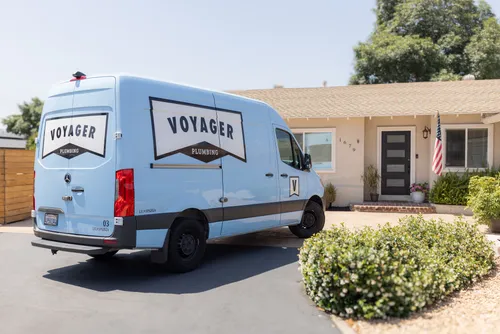
Voyager Plumbing
1050 Pioneer Way # P, El Cajon, CA 92020
Voyager Plumbing is a licensed plumbing company serving San Diego, CA, specializing in residential and commercial plumbing services. They handle a wide range of needs including drain cleaning, sewer line inspections, water heater repair and installation for both tank and tankless systems, leak detection, repiping, and garbage disposal repairs. The company uses advanced equipment such as hydro jetting and sewer camera inspections to diagnose and resolve plumbing issues efficiently. Voyager Plumbing is family owned and operated, emphasizing transparent pricing and clear communication to deliver long-lasting solutions.
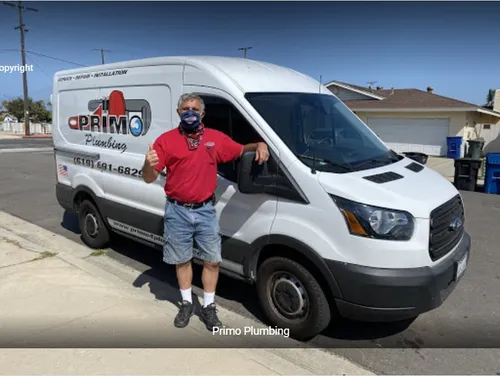
Primo Plumbing
528 Welton St, Chula Vista, CA 91911
Primo Plumbing is a full-service plumbing contractor serving San Diego, CA, with over 30 years of experience. They provide a wide range of services including sewer camera inspections, drain cleaning, tankless and traditional water heater installation and repair, leak detection, repiping, and trenchless sewer repair. Known for using current technology, Primo Plumbing offers capabilities such as high-pressure hydro jetting and sewer line relining. The company is recognized for its commitment to ethics and customer service, and they are available every day of the week to accommodate various project needs.
Understanding Your Poway Sewer Line
The sewer lateral is your home's private pipeline, typically running 3 to 6 feet underground from your house to the main public sewer line in the street. In many older Poway neighborhoods, these lines were originally constructed from materials like clay tile or cast iron, which have a finite lifespan and are susceptible to specific types of damage.
Recognizing the signs of a failing sewer line early can save you from more extensive and expensive repairs. Key indicators include:
- Frequent Drain Clogs: Multiple drains backing up simultaneously, especially when using fixtures like toilets or washing machines.
- Unpleasant Odors: Persistent sewer gas smells in your yard, near cleanout pipes, or inside your home.
- Soggy or Lush Patches: Unexplained wet, sunken, or unusually green and fast-growing areas in your lawn, indicating a leak.
- Gurgling Sounds: Bubbling or gurgling noises coming from toilets or drains.
- Foundation Issues: New cracks in your home's foundation or unexplained moisture in the basement or crawlspace.
Common Causes of Sewer Line Damage in Poway
Several factors unique to the Poway area contribute to sewer line failures. Understanding these causes can help in both diagnosis and prevention.
Tree Root Intrusion: This is a primary culprit, especially for older clay tile pipes. Tree roots are naturally drawn to the moisture and nutrients inside sewer pipes. They can infiltrate through tiny cracks or pipe joints, eventually creating massive blockages or causing pipes to crack and collapse.
Seismic Activity and Soil Shifts: Poway's location means the ground is subject to seismic activity. Even minor tremors can cause soil to shift and settle, putting stress on underground pipes and leading to misalignments, cracks, or breaks 1.
Corrosion and Deterioration: Cast iron pipes, common in mid-century homes, corrode from the inside out over a typical lifespan of 30-50 years. This corrosion weakens the pipe wall, leading to leaks and eventual failure.
Expansive Clay Soils: The region's clay-rich soil expands when wet and contracts when dry. This constant movement can exert pressure on buried sewer lines, causing them to crack, shift, or break over time.
Low-Flow Fixtures and Buildup: While water conservation is essential, modern low-flow toilets and fixtures sometimes don't provide enough water volume to effectively flush waste through the system, leading to increased buildup and potential blockages over time 2.
Diagnostic Tools: The Sewer Camera Inspection
Before any repair can be planned, an accurate diagnosis is essential. Professional plumbers use a specialized tool: a high-resolution, waterproof video camera mounted on a flexible rod. This camera is fed through your sewer line cleanout, providing a real-time view of the pipe's interior condition on a monitor.
A thorough camera inspection will reveal:
- The exact location and depth of the problem.
- The nature of the damage (root intrusion, crack, collapse, offset joint, or bellied pipe).
- The material and condition of the existing pipe.
- The overall length and layout of the sewer lateral.
This critical step eliminates guesswork, allowing for a precise repair plan and an accurate cost estimate. It determines whether a spot repair, full replacement, or a specific method is the most effective solution.
Repair Methods: Trenchless vs. Traditional Excavation
Once the problem is identified, you and your plumbing professional will decide on the best repair strategy. The two main categories are trenchless (minimally invasive) methods and traditional excavation.
Trenchless Sewer Repair
Trenchless technology has revolutionized sewer line repair by minimizing disruption to your property. There are two primary trenchless methods:
1. Pipe Lining (Cured-in-Place Pipe - CIPP): This method creates a "pipe within a pipe." A flexible, resin-saturated liner is inserted into the damaged pipe through an existing access point. The liner is then inflated and cured in place using heat or UV light, forming a new, seamless, and highly durable pipe interior. It seals cracks and holes and resists root intrusion.
- Pros: Extremely minimal digging, often completed in a day, preserves landscaping, driveways, and hardscapes. The new lining is jointless and corrosion-resistant.
- Cons: Requires a structurally sound host pipe to line; cannot be used on fully collapsed sections. It also slightly reduces the internal pipe diameter 3.
2. Pipe Bursting: This method is used for full sewer line replacement without a massive trench. A conical bursting head is pulled through the old, damaged pipe, fracturing it outward while simultaneously pulling a new, high-density polyethylene (HDPE) pipe into place behind it.
- Pros: Allows for replacement with a new, often larger-diameter pipe with minimal excavation (only at the entry and exit pits). Highly durable and long-lasting solution.
- Cons: Requires slightly more excavation than lining. Needs clear access points at both ends of the run. Not ideal if there are many utility lines in close proximity.
Traditional Excavation (Open-Trench Repair)
This is the conventional method, involving the digging of a long, deep trench along the entire path of the sewer line to fully expose it. The old pipe is removed and a new one is laid in its place.
- Pros: Provides complete visual access to the pipe and surrounding soil. It is sometimes the only option for severely collapsed pipes, complex layouts, or when other utilities are in the way. The per-foot cost for the pipe replacement itself can be lower.
- Cons: Highly disruptive to your property. It destroys landscaping, lawns, driveways, sidewalks, and patios. The project timeline is longer due to digging and, critically, the extensive restoration work required afterward, which adds significant cost and time 4 5.
Find the perfect sewer line repair companies for your needs
Get personalized recommendations and expert advice
Cost Considerations for Poway Homeowners
Sewer line repair is a significant investment, and costs in Poway vary widely based on the method, extent of damage, pipe location, and necessary restoration. Here's a general breakdown:
- Trenchless Pipe Lining (Repair): Typically ranges from $4,000 to $12,500 for spot repairs or lining a specific section.
- Trenchless Pipe Bursting (Replacement): Generally falls between $6,000 and $20,000+ for a full lateral replacement, depending on length and depth.
- Traditional Excavation (Replacement): Often quoted at $50 to $450+ per linear foot for the excavation and pipe work itself. However, this does not include the substantial added costs of restoring your yard, concrete, asphalt, or landscaping, which can easily add thousands more to the final bill 6.
- Total Project Cost: A full sewer line replacement project, regardless of method, can range from $3,000 to $10,000+ for a straightforward job, but complex situations involving long runs, deep pipes, or difficult soil conditions can exceed $20,000 7 8 9 10.
Key Takeaway: While trenchless methods may have a higher upfront cost for materials and specialized equipment, they are often more cost-effective in the long run because they eliminate the enormous expense and hassle of property restoration. A detailed camera inspection and quote from a qualified professional are the only ways to get an accurate price for your specific situation 11 12.
Choosing the Right Service Provider
Selecting a qualified professional is crucial for a successful and lasting sewer line repair. Look for a licensed, bonded, and insured plumbing contractor with specific expertise in sewer line diagnostics and both trenchless and traditional methods. They should provide a detailed, written estimate based on a camera inspection, clearly explaining the recommended solution, warranty information, and a projected timeline. Check online reviews, ask for references, and verify their standing with the California State License Board.
Frequently asked questions
Sources
Footnotes
-
When To Replace Vs. Repair Your Sewer Line - https://westernrooter.com/when-to-replace-vs-repair-your-sewer-line/ ↩
-
Common Causes of Sewer Line Damage: Key Factors and Prevention Tips - https://www.onecallplumbingsc.com/common-causes-of-sewer-line-damage/ ↩
-
Trenchless Sewer Repair vs. Traditional Excavation: Which is Better? - https://alphaenvironmental.net/blog/trenchless-sewer-repair-vs-traditional-excavation-which-is-better/ ↩
-
Trenchless Sewer Line Repair vs Traditional: Which Is Better - https://cactusplumbingandair.com/trenchless-sewer-line-repair-vs-traditional/ ↩
-
Trenchless vs. Traditional Sewer Repair - https://sewerlinesonly.com/trenchless-vs-traditional-sewer-repair-which-is-more-cost-effective-for-lakewood-homeowners/ ↩
-
Cost Comparison: Trenchless vs. Traditional Sewer Line Repair - https://www.advancedtrenchlesssolutions.com/blog/cost-comparison-trenchless-vs-traditional-sewer-line-repair ↩
-
Sewer Line Replacement vs Repair: A Cost-Benefit Analysis ... - https://www.alpineplumbingandair.com/sewer-line-replacement-vs-repair-a-cost-benefit-analysis-for-california-homes/ ↩
-
Sewer Line Replacement Cost in San Diego - Almco Plumbing - https://almcoplumbing.com/how-is-the-cost-of-repairing-and-replacing-sewer-line/ ↩
-
How Much Does Sewer Line Repair Typically Cost? - https://www.jsewerandplumbing.com/how-much-does-sewer-line-repair-typically-cost/ ↩
-
What is the Cost of a Sewer Line Replacement in Southern ... - https://www.burgesons.com/blog/what-is-the-cost-of-a-sewer-line-replacement-in-southern-california ↩
-
Is Trenchless Sewer Line Repair Cheaper? - AP Plumbing - https://applumbing.com/blog/is-trenchless-sewer-line-repair-cheaper/ ↩
-
Sewer Pipe Lining vs Residential Excavation: Homeowner Guide - https://www.128plumbing.com/sewer-pipe-lining-vs-residential-excavation/ ↩