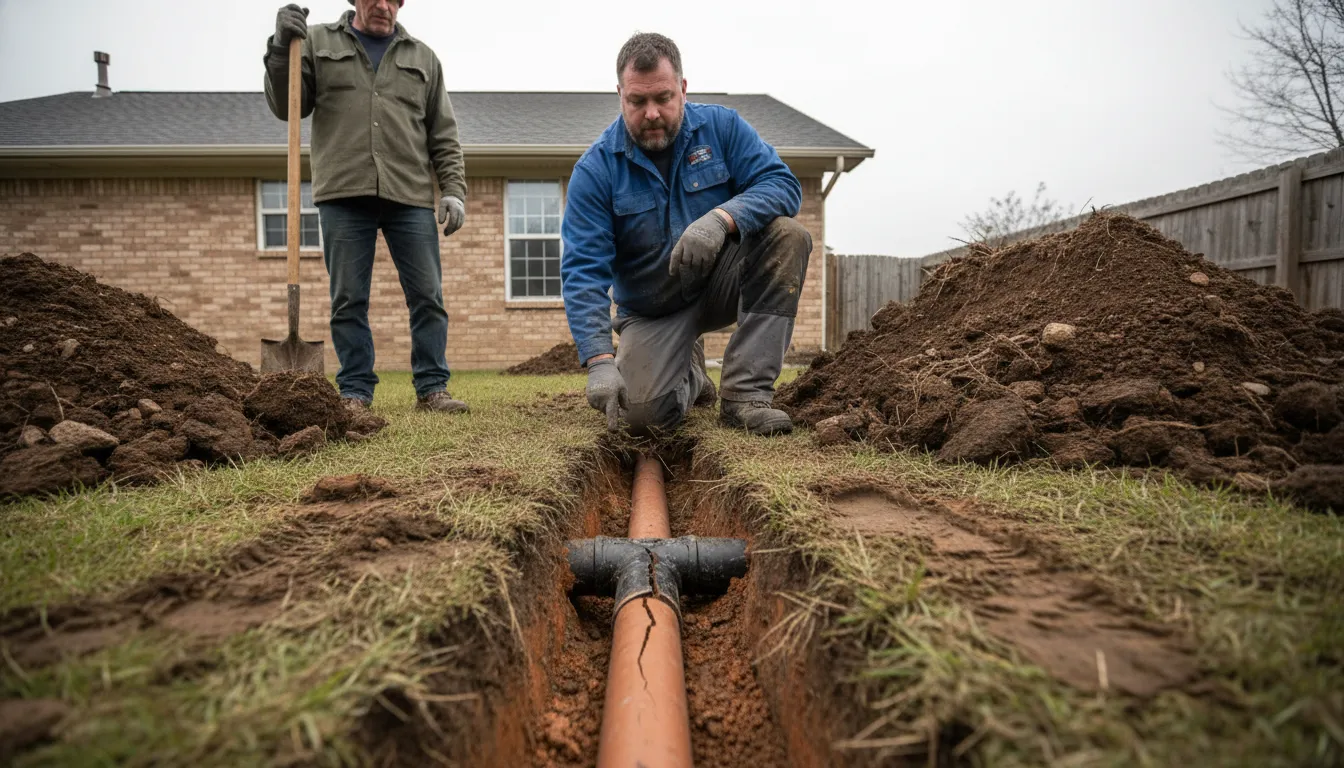
Find the Best Sewer Line Repair Companies for Your Business
No obligation • Fast responses • Nationwide coverage

Why you can trust Search a Plumber
Search a Plumber is a leading United States resource for finding and evaluating professional plumbing services. Our team researches licensing, experience, and customer feedback to create unbiased, fact-driven overviews. Companies cannot pay to change ratings or placement, ensuring homeowners get trustworthy information.
Search providers near you
Top Sewer Line Repair Companies in Pittsburg, California Ranked
A damaged sewer line is a serious issue that can disrupt your home and lead to costly property damage if left unaddressed. Sewer line repair involves fixing or replacing the underground pipe that carries wastewater from your home to the city's main sewer line. In Pittsburg, this is a critical service due to the area's aging infrastructure and specific soil conditions. This guide provides detailed information on common problems, repair methods, and costs to help you understand your options and connect with qualified local professionals for an assessment.
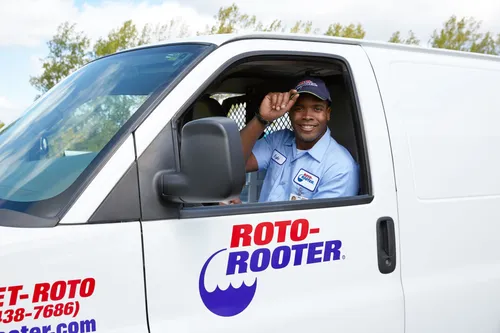
Roto-Rooter Plumbing & Water Cleanup
1780 Whipple Rd Ste 203G, Union City, CA 94587
Roto-Rooter Plumbing & Water Cleanup provides comprehensive plumbing services in San Jose, CA, specializing in residential and commercial plumbing solutions. Their offerings include sewer and drain cleaning, water heater repair and installation, leak detection, gas line installation, and trenchless sewer repair. The company is equipped to handle emergency plumbing situations with 24/7 availability, ensuring prompt response to issues like burst pipes and sewer backups. With extensive experience and advanced technology, Roto-Rooter addresses complex plumbing challenges efficiently. They also offer floodwater cleanup and mold remediation services, supporting property restoration after water damage. Serving the San Jose area and nearby communities, Roto-Rooter is a licensed and insured provider known for its broad range of plumbing capabilities and emergency service availability.
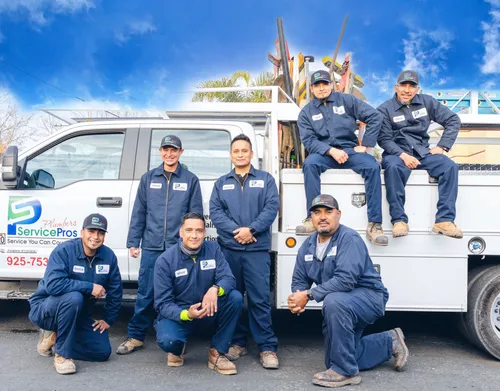
Service Pros Plumbers, Inc.
1320 Willow Pass Rd, Concord, CA 94520
Service Pros Plumbers, Inc. is a family-owned plumbing company serving Oakland, CA, with over 25 years of experience. They provide a wide range of plumbing services for residential and commercial customers, including water heater repair and installation, drain cleaning, sewer line replacement with trenchless options, leak detection, and gas line installation. Their licensed plumbers also offer whole-house repiping to improve water pressure and system efficiency. Service Pros Plumbers offers 24/7 emergency plumbing services to address urgent issues such as burst pipes and clogged drains promptly.
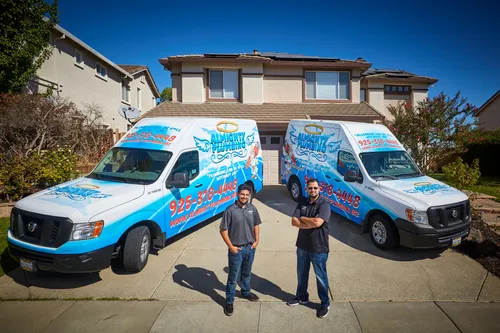
Almighty Plumbing
1309 Mokelumne Dr, Antioch, CA 94531
Almighty Plumbing is a family-owned and operated plumbing company serving Oakland, CA, and the greater East Bay area. They provide a wide range of plumbing services including water heater repair and installation, tankless water heater services, water softener installation, drain cleaning, sewer line repair, repiping, and garbage disposal repair. The company also specializes in bathroom remodeling and water filtration system installation. With a focus on honest, fair service tailored to customer needs, Almighty Plumbing offers multi-year warranties on repairs and installations. They also provide emergency plumbing services to address urgent issues promptly.
URV Projects Plumbing Service
1048 Serpentine Ln # 312, Pleasanton, CA 94566
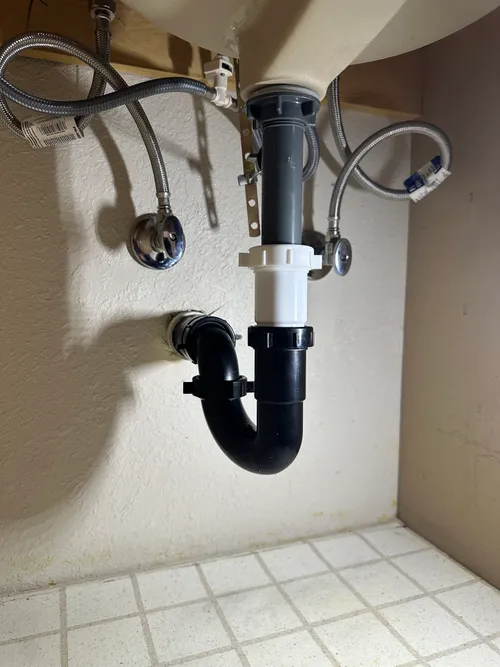
URV Projects Plumbing Service is a licensed and insured full-service plumbing company serving Fremont, CA, and nearby cities. They offer a wide range of residential plumbing services including water heater repair and installation, water softener installation, drain cleaning, sewer line repair, and leak detection. The company is experienced in handling complex plumbing projects that require detailed planning and skilled workmanship. Their team uses advanced techniques for leak detection and provides reliable water heater services to ensure consistent hot water supply. URV Projects Plumbing Service is known for using high-quality materials and delivering guaranteed work.
Roto-Rooter Plumbing & Water Cleanup
1070 Marina Village Pkwy UNIT 202, Alameda, CA 94501
Roto-Rooter Plumbing & Water Cleanup provides comprehensive plumbing services in San Francisco, CA, specializing in residential and commercial plumbing solutions. Their offerings include sewer and drain cleaning, water heater repair and installation, leak detection, sewer line repair using trenchless methods, and emergency flood cleanup. The company uses advanced equipment like hydro-jetting to address complex plumbing issues efficiently. Serving Alameda and nearby counties, Roto-Rooter is available 24/7 for emergency plumbing needs, ensuring prompt response to urgent situations.
Common Causes of Sewer Line Problems in Pittsburg
Understanding why sewer lines fail is the first step toward a lasting solution. In Pittsburg, several local factors contribute to underground pipe issues.
- Tree Root Intrusion: This is a leading cause of blockages and breaks, especially in older neighborhoods with mature trees. Roots are attracted to the moisture and nutrients in sewer pipes and can infiltrate through tiny cracks or pipe joints. Once inside, they grow rapidly, causing complete blockages or exerting pressure that cracks the pipe.
- Aging Pipe Materials: Many homes in Contra Costa County have original sewer lines made of cast iron or vitrified clay (orangeburg). Cast iron pipes, common in homes built 30-50 years ago, are susceptible to corrosion and rust. Clay pipes, with a lifespan of 50-60 years, are brittle and can crack or collapse from soil pressure or root growth.
- Soil Movement and Seismic Activity: Pittsburg's soil contains expansive clay, which swells when wet and shrinks during dry periods. This constant movement can stress and misalign sewer pipes. Furthermore, seismic activity in the region can shift the ground, leading to breaks or separated joints in the line 1.
- Ground Shifting and Settlement: Over time, the ground naturally settles. If a sewer pipe wasn't bedded properly during installation or if soil washes away (a process called pipe scour), it can lead to sagging sections where waste collects and causes repeated clogs.
- Low-Flow Fixtures and Sediment: While water conservation is important, the widespread use of low-flow toilets and faucets can reduce the scouring action in pipes. This allows grease, soap, and other debris to build up more easily, leading to gradual blockages 2.
Recognizing the Signs of a Failing Sewer Line
Don't ignore these warning signs. Early detection can mean the difference between a simple repair and a major replacement project.
- Multiple Slow Drains: If more than one fixture (like toilets, showers, and sinks) drains slowly simultaneously, especially after using other drains, the problem is likely in the main sewer line, not an individual branch.
- Unpleasant Odors: Foul sewage smells in your yard, near cleanouts, or even inside your home are a strong indicator of a break or crack in the line.
- Sewage Backups: The most severe sign is wastewater backing up into floor drains, showers, or toilets. This requires immediate professional attention.
- Lush or Soggy Patches in Yard: A broken sewer line leaks nutrient-rich water into your soil. This can cause one area of your lawn to become unusually green and lush or remain constantly soggy.
- Foundation Cracks or Settlement: In severe cases, leaking sewage can erode soil under your home's foundation, leading to cracks in walls or uneven floors.
Repair Methods: Trenchless vs. Traditional Excavation
When it comes to fixing your sewer line, you have two primary approaches: modern trenchless technology or traditional excavation. The best choice depends on the damage's location, extent, and your property's layout.
Trenchless Sewer Repair
Trenchless methods are designed to fix or replace pipes with minimal digging, preserving your landscaping, driveway, and hardscape.
-
Pipe Lining (Cured-in-Place Pipe - CIPP): A flexible, resin-saturated liner is inserted into the damaged pipe through an existing access point. It is then inflated and cured with heat or UV light, forming a hard, seamless "pipe within a pipe." This method seals cracks and holes and resists root intrusion.
- Pros: Very little digging (only at access points), often completed in a day, creates a jointless pipe, and can extend the life of the line by 50 years or more 3 4.
- Cons: Requires the existing pipe to have a mostly intact shape (not fully collapsed). It also slightly reduces the internal pipe diameter.
- Best For: Pipes with cracks, holes, or root intrusions but whose overall structure is sound.
-
Pipe Bursting: This is a trenchless replacement method. A conical bursting head is pulled through the old, damaged pipe, fracturing it outward while simultaneously pulling a new, high-density polyethylene (HDPE) pipe into place behind it.
- Pros: Installs a brand-new, durable pipe with no reduction in size. Still requires only small access pits, not a long trench.
- Cons: Not suitable if the old pipe has large, sweeping bends or is surrounded by other utilities too close to safely burst.
- Best For: Completely replacing severely damaged or collapsed lines, or upgrading from a fragile material like clay to modern plastic.
Traditional Sewer Line Excavation
This is the conventional "dig-and-replace" method. A trench is excavated along the entire length of the damaged pipe section to expose it, allowing for direct repair or replacement.
- Pros: Allows for a direct visual inspection of the entire pipe. It is the only option for pipes that have completely collapsed or are inaccessible for trenchless equipment. It can also be necessary for repairs very close to the home's foundation or under structures 5 6.
- Cons: Highly disruptive to landscaping, driveways, sidewalks, and patios. The restoration of these elements adds significant time and cost to the project. The open trench can also be a safety concern.
- Best For: Severe damage in complex locations, when other utilities are in the way of trenchless methods, or when the homeowner prefers a direct, hands-on approach to replacement.
Find the perfect sewer line repair companies for your needs
Get personalized recommendations and expert advice
Understanding Sewer Line Repair Costs in Pittsburg
Costs can vary widely based on the repair method, the length and depth of the pipe, access difficulty, and necessary restoration work. Here's a general breakdown for the Pittsburg area 7 8 9:
- Minor Spot Repair: For a small, accessible section of pipe, a simple excavation and patch can cost between $100 and $500+.
- Trenchless Pipe Lining: Typically costs $60 to $250 per linear foot. For a standard 20-foot section, this translates to approximately $1,200 to $5,000 10.
- Trenchless Pipe Bursting: As a full replacement method, bursting generally ranges from $3,000 to $10,000 for a standard residential line.
- Traditional Excavation & Replacement: The digging and new pipe installation alone can cost $4,000 to $13,000+. However, this does not include landscape and hardscape restoration, which can easily add $1,000 to $8,000 or more to the total bill, potentially pushing complex jobs toward $25,000 11.
Key Financial Insight: While trenchless methods often have a higher initial material and technology cost, a comprehensive cost-benefit analysis that includes landscape restoration often shows trenchless to be more cost-effective over a 10-20 year period, especially when avoiding repeated repairs on an aging line 12 13. The only way to get an accurate price is to have a professional perform a video camera inspection and provide a detailed quote.
The Professional Repair Process: What to Expect
- Inspection & Diagnosis: A professional will use a specialized sewer camera to visually inspect the inside of your pipe. This identifies the exact location, cause, and extent of the damage, which is crucial for determining the right repair method.
- Solution & Quote Presentation: Based on the inspection, the technician will explain your options (trenchless vs. traditional), the pros and cons of each, and provide a written, detailed quote outlining all costs.
- Permitting: Repairs connecting to the city main typically require a permit from the City of Pittsburg. A reputable professional will handle this process.
- Repair Execution: The chosen method is performed. Trenchless repairs are often completed in a single day, while excavation projects take longer due to digging and restoration.
- Final Inspection & Clean-up: The new or repaired line is camera-inspected again to ensure the work is successful. The site is cleaned up, and for excavation jobs, restoration of your yard begins.
Choosing a Service Provider in Pittsburg
Selecting the right professional is critical. Look for a licensed, insured contractor with specific experience in both trenchless and traditional sewer repair. They should be willing to perform a camera inspection before providing a quote, clearly explain all options, and offer warranties on both materials and labor. Always get multiple detailed estimates to compare scope and price.
Frequently asked questions
Sources
Footnotes
-
Trenchless Sewer Repair vs. Traditional Excavation - AQUALIS - https://aqualisco.com/trenchless-sewer-repair-vs-traditional/ ↩
-
Trenchless Pipe Repair: Smart Fixes for Sewer Line Problems - https://hydromaxplumbing.com/blog/trenchless-pipe-repair-fixes-for-sewer-line-problems/ ↩
-
Trenchless Sewer Repair | Pittsburg, CA - https://www.absoluteplumbinganddrain.com/service-areas/pittsburg-ca/trenchless-sewer-lines/ ↩
-
Trenchless Sewer Repair vs. Traditional Excavation: Which is Better? - https://alphaenvironmental.net/blog/trenchless-sewer-repair-vs-traditional-excavation-which-is-better/ ↩
-
Trenchless Sewer Repair vs. Traditional Excavation - https://tdtplumbing.com/trenchless-sewer-repair/difference-to-traditional-repair/ ↩
-
Trenchless Sewer Line Repair vs Traditional: Which Is Better - https://cactusplumbingandair.com/trenchless-sewer-line-repair-vs-traditional/ ↩
-
Sewer Line Replacement vs Repair: A Cost-Benefit Analysis ... - https://www.alpineplumbingandair.com/sewer-line-replacement-vs-repair-a-cost-benefit-analysis-for-california-homes/ ↩
-
Empower Your Decision: Decoding Trenchless Sewer Repair Costs - Pipeliner Pros - https://pipelinerpros.com/trenchless-sewer-repair-cost/ ↩
-
Cost To Repair Sewer Line: 2023 Options & Affordable Services - https://www.superbrothers.com/cost-to-repair-sewer-line-2023-options-affordable-services/ ↩
-
Sewer Pipe Bursting Cost: Essential Factors to Consider - https://www.benjaminfranklinplumbing.com/league-city/blog/2024/december/sewer-pipe-bursting-cost-essential-factors-to-consider/ ↩
-
Cost Comparison: Trenchless vs. Traditional Sewer Line Repair - https://www.advancedtrenchlesssolutions.com/blog/cost-comparison-trenchless-vs-traditional-sewer-line-repair ↩
-
Trenchless vs. Traditional Sewer Repair - https://sewerlinesonly.com/trenchless-vs-traditional-sewer-repair-which-is-more-cost-effective-for-lakewood-homeowners/ ↩
-
Is Trenchless Sewer Line Repair Cheaper? - AP Plumbing - https://applumbing.com/blog/is-trenchless-sewer-line-repair-cheaper/ ↩