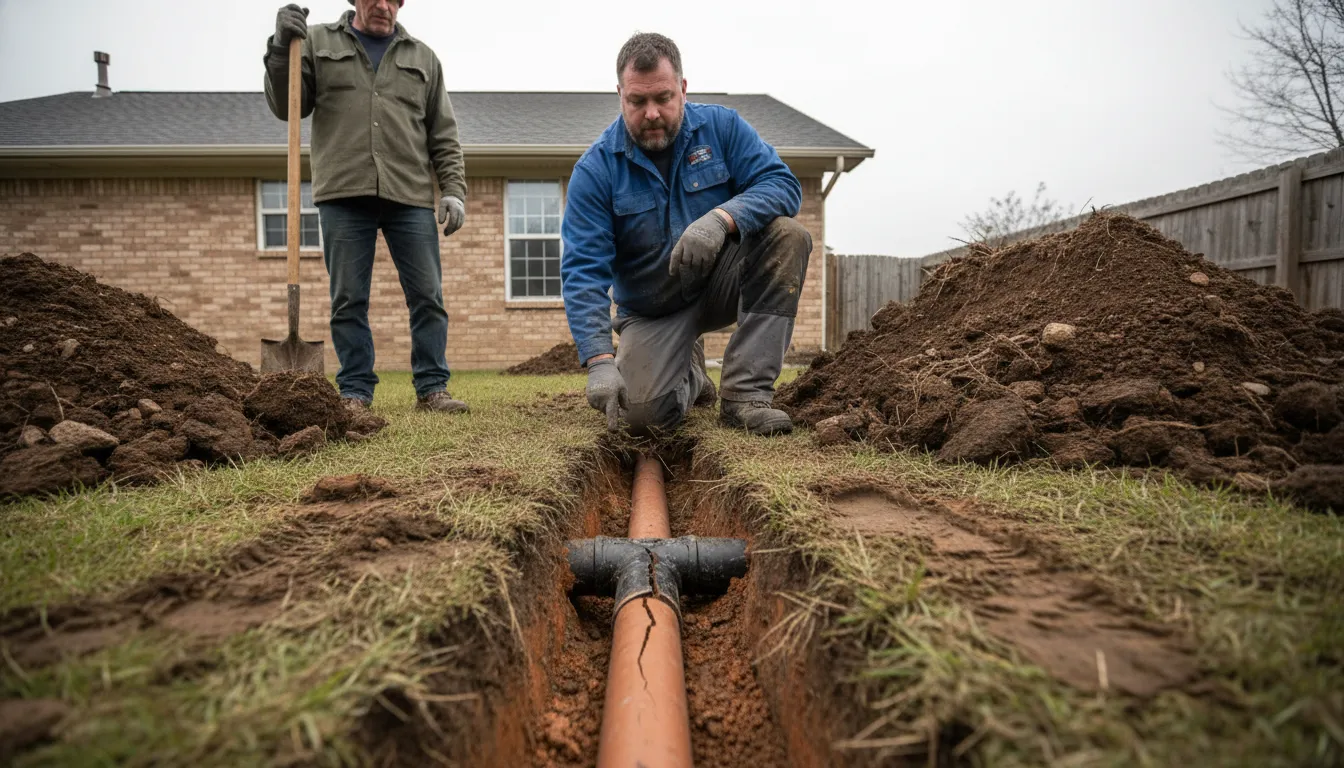
Find the Best Sewer Line Repair Companies for Your Business
No obligation • Fast responses • Nationwide coverage

Why you can trust Search a Plumber
Search a Plumber is a leading United States resource for finding and evaluating professional plumbing services. Our team researches licensing, experience, and customer feedback to create unbiased, fact-driven overviews. Companies cannot pay to change ratings or placement, ensuring homeowners get trustworthy information.
Search providers near you
Top Sewer Line Repair Companies in Livermore, California Ranked
A failing sewer line is a serious issue that can disrupt your home and lead to costly property damage. Sewer line repair involves diagnosing and fixing the underground pipe that carries all your home's wastewater to the city main. In Livermore, this is especially critical due to local soil conditions and aging infrastructure. This guide explains the common causes of sewer problems here, compares modern and traditional repair methods, and provides the information you need to connect with qualified local specialists who can assess your specific situation.
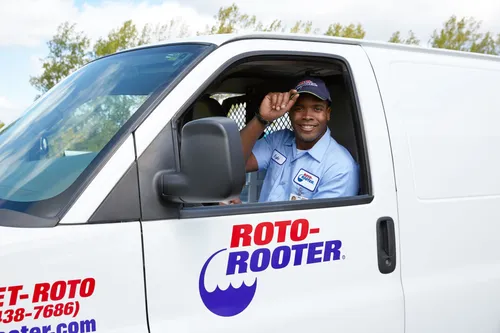
Roto-Rooter Plumbing & Water Cleanup
1780 Whipple Rd Ste 203G, Union City, CA 94587
Roto-Rooter Plumbing & Water Cleanup provides comprehensive plumbing services in San Jose, CA, specializing in residential and commercial plumbing solutions. Their offerings include sewer and drain cleaning, water heater repair and installation, leak detection, gas line installation, and trenchless sewer repair. The company is equipped to handle emergency plumbing situations with 24/7 availability, ensuring prompt response to issues like burst pipes and sewer backups. With extensive experience and advanced technology, Roto-Rooter addresses complex plumbing challenges efficiently. They also offer floodwater cleanup and mold remediation services, supporting property restoration after water damage. Serving the San Jose area and nearby communities, Roto-Rooter is a licensed and insured provider known for its broad range of plumbing capabilities and emergency service availability.
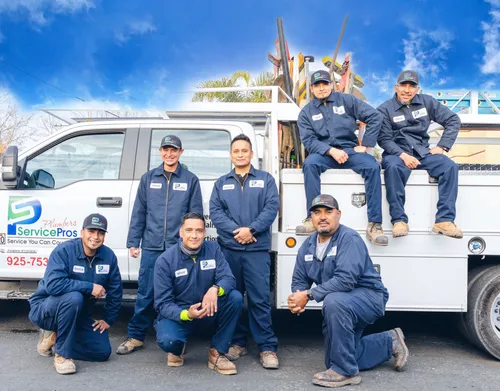
Service Pros Plumbers, Inc.
1320 Willow Pass Rd, Concord, CA 94520
Service Pros Plumbers, Inc. is a family-owned plumbing company serving Oakland, CA, with over 25 years of experience. They provide a wide range of plumbing services for residential and commercial customers, including water heater repair and installation, drain cleaning, sewer line replacement with trenchless options, leak detection, and gas line installation. Their licensed plumbers also offer whole-house repiping to improve water pressure and system efficiency. Service Pros Plumbers offers 24/7 emergency plumbing services to address urgent issues such as burst pipes and clogged drains promptly.
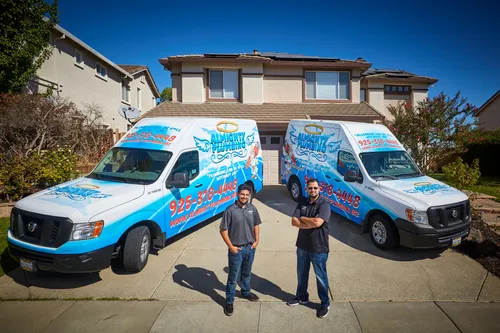
Almighty Plumbing
1309 Mokelumne Dr, Antioch, CA 94531
Almighty Plumbing is a family-owned and operated plumbing company serving Oakland, CA, and the greater East Bay area. They provide a wide range of plumbing services including water heater repair and installation, tankless water heater services, water softener installation, drain cleaning, sewer line repair, repiping, and garbage disposal repair. The company also specializes in bathroom remodeling and water filtration system installation. With a focus on honest, fair service tailored to customer needs, Almighty Plumbing offers multi-year warranties on repairs and installations. They also provide emergency plumbing services to address urgent issues promptly.
URV Projects Plumbing Service
1048 Serpentine Ln # 312, Pleasanton, CA 94566
URV Projects Plumbing Service is a licensed and insured full-service plumbing company serving Fremont, CA, and nearby cities. They offer a wide range of residential plumbing services including water heater repair and installation, water softener installation, drain cleaning, sewer line repair, and leak detection. The company is experienced in handling complex plumbing projects that require detailed planning and skilled workmanship. Their team uses advanced techniques for leak detection and provides reliable water heater services to ensure consistent hot water supply. URV Projects Plumbing Service is known for using high-quality materials and delivering guaranteed work.
West Peak Trenchless & Plumbing
1030 Duane Ave, Santa Clara, CA 95054
West Peak Trenchless & Plumbing is a plumbing and trenchless repair company serving San Jose, CA. They provide services including water heater repair and installation, hydro jetting, sewer line repair, and trenchless sewer repair using advanced cure-in-place pipe (CIPP) technology. With over 15 years of experience, they serve both commercial and residential clients in the greater San Francisco area, delivering solutions that minimize disruption while addressing a variety of plumbing needs.
Understanding Your Livermore Sewer Line
Your home's main sewer lateral is a crucial but hidden component. It runs from the foundation of your house, typically near bathrooms and kitchens, underground across your property to connect with the municipal sewer main, which is often located under the street or an easement. In Livermore, this path frequently goes beneath landscaping, driveways, or even sidewalks, which is a key factor when considering repair options.
Most homes in older Livermore neighborhoods were built with one of two common pipe materials: cast iron or vitrified clay. While durable, both have a finite lifespan. Cast iron pipes, common in mid-century homes, are susceptible to internal corrosion and rust over 30-50 years, which can eventually lead to holes or total failure. Clay pipes, known for their longevity of 50-60 years, are brittle and prone to cracking from ground movement or root pressure. Knowing your home's age and original pipe material can provide early clues about potential vulnerability.
Common Causes of Sewer Line Damage in Livermore
Several factors unique to the Livermore area contribute to sewer line failures. Identifying the root cause is the first step toward a lasting repair.
- Tree Root Intrusion: This is a leading cause of sewer blockages and damage in California. Roots from thirsty trees and shrubs are attracted to the moisture and nutrients inside sewer pipes. They can infiltrate through tiny cracks or loose joints in older clay or cast iron pipes, eventually growing large enough to cause complete blockages or fracture the pipe.
- Aging and Corroding Pipes: As mentioned, the natural aging process of cast iron and clay is a major factor. Cast iron corrodes from the inside out, reducing flow and creating rough surfaces that catch debris. Clay tiles can simply wear out and lose their structural integrity over decades of use.
- Seismic Activity and Ground Shifts: Livermore's location in California makes its underground utilities vulnerable to ground movement from seismic activity. Even minor earthquakes or tremors can shift soil and cause pipes to crack, separate at joints, or collapse.
- Expansive Clay Soils: The soil in much of California has a high clay content, which is known as "expansive soil" 1. This soil swells significantly when wet and shrinks during dry periods. This constant expansion and contraction puts tremendous stress on buried sewer lines, leading to misalignment, cracks, and breaks over time.
Diagnostic Step: The Video Inspection
Before any repair plan is proposed, a professional video pipe inspection is non-negotiable. A small, high-resolution camera is fed through the sewer line, providing a real-time view of the interior condition. This inspection allows a specialist to pinpoint the exact location, nature, and severity of the problem-whether it's a root mass, a cracked pipe, a collapsed section, or a belly (a low spot where waste collects). In Livermore, where repair methods vary greatly in cost and invasiveness, this diagnostic step is crucial for receiving an accurate recommendation and estimate 2.
Repair Methods: Trenchless vs. Traditional Excavation
Once the problem is diagnosed, you will likely be presented with two primary repair philosophies: modern trenchless methods or traditional open-trench excavation. The right choice depends on the damage, your property layout, and your priorities regarding disruption and long-term value.
Trenchless Sewer Repair
Trenchless technology has revolutionized sewer line rehabilitation by minimizing excavation. The two most common methods are CIPP Lining and Pipe Bursting.
-
Cured-In-Place Pipe (CIPP) Lining: This method involves saturating a flexible, resin-coated tube and inserting it into the damaged pipe. The tube is then inflated, pressing against the host pipe's walls, and cured with heat or UV light to form a hard, seamless "pipe within a pipe." It seals cracks and holes, prevents root intrusion, and restores flow.
-
Pros: Extremely minimally invasive, often requiring only one or two small access pits. It preserves landscaping, driveways, and hardscapes. The installation is typically faster than excavation, and the smooth interior can improve flow. When factoring in the cost of restoring a dug-up yard, it often proves more cost-effective long-term 3.
-
Cons: It is not suitable for completely collapsed pipes. The process also slightly reduces the internal diameter of the pipe (though the smooth liner often results in equal or better flow). The existing pipe must be cleaned and prepared beforehand.
-
Pipe Bursting: This is a trenchless replacement method. A conical bursting head is pulled through the old, damaged pipe, fracturing it outward while simultaneously pulling a new, high-density polyethylene (HDPE) pipe into place behind it.
- Pros: It installs a brand-new, durable pipe with a similar or larger diameter. It is still far less disruptive than a full trench, requiring only entry and exit pits. It is an excellent solution for replacing severely damaged clay or cast iron lines 4 5.
- Cons: It requires somewhat more excavation than CIPP lining for the pits. It may not be feasible if the old pipe has large, offset misalignments or if there are many other utilities densely packed in the same area.
Traditional Excavation (Open-Trench Repair)
This is the conventional method, involving digging a trench along the entire length of the sewer line to expose it for repair or replacement.
- Pros: It allows for a direct, hands-on repair. It is the only option for severely collapsed pipes or situations with complex, multiple failures in a short span. It can be more straightforward for very short runs or for repairs inside a home's foundation.
- Cons: It is highly disruptive, destroying lawns, gardens, patios, and driveways in its path. The restoration of landscaping and hard surfaces adds significant time and expense to the project. The overall process is slower, and the final cost can be much higher when restoration is included 6.
Find the perfect sewer line repair companies for your needs
Get personalized recommendations and expert advice
Cost Considerations for Sewer Repair in Livermore
Costs for fixing a sewer line in Livermore vary widely based on the method, the length and depth of the pipe, the extent of damage, and the required restoration. Below is a general cost framework based on common industry data 7 8 9.
- Minor Repairs (Clearing clogs, sealing small leaks): $100 - $500
- Trenchless Repair (CIPP Lining): $135 - $285+ per linear foot. A typical residential job often ranges from $4,000 to $13,000.
- Traditional Excavation (including basic restoration): $50 - $450+ per linear foot. Total project costs frequently fall between $6,000 and $12,000, but can exceed $20,000+ if extensive hardscape or landscape repair is needed.
- Full Line Replacement (for collapsed lines): $7,500 - $30,000+. Trenchless methods like pipe bursting can often reduce this cost by 30-50% by avoiding restoration 10 11.
Key Takeaway: While the per-foot cost of trenchless methods may appear higher initially, the total project cost is often lower for longer runs in Livermore because it eliminates thousands of dollars in landscape and hardscape repair 12 13. For properties with mature landscaping, pools, or concrete installations, the value of preservation is immense.
Choosing the Right Solution for Your Home
Given Livermore's specific challenges-expansive soils, seismic risk, and mature trees-a trenchless approach is often the preferred recommendation for long sewer runs. It addresses the pipe problem while protecting your property's surface. However, the only way to know for sure is through a professional video inspection and a detailed assessment from a licensed specialist. They can explain which options are technically feasible for your situation and provide a clear, line-item estimate.
Frequently asked questions
Sources
Footnotes
-
Common Causes of Sewer Line Damage: Key Factors and Prevention Tips - https://www.onecallplumbingsc.com/common-causes-of-sewer-line-damage/ ↩
-
Sewer Line Replacement vs Repair: A Cost-Benefit Analysis ... - https://www.alpineplumbingandair.com/sewer-line-replacement-vs-repair-a-cost-benefit-analysis-for-california-homes/ ↩
-
Sewer Line Repair & Excavation in Livermore, CA - Roto-Rooter - https://www.rotorooter.com/livermoreca/sewer-lines-excavation/ ↩
-
Sewer Repair Options: Trenchless vs. Traditional Methods | TYCO - https://tycoplumbingco.com/sewer-repair-options-trenchless-vs-traditional-methods/ ↩
-
Trenchless Sewer Repair vs Traditional Plumbing Repair - https://www.carinihome.com/trenchless-sewer-repair-vs-traditional-plumbing-repair/ ↩
-
TRENCHLESS vs. TRADITIONAL SEWER REPAIR: cost & time ... - https://epoxypipeline.com/blog/trenchless-vs-traditional-sewer-repair-comparison/ ↩
-
Trenchless vs. Traditional Sewer Repair - https://sewerlinesonly.com/trenchless-vs-traditional-sewer-repair-which-is-more-cost-effective-for-lakewood-homeowners/ ↩
-
The Cost of Sewer Line Replacement: What to Expect - https://dirtcheapsewer.com/the-cost-of-sewer-line-replacement/ ↩
-
Cost To Repair Sewer Line: 2023 Options & Affordable Services - https://www.superbrothers.com/cost-to-repair-sewer-line-2023-options-affordable-services/ ↩
-
Cost Comparison: Trenchless vs. Traditional Sewer Line Repair - https://www.advancedtrenchlesssolutions.com/blog/cost-comparison-trenchless-vs-traditional-sewer-line-repair ↩
-
Trenchless Sewer Repair vs. Traditional Methods in the Bay ... - https://total-uc.com/trenchless-vs-traditional-sewer-repair/ ↩
-
Is Trenchless Sewer Line Repair Cheaper? - AP Plumbing - https://applumbing.com/blog/is-trenchless-sewer-line-repair-cheaper/ ↩
-
Trenchless Sewer Repair vs. Traditional Excavation - AQUALIS - https://aqualisco.com/trenchless-sewer-repair-vs-traditional/ ↩