Find the Best Sewer Line Repair Companies for Your Business
No obligation • Fast responses • Nationwide coverage

Why you can trust Search a Plumber
Search a Plumber is a leading United States resource for finding and evaluating professional plumbing services. Our team researches licensing, experience, and customer feedback to create unbiased, fact-driven overviews. Companies cannot pay to change ratings or placement, ensuring homeowners get trustworthy information.
Search providers near you
Top Sewer Line Repair Companies in La Mirada, California Ranked
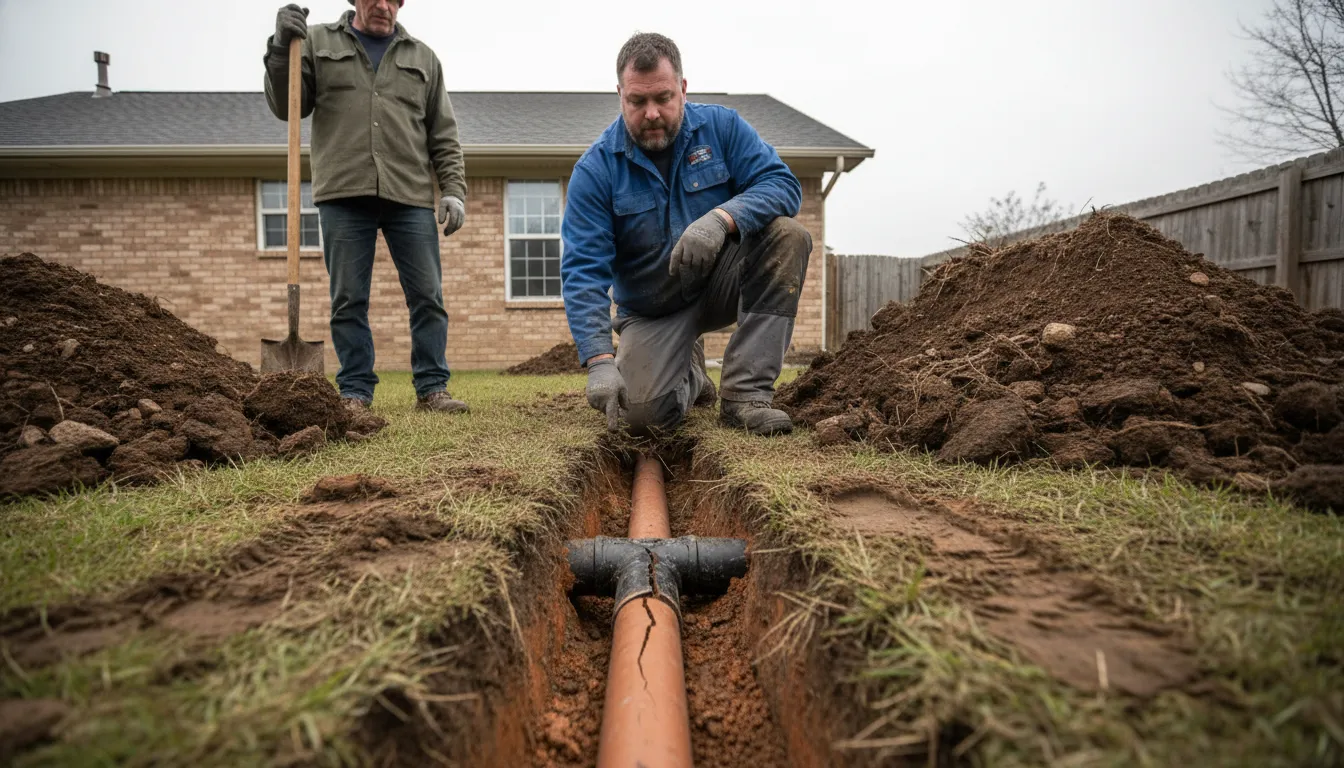
A damaged sewer line is a serious issue that can disrupt your home and pose health risks. Sewer line repair involves diagnosing and fixing the underground pipe that carries all your home's wastewater to the city's main sewer system. When this critical line fails, it requires prompt, professional attention to prevent backups, property damage, and costly complications. This guide will help you understand the common causes, repair methods, and considerations for addressing sewer line problems in La Mirada, empowering you to make informed decisions about your property's plumbing infrastructure.

All City Plumbing, Air & Electrical
5612 E La Palma Ave, Anaheim, CA 92807
All City Plumbing, Air & Electrical is a full-service plumbing, HVAC, and electrical provider located in Anaheim, CA. They offer a wide range of services including water heater repair and installation, drain cleaning, hydro jetting, sewer line repair, leak detection, repiping, and toilet repair. Their team is licensed, bonded, and insured, with technicians who are ACE Certified and available 24/7 for emergency plumbing and HVAC needs. With over 13 years of experience serving Anaheim and surrounding areas, they use advanced technology to ensure efficient and reliable service.
Dymek's Freedom Plumbing, Inc
2921 E Miraloma Ave #17, Anaheim, CA 92806
Dymek's Freedom Plumbing, Inc is a plumbing service provider based in Anaheim, CA, offering a wide range of residential and commercial plumbing solutions. Their services include sewer camera inspections, water heater installation and repair, drain cleaning, hydro jetting, trenchless sewer repair, leak detection, repiping, and garbage disposal repairs. They utilize advanced technology such as electronic slab leak detection and sewer video inspection to diagnose and address plumbing issues efficiently. With over 25 years of experience, the company emphasizes old-fashioned values combined with modern technology and is available 24/7 for emergency plumbing needs.
Merry Plumbing
1465 San Marino Ave, San Marino, CA 91108
Merry Plumbing is a well-established plumbing company serving Los Angeles, CA, and nearby areas including Pasadena, San Marino, and Glendora. With 79 years in business since 1946, they provide a wide range of plumbing services such as sewer camera inspection, water heater repair and installation, drain cleaning, hydro jetting, sewer line repair, leak detection, and repiping. Their team is equipped to handle both residential and commercial plumbing needs with modern tools and on-site parts availability. Merry Plumbing emphasizes clear, upfront estimates and has built a reputation for thorough and dependable service over many decades.
Carlson Plumbing Pros
17150 Newhope St Suite 301-302, Fountain Valley, CA 92708
Carlson Plumbing Pros is a licensed plumbing company serving Santa Ana, CA, and the broader Orange County area. They offer a wide range of plumbing services including water heater repair, water softener installation, drain cleaning, sewer line repair, leak detection, repiping, and gas line installation. With over 20 years of experience, they provide skilled plumbing solutions and are equipped to handle emergencies with 24/7 availability.

The Rooter Company
375 Cliffwood Park St, Brea, CA 92821
The Rooter Company is a plumbing service provider based in Anaheim, CA, serving homes and businesses throughout Orange County and surrounding areas. They specialize in drain cleaning, sewer line repair, and leak detection. With over 15 years of experience, the company offers 24/7 emergency plumbing and sewer services, including same-day appointments to address urgent issues promptly. Their team emphasizes clean job sites, transparent pricing, and bilingual service to accommodate a diverse customer base.
Understanding Your Sewer Line in La Mirada
The main sewer lateral is the private pipe that runs from your home, typically under your yard, driveway, or patio, and connects to the public sewer main in the street. It handles all wastewater from toilets, sinks, showers, and appliances. In La Mirada, several local factors make these lines particularly susceptible to problems. The region's expansive clay soils can shift and place pressure on pipes, and seismic activity can cause ground movement that leads to misalignment or breaks. Furthermore, many homes in older neighborhoods were built with aging materials that are now reaching the end of their functional lifespan.
Common Causes of Sewer Line Failure
Knowing what typically damages sewer pipes in this area is the first step in prevention and diagnosis.
- Tree Root Intrusion: This is one of the most frequent culprits. Roots seek out moisture and nutrients, and they can infiltrate tiny cracks or loose joints in sewer pipes. Once inside, they expand, causing blockages and eventually breaking the pipe apart.
- Aging Pipe Materials: Many La Mirada homes have original sewer lines made of cast iron or vitrified clay tile (VCT). Cast iron can corrode and rust through over 30-50 years, while clay pipes, though durable for 50-60 years, are brittle and prone to cracking and root intrusion at the joints.
- Ground Movement: Southern California's clay soils expand when wet and contract when dry, a cycle that can stress and fracture pipes over time. Minor seismic shifts can also compromise pipe integrity 1 2.
- General Wear and Tear: Over decades, pipes can simply degrade from constant use, leading to gradual bellies (sags), cracks, and eventual collapse.
Diagnostic Step: The Video Inspection
Before any repair can be planned, a professional sewer camera inspection is essential. A specialized waterproof camera is snaked through the line, providing a real-time video feed of the pipe's interior condition. This allows a technician to pinpoint the exact location, nature, and severity of the problem-whether it's a root mass, a crack, a collapsed section, or offset joints. This critical diagnostic tool prevents unnecessary excavation and ensures the correct repair method is chosen.
Repair Methods: Trenchless vs. Traditional Excavation
Once the problem is identified, you and your plumbing professional will decide on the best repair strategy. The choice largely depends on the pipe's condition and location.
Trenchless Sewer Repair
Trenchless technology has revolutionized sewer line repair by offering solutions that require minimal digging. These methods are often faster and preserve your landscaping, hardscaping, and driveway.
- Pipe Lining (Cured-in-Place Pipe - CIPP): A flexible, resin-saturated tube is inserted into the damaged pipe and inflated. The resin cures in place, forming a hard, seamless "pipe within a pipe." This method seals cracks and holes, prevents root intrusion, and is excellent for pipes that are structurally sound but leaking.
- Pipe Bursting: This technique is used for sewer line replacement when the old pipe is too damaged to line. A bursting head is pulled through the old pipe, simultaneously fracturing it outward while pulling a new, high-density polyethylene (HDPE) pipe into place behind it. It replaces the line without a traditional trench.
Pros of Trenchless: Minimal disruption to property, often completed in a day, no large trenches to backfill, and can be more cost-effective when considering landscape restoration 3. Cons of Trenchless: Requires access points at both ends of the repair section. It may not be suitable for pipes that have completely collapsed, have severe sags (bellies), or are misaligned by more than a few inches.
Traditional Excavation Repair
This is the conventional method, involving digging a trench along the path of the sewer line to fully expose it for repair or sewer pipe replacement.
- Spot Repair: If the damage is isolated to one section, only that portion is excavated and replaced, with new pipe connected to the existing, sound pipe on either side.
- Full Line Replacement: The entire sewer lateral from the house to the street is excavated and replaced with new, modern PVC pipe.
Pros of Excavation: Allows for a complete visual inspection, is the only option for severely collapsed or misaligned pipes, and provides the opportunity to upgrade the entire line with durable new material. Cons of Excavation: Highly disruptive to lawns, gardens, driveways, and walkways. It involves significant labor, longer project timelines, and additional costs for excavation equipment and landscape restoration 4.
Find the perfect sewer line repair companies for your needs
Get personalized recommendations and expert advice
Cost Considerations for Sewer Repair in La Mirada
Costs for sewer lateral repair can vary widely based on the method, extent of damage, pipe length, depth, and required restoration. Here's a general breakdown based on regional data:
- Minor Repair/Clearing: Addressing a simple clog or small leak may cost between $100 and $500.
- Trenchless Repair (Lining): Typically ranges from $1,100 to $5,000 for a standard 20-foot section, or $55 to $250 per linear foot 5 6.
- Excavation Repair/Replacement: Spot repairs via excavation can cost $1,000 to $4,000 or more. A full sewer line replacement using traditional excavation can range from $4,000 to over $20,000, depending on length, depth, and restoration complexity 7 8 9.
- Trenchless Replacement (Pipe Bursting): Often falls between the cost of lining and full excavation, potentially offering savings on the full replacement of a damaged line.
Key factors influencing price include the pipe material (PVC is standard for new installs), permit fees from the city of La Mirada, the difficulty of the excavation (rocky soil, deep pipes, obstacles), and post-repair landscape repair like sod, concrete, or asphalt work.
Repair vs. Replacement: A Long-Term View
For homeowners with older systems, a crucial decision is whether to repair a section or invest in a full sewer line replacement. A cost-benefit analysis often favors replacement in certain scenarios:
- Age of Pipes: If your cast iron or clay pipes are 40+ years old and have one failure, other sections are likely near failure. Repeated spot repairs can become more expensive than a single replacement.
- Material Upgrade: Replacing an old line with modern PVC eliminates corrosion concerns, creates a seamless jointless pipe that resists roots, and can improve flow capacity.
- Trenchless Advantage: A trenchless replacement (pipe bursting) can provide a brand-new, durable pipe with minimal surface disruption, often making it a smarter long-term investment than multiple traditional repairs on an aging system 10 11.
Choosing a Service Provider
Selecting the right professional is critical. Look for a licensed, insured plumbing contractor with specific experience in sewer line repair and replacement. They should always recommend a video inspection first, clearly explain all options (trenchless and traditional), provide a detailed written estimate, and pull all necessary city permits. Ask for references and verify their familiarity with La Mirada's soil conditions and local codes.
Frequently asked questions
Sources
Footnotes
-
No-Dig Repair for Broken Sewer Pipes & Cracked Sewer Lines - https://www.hksolutionsgroup.com/cmesewerrepair/about/resources/cracked-pipe-repair ↩
-
Cost of Sewer Repair Boston, MA - https://nepipe.com/residential-services/cost-of-sewer-repair/ ↩
-
Trenchless Sewer Repair vs. Traditional Methods in the Bay Area - https://total-uc.com/trenchless-vs-traditional-sewer-repair/ ↩
-
Sewer Pipe Lining vs Residential Excavation: Homeowner Guide - https://www.128plumbing.com/sewer-pipe-lining-vs-residential-excavation/ ↩
-
Empower Your Decision: Decoding Trenchless Sewer Repair Costs - Pipeliner Pros - https://pipelinerpros.com/trenchless-sewer-repair-cost/ ↩
-
Cost to Replace Trenchless Sewer Line in Los Angeles - https://reliantr.com/how-much-does-it-cost-to-replace-trenchless-sewer-line-in-los-angeles/ ↩
-
Cost To Repair Sewer Line: 2023 Options & Affordable Services - https://www.superbrothers.com/cost-to-repair-sewer-line-2023-options-affordable-services/ ↩
-
What is the Cost of a Sewer Line Replacement in Southern California? - https://www.burgesons.com/blog/what-is-the-cost-of-a-sewer-line-replacement-in-southern-california ↩
-
Essential Guide to Sewer Line Repair in Los Angeles - https://www.lordsofplumbing.com/essential-guide-to-sewer-line-repair-in-los-angeles/ ↩
-
Sewer Line Replacement vs Repair: A Cost-Benefit Analysis ... - https://www.alpineplumbingandair.com/sewer-line-replacement-vs-repair-a-cost-benefit-analysis-for-california-homes/ ↩
-
Sewer Services La Mirada - One Way Rooter and Plumbing - https://www.onewayrooter.com/sewer-services-la-mirada/ ↩