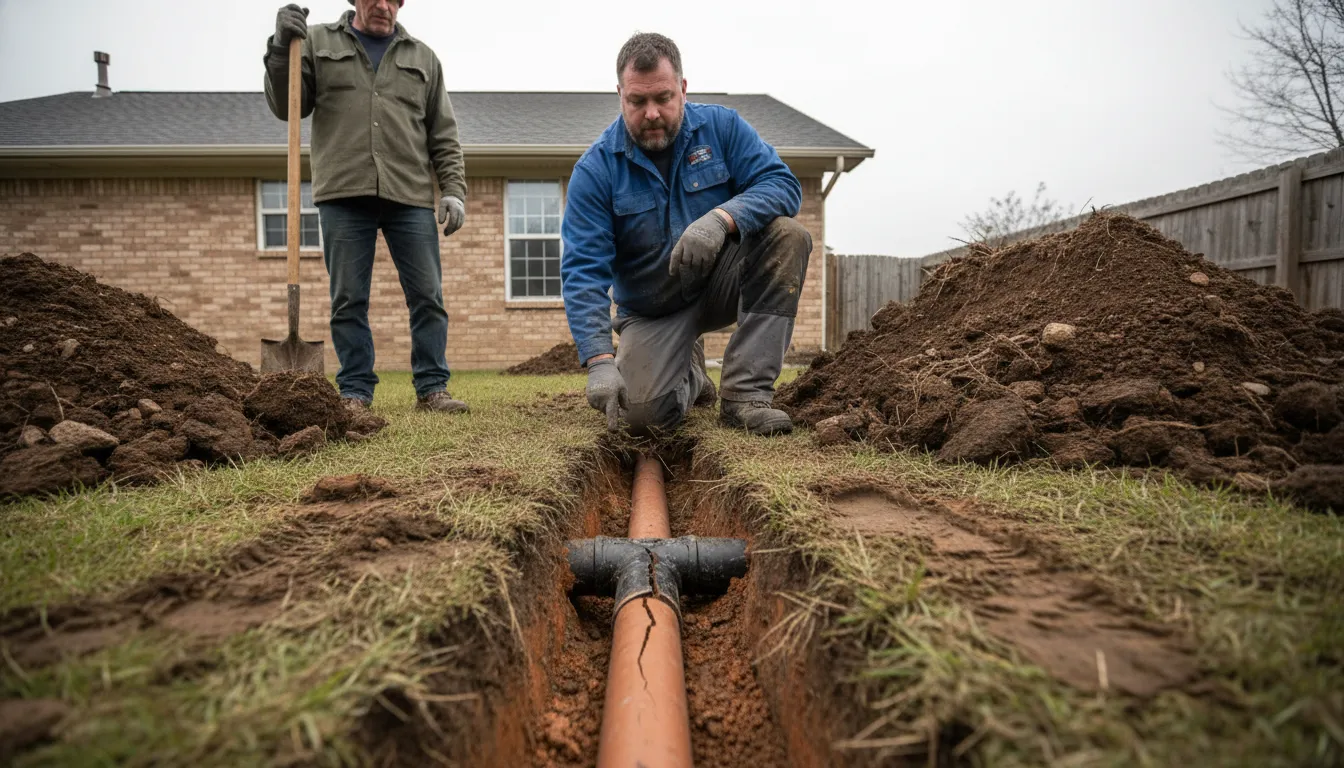
Find the Best Sewer Line Repair Companies for Your Business
No obligation • Fast responses • Nationwide coverage

Why you can trust Search a Plumber
Search a Plumber is a leading United States resource for finding and evaluating professional plumbing services. Our team researches licensing, experience, and customer feedback to create unbiased, fact-driven overviews. Companies cannot pay to change ratings or placement, ensuring homeowners get trustworthy information.
Search providers near you
Top Sewer Line Repair Companies in Folsom, California Ranked
Dealing with a sewer line problem can be a stressful and disruptive experience for any Folsom homeowner. Issues like persistent clogs, slow drains, or sewage backups are clear signs that your main sewer line, the critical pipe running from your home to the city connection, needs professional attention. This guide explains the common causes of sewer line failures in Folsom, details the modern repair methods available, and provides the information you need to make an informed decision when selecting a local specialist to restore your home's essential plumbing function.
Top Rank Plumbing
Sacramento, CA
Top Rank Plumbing is a family-operated plumbing company serving Sacramento, CA. They provide a wide range of residential and commercial plumbing services including drain cleaning, hydro jetting, sewer camera inspections, water heater repair and installation, leak detection, repiping, gas line installation, and sewer line repair. Their licensed and insured technicians use advanced tools to deliver solutions tailored to each property. The company offers 24/7 emergency plumbing services and same-day scheduling to address urgent plumbing needs promptly.
Paradise Plumbing Pros
4100 Wayside Ln # 100, Carmichael, CA 95608
Paradise Plumbing Pros is a plumbing service provider based in Sacramento, CA, offering a wide range of residential plumbing solutions. Their services include sewer camera inspections, water heater repair and installation, tankless water heater services, water softener installation, drain cleaning, hydro jetting, sewer line repair, leak detection, repiping, gas line installation, toilet repair, and garbage disposal repair. They are equipped to handle complex plumbing issues with expertise and advanced equipment, including hydro jetting to clear blockages and camera inspections to diagnose sewer line problems. Paradise Plumbing Pros provides 24/7 emergency plumbing services to ensure timely assistance whenever needed. The company is known for its skilled and certified plumbers who deliver comprehensive solutions with attention to detail and transparency.
Ducks Plumbing Heating Air
Sacramento, CA
Ducks Plumbing Heating Air provides plumbing, HVAC, and bathroom remodeling services in Sacramento, CA. They serve the greater Sacramento area including Elk Grove, Roseville, Citrus Heights, Davis, and Folsom. Their plumbing services cover sewer camera inspections, water heater repairs, water softener installations, drain cleaning, hydro jetting, sewer line repairs including trenchless methods, repiping, gas line installations, and repairs for toilets and garbage disposals. The company also offers heating and air conditioning installation and repair, as well as full bathroom remodels. Ducks Plumbing Heating Air emphasizes affordable services with attention to detail for homeowners throughout the region.
5 Star Plumbing
4616 Roseville Rd, North Highlands, CA 95660
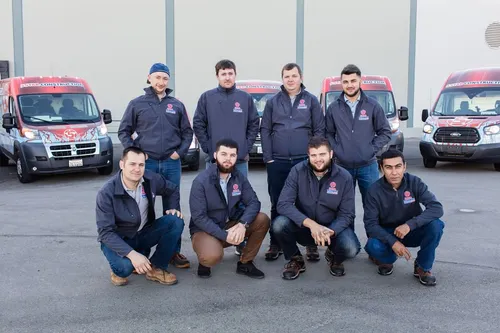
5 Star Plumbing is a licensed and insured plumbing company serving Sacramento, CA. They offer a wide range of residential plumbing services including sewer camera inspections, water heater repair and installation, drain cleaning, hydro jetting, sewer line repair, leak detection, repiping, gas line installation, toilet repair, and garbage disposal repair. With over 8 years of experience, their team is equipped to handle both routine maintenance and emergency plumbing needs. They provide upfront quotes, a lifetime guarantee on their work, and emphasize thorough inspections to prevent property damage. 5 Star Plumbing also offers 24/7 emergency services to address urgent plumbing issues promptly.

A1 Plumbing & Drains
6520 44th St # 310, Sacramento, CA 95823
A1 Plumbing & Drains is a licensed plumbing company serving Sacramento, CA, and nearby areas including Elk Grove and Yuba City. They provide a wide range of plumbing services such as sewer line repair, water heater installation and repair, drain cleaning, hydro jetting, leak detection, and trenchless sewer repair. The team uses modern diagnostic tools and offers emergency plumbing services available 24/7 to address urgent issues promptly. With decades of combined experience, A1 Plumbing & Drains focuses on tailored solutions that consider Sacramento's unique plumbing challenges, including hard water and aging infrastructure, to deliver long-lasting results. They also handle necessary permits and provide warranties on their work.
Understanding Your Folsom Home's Sewer System
The sewer lateral is your property's private responsibility, typically running from the foundation of your house, under your yard or driveway, and connecting to the public city main line near the street. In Folsom's established neighborhoods, these pipes are often decades old and can be made from materials like clay tile or cast iron, which are susceptible to specific types of deterioration over time. Recognizing the location and vulnerability of this hidden infrastructure is the first step in addressing problems effectively.
Common Culprits of Sewer Line Failure
Several factors can compromise your underground drain line. Identifying the likely cause helps technicians determine the best repair strategy.
- Tree Root Intrusion: This is a leading issue in Folsom. Roots from mature trees are drawn to the moisture and nutrients in sewer pipes, especially at the joints of older clay or cast iron lines. They can create dense blockages or exert enough pressure to crack and break the pipe itself.
- Aging and Corrosion: Older pipe materials have a finite lifespan. Cast iron can rust and corrode, thinning the pipe wall until it collapses. Clay tiles, while durable, can crack or have their joints compromised by shifting soil.
- Ground Shifting and Settlement: Soil movement, whether from seasonal changes, poor compaction, or seismic activity, can put stress on sewer pipes. This can lead to misaligned joints, bellies (sags that collect waste), or complete cracks 1.
- Grease and Debris Blockages: While often causing partial clogs, the gradual buildup of fats, oils, and non-flushable materials can eventually create a complete obstruction, putting pressure on the entire line.
Modern Solutions: Trenchless Sewer Repair
For many homeowners, the thought of a repair conjures images of a massive trench tearing through their landscaped yard. Today, trenchless technology offers a far less invasive alternative for fixing underground pipes.
How Trenchless Pipe Lining Works (Cured-in-Place Pipe)
This method, often called pipe lining, creates a "pipe within a pipe." A flexible, resin-saturated tube is inserted through an existing access point (like a cleanout) and guided to the damaged section. The tube is then inflated, pressing the resin against the interior walls of the old pipe. The resin is cured (often with hot water or UV light), forming a hard, seamless, and corrosion-resistant new pipe that can last 50 years or more 2.
Pros:
- Minimal Disruption: Requires only small access pits, leaving your lawn, driveway, and hardscape virtually untouched.
- Speed: Often completed in a day or two.
- Durability: The new liner is jointless and resistant to root intrusion and corrosion.
- Ideal for Difficult Areas: Excellent for repairs under structures, decks, or mature landscaping.
Cons:
- Not for All Damage: Cannot be used if the existing pipe has completely collapsed or is severely misaligned.
- Slightly Reduced Diameter: The new liner marginally reduces the internal pipe diameter, though modern liners are very thin.
How Pipe Bursting Works
Pipe bursting is another trenchless technique used when the existing pipe is too damaged for lining or needs to be upsized. A bursting head is pulled through the old pipe, simultaneously fracturing it outward and pulling a new, high-density polyethylene (HDPE) pipe into place behind it 3 4.
Pros:
- Complete Replacement: Installs a brand-new, durable pipe.
- Can Increase Size: Allows for upgrading to a larger diameter pipe if needed.
- Still Less Invasive: While more disruptive than lining, it still avoids a full traditional trench.
Cons:
- Requires Entry/Exit Pits: Needs slightly larger pits at each end of the run.
- May Disturb Utilities: Careful locating is essential as the bursting process can shift surrounding soil.
Find the perfect sewer line repair companies for your needs
Get personalized recommendations and expert advice
Traditional Excavation: The Conventional Approach
The traditional method of sewer line replacement involves using a backhoe or other equipment to dig an open trench along the entire length of the damaged pipe. The old pipe is removed, and a new one is laid in the trench before it is backfilled.
Pros:
- Direct Access: Allows for a full visual inspection of the pipe and surrounding soil.
- Solution for Any Damage: Effective for completely collapsed pipes or situations where trenchless is not feasible.
- Potentially Lower Upfront Material Cost: The pipe materials themselves can be less expensive.
Cons:
- Major Property Disruption: Destroys lawns, gardens, sidewalks, and driveways, requiring costly and time-consuming restoration.
- Higher Labor and Restoration Costs: The expense of digging, shoring, and later repairing the landscape often makes this the more expensive option overall.
- Time-Consuming: The process of digging, repairing, and restoring can take significantly longer 5 6.
Cost Considerations for Folsom Homeowners
Sewer line repair costs vary widely based on the method, extent of damage, pipe location, and accessibility. Here's a general breakdown based on regional and national data:
- Diagnostic Camera Inspection: $100 - $500. This critical first step saves money in the long run by accurately identifying the problem's location and nature 7.
- Minor Repair (Spot Repair): $100 - $500. For addressing a single, accessible leak or small section of damage.
- Trenchless Sewer Repair (Lining or Bursting): $70 - $250 per linear foot. For a typical 20-foot run, costs might range from $1,400 to $5,000. This method factors in the specialized technology and materials but avoids restoration costs 8 9.
- Traditional Excavation Repair: $50 - $450+ per linear foot. While the per-foot cost for the pipe work can be lower, the total project cost often climbs into the $5,000 to $15,000+ range when adding in the labor for excavation and the significant expense of restoring your property 10 11 12.
Key Takeaway: Always get itemized quotes that include all costs. A lower per-foot quote for excavation can be misleading if it doesn't include the thousands of dollars needed to re-sod your lawn, re-pour concrete, or rebuild a patio.
Making the Right Choice for Your Home
Choosing between trenchless and traditional sewer line replacement depends on your specific situation. Start with a professional video camera inspection from a reputable Folsom-area plumber 13. This will reveal the exact cause, location, and condition of the problem.
Consult with local experts who offer both solutions. They can provide a comparative quote and recommend the most effective, long-term solution for your property. For many in Folsom, where preserving mature landscaping is a priority, trenchless methods are often the preferred choice due to their minimal impact and long-lasting results 14 15.
Frequently asked questions
Sources
Footnotes
-
Sewer Line Repair Services | NEXGEN HVAC & Plumbing - https://nexgenairandplumbing.com/plumbing/sewer-line-repair/ ↩
-
Sewer Pipe Lining vs Residential Excavation - 128 Plumbing - https://www.128plumbing.com/sewer-pipe-lining-vs-residential-excavation/ ↩
-
Trenchless Sewer Line Repair in Sacramento | Bonney - https://www.bonney.com/drain-sewer/trenchless-sewer-replacement/ ↩
-
Trenchless Sewer Repair vs. Traditional Excavation - TDT Plumbing - https://tdtplumbing.com/trenchless-sewer-repair/difference-to-traditional-repair/ ↩
-
Trenchless Sewer Repair vs. Traditional Excavation - AQUALIS - https://aqualisco.com/trenchless-sewer-repair-vs-traditional/ ↩
-
Trenchless Sewer Line Repair vs Traditional: Which Is Better - https://cactusplumbingandair.com/trenchless-sewer-line-repair-vs-traditional/ ↩
-
Sewer Repair Options: Trenchless vs. Traditional Methods | TYCO - https://tycoplumbingco.com/sewer-repair-options-trenchless-vs-traditional-methods/ ↩
-
Is Trenchless Sewer Line Repair Cheaper? - AP Plumbing - https://applumbing.com/blog/is-trenchless-sewer-line-repair-cheaper/ ↩
-
Decoding Trenchless Sewer Repair Costs - Pipeliner Pros - https://pipelinerpros.com/trenchless-sewer-repair-cost/ ↩
-
Cost To Repair Sewer Line: 2023 Options & Affordable Services - https://www.superbrothers.com/cost-to-repair-sewer-line-2023-options-affordable-services/ ↩
-
Cost Comparison: Trenchless vs. Traditional Sewer Line Repair - https://www.advancedtrenchlesssolutions.com/blog/cost-comparison-trenchless-vs-traditional-sewer-line-repair ↩
-
Average Cost Of Sewer Line Repair & Replacement 2023 - https://www.superbrothers.com/average-cost-of-sewer-line-repair-replacement-2023/ ↩
-
Trenchless Sewer Repair - Sacramento Plumbing Solutions - https://www.sacramentoplumbingsolutions.com/trenchless-pipe-repair/ ↩
-
Trenchless sewer repair in Folsom, CA - All Phase Plumbing - https://www.allphaseplumbinginc.com/cities/trenchless-sewer-repair-folsom ↩
-
Cost of Repairing Sewer Lines by Tradespeople - https://www.mybuilder.com/plumbing/price-guides/cost-of-repairing-sewer-lines ↩