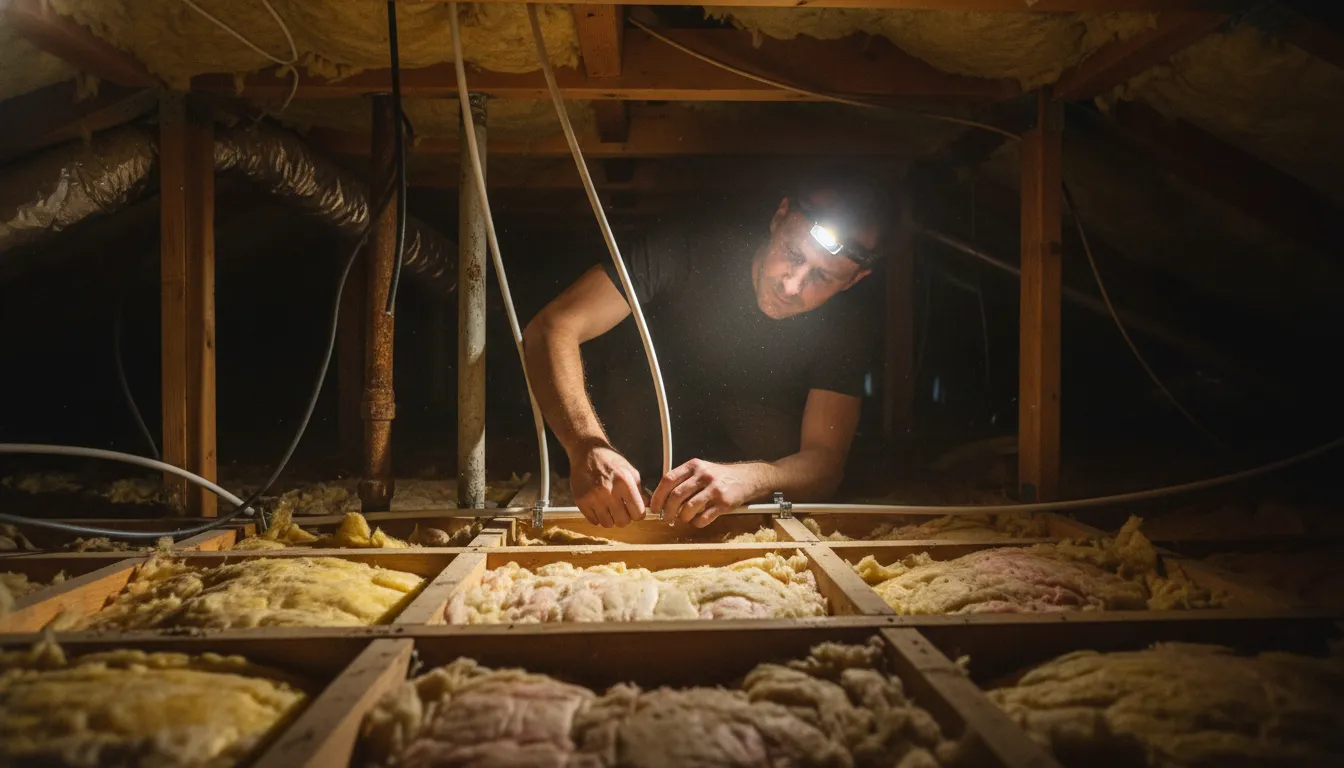
Find the Best Repiping Contractors for Your Business
No obligation • Fast responses • Nationwide coverage

Why you can trust Search a Plumber
Search a Plumber is a leading United States resource for finding and evaluating professional plumbing services. Our team researches licensing, experience, and customer feedback to create unbiased, fact-driven overviews. Companies cannot pay to change ratings or placement, ensuring homeowners get trustworthy information.
Search providers near you
Top Repiping Contractors in Montebello, California Ranked
A whole-house repiping project is a significant but often necessary investment to ensure your home's plumbing system is safe, reliable, and efficient. This process involves replacing all the old water supply pipes running through your walls and ceilings with new, modern materials. For Montebello homeowners, this service is crucial for addressing persistent leaks, low water pressure, or discolored water caused by aging galvanized steel or polybutylene pipes. The following guide explains what to expect from a repipe, helping you understand the process, materials, and considerations for finding a qualified professional to handle this major home improvement.

All City Plumbing, Air & Electrical
5612 E La Palma Ave, Anaheim, CA 92807
All City Plumbing, Air & Electrical is a full-service plumbing, HVAC, and electrical provider located in Anaheim, CA. They offer a wide range of services including water heater repair and installation, drain cleaning, hydro jetting, sewer line repair, leak detection, repiping, and toilet repair. Their team is licensed, bonded, and insured, with technicians who are ACE Certified and available 24/7 for emergency plumbing and HVAC needs. With over 13 years of experience serving Anaheim and surrounding areas, they use advanced technology to ensure efficient and reliable service.
Dymek's Freedom Plumbing, Inc
2921 E Miraloma Ave #17, Anaheim, CA 92806
Dymek's Freedom Plumbing, Inc is a plumbing service provider based in Anaheim, CA, offering a wide range of residential and commercial plumbing solutions. Their services include sewer camera inspections, water heater installation and repair, drain cleaning, hydro jetting, trenchless sewer repair, leak detection, repiping, and garbage disposal repairs. They utilize advanced technology such as electronic slab leak detection and sewer video inspection to diagnose and address plumbing issues efficiently. With over 25 years of experience, the company emphasizes old-fashioned values combined with modern technology and is available 24/7 for emergency plumbing needs.

Merry Plumbing
1465 San Marino Ave, San Marino, CA 91108
Merry Plumbing is a well-established plumbing company serving Los Angeles, CA, and nearby areas including Pasadena, San Marino, and Glendora. With 79 years in business since 1946, they provide a wide range of plumbing services such as sewer camera inspection, water heater repair and installation, drain cleaning, hydro jetting, sewer line repair, leak detection, and repiping. Their team is equipped to handle both residential and commercial plumbing needs with modern tools and on-site parts availability. Merry Plumbing emphasizes clear, upfront estimates and has built a reputation for thorough and dependable service over many decades.
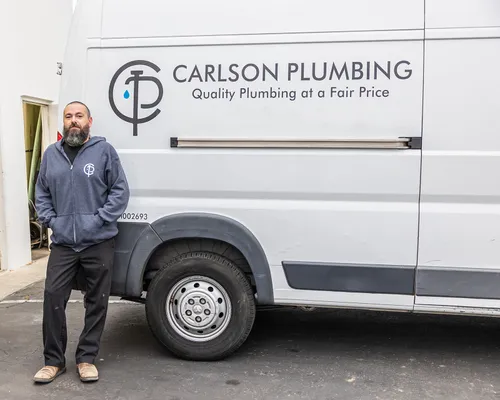
Carlson Plumbing Pros
17150 Newhope St Suite 301-302, Fountain Valley, CA 92708
Carlson Plumbing Pros is a licensed plumbing company serving Santa Ana, CA, and the broader Orange County area. They offer a wide range of plumbing services including water heater repair, water softener installation, drain cleaning, sewer line repair, leak detection, repiping, and gas line installation. With over 20 years of experience, they provide skilled plumbing solutions and are equipped to handle emergencies with 24/7 availability.

Premier 1 Plumbing, Inc.
120 E Santa Anita Ave, Burbank, CA 91502
Premier 1 Plumbing, Inc. is a family-owned plumbing company serving Los Angeles, CA. They provide a wide range of plumbing services for homes and businesses, including repairs and complete repiping jobs. Their licensed plumbers have repaired over 1,300 pipes and 800 faucets, demonstrating their experience and capability. The company emphasizes professionalism and expert workmanship to restore plumbing systems efficiently. Premier 1 Plumbing has built its reputation over several years and offers a 100% customer satisfaction guarantee.
Understanding the Need for a Whole-House Repipe
Over time, the water supply lines in your home can deteriorate. In many Montebello homes built several decades ago, galvanized steel pipes were the standard. These pipes are prone to internal rust and corrosion, which gradually restricts water flow and can lead to low pressure at your faucets and showers. You might also notice reddish or brownish water, a telltale sign of rust flaking off the pipe walls. Another problematic material found in some homes is polybutylene, a plastic piping used from the late 1970s to mid-1990s that can become brittle and fail unexpectedly.
A complete pipe replacement, or re-piping, is the definitive solution. Unlike spot repairs that address a single leak, a whole-home repiping project eliminates the entire aging network, providing a permanent fix that can last for decades and potentially increase your property's value. It resolves water quality issues, restores proper pressure, and gives you peace of mind against catastrophic leaks inside your walls.
The Step-by-Step Repiping Process
A professional plumbing service will manage a repiping project in a logical, phased manner to minimize disruption to your household. Here's a typical sequence of events:
1. Initial Assessment and Planning The process begins with a thorough inspection. A licensed plumber will evaluate your current system, identify the existing pipe materials, and locate the main shutoff valve. They will discuss your symptoms-like recurring leaks or poor pressure-and map out a strategy for the new pipe layout. This planning phase is critical for determining the scope of work, the best materials for your home, and creating a timeline that phases the work to keep water available in parts of the house as long as possible 1.
2. Preparation and Access Before work begins, the team will prepare your home. This involves moving furniture, laying down protective floor coverings, and setting up dust control barriers. To access the old pipes, strategic access holes will need to be cut into drywall or plaster in walls and sometimes ceilings. The goal is to be as minimally invasive as possible while ensuring the plumbers can reach all necessary pipe runs. Your home's water supply will be shut off at the main valve during active installation phases.
3. Removal and Installation of New Piping The old pipes are carefully disconnected and removed. The plumbers then install the new piping system according to the planned layout. This stage is methodical, as each new section is measured, cut, and secured. Connections are made at each fixture-sinks, toilets, showers, and appliances-ensuring a watertight seal. The installation team works systematically, often completing one section or floor at a time.
4. Pressure Testing and Inspection Once the new piping is fully installed, it is not yet connected to your fixtures. The system undergoes a rigorous pressure test. The pipes are sealed and filled with air or water at high pressure to check for any leaks. This step is essential for ensuring the integrity of all connections and joints. In many cases, the work must also pass an inspection by the local Montebello building department to verify it meets all current plumbing codes 2 3.
5. System Activation and Restoration After passing all tests, the new system is connected to your main water line and each fixture is activated. The plumbers will check every faucet, toilet, and valve for proper operation and flow. Finally, the restoration phase begins. This includes patching the access holes in your drywall, cleaning up the work area thoroughly, and removing all debris from your property. A quality crew will leave your home as tidy as they found it, with only the fresh, reliable water flowing through new pipes as evidence of their work 4.
Find the perfect repiping contractors for your needs
Get personalized recommendations and expert advice
Choosing the Right Pipe Material
The two most common materials for modern whole-house repiping are PEX and copper. Each has distinct advantages that your plumber can help you weigh based on your budget and home's needs.
PEX (Cross-Linked Polyethylene) PEX has become the go-to choice for many repiping projects. This flexible, plastic tubing is highly resistant to scale and chlorine corrosion, which is important with Southern California water. Its flexibility allows it to be snaked through walls with fewer fittings and connections, which can reduce the potential for future leaks and lower labor costs. Installation is faster as it often requires no soldering, using crimp or clamp rings instead. PEX is also less expensive than copper on a material-cost basis, making it a cost-effective and durable option for general water supply.
Copper Copper piping is the traditional, time-tested material known for its exceptional durability and long lifespan, often exceeding 50 years. It can withstand high temperatures and has a natural resistance to bacteria 5. For some homeowners, the longevity and perceived value of copper are worth the higher upfront cost. However, copper installation is more labor-intensive, requiring soldering at each joint, and the material itself is more expensive. It is also a rigid material, which can make installation in tight spaces more challenging 6 7.
What to Expect: Timeline and Living Arrangements
A common question is how long you'll be without water. A whole-house repipe is not an overnight job. For an average single-family home in Montebello, the process can take anywhere from a few days to a couple of weeks 8 9 10. The timeline depends heavily on the size of your home, the complexity of the pipe layout, the material chosen, and the crew's size.
Professional plumbers typically use a phased approach. They will often section off the house, completing one bathroom or one floor at a time. This allows them to keep the water on in other parts of your home for as long as possible. There will, however, be periods when the main water is completely shut off. Your plumbing contractor should provide a clear schedule so you can plan accordingly. For longer projects, some families choose to stay elsewhere, but many are able to remain at home with some advance planning for water usage.
Understanding the Investment: Cost Factors in Montebello
The cost to repipe a house in California is generally higher than the national average due to labor rates and material costs. For Montebello homeowners, you can expect a wide range, typically from $5,000 for a very small home with good access to well over $30,000 for a large or complex property 11 12. It's important to get detailed, written estimates from licensed professionals.
Several key factors influence the final price:
- Home Size and Number of Fixtures: A larger square footage and more bathrooms, kitchens, and wet bars mean more linear feet of piping and more labor.
- Pipe Material: As discussed, copper systems have a higher material cost than PEX.
- Wall and Ceiling Access: The ease of accessing old pipes greatly affects labor time. Homes with plaster walls, finished basements, or multiple stories may incur higher costs.
- Included Restoration: Some quotes include basic drywall patching and repair, while others leave that to a separate contractor. Be sure to clarify what is included.
- Permit and Inspection Fees: These are usually required and will be part of the overall project cost.
A reputable plumber will provide a transparent breakdown of these costs, helping you understand exactly what you're paying for.
Frequently asked questions
Sources
Footnotes
-
Whole Home Repiping | San Diego, CA - Mauzy - https://mauzy.com/services/plumbing/whole-home-repiping/ ↩
-
Whole-House Repiping: Step-by-Step Guide - https://www.veteranplumbing.us/whole-house-repiping-step-by-step-guide/ ↩
-
What Is Involved in Repiping a House? - Apollo HVAC & Plumbing - https://gotoapollo.com/2024/03/06/what-is-involved-in-repiping-a-house/ ↩
-
How Much to Repipe a House? - Reliant Plumbing - https://reliantplumbing.com/plumbing/pipe-repairs/whole-house-repipe-cost/ ↩
-
How Much Does It Cost to Repipe a House in San Diego County - https://www.clearwaterplumbinganddrains.com/plumbing-blog/cost-to-repipe-a-house-in-san-diego-county ↩
-
Whole-Home Repiping: The Permanent Fix for Leaks - Paws Plumbing - https://www.pawsplumbing.com/blog/whole-home-repiping/ ↩
-
How Much Does it Cost to Repipe a House in California? - https://wisemonkeyrepipe.com/how-much-does-it-cost-to-repipe-a-house-in-california/ ↩
-
Whole House Repiping Services Santa Clara, CA - https://www.ejplumbing.com/plumbing-services/piping-repiping/ ↩
-
How Much to Repipe a House: A Comprehensive Cost Guide - https://www.benjaminfranklinplumbing.com/league-city/blog/2024/december/how-much-to-repipe-a-house-a-comprehensive-cost-guide/ ↩
-
Learn How Long It Takes to Repipe a Home | Cozy Services - https://www.cozyhvac.net/learn-how-long-it-takes-to-repipe-a-home/ ↩
-
How Much Does It Cost to Repipe a House in California - https://cycloneplumbingusa.com/how-much-does-it-cost-to-repipe-a-house-in-california/ ↩
-
How Much Does It Cost to Repipe a House in the Bay Area? - https://total-uc.com/how-much-does-it-cost-to-repipe-a-house/ ↩