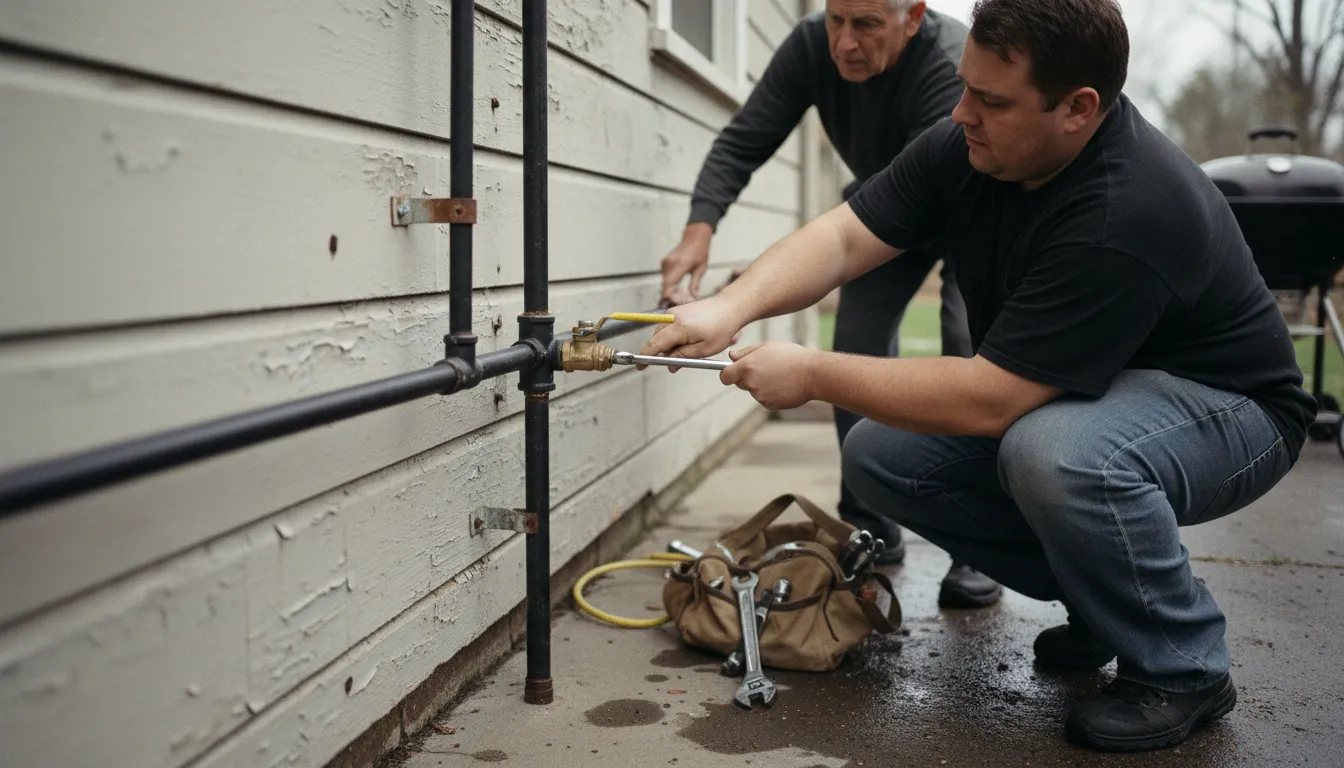
Find the Best Gas Line Plumbing Companies for Your Business
No obligation • Fast responses • Nationwide coverage

Why you can trust Search a Plumber
Search a Plumber is a leading United States resource for finding and evaluating professional plumbing services. Our team researches licensing, experience, and customer feedback to create unbiased, fact-driven overviews. Companies cannot pay to change ratings or placement, ensuring homeowners get trustworthy information.
Search providers near you
Top Gas Line Plumbing Companies in Reading, Pennsylvania Ranked
Installing or repairing a gas line is a critical project that directly impacts the safety and functionality of your home or business. Proper gas piping work ensures reliable fuel for appliances like furnaces, water heaters, stoves, and fireplaces. In Reading, this process is governed by strict local codes and safety regulations, making it essential to work with qualified professionals. This guide will help you understand the key steps, requirements, and considerations for gas line projects in the Reading area, so you can make informed decisions when connecting with local specialists.
Understanding Local Requirements in Reading
Before any trench is dug or pipe is fitted, the first step is navigating local regulations. In Reading, PA, and surrounding Berks County municipalities, a building permit is mandatory for new gas line installations or significant alterations. Your licensed contractor will typically handle this process, submitting plans that comply with the City of Reading's building codes or your local township's requirements. The permit ensures the work meets safety standards, and it triggers the necessary inspections-a crucial step, often required both before the trench is backfilled and after the line is pressurized 1. Skipping this step can result in fines, unsafe conditions, and problems when selling your property.
Why Permits and Inspections Are Non-Negotiable
Gas line work involves high-pressure, combustible fuel. The inspection process is your independent safety net, verifying that materials, installation depth, joint integrity, and pressure ratings are correct. It protects you, your family, and your neighbors. Always confirm that any professional you hire is familiar with the specific requirements of the Reading codes department and will pull the proper permits.
The Step-by-Step Process for Gas Piping Installation
A professional gas line installation follows a meticulous sequence to ensure safety and longevity.
1. Planning and Assessment A qualified technician will first assess your needs, calculating the required gas load (in BTUs) for all appliances to determine the correct pipe diameter. They will plan the route from the meter or main line to each appliance, aiming for the most direct path while avoiding major obstacles and other utilities.
2. Calling 811 and Excavation This is a critical safety and legal step. Pennsylvania law requires you to Call 811 Before You Dig. This free service notifies all local utility companies, who will come mark the locations of their underground lines (electric, cable, water, sewer) to prevent dangerous and costly strikes 2 3. Once the area is clear, excavation begins. Trench depth is code-specific; for typical residential service lines on private property, trenches are often 12 to 18 inches deep. Under driveways or areas with vehicle traffic, the required depth can increase to 24 inches or more 4 5.
3. Pipe Installation and Material Selection The correct material must be used for each section of the run. For underground lines outside the home, yellow polyethylene (PE) pipe is commonly used for its durability and corrosion resistance. Where the pipe enters the building and runs inside, it transitions to black iron or corrugated stainless steel tubing (CSST), which is rated for indoor use. Fittings, risers, and shut-off valves are installed according to manufacturer and code specifications.
4. Pressure Testing and Inspection Before the trench is backfilled, the entire new line is pressurized with air (typically to at least 10 psi) and monitored for a minimum of 15 minutes. This test confirms there are no leaks at joints or fittings 6. This is often the stage where a municipal inspector will check the work. Only after passing inspection can the trench be carefully backfilled.
5. Final Connection and Activation Finally, the licensed professional will connect the new line to the meter and appliances, conduct a final leak check with a gas detector, and ensure all appliances are operating correctly and safely.
Find the perfect gas line plumbing companies for your needs
Get personalized recommendations and expert advice
Safety: The Paramount Concern
Gas line work is not a DIY project. Federal pipeline safety regulations (49 CFR Part 192) mandate that all work on fuel gas piping be performed by "qualified individuals" 7. Here's why expertise is non-negotiable:
- Leak Prevention: Improperly threaded joints, incorrect sealants, or damaged pipe can lead to slow leaks or catastrophic failure.
- Combustion Air: Appliances need proper ventilation. A professional ensures gas lines are sized correctly and that appliances are vented properly to prevent carbon monoxide buildup.
- Code Compliance: Professionals understand the clearances required from electrical lines, other utilities, and structural elements.
- System Integrity: They know how to properly support piping, protect it from corrosion, and install sediment traps (drip legs) to catch debris before it enters appliance valves.
The risks of improper installation-fire, explosion, poisoning-far outweigh any potential cost savings from unqualified work.
Cost Factors for Gas Line Projects in Reading
Costs for gas line installation and repair in Reading vary widely based on the project's scope and complexity. It's best to view any figures as a general range and obtain detailed, written quotes from licensed local plumbers.
- Minor Repairs: Fixing a small leak at a valve or fitting might range from $250 to $600+.
- Partial Line Replacement: Replacing a section of corroded or damaged pipe, especially if it involves moderate excavation, can cost between $1,000 and $3,000+.
- New Line Installation: For running a new line from the meter to an appliance, costs are often calculated per linear foot. You can expect a range of $15 to $50+ per foot 8 9. The final price depends on:
- Length and Diameter: Longer runs and larger-diameter pipe for higher BTU loads cost more.
- Excavation Difficulty: Digging through rocky soil, under concrete driveways, patios, or navigating dense tree roots significantly increases labor and time.
- Materials: The type and grade of pipe and fittings used.
- Permit Fees: Local municipality fees for permits and inspections.
- Labor Rates: The standard rates for skilled, licensed gas fitters in the Berks County area.
For commercial projects or extensive whole-house repiping, costs will be higher and require a detailed assessment by a specialist in commercial gas line repair and installation 10.
Choosing the Right Professional in Reading
Your choice of contractor is your primary safety investment. Look for a licensed plumber or HVAC contractor who specifically advertises expertise in gas line installation and repair. They should be fully insured, willing to pull all required Reading or Berks County permits, and provide a clear, detailed written estimate that breaks down labor, materials, and permit fees. Don't hesitate to ask for references from similar projects and verify their license status. A reputable professional, like those serving the Reading community, will prioritize safety, communication, and code compliance above all else 11 12.
Frequently asked questions
Sources
Footnotes
-
Natural Gas Line - Centre Region Council of Governments - https://www.crcog.net/index.asp?SEC=73F15F73-25C5-4D61-B004-BD8F72133410 ↩
-
Cover and Clearance Requirements for Transmission Lines ... - PGE - https://www.pge.com/assets/pge/docs/account/service-requests/a-04.pdf ↩
-
Gas Piping 101: What You Need to Know (and Why It's Not a DIY Job) - https://mcmackinmechanical.com/2025/05/20/gas-piping-101-what-you-need-to-know-and-why-its-not-a-diy-job/ ↩
-
How Deep Are Gas Lines Buried? Dig Into the Requirements - Angie's List - https://www.angi.com/articles/how-deep-are-gas-lines-buried.htm ↩
-
Underground Gas Line - GasGuys.ca Inc. - https://www.gasguys.ca/underground-gas-lines/ ↩
-
Frequently Asked Questions - CivicPlus.CMS.FAQ - https://www.rpvca.gov/faq.aspx?TID=40 ↩
-
Installation Guide - Peoples Gas - https://www.peoples-gas.com/get-gas/files/Peoples_Service_Line_Installation_Guide.pdf ↩
-
How Much Does Gas Line Installation Cost? (2026) - HomeGuide - https://homeguide.com/costs/gas-line-installation-cost ↩
-
How to Install Natural Gas Lines Safely and Correctly - https://bluegasexpress.com/how-to-install-natural-gas-lines/ ↩
-
Commercial Gas Line Repair Services in Cumberland County, PA - https://yorkgaslineservice.com/commercial-gas-line-repair-cumberland-county-pa ↩
-
Essential Guide to Gas Line Installation: Tips and Safety ... - https://gaeberly.com/gas-line-installation/ ↩
-
Best Gas Line Installation In Reading, PA - https://makeitessig.com/plumbing-services/gas-line-installation/ ↩