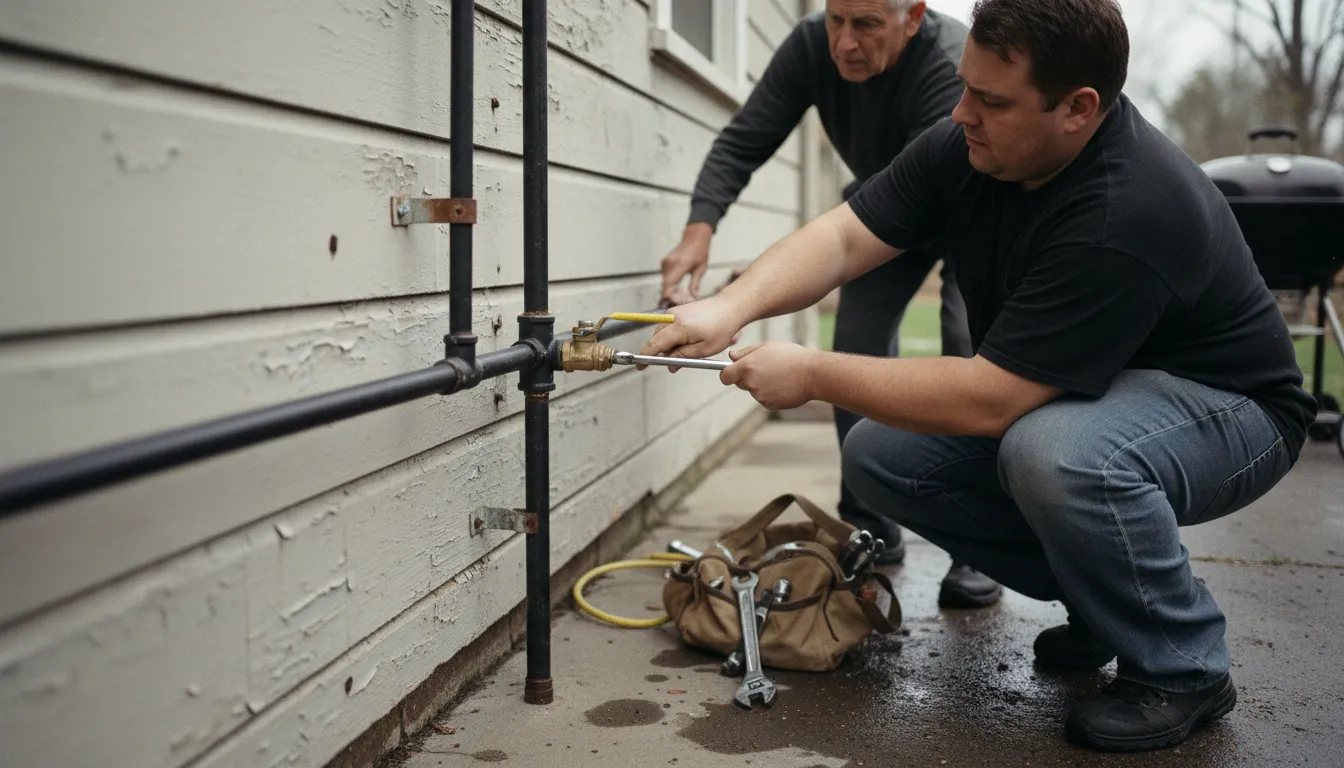
Find the Best Gas Line Plumbing Companies for Your Business
No obligation • Fast responses • Nationwide coverage

Why you can trust Search a Plumber
Search a Plumber is a leading United States resource for finding and evaluating professional plumbing services. Our team researches licensing, experience, and customer feedback to create unbiased, fact-driven overviews. Companies cannot pay to change ratings or placement, ensuring homeowners get trustworthy information.
Search providers near you
Top Gas Line Plumbing Companies in Union, New Jersey Ranked
Installing or repairing a gas line is a critical home improvement project that directly impacts the safety and functionality of your property. Whether you're adding a gas fireplace, upgrading to a gas stove, or addressing a leak, proper gas piping work requires strict adherence to local codes and expert craftsmanship. This guide explains the essential steps, local requirements, and key considerations for gas line projects in Union, helping you make informed decisions when connecting with qualified local professionals.
Above and Beyond Plumbing and Heating LLC
5 Van Winkle Rd, Pine Brook, NJ 07058
Above and Beyond Plumbing and Heating LLC is a plumbing and heating service provider based in New York, NY. They offer a wide range of services including water heater repair and installation, water softener installation, drain cleaning, sewer line repair, leak detection, repiping, gas line installation, toilet repair, and garbage disposal repair. The company is known for its 24-hour emergency plumbing services, ensuring help is available whenever needed. They also specialize in boiler installation and repair, and install water filtration and softening systems to improve water quality. With over a decade of experience, Above and Beyond Plumbing and Heating LLC serves New York and surrounding areas, providing tailored solutions to meet specific plumbing and heating needs.
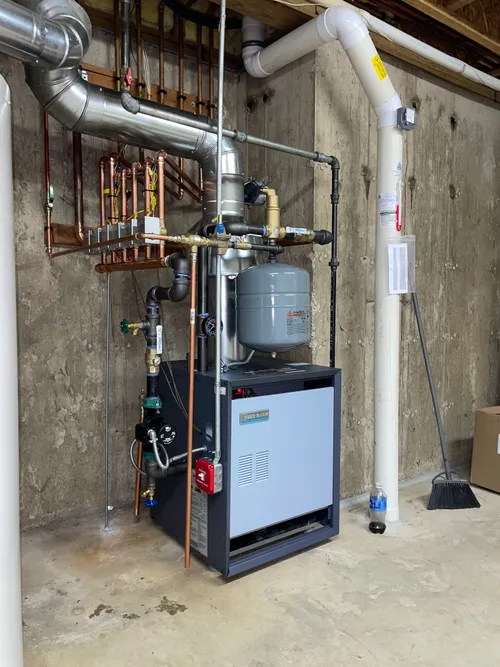
Angler Plumbing, Heating & Drain Cleaning LLC
598 Hickory Ave, Saddle Brook, NJ 07663
Angler Plumbing, Heating & Drain Cleaning LLC is a family- and veteran-owned business serving New York, NY, and Bergen County, NJ. They provide a wide range of plumbing, heating, and drain services including water heater installation and repair, sump pump maintenance, gas line installation, and drain cleaning. Their licensed master plumber offers a one-year warranty on parts, labor, and materials, and the company is known for its safety-first approach and fully stocked trucks. With over 22 years of experience, Angler Plumbing also offers emergency services with weekend and evening appointments available upon request.
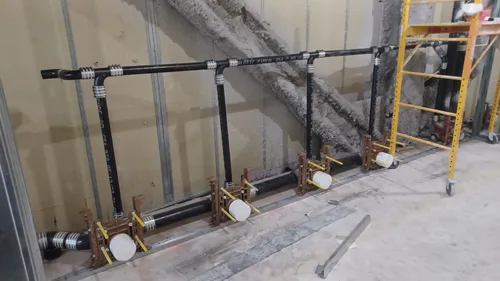
Affordable Plumbing and Leak Repair
New York, NY
Affordable Plumbing and Leak Repair provides a wide range of plumbing services in New York, NY, including water heater repair and installation, drain cleaning, leak detection, repiping, and gas line installation. They serve Staten Island and surrounding areas such as Queens, The Bronx, Brooklyn, and Jersey City. The company offers emergency plumbing services to address urgent issues like burst pipes and clogged drains. Their team is equipped to handle various plumbing needs, including dryer and washer hookups, with a focus on preventing future problems through quality repairs and installations.
A&E NYC Plumbing
40 Fulton St, New York, NY 10038
A&E NYC Plumbing offers a wide range of plumbing services in New York, NY, including water heater repair and installation, drain cleaning, sewer line repair, leak detection, and gas line installation. They also handle faucet and toilet repairs, garbage disposal maintenance, and repiping projects. The company is licensed and insured, providing both residential and commercial plumbing solutions with a focus on safety and technical expertise. Their team is experienced in managing complex plumbing systems and offers free onsite estimates for more involved jobs.
Poseidon Plumbing
795 Susquehanna Ave, Franklin Lakes, NJ 07417
Poseidon Plumbing is a full-service plumbing company based in New Jersey with branches in Franklin Lakes and Mountain Lakes. They offer a wide range of plumbing services including water heater repair and installation, water softener installation, drain cleaning, hydro jetting, repiping, gas line installation, and toilet repair. Serving Northern New Jersey, including Essex, Morris, and Bergen counties, they provide solutions for both residential repairs and new construction projects. Their capabilities include advanced hydro jetting for effective drain cleaning. Poseidon Plumbing is available 24/7 for emergency plumbing services.
Understanding Gas Piping Projects
Gas line work involves more than just running a pipe from point A to point B. It's a systematic process that integrates planning, material selection, precise installation, and rigorous safety checks. In Union, this work is governed by New Jersey state codes and specific township regulations to ensure every installation is leak-free and secure for decades. Projects can range from a simple extension for a new kitchen appliance to a complex system for a whole-home generator or pool heater.
The core goal is to safely deliver natural gas or propane from the main supply or tank to your appliances, such as furnaces, water heaters, dryers, and ranges. A properly installed system is efficient and reliable, while any flaw can pose serious risks. That's why partnering with a licensed professional who is familiar with Union's permit process and inspection protocols is non-negotiable.
The Step-by-Step Installation Process
A professional gas line installation follows a defined sequence to ensure safety and compliance.
1. Planning and Site Evaluation
Every successful project begins with a detailed plan. A technician will assess the site to determine the most efficient and code-compliant route from the gas meter or source to the new appliance. This involves checking for obstacles, determining trench depth requirements, and identifying the locations of other underground utilities. Proper planning minimizes excavation work and helps anticipate challenges.
2. Securing Permits and Calling 811
Before any digging begins, two crucial steps must be completed. First, your contractor will pull the required permits from the Township of Union. Any new gas line, extension, or alteration typically requires a permit 1. Second, New Jersey law requires a call to 811 at least three business days before excavation2. This free service has utility companies mark the locations of public underground lines (like water, electric, and cable) with flags and paint, preventing dangerous and costly strikes.
3. Excavation and Trenching
Once utilities are marked, excavation can proceed. Trenches are dug along the planned route to the required depth. It's the homeowner's responsibility to ensure the work area is clear and, if necessary, to have water pumped out of the trench. For repairs to existing lines, this step may involve minimal digging to access the specific section of pipe.
4. Piping Installation and Connection
The approved gas pipe is laid in the trench. In modern installations, Corrugated Stainless Steel Tubing (CSST), such as WARDFLEX, is a popular choice due to its flexibility and ease of installation around obstacles. Traditional black iron pipe is also used and is known for its durability. The new piping is carefully connected to the existing gas supply line, with precise alignment and sealing at every joint.
5. Pressure Testing and Inspection
This is the most critical safety step. The entire new section of pipe is pressurized with air or an inert gas and monitored with a gauge for a set period. Any drop in pressure indicates a leak that must be found and sealed. Only after a successful pressure test will the system be ready for the township's mandatory final inspection. A township inspector must approve the work before gas is allowed to flow to the new appliance.
6. Final Hookup and Startup
After passing inspection, the technician can make the final connection to the appliance, purge the line of air, and start up the system, verifying that everything is operating correctly and safely3.
Find the perfect gas line plumbing companies for your needs
Get personalized recommendations and expert advice
Local Codes and Permit Requirements in Union
Compliance with local regulations is not a suggestion-it's a legal requirement for your safety. The Township of Union enforces the New Jersey Uniform Construction Code, which includes specific provisions for gas piping.
- Permits Are Mandatory: A plumbing permit is required for installing, altering, or extending any gas piping system4 5. Your contractor typically handles this, but it's wise to confirm. The township's fee structure may include a rate, such as $35 per gas fixture being connected6 4.
- Inspections Are Required: The work will require a final inspection by a township official. This inspection verifies that the installation meets all code requirements for materials, support, bonding (for CSST), and safety. You cannot use the new gas appliance until it passes this inspection.
- Material Standards: All piping materials must be approved for gas service. CSST must be properly bonded to prevent damage from electrical surges, and all exposed piping must be protected from physical damage.
Key Safety Considerations for Homeowners
Safety is paramount in any gas project. Here are the non-negotiable principles that guide professional work in Union:
- Never Skip the 811 Call: Hitting a buried electric or gas line can cause injury, service outages, and massive repair bills. The 811 call is free and legally required.
- Insist on Pressure Testing: A visual inspection is not enough. A proper pressure test is the only way to conclusively prove a system is leak-free before it is energized 7.
- Protect Gas Meters: If a gas meter or regulator is in a location vulnerable to vehicle impact (like near a driveway), codes may require protective bollards to be installed8.
- Use Only Licensed Professionals: Gas line work is not a DIY project. Only licensed plumbers or gas fitters have the training and insurance to perform this work safely and legally in New Jersey.
Factors Influencing Project Cost
The cost for gas line installation or repair in Union varies based on several factors. While material costs are part of the equation, labor, complexity, and local fees are significant drivers.
- Project Complexity: A straightforward line to a nearby appliance costs less than a long run that requires tunneling under driveways or sidewalks, or connecting multiple new fixtures.
- Materials Used: CSST (like WARDFLEX) often has a higher material cost than black iron but can be faster to install, potentially affecting labor time. The choice depends on the job's specifics and code requirements9 10.
- Length of Run: The total linear feet of new piping needed is a primary cost factor. Longer runs require more materials, more labor for trenching, and potentially more permits11.
- Local Permit and Inspection Fees: As noted, township fees, such as a per-fixture charge, will be part of the total project cost.
- Excavation Challenges: Rocky soil, tree roots, or the need for specialized equipment can increase the time and cost of the excavation phase.
Frequently asked questions
Sources
Footnotes
-
New Jersey Plumbing Permit Guide - https://www.permitflow.com/blog/plumbing-permit-nj ↩
-
NJNG Construction on Your Street - https://www.njng.com/my-home/construction-street.aspx ↩
-
Natural Gas Installation Standards: 2018 Handbook - Scribd - https://www.scribd.com/document/435769937/GIS ↩
-
Township of Union, NJ Construction Codes, Uniform - eCode360 - https://ecode360.com/37568044 ↩ ↩2
-
Building Permits and Inspections - New Jersey Business - NJ.gov - https://business.nj.gov/pages/building-permits-and-inspections ↩
-
Expert Gas Piping Installation & Repair in Landisville, NJ - https://eogservice.com/plumbing/gas-piping-service ↩
-
How to Install Natural Gas Lines Safely and Correctly - https://bluegasexpress.com/how-to-install-natural-gas-lines/ ↩
-
A Customer Guide to Natural Gas Service Installation - https://cdn.ymaws.com/nycmpc.org/resource/resmgr/weekly_update/3_23_22/gasyellowbook-1.pdf ↩
-
Gas Line Installation Cost: 2023 Guide - Super Brothers - https://www.superbrothers.com/gas-line-installation-cost-2023-guide/ ↩
-
Gas Piping Services in Union, NJ - https://www.schoenwaldercorp.com/plumber/gas-piping ↩
-
Foot by Foot: Understanding Gas Line Installation Costs - https://jollyplumbing.com/gas-line-installation-cost-per-foot/ ↩