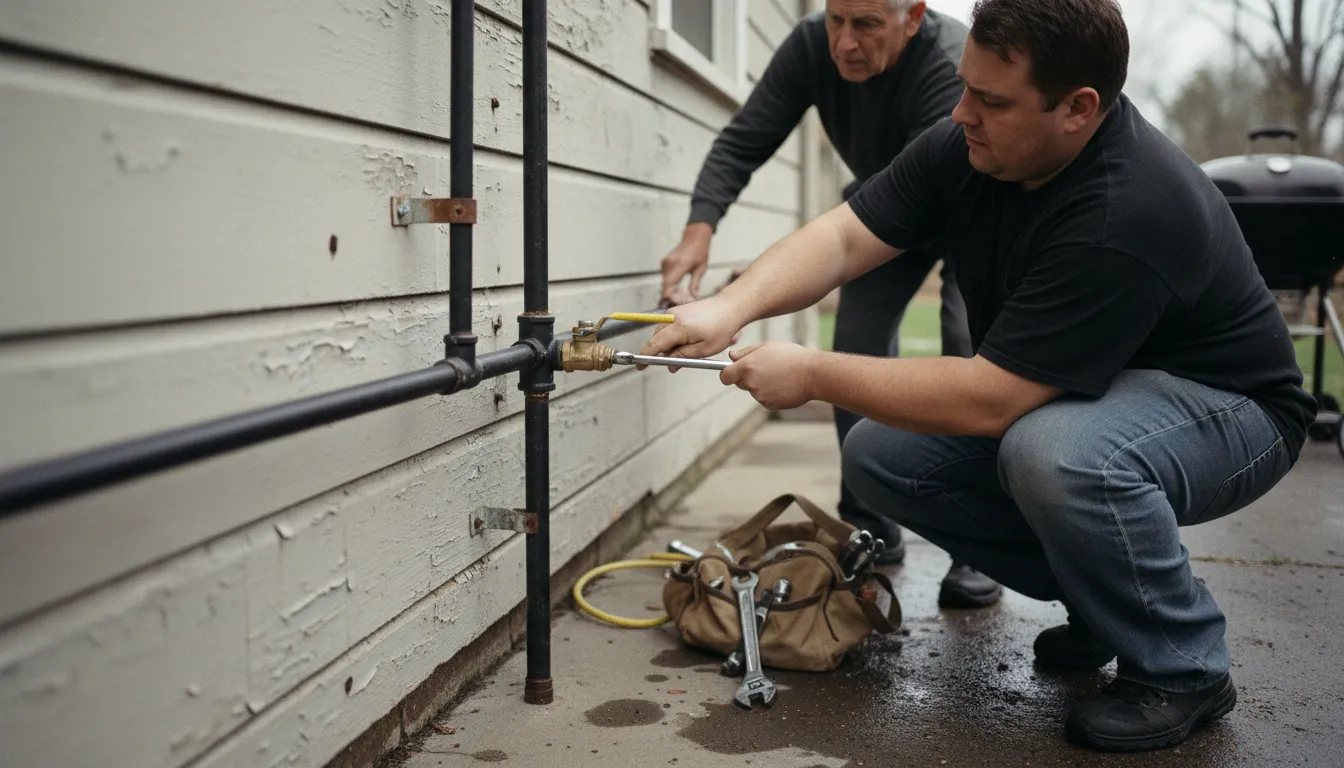
Find the Best Gas Line Plumbing Companies for Your Business
No obligation • Fast responses • Nationwide coverage

Why you can trust Search a Plumber
Search a Plumber is a leading United States resource for finding and evaluating professional plumbing services. Our team researches licensing, experience, and customer feedback to create unbiased, fact-driven overviews. Companies cannot pay to change ratings or placement, ensuring homeowners get trustworthy information.
Search providers near you
Best Gas Line Plumbing Companies in New Jersey Ranked
Installing or repairing a gas line is a critical home improvement project that directly impacts the safety and functionality of your property. Proper gas line work ensures your appliances receive a reliable fuel supply while preventing dangerous leaks. In New Jersey, this work is highly regulated, requiring licensed professionals, permits, and inspections to guarantee code compliance and safety. This guide explains the process, regulations, and key considerations for homeowners, helping you understand what to expect and how to connect with qualified local specialists for your project.
Mark Henry Plumbing and Heating Corp
104-24 Jamaica Ave, Richmond Hill, NY 11418
Mark Henry Plumbing and Heating Corp is a licensed plumbing firm serving Jersey City, NJ, and the five boroughs of New York City. They specialize in gas line installation and Local Law 152 gas inspections performed by a NYC Licensed Master Plumber. The company ensures inspections meet NYC Fuel Gas Code standards and manages report submissions to the Department of Buildings. With nearly two decades of experience, Mark Henry Plumbing and Heating Corp provides personalized service directly through their licensed plumber, Mark Jozwik.
Lesco Plumbing, Heating & Cooling
Newark, NJ
Lesco Plumbing, Heating & Cooling is a plumbing and HVAC company based in Newark, NJ, serving Northern New Jersey including Morris, Essex, Passaic, and Union counties. They provide a range of services such as water heater repair and installation, drain cleaning, sewer line repair, leak detection, repiping, and gas line installation. Established in 2003, Lesco Plumbing, Heating & Cooling has over 20 years of experience in the industry. They also offer HVAC services including furnace and air conditioner repair and replacement.
Phil Masucci Plumbing Heating & Drain Cleaning
9 Florida St, Maplewood, NJ 07040
Phil Masucci Plumbing Heating & Drain Cleaning is a full-service plumbing and heating company based in Newark, NJ. Serving Essex, Union, Morris, and Middlesex counties, the company offers a wide range of services including water heater installation and repair, sump pump maintenance, drain cleaning, and gas line installation. They provide specialized capabilities such as sewer pipe descaling and video camera drain inspection. With over 20 years of experience, they also handle general contracting for kitchen, bathroom, and laundry room updates.
A Good Plumber Corp.
2114 E 27th St, Brooklyn, NY 11229
A Good Plumber Corp. is a family-owned plumbing company serving Jersey City, NJ, with over 30 years of experience. They specialize in water heater repair and installation, leak detection, and gas line installation. Their team includes three licensed master plumbers who ensure all work meets the latest safety codes. The company is known for handling both residential and commercial plumbing needs with a focus on safety and professionalism.
Harris Plumbing & Heating Corporation
184 Glenmore Ave, Brooklyn, NY 11212
Harris Plumbing & Heating Corporation offers plumbing and heating services in Jersey City, NJ, with coverage extending to Brooklyn, Manhattan, Queens, and the Bronx. The company provides water heater repair and installation, drain cleaning, leak detection, gas line installation, and heating system maintenance. They have the capability to convert oil heating systems to gas and handle code violation removals. Established in 1918, Harris Plumbing & Heating brings over 100 years of experience to residential and commercial clients, ensuring systems meet performance and code requirements.
Understanding New Jersey's Gas Line Regulations
Gas line work in New Jersey is governed by a strict framework of state and local codes designed for public safety. The primary regulations stem from the International Fuel Gas Code (IFGC) and the International Residential Code (IRC), as adopted by the state. These rules are enforced at the municipal level, meaning your local building department is the final authority on permitting and inspections.
The core principle is that all gas piping installation, extension, or alteration requires a permit and must be performed by a licensed professional. This isn't just a formality; it's a crucial step in a process that ends with a pressure test and a final inspection by your town's building official. Only after passing this inspection can your utility company-such as PSE&G or South Jersey Gas-safely connect or activate your meter.
Key Regulatory Bodies and Roles
- Local Municipality (Building Department): Issues permits, performs inspections, and provides final approval on all gas piping work.
- New Jersey Department of Community Affairs (DCA): Oversees the state's uniform construction code, providing guidelines and standards that local authorities follow.
- Licensed Plumber or HVAC Contractor: The only professionals legally authorized to install and repair gas piping systems. For propane (LP) gas, specific additional certification is required.
- Gas Utility (PSE&G, SJG, etc.): Owns the meter and the service line up to it. They perform the final meter connection or activation only after receiving proof of a passed municipal inspection.
The Step-by-Step Process for Gas Line Projects
Whether you're adding a gas fireplace, stove, or dryer, or repairing an existing line, the process follows a standardized path in New Jersey.
1. Planning and Professional Consultation
Begin by determining your needs. Where will the new appliance be located? Are you replacing old piping? The next step is the most important: consult with licensed, insured professionals. Get detailed quotes from several licensed plumbers or gas line contractors. A reputable professional will assess your home, discuss material options (like black iron pipe or Corrugated Stainless Steel Tubing - CSST), and help design a layout that meets code 1.
2. Permit Application
Your licensed contractor will handle the permit application with your local building department. This requires submitting detailed plans of the proposed work. As the homeowner, you can pull the permit yourself, but this makes you legally responsible for code compliance. It is strongly advised to let your contractor manage this process.
3. Installation by a Licensed Professional
The installation phase involves the physical work:
- Running new gas piping from the meter or an existing tee to the new appliance.
- Installing accessible shutoff valves at the appliance and as required by code.
- Ensuring proper support, protection, and labeling of pipes.
- For underground lines, ensuring a minimum burial depth of 12 inches and proper separation from other utilities.
4. Pressure Testing and Inspection
Before the system is enclosed or buried, the contractor must perform a pressure test. A common requirement is to pressurize the system to 3 psi for 10 minutes (for lines that will be submerged in concrete or below grade) to check for leaks 2. A municipal inspector will then visit to verify the installation against the permitted plans and code requirements. Upon passing, the inspector will provide a certificate of approval, often in the form of a sticker placed on the meter 3.
5. Utility Meter Connection
The final step is contacting your gas utility. They will not activate service without proof of passed inspection. Once they receive the approval from your town, a utility technician will connect the meter, and your new gas line will be ready for use 4.
Find the perfect gas line plumbing companies for your needs
Get personalized recommendations and expert advice
Safety Standards and Best Practices
Safety is the non-negotiable foundation of all gas line work. Adherence to the following standards is what you pay for when hiring a licensed professional.
- Licensed Work is Mandatory: Unlicensed work risks improper joints, wrong materials, and inadequate support, leading to potentially catastrophic leaks or explosions 5.
- Shutoff Valves: Code requires an accessible shutoff valve at each appliance. Everyone in the household should know its location in case of emergency.
- Material and Installation Compliance: Using approved materials (like yellow CSST for underground use) and following precise installation techniques for threading, joining, and supporting pipes prevents long-term failure 6 7.
- Protection of Exposed Components: Gas meters and regulators located near driveways or in vulnerable areas must be protected by sturdy bollards or barriers to prevent vehicle damage 8.
Cost Considerations for Gas Line Work in NJ
The cost of gas line projects in New Jersey is highly variable and depends on several factors. There is no standard "per foot" price that applies universally.
Primary Cost Factors:
- Project Scope: A simple repair of a small leak is far less expensive than running a new line from the meter to a second-floor kitchen.
- Pipe Length and Route: The distance the pipe must travel and the complexity of the route (through basements, inside walls, under concrete slabs) significantly impact labor and material costs.
- Materials: Traditional black iron pipe, flexible CSST, and the necessary fittings, valves, and connectors have different price points.
- Permit Fees: These vary by municipality but are a required part of the project budget 9 10.
- Main Extension: If your home is far from the main gas line in the street, the utility may charge a fee to extend the service line to your property, which can be a substantial additional cost 11 12.
While minor repairs may cost a few hundred dollars, homeowners should expect new gas line installations to typically cost several thousand dollars, reflecting the skilled labor, materials, permits, and inspections involved. The most accurate way to budget is to obtain detailed, written estimates from multiple licensed contractors.
Common Types of Gas Line Projects
New Appliance Hookups
This is a frequent request, whether for a kitchen range, tankless water heater, fire pit, or garage heater. The process involves tapping into an existing gas line (if it has sufficient capacity) or running a new line from the meter.
Whole-House Repiping
Older homes may have outdated or corroded galvanized steel piping. Repiping with modern materials like black iron or CSST improves safety and gas flow to all appliances.
Service Line Replacement
The gas line running from the main in the street to your meter is typically owned by the utility. However, if repairs or replacement are needed on the homeowner's side of the meter (or the entire service line for some properties), it requires coordination between a licensed contractor and the utility company 13.
Emergency Leak Repairs
If you smell gas (a rotten egg odor) or hear a hissing sound near a gas line, leave the area immediately and call your gas utility from a safe distance. They will respond to secure the area. Permanent repairs must then be made by a licensed professional following the full permit and inspection process.
Frequently asked questions
Sources
Footnotes
-
Expectations During a New Gas Line Installation for Your Home? - https://magnificentplumbing.com/new-gas-line-installation-for-your-home/ ↩
-
49 NJR 2(2) - NJ.gov - https://www.nj.gov/dca/divisions/dhcr/ok/dca/divisions/codes/codreg/pdf_rule_proposals/P2017_029omnibus_dca5_23-2.2.pdf ↩
-
Mechanical.Plumbing Guidance for Code Officials - NJ.gov - https://www.nj.gov/dca/codes/alerts/pdfs/mechanical_plumbing_guidance.pdf ↩
-
Construction & Renovation Local Inspections - PSE&G - https://nj.pseg.com/businessandcontractorservices/constructionandrenovationservices/mandatorylocalinspections ↩
-
Gas Line Installation: What You Need to Know - https://www.pasoroblesheating.com/gas-line-installation-what-you-need-to-know-before-starting-your-project/ ↩
-
2018 International Residential Code, New Jersey Edition - G2415 ... - https://codes.iccsafe.org/s/NJRC2018P2/part-vi-fuel-gas/NJRC2018P2-Pt06-Ch24-SecG2415.12 ↩
-
Chapter 4 Gas Piping Installations: New Jersey ... - UpCodes - https://up.codes/viewer/new_jersey/ifgc-2015/chapter/4/gas-piping-installations ↩
-
Gas Line Installation - Quality Plumbing - https://qualityplumbing.cc/gas-line-installation-what-homeowners-need-to-know/ ↩
-
New Jersey Plumbing Permit Guide - https://www.permitflow.com/blog/plumbing-permit-nj ↩
-
Are there any permits required for home gas line installations? - https://www.njrhomeservices.com/faqs/are-there-any-permits-required-for-home-gas-line-installations/ ↩
-
Residential & Commercial New Construction - South Jersey Gas - https://www.southjerseygas.com/residential/new-customers/new-construction ↩
-
Essential Guide to Gas Line Installation: Tips and Safety Precautions - https://gaeberly.com/gas-line-installation/ ↩
-
N.J. Admin. Code § 14:7-1.11 - Installation of pipe - https://www.law.cornell.edu/regulations/new-jersey/N-J-A-C-14-7-1-11 ↩