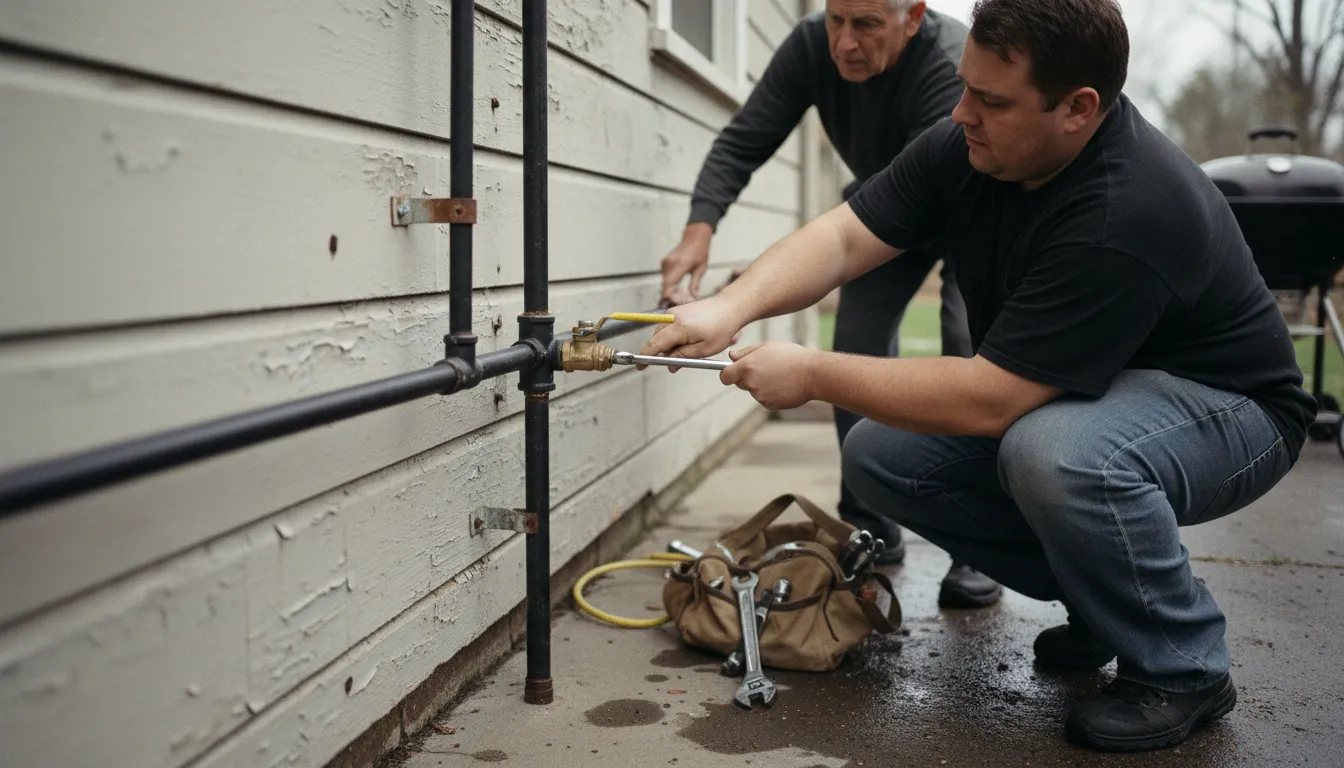
Find the Best Gas Line Plumbing Companies for Your Business
No obligation • Fast responses • Nationwide coverage

Why you can trust Search a Plumber
Search a Plumber is a leading United States resource for finding and evaluating professional plumbing services. Our team researches licensing, experience, and customer feedback to create unbiased, fact-driven overviews. Companies cannot pay to change ratings or placement, ensuring homeowners get trustworthy information.
Search providers near you
Top Gas Line Plumbing Companies in Howell, New Jersey Ranked
Connecting your home or business to a safe and reliable natural gas supply is a critical project that requires precision and expertise. Gas line installation and repair involves running pipes from the main utility line to your appliances, ensuring proper pressure, and adhering to strict safety codes to prevent leaks and hazards. For Howell residents, this process is governed by specific township permits and state regulations, making it essential to work with qualified professionals. This guide will help you understand the local requirements, the typical process for gas piping work, and how to find licensed specialists in your area to handle your project safely and efficiently.
Force Plumbing and Heating LLC
158 NJ-36, Hazlet, NJ 07730
Force Plumbing and Heating LLC is a family-owned plumbing and heating contractor serving New York, NY, and surrounding areas. They offer a wide range of services including water heater repair and installation, drain cleaning, and gas line installation. The company is certified as Navien Service Specialists and partners with Moen to provide advanced Smart Water technology installations. They are fully licensed and qualified to handle gas line repair, replacement, and installation, ensuring safety and compliance with local regulations. Force Plumbing and Heating LLC also provides emergency after-hours repair services for urgent plumbing and heating issues.
Zachary Plumbing
Newark, NJ
Zachary Plumbing is a plumbing service provider based in Newark, NJ. They offer a wide range of services including sewer camera inspections, water heater installation and repair, drain cleaning, hydro jetting, leak detection, and repiping for gas, water, and sewer lines. The company also handles gas line installation, garbage disposal repair, and various fixture installations and repairs. Their capabilities include sewer video inspection and hydro jetting to maintain clear and functional plumbing systems.
Understanding Gas Line Services in Howell
Whether you're installing a new gas stove, fireplace, dryer, or furnace, or repairing an existing line, gas piping work is not a DIY project. In Howell, all gas line installation, replacement, and repair must be performed by a licensed professional. This work includes running new lines from the meter, repairing leaks in existing pipes, and extending service to new additions or outdoor appliances like grills. The primary goal is to ensure a secure connection that delivers fuel efficiently while meeting all safety standards set by the state of New Jersey and Howell Township.
The materials used are also specialized. Professionals typically work with black iron pipe or Corrugated Stainless Steel Tubing (CSST). CSST is a flexible, yellow-jacketed piping that is often used for running lines through walls and tight spaces, while traditional black iron is rigid and used for exposed runs. The choice depends on the application, local code, and the specific appliance requirements.
The Critical First Step: Permits and Planning
Before any digging or pipe fitting begins, proper planning and permitting are mandatory in Howell.
Permits Are Required: For any new gas line installation or significant repair, a licensed plumber must secure permits from Howell Township. This is not optional. The permit process ensures your project is reviewed for compliance with the International Fuel Gas Code (IFGC) and International Residential Code (IRC), which New Jersey adopts. Permit fees are typically based on the number of fixtures (appliances) being connected, often around $15 per fixture, plus additional fees for special devices 1 2.
Call Before You Dig: The single most important safety step is contacting NJ One Call by dialing 811. This free service marks the location of public underground utility lines, such as the main gas, water, and electric lines, to prevent accidental strikes. You or your contractor must call at least three business days before any excavation. Remember, this service only marks public lines; private lines like sprinkler systems or propane tanks must be located and marked by the property owner.
The Gas Line Installation Process: A Step-by-Step Overview
A professional gas line project follows a meticulous sequence to ensure safety and code compliance.
- Route Planning & Utility Marking: The contractor will plan the pipe route from the meter or main line to the appliance. After NJ One Call has marked public utilities, the work area is clearly defined.
- Trenching: For underground lines, a trench is dug. Depth requirements are strict, often a minimum of 12 inches deep for underground piping, and deeper for the main service line to the house, to protect the pipe from damage and freezing.
- Pipe Installation: The approved pipe (black iron or CSST) is cut, threaded, and installed along the planned route. All connections are made using proper fittings and pipe dope or tape rated for gas.
- Connections: The line is securely connected to the gas meter or main shutoff at one end and to the appliance shutoff valve at the other.
- Pressure Testing: This is a crucial safety check. The system is pressurized with air or an inert gas and monitored with a gauge for a set period. Any drop in pressure indicates a leak that must be found and sealed before proceeding 3.
- Inspection: Once the installer confirms the system is leak-free, a Howell Township construction code official will inspect the work. They verify proper materials, installation techniques, support, and labeling before granting approval 4.
- Backfill & Final Connection: Only after passing inspection can the trench be backfilled. The utility company or plumber will then perform the final connection to the gas supply and the appliance can be commissioned.
Find the perfect gas line plumbing companies for your needs
Get personalized recommendations and expert advice
Who Can Perform Gas Work? Licensing and Responsibilities
In New Jersey, gas line work falls under plumbing licensure. Only a state-licensed master plumber or a qualified journeyman under their supervision should perform residential gas piping installation and repair. It is illegal for an unlicensed individual to undertake this work.
It's important to understand the division of responsibility:
- Homeowner/Private Property: Licensed plumbers handle all gas piping after the meter, including repairs, new branches, and appliance connections.
- Main Service Line & Street Work: The utility company, New Jersey Natural Gas (NJNG), owns and maintains the gas main in the street and the service line up to the meter. Any work on these components must be coordinated through NJNG 5.
Always verify a contractor's license and insurance before hiring them for gas line services. A reputable professional will handle the entire process, from pulling permits to scheduling the final inspection.
Cost Considerations for Gas Line Projects in Howell
Costs for gas line installation and repair can vary widely based on the project's scope and complexity. Simple repairs or short extensions may cost a few hundred dollars, while running a new line from the meter to a distant appliance or installing a whole-home system can run into the thousands.
Key factors influencing cost include:
- Permit Fees: As noted, township fees based on fixture count.
- Materials: The length of pipe needed and the type (CSST vs. black iron).
- Labor: The complexity of the run (e.g., tunneling under a driveway, running through finished walls).
- Project Scope: Installing a simple line for a kitchen stove is less involved than running a line to a new pool heater or detached garage.
While cost is a factor, prioritizing licensed, experienced professionals for this critical safety work is paramount. Getting multiple detailed quotes that include permit fees, materials, labor, and inspection coordination is the best approach.
Safety and Code Compliance: Non-Negotiables
Gas line work is governed by codes designed to prevent fires, explosions, and carbon monoxide poisoning. Key compliance points in Howell include:
- Proper Sizing: Pipes must be correctly sized (diameter) to deliver adequate gas volume and pressure to all appliances simultaneously.
- Support and Protection: Pipes must be properly supported and, where exposed to potential damage, protected.
- Shutoff Valves: Each appliance must have an accessible, approved shutoff valve.
- Leak Detection: All connections must be tested, as described. Many professionals also use gas leak detection solution or electronic detectors for a final check.
- Venting: While not directly part of the pipe, ensuring gas appliances are properly vented is a related and critical safety concern.
Adherence to these codes is verified during the township inspection. Skipping permits or inspections not only risks safety but can also lead to fines, invalidated insurance, and major complications when selling your home.
Frequently asked questions
Sources
Footnotes
-
Gas Line Installation & Repair | Safe, Licensed Service - https://msiplumbingandremodeling.com/gas-lines/ ↩
-
Gas Line Installation and Repairs - https://www.peaceofmindplumbingnj.com/guide-for-gas-line-installation-repairs-leak-detection ↩
-
Inspection Checklist Residential Fuel Gas Piping - https://www.mybuildingpermit.com/sites/default/files/inline-files/15%20IRC%20Fuel%20Gas%20Piping%20Checklist_1.pdf ↩
-
Construction Code Communicator - NJ.gov - https://www.nj.gov/dca/codes/publications/pdf_ccc/CCC_Smr_2022.pdf ↩
-
NJNG Construction on Your Street - https://www.njng.com/my-home/construction-street.aspx ↩