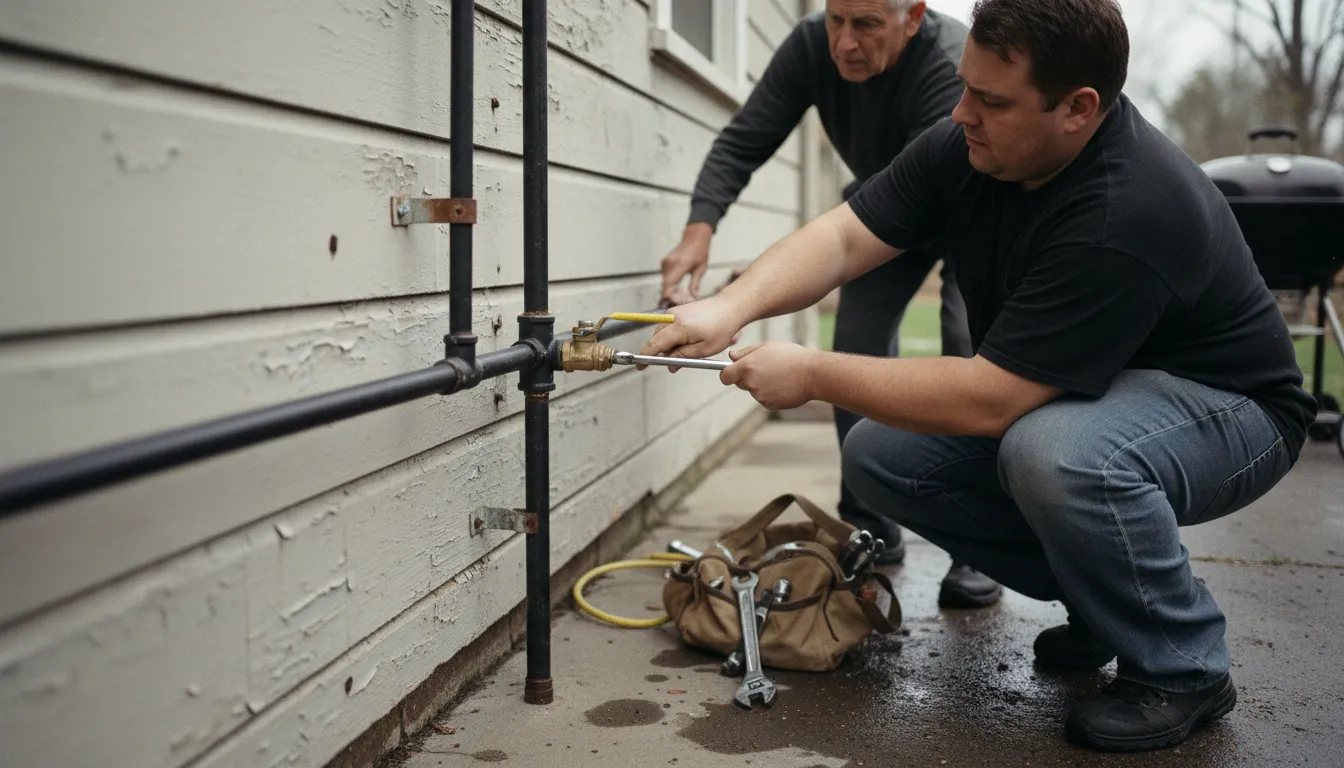
Find the Best Gas Line Plumbing Companies for Your Business
No obligation • Fast responses • Nationwide coverage

Why you can trust Search a Plumber
Search a Plumber is a leading United States resource for finding and evaluating professional plumbing services. Our team researches licensing, experience, and customer feedback to create unbiased, fact-driven overviews. Companies cannot pay to change ratings or placement, ensuring homeowners get trustworthy information.
Search providers near you
Top Gas Line Plumbing Companies in Hillsborough, New Jersey Ranked
Installing or repairing a gas line is a critical home improvement project that requires precision, safety, and strict adherence to local codes. Whether you're adding a gas fireplace, connecting a new stove, or replacing an aging line, this work involves connecting your home to a pressurized fuel system. In Hillsborough, this process is governed by New Jersey state plumbing codes, township permit requirements, and the specific procedures of the local utility provider, PSE&G. This guide is designed to help Hillsborough homeowners understand the process, from planning and permitting to inspection, so you can confidently navigate your project and find qualified local professionals for your gas piping needs.
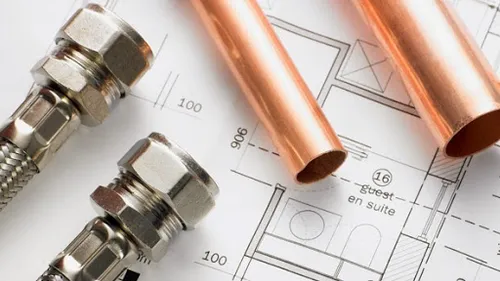
Force Plumbing and Heating LLC
158 NJ-36, Hazlet, NJ 07730
Force Plumbing and Heating LLC is a family-owned plumbing and heating contractor serving New York, NY, and surrounding areas. They offer a wide range of services including water heater repair and installation, drain cleaning, and gas line installation. The company is certified as Navien Service Specialists and partners with Moen to provide advanced Smart Water technology installations. They are fully licensed and qualified to handle gas line repair, replacement, and installation, ensuring safety and compliance with local regulations. Force Plumbing and Heating LLC also provides emergency after-hours repair services for urgent plumbing and heating issues.
Lesco Plumbing, Heating & Cooling
Newark, NJ
Lesco Plumbing, Heating & Cooling is a plumbing and HVAC company based in Newark, NJ, serving Northern New Jersey including Morris, Essex, Passaic, and Union counties. They provide a range of services such as water heater repair and installation, drain cleaning, sewer line repair, leak detection, repiping, and gas line installation. Established in 2003, Lesco Plumbing, Heating & Cooling has over 20 years of experience in the industry. They also offer HVAC services including furnace and air conditioner repair and replacement.
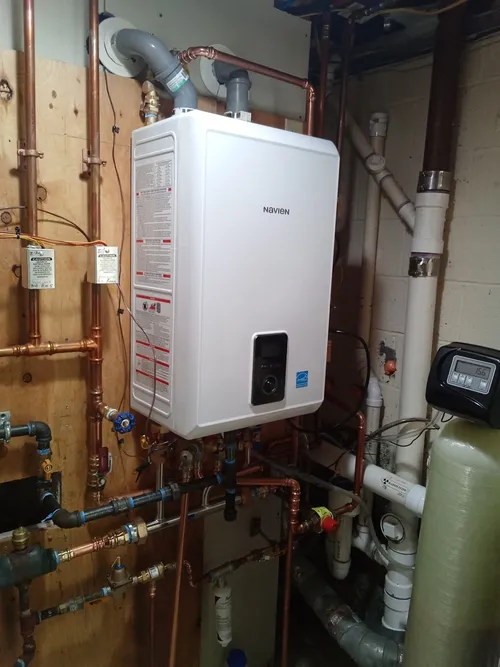
C&F Plumbing
12 Baldwin Ln Suite 12B, Mountain Lakes, NJ 07046
C&F Plumbing offers a wide range of plumbing services in New York, NY, including sewer camera inspections, water heater installation and repair, drain cleaning with hydro jetting, leak detection, repiping, gas line installation, and toilet repair. They also provide water treatment solutions such as water softener installation and handle sewage pump and boiler services. The company uses advanced tools like drain cameras to diagnose issues accurately and offers comprehensive sewer line repairs and replacements. C&F Plumbing serves both residential and commercial clients and emphasizes expert service from certified contractors. Their service area includes multiple communities in New Jersey, reflecting a broad regional presence.
Phil Masucci Plumbing Heating & Drain Cleaning
9 Florida St, Maplewood, NJ 07040
Phil Masucci Plumbing Heating & Drain Cleaning is a full-service plumbing and heating company based in Newark, NJ. Serving Essex, Union, Morris, and Middlesex counties, the company offers a wide range of services including water heater installation and repair, sump pump maintenance, drain cleaning, and gas line installation. They provide specialized capabilities such as sewer pipe descaling and video camera drain inspection. With over 20 years of experience, they also handle general contracting for kitchen, bathroom, and laundry room updates.
Rick Lucas Plumbing & Remodeling - Plumber in Bucks County PA
1317 Buck Rd, Feasterville-Trevose, PA 19053
Rick Lucas Plumbing & Remodeling is a family-owned plumbing company based in Feasterville, serving Philadelphia, PA, and the greater Bucks County area. Established in 2018, the company draws on Rick Lucas's over 20 years of master plumbing experience to provide a wide range of services including water heater installation and repair, drain cleaning, sewer line repair, sump pump services, gas line installation, and repiping. They offer 24/7 emergency plumbing services with rapid response times, using advanced diagnostic equipment and professional-grade materials to address plumbing issues efficiently.
Understanding Gas Line Work in Hillsborough
Gas line installation and repair, often referred to as gas piping or fuel line work, is not a typical DIY project. It involves working with natural gas or propane systems that, if handled incorrectly, can pose serious safety risks. In Hillsborough Township, all such work falls under the New Jersey Uniform Construction Code (UCC). This means any new installation, replacement, or significant repair of gas piping requires oversight. The primary goal of these regulations is to ensure the safety of your household and the community by mandating that work is performed correctly and inspected by qualified officials.
The process is a partnership between you (the homeowner), a licensed professional, the Hillsborough Construction Department, and PSE&G. Each entity has a specific role. The licensed plumber executes the work to code, the township issues permits and conducts inspections to verify compliance with building standards, and PSE&G, as the gas utility, is responsible for the meter and ensuring the system is safe before gas service is activated. Understanding this workflow from the start is key to a smooth and successful project.
The Step-by-Step Process for Gas Piping Projects
Navigating a gas line project involves a series of defined steps. Skipping any can lead to delays, failed inspections, or safety hazards.
1. Planning and "Call Before You Dig"
Before any shovel hits the ground, planning is essential. If your project involves any underground work-such as running a new line to a detached garage, pool heater, or outdoor kitchen-you are legally required to contact New Jersey's "Call Before You Dig" service at 811 1. This free service notifies all public utility companies (like PSE&G for gas, JCP&L for electric) to come and mark the location of their underground lines on your property. This step is crucial for preventing dangerous strikes, service interruptions, and costly repairs. It's also your responsibility to identify and mark any private underground lines, such as irrigation systems or septic lines 1.
2. Securing Permits from Hillsborough Township
Virtually all gas line installation or replacement work in Hillsborough requires a permit. As the homeowner, you can pull a permit for work on your own single-family dwelling, but the work must still meet all code requirements 2. Most homeowners choose to have their licensed plumbing contractor handle this process. Permits are obtained through the Hillsborough Township Construction Department using the state's Uniform Construction Code forms, typically the F-100 (Application) and F-130 (Certificate). The permit fee is based on the project's valuation. Starting work without a permit can result in fines and require you to open up finished work for inspection.
3. The Installation: Trenching, Piping, and Connections
Once permits are secured, the physical work begins. For underground runs, this involves trenching-digging a trench to the required depth (which varies based on code and pipe material) from the source to the appliance location. The path must avoid major obstacles like large tree roots or concrete patios, which can significantly affect cost.
The piping materials are specialized. For indoor sections and vertical risers, black iron pipe is standard. For buried underground lines, yellow polyethylene (PE) pipe is commonly used due to its durability and corrosion resistance. The licensed plumber will make all necessary connections, including tapping into the existing gas line (if adding a branch) or connecting to the meter location, and running the line to the new appliance shut-off valve.
4. Mandatory Pressure Testing and Inspections
This is the most critical phase for safety. Before the gas utility will set a meter or turn on service, the entire newly installed piping system must pass a pressure test. Your plumber will pressurize the system with air or an inert gas and monitor it to ensure there are no leaks. Upon a successful test, the plumber will affix a yellow "Piping Pressure Test" sticker, provided by PSE&G, to the meter location.
The township requires inspections at specific stages. A pressure test inspection is often done to witness the test. After all work is complete and the pressure test is passed, a final inspection is required before the township will issue a Certificate of Approval 3 4. PSE&G also has requirements; they typically need to see that permanent electrical service is established at the property before they will schedule the meter installation 3.
Find the perfect gas line plumbing companies for your needs
Get personalized recommendations and expert advice
Key Safety and Code Considerations
Adhering to safety protocols isn't just about passing inspection-it's about protecting your home.
- Professional Licensing is Non-Negotiable: Always hire a New Jersey-licensed master plumber for gas line work. Their license is your assurance that they understand the state and local codes governing gas pressure, pipe sizing, material specifications, and proper venting for appliances.
- Ventilation is Critical: Any new gas appliance, like a furnace or water heater, must be properly vented to the outdoors. Incomplete combustion can produce deadly carbon monoxide. This is a key part of the final inspection.
- The Importance of the Pressure Test: Never allow a plumber to skip the pressure test or assume a visual check is sufficient. This test is the definitive method for detecting minute leaks that could lead to a dangerous gas accumulation over time 5.
- Awareness of Your Private Lines: While 811 covers public utilities, you are responsible for knowing the location of your own private underground infrastructure. Damaging your own sprinkler system or electrical line to a shed can add unexpected cost and complication to your project.
Understanding Costs for Gas Line Projects
The cost of gas line installation in Hillsborough is highly variable and depends on several factors. A common baseline estimate is between $15 and $25 per linear foot for the pipe run itself 6 7. However, this is just a starting point.
Primary factors influencing the final price include:
- Total Length: A simple 20-foot line for a backyard grill will cost significantly less than a 150-foot run to a detached workshop.
- Path Complexity: Trenching through soft soil is straightforward. If the path requires navigating under a driveway, sidewalk, or landscaped area, the cost will rise due to the need for specialized tunneling equipment or concrete work.
- Materials and Labor: The cost of black iron, PE pipe, fittings, and shut-off valves, plus the labor for a skilled, licensed professional.
- Permits and Fees: The township permit fee and any associated inspection fees.
- Appliance Hookup: The final connection to the appliance (e.g., furnace, stove, dryer) may involve additional labor and fittings.
Always get detailed, written estimates from multiple licensed plumbers that break down material, labor, and permit costs for your specific project scope.
Frequently asked questions
Sources
Footnotes
-
NJNG Construction on Your Street - https://www.njng.com/my-home/construction-street.aspx ↩ ↩2
-
New Jersey Plumbing Permit Guide - PermitFlow - https://www.permitflow.com/blog/plumbing-permit-nj ↩
-
Construction & Renovation Local Inspections - PSE&G - https://nj.pseg.com/businessandcontractorservices/constructionandrenovationservices/mandatorylocalinspections ↩ ↩2
-
Hillsborough Municipal Website - Permits - https://hillsboroughnj.gov/construction-page-list/235-permits ↩
-
Gas Line Installation Services in Hillsborough- Next Level Plumbing - https://www.nextlevelplumbingservices.com/gas-line-installation-services/ ↩
-
Gas Line Installation Cost: 2023 Guide - Super Brothers - https://www.superbrothers.com/gas-line-installation-cost-2023-guide/ ↩
-
How to Install Natural Gas Lines Safely and Correctly - https://bluegasexpress.com/how-to-install-natural-gas-lines/ ↩