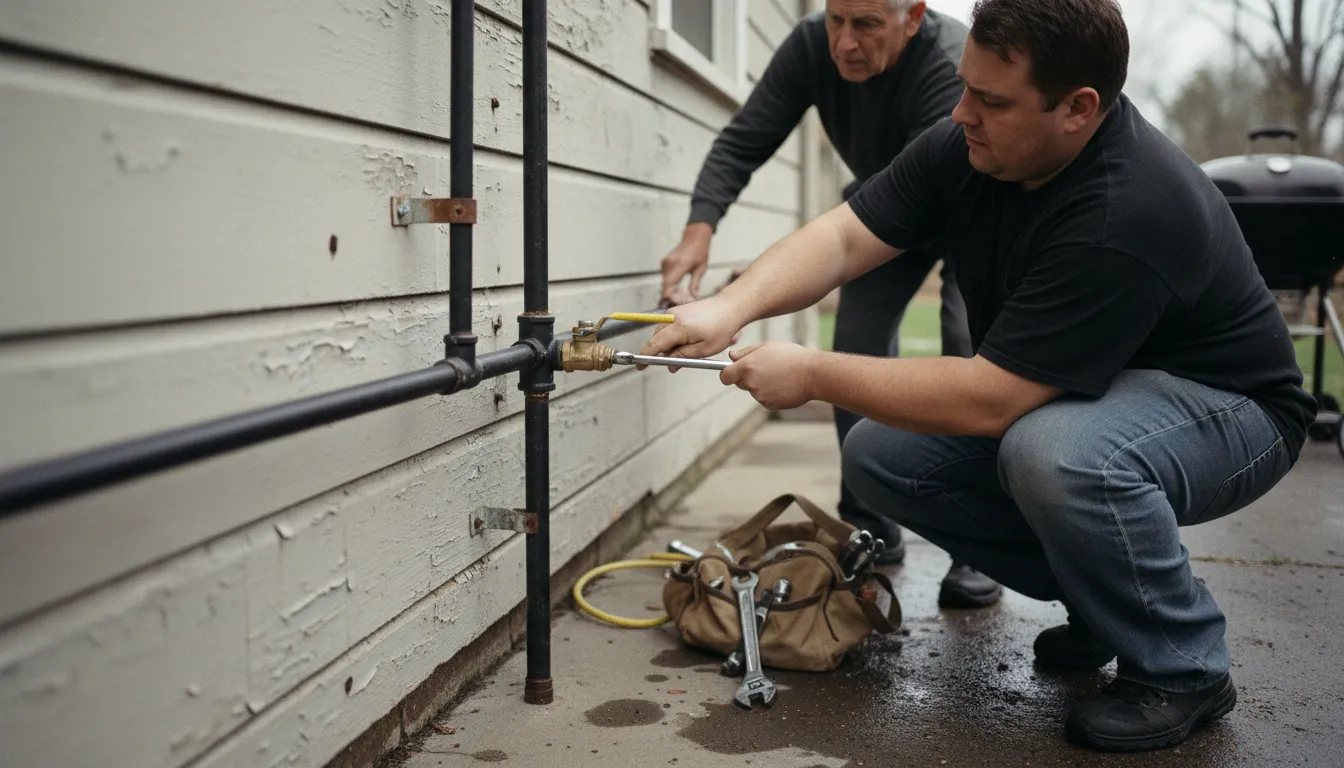
Find the Best Gas Line Plumbing Companies for Your Business
No obligation • Fast responses • Nationwide coverage

Why you can trust Search a Plumber
Search a Plumber is a leading United States resource for finding and evaluating professional plumbing services. Our team researches licensing, experience, and customer feedback to create unbiased, fact-driven overviews. Companies cannot pay to change ratings or placement, ensuring homeowners get trustworthy information.
Search providers near you
Top Gas Line Plumbing Companies in Bayonne, New Jersey Ranked
Installing or repairing a gas line is a critical home improvement project that directly impacts the safety and functionality of your property. Natural gas powers essential appliances like furnaces, water heaters, stoves, and dryers, but working with gas piping requires specialized knowledge and strict adherence to safety codes. For homeowners in Bayonne, navigating the process of gas line work involves understanding local permit requirements, coordinating with utility providers, and hiring qualified professionals. This guide is designed to help you understand the key steps, regulations, and considerations for managing your gas piping project safely and effectively.
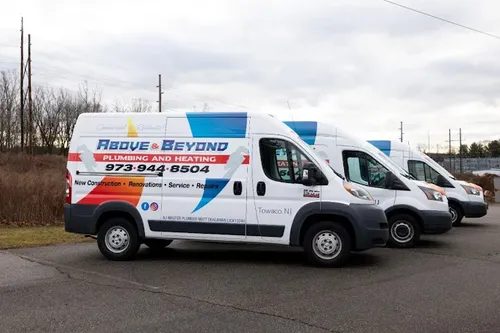
Above and Beyond Plumbing and Heating LLC
5 Van Winkle Rd, Pine Brook, NJ 07058
Above and Beyond Plumbing and Heating LLC is a plumbing and heating service provider based in New York, NY. They offer a wide range of services including water heater repair and installation, water softener installation, drain cleaning, sewer line repair, leak detection, repiping, gas line installation, toilet repair, and garbage disposal repair. The company is known for its 24-hour emergency plumbing services, ensuring help is available whenever needed. They also specialize in boiler installation and repair, and install water filtration and softening systems to improve water quality. With over a decade of experience, Above and Beyond Plumbing and Heating LLC serves New York and surrounding areas, providing tailored solutions to meet specific plumbing and heating needs.
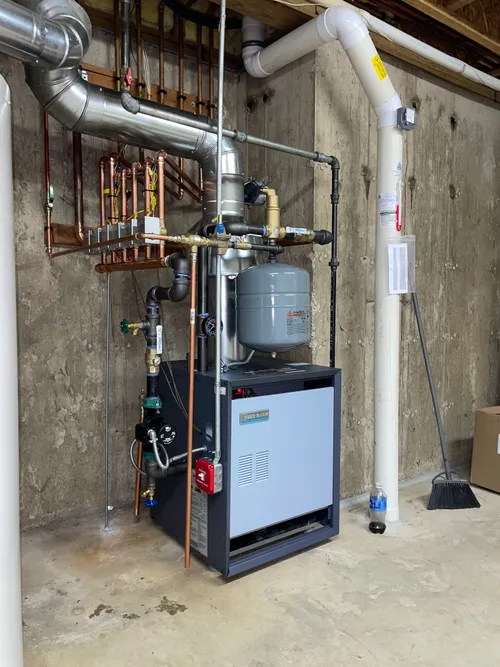
Angler Plumbing, Heating & Drain Cleaning LLC
598 Hickory Ave, Saddle Brook, NJ 07663
Angler Plumbing, Heating & Drain Cleaning LLC is a family- and veteran-owned business serving New York, NY, and Bergen County, NJ. They provide a wide range of plumbing, heating, and drain services including water heater installation and repair, sump pump maintenance, gas line installation, and drain cleaning. Their licensed master plumber offers a one-year warranty on parts, labor, and materials, and the company is known for its safety-first approach and fully stocked trucks. With over 22 years of experience, Angler Plumbing also offers emergency services with weekend and evening appointments available upon request.
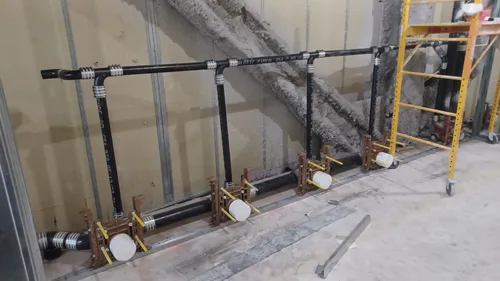
Affordable Plumbing and Leak Repair
New York, NY
Affordable Plumbing and Leak Repair provides a wide range of plumbing services in New York, NY, including water heater repair and installation, drain cleaning, leak detection, repiping, and gas line installation. They serve Staten Island and surrounding areas such as Queens, The Bronx, Brooklyn, and Jersey City. The company offers emergency plumbing services to address urgent issues like burst pipes and clogged drains. Their team is equipped to handle various plumbing needs, including dryer and washer hookups, with a focus on preventing future problems through quality repairs and installations.
Superior Plumbing, Heating, & Mechanical, LLC
New York, NY
Superior Plumbing, Heating, & Mechanical, LLC is a family-owned business serving New York, NY, and surrounding areas including the five boroughs, Long Island, and Westchester County. Since 2003, they have provided commercial plumbing, heating, and mechanical services to building owners, managers, and engineers. Their licensed team offers a range of services such as drain cleaning, leak detection, gas line installation, toilet repair, backflow prevention, and water leak detection. They are certified for gas piping and backflow testing and provide 24/7 emergency and scheduled maintenance services to ensure building systems operate efficiently and comply with local codes.
A&E NYC Plumbing
40 Fulton St, New York, NY 10038
A&E NYC Plumbing offers a wide range of plumbing services in New York, NY, including water heater repair and installation, drain cleaning, sewer line repair, leak detection, and gas line installation. They also handle faucet and toilet repairs, garbage disposal maintenance, and repiping projects. The company is licensed and insured, providing both residential and commercial plumbing solutions with a focus on safety and technical expertise. Their team is experienced in managing complex plumbing systems and offers free onsite estimates for more involved jobs.
Understanding Gas Line Work in Bayonne
Gas line installation and repair, often referred to as gas piping or fuel gas line work, is a regulated trade for good reason. A properly installed system delivers efficient fuel to your appliances, while a faulty one can pose serious risks. In New Jersey, all work on gas piping must be performed by a licensed master plumber. This isn't just a recommendation-it's a legal requirement designed to ensure every connection, fitting, and pipe meets the stringent safety standards of the New Jersey Uniform Construction Code (UCC).
For Bayonne residents, the process is overseen by both the local Construction Department and the utility provider, PSE&G. The goal is a safe, code-compliant system that passes all required inspections before gas service is activated. Whether you're adding a gas stove, running a line to a new patio heater, or repairing a suspected leak, starting with a clear understanding of the regulatory landscape is your first step toward a successful project.
The Permit and Inspection Process
Before any digging or pipe threading begins, securing the proper permits is mandatory. Your licensed plumbing contractor will typically handle this process, which is a strong reason to hire a professional.
- Applying for Permits: Permits are obtained from the Bayonne Construction Department. The application involves submitting specific forms, including the NJ UCC Construction Permit (F-100) and the appropriate technical subcode forms (like F-130 for plumbing). These documents detail the scope of work, materials to be used, and ensure the plans comply with state and local safety codes.
- Required Inspections: The inspection process is multi-stage and non-negotiable. Key inspections include:
- Pressure Test: After the new gas piping is installed but before it is connected to appliances or buried, the system must undergo a pressure test. An inspector will check for leaks to ensure the integrity of all joints and fittings.
- Final Inspection: Once the pressure test passes and appliances are properly connected, a final inspection is conducted. The inspector verifies that the installation is complete, safe, and ready for the meter to be set.
- PSE&G's Role: As the gas utility, PSE&G owns and maintains the main gas line up to the meter. Your contractor's work involves the piping from the meter outlet to your appliances. However, PSE&G requires a passed local inspection before they will dispatch a technician to set or turn on the meter. A yellow "piping pressure test" sticker from the local inspection authority is often the proof they need to proceed.
Step-by-Step: From Planning to Meter Set
A professional gas line installation follows a logical sequence to ensure safety and compliance. Here's a typical workflow for a project in Bayonne:
- Initial Assessment & Planning: A licensed plumber will visit your home to assess the project. They will calculate the required gas load (in BTUs) for your appliances, plan the most efficient and code-compliant route for the new pipe, and determine the materials needed, such as black iron pipe or Corrugated Stainless Steel Tubing (CSST).
- Call 811: This is a critical and legally required safety step. Your contractor will call 811 or submit an online request at least a few business days before any excavation. This free service ensures all public underground utility lines (electric, cable, sewer) are marked with spray paint or flags to prevent accidental strikes during digging. Note: You, as the homeowner, are responsible for marking any private lines, such as sprinkler systems or sewer laterals.
- Permit Submission: With plans finalized, your pro will submit the permit application to the Bayonne Construction Department.
- Excavation & Trenching: Once permits are secured and utilities are marked, excavation begins. The trench must be dug to the depth required by code to protect the pipe from damage and frost.
- Piping Installation: The new gas line is laid in the trench and run into the home. Connections are made using approved techniques, and the pipe is supported securely along its interior path to the appliance shut-off valves.
- Pressure Testing & Inspection: The system is sealed and pressurized with air. A gauge is monitored to ensure the pressure holds steady, indicating no leaks. A municipal inspector is called to witness and approve this test 1 2.
- Backfill & Final Connections: After the pressure test passes, the trench can be backfilled. The plumber then makes the final connections to your gas appliances, ensuring proper fittings and shut-off valves are in place.
- Final Inspection & Meter Set: The local inspector performs a final review. Once approved, PSE&G is notified to install or activate the gas meter, making the system live.
Find the perfect gas line plumbing companies for your needs
Get personalized recommendations and expert advice
Critical Safety and Compliance Considerations
Safety is the paramount concern with any gas project. Adhering to these principles is non-negotiable:
- Always Hire Licensed Professionals: New Jersey law prohibits unlicensed individuals from performing gas fitting work. A licensed master plumber carries the necessary insurance, bonding, and knowledge of the latest codes to protect your home and family.
- Never Skip the Call to 811: Hitting an underground electric or gas line can cause injury, costly repairs, and service outages. "Call Before You Dig" is a free and essential safeguard 3 4.
- Ensure Appliance Readiness: For a new meter set, PSE&G and local inspectors typically require at least one major gas appliance (like a furnace or water heater) to be permanently installed and connected. This verifies the system has a proper endpoint and load 5.
- Understand Code Requirements: The NJ UCC specifies clearances for gas pipes from electrical panels, windows, and other fixtures. It also dictates the types of approved materials and proper venting for appliances. Your licensed professional will ensure all work meets these standards 6.
Understanding Costs for Gas Line Projects
Costs for gas piping services can vary widely based on the project's scope, the distance the pipe must travel, and the complexity of the installation (e.g., tunneling under a driveway vs. a simple basement run). While prices fluctuate, here are general frameworks based on national and regional averages:
- Basic New Gas Line Installation: For running a line from an existing meter to a new appliance like a stove or dryer inside the home, homeowners might expect costs ranging from $500 to $2,000 or more, heavily dependent on length and wall penetrations 7.
- Running a New Line from the Street/Main: This is a more extensive project involving excavation from the property line to the house. Costs can range from $2,000 to $10,000+, factoring in trenching distance, landscaping restoration, and utility connection fees 8.
- Gas Line Repairs: Fixing a leak or repairing a section of pipe can cost between $120 and $5,000. Simple above-ground fitting repairs are on the lower end, while locating and repairing a leak under a concrete slab is a major undertaking on the higher end 9.
- Cost by Linear Foot: A common way contractors estimate is by the foot. Installing new gas piping can average $15 to $25 per linear foot, which includes materials and labor but not major excavation 10 11.
Always get detailed, written estimates from multiple licensed Bayonne plumbers. The estimate should break down labor, materials, permit fees, and any anticipated costs for restoring your yard or walls.
Frequently asked questions
Sources
Footnotes
-
Gas Line Installation Cost: 2023 Guide - Super Brothers - https://www.superbrothers.com/gas-line-installation-cost-2023-guide/ ↩
-
Essential Guide to Gas Line Installation: Tips and Safety ... - https://gaeberly.com/gas-line-installation/ ↩
-
NJNG Construction on Your Street - https://www.njng.com/my-home/construction-street.aspx ↩
-
How to Install Natural Gas Lines Safely and Correctly - https://bluegasexpress.com/how-to-install-natural-gas-lines/ ↩
-
Construction & Renovation Local Inspections - PSE&G - https://nj.pseg.com/businessandcontractorservices/constructionandrenovationservices/mandatorylocalinspections ↩
-
New Jersey Plumbing Permit Guide - PermitFlow - https://www.permitflow.com/blog/plumbing-permit-nj ↩
-
How Much Does It Cost to Install a Gas Line? [2025 Data] - https://www.homeadvisor.com/cost/plumbing/install-or-repair-gas-pipes/ ↩
-
How Much Does Gas Line Installation Cost? (2026) - HomeGuide - https://homeguide.com/costs/gas-line-installation-cost ↩
-
How Much Do Gas Line Installation or Repairs Cost? [2026 Data] - https://www.angi.com/articles/what-average-cost-85-run-natural-gas-line.htm ↩
-
New Gas Line Installation Cost: Natural Gas Piping Supplies & ... - https://www.superbrothers.com/new-gas-line-installation-cost-natural-gas-piping-supplies-custom-piping/ ↩
-
Gas Line Repair and Replacement Costs [2026 Data] | Angi - https://www.angi.com/articles/average-gas-line-repair-and-installation-costs.htm ↩