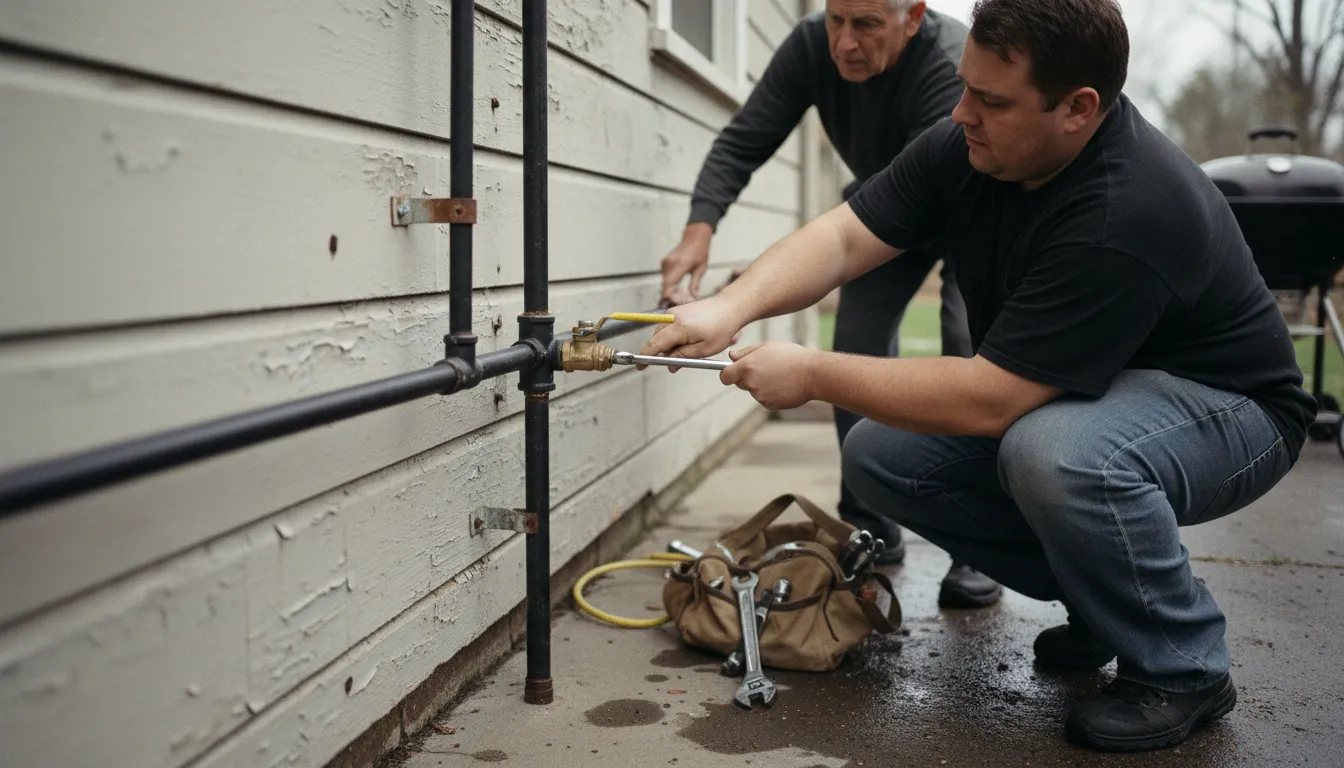
Find the Best Gas Line Plumbing Companies for Your Business
No obligation • Fast responses • Nationwide coverage

Why you can trust Search a Plumber
Search a Plumber is a leading United States resource for finding and evaluating professional plumbing services. Our team researches licensing, experience, and customer feedback to create unbiased, fact-driven overviews. Companies cannot pay to change ratings or placement, ensuring homeowners get trustworthy information.
Search providers near you
Top Gas Line Plumbing Companies in High Point, North Carolina Ranked
Ensuring your home has a safe and reliable gas supply is a critical aspect of modern living, powering everything from your furnace and water heater to your stove and fireplace. Gas line installation and repair is specialized work that directly impacts the safety and efficiency of your home. This guide is designed to help High Point homeowners understand the process, regulations, and key considerations for gas piping projects, empowering you to make informed decisions when you need to connect a new appliance, replace an old line, or address a potential leak.
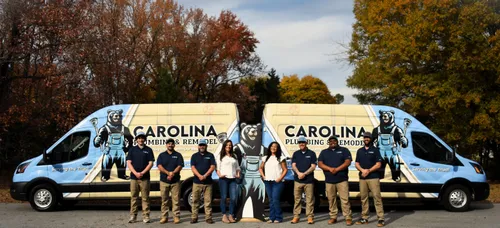
Carolina Plumbing & Remodel
1130 Snow Bridge Ln C, Kernersville, NC 27284
Carolina Plumbing & Remodel is a plumbing company serving Greensboro, NC, and the surrounding Triad area, including Winston-Salem, Kernersville, High Point, and more. They provide plumbing services for residential, commercial, and industrial clients, including tankless water heater installation, drain cleaning, leak detection, and gas line installation. The company offers 24/7 emergency plumbing services to address urgent issues such as burst pipes and water leaks. With years of experience, Carolina Plumbing & Remodel emphasizes quality workmanship and transparent pricing.
Owens Plumbing Company LLC
1418 Whilden Pl, Greensboro, NC 27408
Owens Plumbing Company LLC serves Greensboro, NC, providing a wide range of plumbing services for both residential and commercial clients. Their expertise includes water heater installation and repair, drain cleaning, sewer line repair, leak detection, repiping, gas line installation, and toilet repair. They handle various water heater types such as gas, electric, hybrid, and tankless models, and offer comprehensive drain cleaning services that address issues from kitchen grease to tree root blockages. Owens Plumbing Company LLC also manages water and gas line repairs and replacements, including main sewer and water lines, as well as fixture and faucet installations and repairs. They support commercial properties with plumbing maintenance and emergency services to keep businesses operational.
Martin Bradley Plumbing
4892 McCracken Rd, Kernersville, NC 27284
Martin Bradley Plumbing is a family-owned plumbing contractor based in Kernersville, NC, serving Winston Salem and the entire Piedmont Triad region. With 35 years of experience, they provide a range of plumbing services including tankless water heater installation, drain cleaning, sewer line repair, leak detection, gas line installation, and hydro jetting. The company is licensed in North Carolina and offers 24/7 emergency services to both residential and commercial customers.
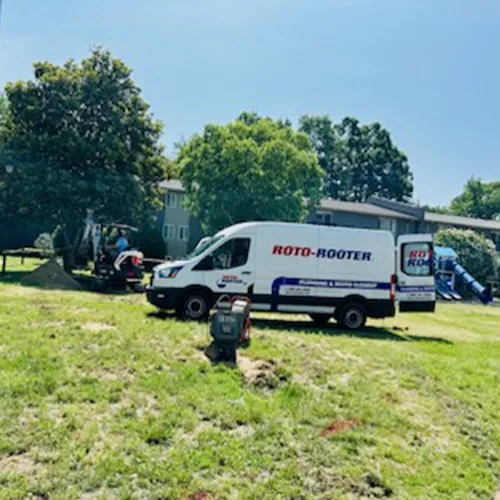
Roto-Rooter Plumbing & Water Cleanup
4248 Piedmont Pkwy, Greensboro, NC 27410
Roto-Rooter Plumbing & Water Cleanup provides comprehensive residential and commercial plumbing services in Greensboro, NC. Their offerings include sewer and drain cleaning, water heater repair and installation, leak detection, sewer line repair using trenchless methods, and emergency flood cleanup. The company uses advanced equipment such as hydro-jetting for drain cleaning and offers 24/7 emergency plumbing services to address urgent issues like burst pipes and sewer backups. Serving Greensboro and surrounding counties, Roto-Rooter is experienced in handling complex plumbing systems and environmental factors unique to the area.
Nicchio & Sons Plumbing LLC
Winston Salem, NC
Nicchio & Sons Plumbing LLC is a family-owned plumbing company serving Winston Salem, NC, and surrounding areas. With over 20 years of experience, they specialize in residential plumbing services including water heater repair and installation, sump pump repair, drain cleaning, hydro jetting, leak detection, repiping, and gas line installation. They handle a wide range of plumbing issues such as clogged drains, leaking pipes, fixture installations, and gas leak repairs. The company is fully licensed and insured, focusing on treating each customer's home with care and attention.
Understanding Gas Line Work in High Point
Working with natural gas or propane requires a high degree of precision and adherence to strict safety codes. In High Point, as throughout North Carolina, all gas line work is governed by the North Carolina Fuel Gas Code and the NC Residential Code 1. These regulations exist to prevent leaks, fires, and explosions, ensuring the safety of your household and community. The process involves more than just running a pipe; it encompasses proper planning, obtaining official permits, using certified materials, and undergoing mandatory inspections by the city.
Whether you're planning a new construction project, adding an outdoor kitchen with a gas grill, or switching an appliance from electric to gas, understanding the local requirements is your first step. This guide will walk you through the essential steps, from permits to final inspection, and highlight why partnering with a licensed professional is not just a recommendation-it's a requirement for safe and legal completion.
The Permit Process: Your First and Most Important Step
Before any trench is dug or pipe is threaded, you must secure the proper permits from the City of High Point. This is a non-negotiable step for any new gas line installation, extension, or significant repair.
Who Needs a Permit? A permit is required for:
- Installing a new gas line from the meter to an appliance.
- Extending an existing line to serve a new appliance (like a gas dryer or fireplace).
- Replacing a large section of existing gas piping.
- Any work that involves cutting into the gas supply system.
Who Obtains the Permit? In almost all cases, the permit must be pulled by a state-licensed contractor-either a licensed plumber or a mechanical contractor. This is because the licensed professional is legally responsible for ensuring the work meets all state and local codes. As a homeowner, you can apply for a permit yourself, but you then assume all liability for the work, which is strongly discouraged due to the significant risks involved.
The Inspection Sequence Once the permit is issued, the city will require one or more inspections. Typically, this includes a pressure test inspection, where the sealed line is tested for leaks, and a final inspection after the line is connected to the appliance and the work area is restored 2. Passing these inspections results in a certificate of approval, which is crucial for your home records and insurance.
The Step-by-Step Installation Process
A professional gas line installation follows a meticulous sequence to ensure safety and longevity.
- Design and Planning: A qualified technician will assess your needs, plan the most efficient and code-compliant route from the gas meter to the appliance, and determine the correct pipe size required for adequate gas flow.
- Utility Location (Call 811): This critical safety step is law. Before any digging, your contractor will call 811 to have all public underground utilities (water, electric, cable) marked on your property. This prevents dangerous and costly strikes 3.
- Excavation/Trenching: A trench is dug to the required depth (as specified by code to protect the pipe from damage). For interior work, walls or floors may need to be carefully opened to run the pipe.
- Pipe Installation: Approved piping material-typically black iron (steel) pipe or corrugated stainless steel tubing (CSST)-is cut, threaded, and assembled with proper fittings. The line is securely connected to the gas meter and run to the appliance location.
- Pressure Testing: The entire new section of pipe is sealed and pressurized with air or an inert gas. The pressure is monitored for a set period to confirm there are no leaks. This test is usually witnessed by a city inspector.
- Connection and Restoration: After passing the pressure test, the line is connected to the appliance valve. The technician will check for proper appliance operation. Finally, the trench is backfilled, and any disturbed landscaping or interior surfaces are repaired.
Critical Safety Considerations for Homeowners
Gas line work is not a DIY project. The risks of an improper installation-including gas leaks, fire, and carbon monoxide poisoning-are far too great.
- Always Hire Licensed Professionals: Only work with contractors who hold an active North Carolina state license in plumbing or mechanical contracting. They have the training, experience, and insurance to perform the job safely and legally 4 5.
- Recognize a Gas Leak: Know the signs: the distinctive "rotten egg" odor added to natural gas, a hissing sound near a gas line, or dead vegetation near a buried pipe. If you suspect a leak, leave the area immediately and call your gas company or 911 from a safe distance.
- Use of Approved Materials: Only materials listed for fuel gas use can be installed. Your contractor will use the correct type of pipe, fittings, and connectors (like flexible appliance connectors) that meet code standards 6.
- Code Compliance is Key: Codes dictate proper clearances from electrical panels, windows, and other fixtures, as well as support intervals and drip leg installation. Professional installers ensure every detail complies.
Find the perfect gas line plumbing companies for your needs
Get personalized recommendations and expert advice
Understanding the Cost of Gas Line Projects
The cost for gas line installation or repair in High Point can vary widely based on several factors. It's wise to budget accordingly and obtain multiple detailed quotes from licensed professionals.
Primary Cost Factors:
- Project Scope & Length: The single biggest factor is the total length of new pipe needed. A line to a nearby appliance costs less than one run to a detached garage or outdoor kitchen.
- Number of Appliances: Each additional appliance (branch line) adds material and labor.
- Installation Difficulty: Costs increase if the installer must trench through rocky soil, navigate complex landscaping, or penetrate concrete foundations or multiple walls.
- Materials: The type of piping (black iron vs. CSST) and the required fittings influence material costs.
- Permits and Inspections: The city's permit fees are an additional, required cost on top of labor and materials 7.
Typical Cost Ranges: While every project is unique, homeowners can expect a broad range. A relatively straightforward installation for a single appliance might fall between $260 and $820 for labor and materials 8. More complex projects involving long trench runs, multiple branches, or difficult access can easily exceed $1,350 9 10. Your detailed quote should itemize labor, materials, and the estimated permit fee.
Getting Started with Your High Point Project
Your best first stop for official information is the City of High Point Development Services website. Here, you can find applications, fee schedules, and contact information for the inspections department 11. When you're ready to hire, verify a contractor's state license online and ask for proof of insurance. Look for established local companies with specific experience in gas line work, and don't hesitate to ask for references from similar projects they've completed in the area.
Frequently asked questions
Sources
Footnotes
-
Residential Construction | High Point, NC - https://www.highpointnc.gov/3019/Residential-Construction ↩
-
Scheduling Inspections | High Point, NC - https://www.buildhighpoint.com/3000/Scheduling-Inspections ↩
-
RESIDENTIAL GAS PIPING INFORMATION - https://www.ci.east-bethel.mn.us/DocumentCenter/View/401 ↩
-
Do I Need a Permit for Gas Line Work in North Carolina? - https://gasmastersnc.com/do-i-need-a-permit-for-gas-line-work-in-north-carolina/ ↩
-
Obtaining a Permit | High Point, NC - https://www.highpointnc.gov/2979/Obtaining-a-Permit ↩
-
A Complete Guide to Gas Line Installation: Tips and Safety Precautions - https://gaeberly.com/gas-line-installation/ ↩
-
Permits | High Point, NC - https://www.highpointnc.gov/3011/Permits ↩
-
How Much Do Gas Line Installation or Repairs Cost? [2026 Data] - https://www.angi.com/articles/what-average-cost-85-run-natural-gas-line.htm ↩
-
Gas Line Installation Cost: A Homeowner Budgeting Guide - https://www.bobvila.com/articles/gas-line-installation-cost/ ↩
-
New Gas Line Installation Cost: Natural Gas Piping Supplies & Custom Piping - https://www.superbrothers.com/new-gas-line-installation-cost-natural-gas-piping-supplies-custom-piping/ ↩
-
Permits Required | High Point, NC - https://www.highpointnc.gov/2978/Permits-Required ↩