Find the Best Gas Line Plumbing Companies for Your Business
No obligation • Fast responses • Nationwide coverage

Why you can trust Search a Plumber
Search a Plumber is a leading United States resource for finding and evaluating professional plumbing services. Our team researches licensing, experience, and customer feedback to create unbiased, fact-driven overviews. Companies cannot pay to change ratings or placement, ensuring homeowners get trustworthy information.
Search providers near you
Top Gas Line Plumbing Companies in Greenwood, Indiana Ranked
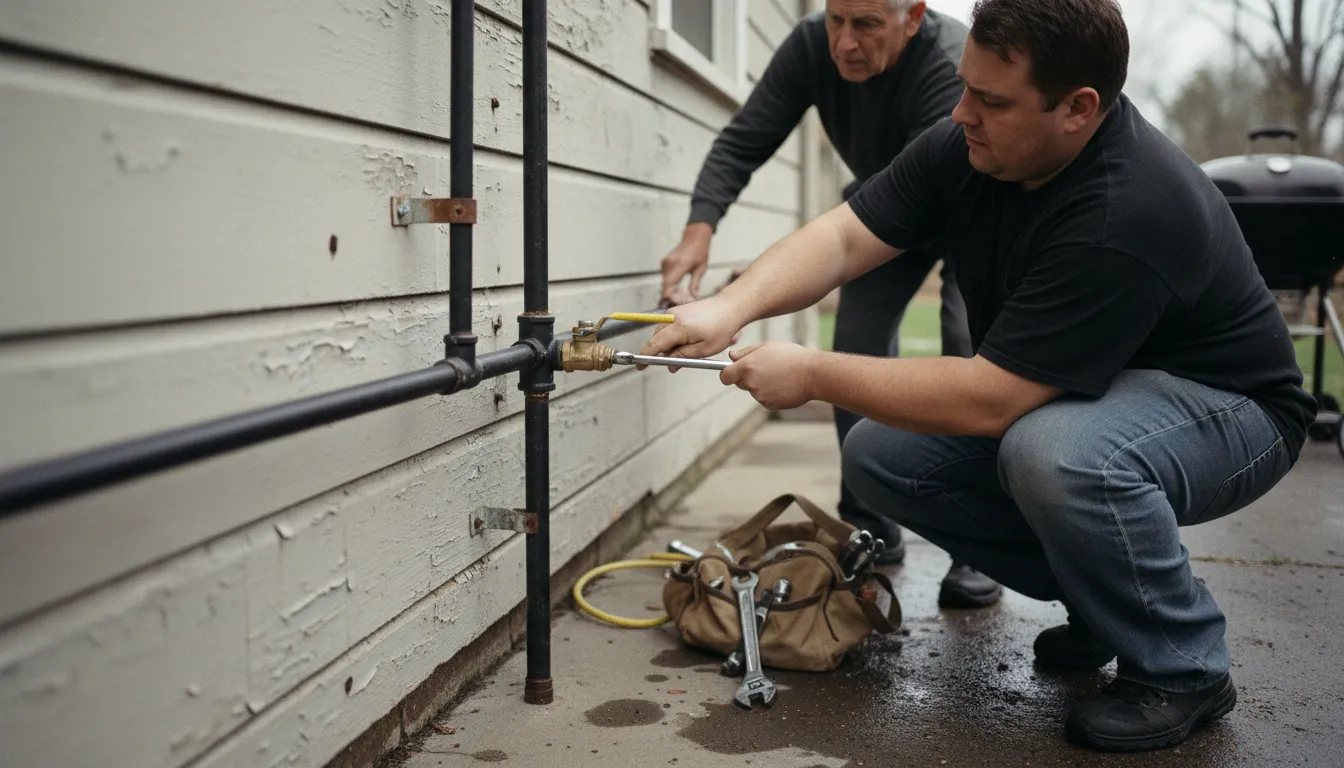
Installing or repairing a gas line is a critical home project that directly impacts the safety and functionality of your household. Whether you're adding a gas fireplace, upgrading to a gas stove, or connecting a new furnace, proper gas piping ensures your appliances operate reliably and safely. This guide explains the essential steps, local requirements, and safety considerations for gas line projects in Greenwood, helping you understand the process so you can find and collaborate effectively with qualified local professionals.
Roto-Rooter Plumbing & Water Cleanup
18 E Main St Ste 230, Greenfield, IN 46140
Roto-Rooter Plumbing & Water Cleanup provides a wide range of plumbing services in Indianapolis, IN, including sewer and drain cleaning, water heater repair and installation, sump pump services, and leak detection. They specialize in both residential and commercial plumbing, offering advanced solutions such as hydro jetting and trenchless sewer repair to address complex plumbing issues. Established in 1935, Roto-Rooter has a long history of innovation and expertise in plumbing, and they offer 24/7 emergency services to handle urgent plumbing problems at any time.

Home Heroes Plumbing Heating & Air
7768 Kane Ct, Fishers, IN 46038
Home Heroes Plumbing Heating & Air is a locally owned plumbing, heating, and air conditioning service provider based in Fishers, Indiana. Serving Indianapolis, IN, and surrounding areas, they offer a range of services including water heater repair and installation, tankless water heater services, water softener installation, sump pump repair, drain cleaning, leak detection, gas line installation, and toilet repair. The company specializes in handling plumbing emergencies during business hours and provides expert solutions such as Rheem water heater installations, including tankless models. With over a decade of experience, Home Heroes Plumbing Heating & Air is committed to delivering reliable service tailored to customer needs.
Price Right Plumbing
500 Polk St #27, Greenwood, IN 46143
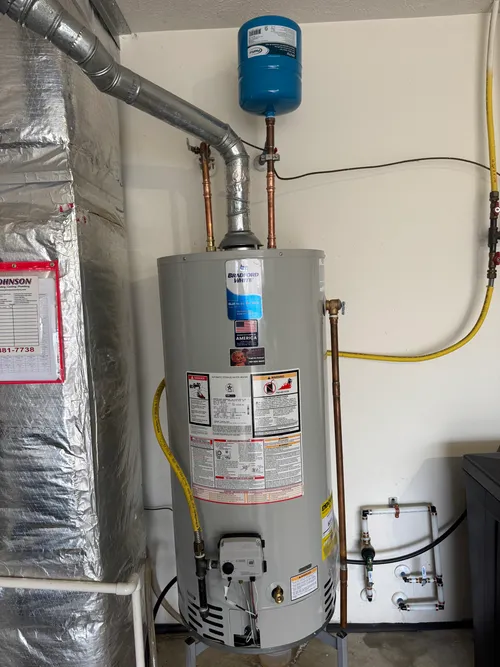
Price Right Plumbing provides a wide range of plumbing services for homes and businesses in Indianapolis, IN. Their expertise includes water heater repair and installation, water softener installation, drain cleaning, hydro jetting, sewer line repair, leak detection, and gas line installation. They offer advanced leak detection and non-invasive pipe repairs, along with certified gas line services to ensure safety and compliance. Price Right Plumbing also provides 24/7 emergency plumbing support to address urgent issues promptly.
Mr. Plumber by Metzler & Hallam
1033 3rd Ave SW Suite 205, Carmel, IN 46032
Mr. Plumber by Metzler & Hallam is a licensed plumbing service provider based in Indianapolis, IN, offering a wide range of plumbing solutions. Their services include sewer camera inspection, water heater repair, water softener installation, sump pump repair, sewer line repair with trenchless technology, leak detection, gas line installation, toilet and garbage disposal repair, among others. They utilize advanced tools such as camera snaking systems and infrared cameras to diagnose plumbing issues efficiently. The company emphasizes trenchless sewer line repair methods like pipe bursting and relining to minimize property disruption. Mr. Plumber provides 24/7 emergency service, ensuring assistance is available whenever needed.
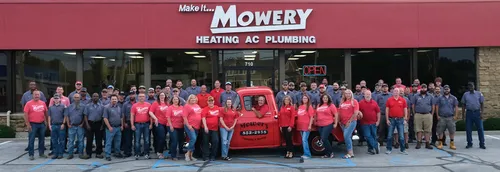
Mowery Heating, Cooling & Plumbing
710 E Main St, Brownsburg, IN 46112
Mowery Heating, Cooling & Plumbing is a full-service plumbing and HVAC company serving Indianapolis, IN. They offer a wide range of services including sewer camera inspections, water heater installation and repair, tankless water heater services, water softener installation, sump pump repair, drain cleaning, sewer line repair, leak detection, repiping, gas line installation, toilet repair, and garbage disposal repair. The company is equipped to handle complex plumbing issues such as sewer line blockages and gas leak repairs. Mowery has a long-standing presence in the community with over 20 years of experience. They also provide emergency plumbing services, including after-hours support for urgent repairs.
Understanding Gas Line Services
Gas line installation and repair encompass a range of services essential for modern homes. This work involves running new pipes from the main gas meter to appliances, repairing leaks in existing systems, or extending lines for home additions and new appliances. Given the inherent risks of working with natural gas or propane, this is not a DIY project. It requires the expertise of a licensed professional who understands the properties of gas, local pressure requirements, and stringent safety codes. In Greenwood, this work is tightly regulated to protect homeowners and the community, making the choice of a qualified contractor paramount.
The Critical Role of Permits and Inspections
In Greenwood, and throughout Johnson County, a municipal permit is required for any new gas line installation or significant repair. This is not merely a formality; it's a vital layer of safety oversight. Your licensed contractor will obtain this permit from the local building authority before work begins. The permit process ensures your project plan adheres to the current Indiana and local plumbing codes.
Following installation, an inspection is mandatory 1. A city or county inspector will visit to verify that all work meets safety standards. They will check for proper materials, secure connections, correct pressure settings, and safe proximity to other utilities. Passing this inspection is crucial, as it provides official confirmation that your new gas piping system is safe for use. Never let a contractor suggest skipping the permit or inspection process.
Step-by-Step: The Professional Installation Process
A professional gas line installation follows a meticulous, safety-first sequence. Here's what you can expect when you hire a qualified Greenwood technician:
- Call 811 Before Digging: This is the non-negotiable first step and is required by law 2 3. Calling 811 (or submitting an online request) notifies Indiana's utility locating service. They will mark the approximate locations of all buried public utility lines on your property-like water, sewer, and electric-usually within a few business days. This prevents dangerous and costly strikes.
- Planning the Route: The technician will assess the location of your gas meter and the new appliance (e.g., tankless water heater, fire pit) to plan the most direct and safe path for the new line, avoiding major obstacles.
- Trenching and Excavation: For underground lines, a trench is dug. Depth is critical; in Greenwood, gas service lines are typically buried 18 to 24 inches deep, but local codes have the final say 4. Within a 24-inch "tolerance zone" on either side of a marked utility line, hand digging is required to carefully expose the existing line 5.
- Pipe Installation: The chosen pipe material (see below) is laid in the trench or run through interior spaces. All connections are made using specialized fittings and thread sealant approved for gas.
- Connection and Pressure Testing: The line is connected to the appliance shutoff valve. Before the system is activated, the plumber will perform a rigorous pressure test. A common method involves pressurizing the line with air (e.g., to 10 psi for 15 minutes for steel pipe) to check for any leaks 6.
- Inspection: As noted, the inspector verifies the work.
- Backfill and Restoration: Once approved, the trench is carefully backfilled, and the work area is restored as agreed upon with the homeowner.
Choosing the Right Pipe Material
The choice of pipe material affects durability, cost, and installation method. Your licensed professional will recommend the best option for your specific project.
- Black Iron Pipe: The traditional, robust choice for both interior and exterior applications. It is highly durable and is often used for exposed runs in basements or for the main supply line. It requires threading and more labor to install.
- Corrugated Stainless Steel Tubing (CSST): A flexible, yellow-jacketed tubing that has become very popular for residential gas piping 7. Its flexibility allows it to be snaked through walls and joists with fewer fittings, often making installation faster and less invasive than rigid black iron.
- Copper Tubing: While once common, its use for gas lines is now restricted by many local codes and is less frequently used in modern installations compared to CSST or black iron.
Find the perfect gas line plumbing companies for your needs
Get personalized recommendations and expert advice
Non-Negotiable Safety Protocols
Safety is the absolute priority in any gas line project. Reputable Greenwood contractors adhere to strict protocols, and as a homeowner, you should be aware of these key points:
- Hire Licensed Professionals Only: This cannot be overstated. A licensed plumber or gas fitter has the training to handle gas safely, knows how to obtain the proper permits, and ensures code compliance that protects your home and family.
- Ensure Proper Ventilation: During work, technicians will ensure work areas, especially basements and crawl spaces, are well-ventilated to prevent the accumulation of any stray gas.
- Secure the Work Site: Keep children and pets completely away from the excavation and work areas for their safety and to allow the technicians to work without distraction 8.
- Know Your Shutoff Valve: Before work begins, identify the location of your main gas shutoff valve. In an emergency, knowing how to turn off the gas supply is crucial.
Factors Influencing Project Cost
The cost for gas line work in Greenwood varies based on several factors. While specific prices require an on-site estimate, understanding these elements helps you evaluate quotes:
- Labor: The primary cost is the skilled labor of the licensed professional. Complex routes or difficult excavation increase labor time.
- Materials: The type and diameter of the pipe (black iron vs. CSST), along with the number of fittings, valves, and connectors, affect material costs.
- Permit Fees: The cost for the required municipal permit will be part of the project total.
- Project Scope & Complexity: Running a completely new line from the meter to a backyard grill is a larger project with higher costs than simply extending an existing line a few feet for a new kitchen range. The total length of pipe needed and obstacles (like concrete patios or finished walls) significantly impact the final price 9.
When is Gas Line Repair Needed?
Installation isn't the only service. Be alert for signs that your existing gas piping may need professional repair:
- The smell of rotten eggs (odorant added to natural gas) near a gas appliance or pipe.
- A hissing or whistling sound near a gas line.
- Unusually high gas bills without increased usage, which may indicate a leak.
- Dead or discolored vegetation in an otherwise healthy lawn along the path of an underground gas line.
- The pilot light on appliances frequently goes out.
If you suspect a leak, leave the area immediately, avoid using any electrical switches or creating sparks, and call your gas company or 911 from a safe distance.
Frequently asked questions
Sources
Footnotes
-
Essential Guide to Gas Line Installation: Tips and Safety Precautions - https://gaeberly.com/gas-line-installation/ ↩
-
Get the Facts About Home Gas Line Installation | Hope Plumbing - https://www.hopeplumbing.com/get-the-facts-about-home-gas-line-installation/ ↩
-
Indianapolis Gas Lines | Hope Plumbing Heating & Cooling - https://www.hopeplumbing.com/plumbing-services/gas-plumbing/ ↩
-
Gas Line Safety During Indiana Home Renovations - Hope Plumbing - https://www.hopeplumbing.com/gas-line-safety-during-indiana-home-renovations/ ↩
-
Frequently Asked Questions - CivicPlus.CMS.FAQ - https://www.rpvca.gov/faq.aspx?TID=40 ↩
-
Gas Line Installation - Fite Plumbing, LLC - https://fiteplumbing.com/gas-line-installation/ ↩
-
Gas Piping | New Appliance Set Up | Greenwood, IN - https://www.wintersplumbers.com/gas-piping ↩
-
Gas Line Installations: Safety Tips for Residents | Southport Home - https://southportheating.com/gas-line-installations-safety-tips-for-residents/ ↩
-
Gas Line Installation Cost: 2023 Guide - Super Brothers - https://www.superbrothers.com/gas-line-installation-cost-2023-guide/ ↩