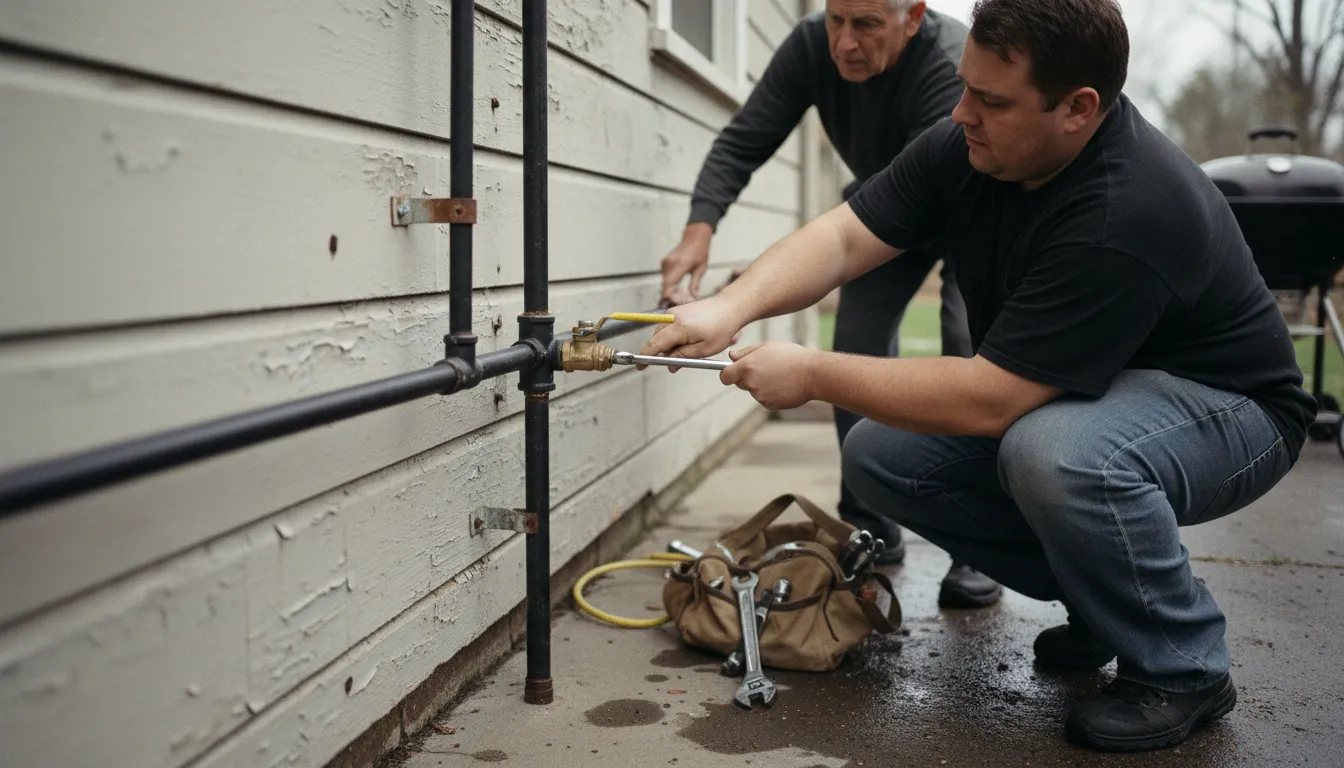
Find the Best Gas Line Plumbing Companies for Your Business
No obligation • Fast responses • Nationwide coverage

Why you can trust Search a Plumber
Search a Plumber is a leading United States resource for finding and evaluating professional plumbing services. Our team researches licensing, experience, and customer feedback to create unbiased, fact-driven overviews. Companies cannot pay to change ratings or placement, ensuring homeowners get trustworthy information.
Search providers near you
Top Gas Line Plumbing Companies in Peachtree Corners, Georgia Ranked
Installing or repairing a gas line is a critical project that directly impacts the safety and functionality of your home. Proper gas piping work ensures your appliances-like water heaters, stoves, and fireplaces-receive a reliable fuel supply without risk of leaks. In Peachtree Corners, this work is governed by strict state and local codes and must be performed by licensed professionals. This guide will help you understand the process, from permits to final inspection, so you can make informed decisions when you need to find qualified local specialists for your gas line project.
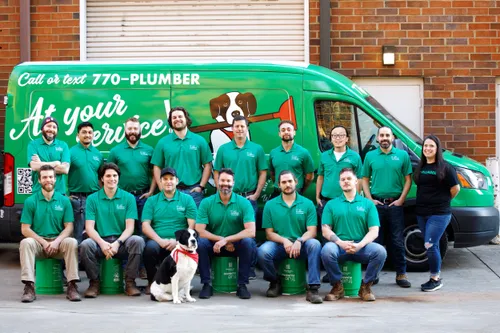
True Plumbing
2650 Pleasantdale Rd, Doraville, GA 30340
True Plumbing is a plumbing service provider based in Atlanta, GA, offering a wide range of services including sewer camera inspections, water heater repair and installation, drain cleaning, sewer line repair, trenchless sewer repair, leak detection, repiping, gas line installation, and toilet repair. They use advanced tools for leak detection and provide trenchless methods for sewer repairs, helping maintain efficient plumbing systems. Established in 2014, True Plumbing focuses on building lasting customer relationships by educating clients and ensuring peace of mind with their work.
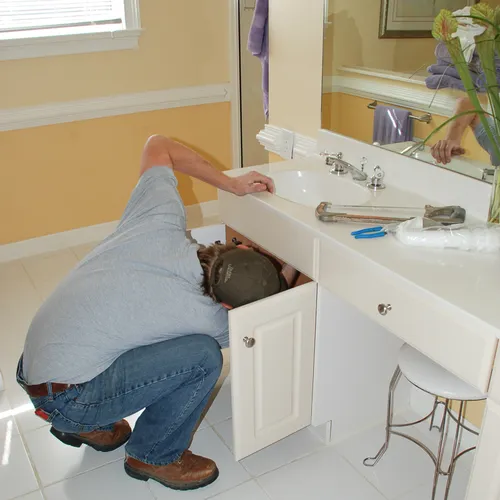
Pike Plumbing
4341 Stilesboro Ln NW, Kennesaw, GA 30152
Pike Plumbing is a family-owned plumbing company serving Atlanta, GA, and surrounding areas since 1984. They provide residential and commercial plumbing services including water heater repair, drain cleaning, sewer line repair, gas line installation, and hydro jetting. Known for handling waterline and sewer line work with a lifetime workmanship warranty, Pike Plumbing offers 24/7 emergency plumbing services to address urgent issues at any time.

Honeycomb Plumbing
Atlanta, GA
Honeycomb Plumbing is a residential plumbing company serving Atlanta, GA, and surrounding counties including Cobb, Fulton, Dekalb, and Gwinnett. Founded this year, the company brings a decade of expertise to a wide range of plumbing services such as water heater installation and maintenance, drain cleaning with camera inspections, water softener and filtration system installation, sump pump repairs, gas line installation, and full repiping projects. They offer 24/7 emergency plumbing services to address urgent issues and prevent property damage.
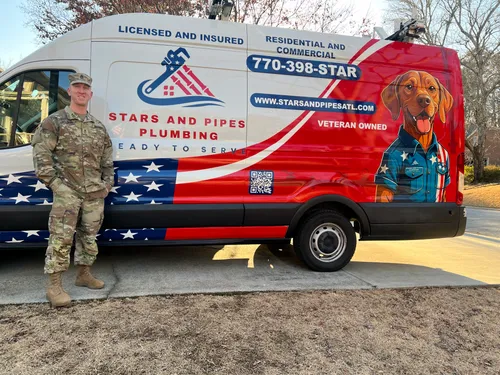
Stars and Pipes Plumbing Atlanta
1014 Parkview Way SW, Lilburn, GA 30047
Stars and Pipes Plumbing Atlanta is a veteran-owned, family-operated plumbing company serving Atlanta, GA, and surrounding counties including Gwinnett, Fulton, and DeKalb. They provide a range of plumbing services such as sewer camera inspections, water heater repair and installation, water softener installation, drain cleaning, hydro jetting, sewer line repair, and gas line installation. Their licensed plumbers use advanced equipment like hydro-jetting and video inspection to diagnose and resolve drainage issues efficiently. With over 10 years of experience, Stars and Pipes Plumbing Atlanta offers certified gas line installations that meet local safety standards and codes.
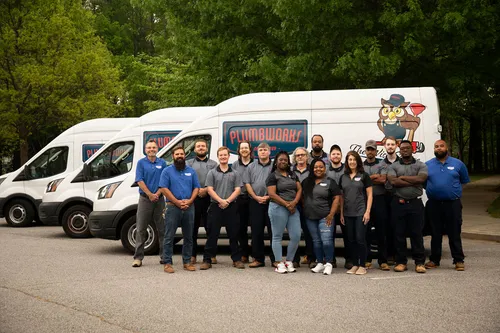
Plumb Works Inc.
3116 Chestnut Dr #101, Atlanta, GA 30340
Plumb Works Inc. is a plumbing company serving the Atlanta, GA area since 1989. They provide a wide range of residential, commercial, and underground plumbing services including sewer camera inspections, water heater repair and installation, sump pump repair, drain cleaning, hydro jetting, sewer line repair, trenchless sewer repair, leak detection, repiping, gas line installation, toilet repair, and garbage disposal repair. The company offers specialized sewer line camera inspections to identify underground pipe issues and provides detailed reports with repair recommendations. Plumb Works also offers emergency plumbing services to address urgent plumbing problems promptly.
Understanding Local Codes and Permit Requirements
Before any trench is dug or pipe is fitted, the first step is securing the proper permits. In Peachtree Corners, a permit is mandatory for installing, altering, or repairing any gas system. This isn't just bureaucratic red tape; it's a vital safety checkpoint. The permitting process ensures that all planned fuel gas work complies with the latest building codes, which in Georgia are based on the 2018 International Fuel Gas Code (IFGC) and International Residential Code (IRC), including state-specific amendments.
You can apply for the necessary permits through the city's BS&A online portal. It's highly recommended to have your licensed plumbing or gas fitting professional handle this application, as they will be familiar with the specific documentation and plans required. The permit triggers a series of inspections by city officials, which are non-negotiable for your safety and legal compliance.
The Step-by-Step Process for Gas Piping Projects
A successful gas line installation or repair follows a meticulous sequence. Skipping or rushing any step can lead to serious hazards or failed inspections.
1. Pre-Construction: Planning and Calling 811
The absolute rule before breaking ground is to call 811. This free service, often known as "Miss Utility," will have all public underground utilities marked on your property. This prevents accidentally striking an electrical, water, or existing gas line, which could cause injury, service outages, or costly damages.
2. Trenching and Excavation
Once lines are marked, excavation begins. Trenches for gas lines must be dug to a code-specified depth, typically between 12 to 18 inches deep for residential applications. Worker safety during this phase is paramount, and the excavation must comply with OSHA standards (Part 1926 Subpart P) for trench shoring or sloping to prevent collapses 1.
3. Pipe Installation and Bedding
The type of pipe used is crucial. Approved materials include black iron, corrugated stainless steel tubing (CSST), or copper, depending on the application and code 2. The pipe is laid in the trench with proper fittings and requires a stable base. "Bedding" involves placing the pipe on clean, stable soil or sand, and "backfilling" is done in careful layers with compaction to about 95% density to prevent future settling that could stress the pipe 2 3.
4. Pressure Testing and Rough-In Inspection
Before the trench is backfilled, a critical test occurs. The newly installed gas line is pressurized (usually to 10-15 PSI) and must hold that pressure steadily for a minimum of 15 minutes. This "pressure test" verifies the integrity of all joints and the pipe itself, confirming there are no leaks. A city inspector will typically perform a rough-in inspection at this stage, before the trench is covered, to approve the test and the installation work thus far.
5. Final Connection and Inspection
After passing the rough-in, the trench can be backfilled. The gas line is then connected to the meter and the intended appliance (e.g., a new tankless water heater or outdoor kitchen grill). A final leak test is conducted, often with an electronic gas detector for the highest sensitivity. Once everything is complete, a final inspection by the city is required to grant official approval and close out the permit 4.
Find the perfect gas line plumbing companies for your needs
Get personalized recommendations and expert advice
Safety Considerations You Cannot Overlook
Gas line work is not a DIY project. The risks of explosion, fire, and carbon monoxide poisoning are too great. Hiring a licensed plumber or gas fitter is the single most important safety decision you can make 5. These professionals:
- Understand the nuances of local amendments to the fuel gas code.
- Have the specialized tools for proper threading, cutting, and testing.
- Know how to ensure proper appliance venting to prevent deadly carbon monoxide buildup.
- Use approved leak detection methods beyond the old "soapy water" test.
Furthermore, using the correct, code-approved materials for your specific application is non-negotiable. For instance, using the wrong type of flexible connector or an unapproved fitting can create a long-term leak hazard.
Understanding Project Scope and Associated Costs
The cost for gas line services in Peachtree Corners varies significantly based on the project's complexity, length of pipe run, materials, and labor rates. It's always wise to obtain multiple detailed quotes from licensed professionals. Here are some general estimate ranges based on common project scopes 6:
- Running a New Line for a Single Appliance: For a relatively straightforward run to connect a gas stove or dryer, you might expect costs in the range of $300 to $800 or more.
- Relocating or Extending an Existing Gas Line: More complex projects that involve longer trenching, navigating landscaping or driveways, and tying into existing systems can range from $500 to $1,500+.
- Gas Line for a Water Heater or Fireplace: Installing the fuel line for a new gas water heater or fireplace insert often falls between $400 and $1,000, depending on the distance from the meter and complexity of the hookup.
Remember, these are estimates. The final price will be determined by the specific conditions on your property. The mandatory call to 811 is free, and the permit fees are a separate, additional cost to factor into your overall budget 7.
Why Professional Expertise is Non-Negotiable
From securing the correct permit to passing the final inspection, every phase of a gas piping project is interconnected. A licensed professional manages this entire workflow. They ensure the trench is safe and to code, the pipe is correctly sized and installed, the pressure test is documented, and all work meets the inspector's checklist 8. Attempting this yourself to save money can result in failed inspections, costly rework, severe safety hazards, and potential issues with your home insurance. Investing in a qualified expert from the start provides peace of mind that your home's fuel system is safe, reliable, and legally compliant.
Frequently asked questions
Sources
Footnotes
-
Oil and Gas Pipeline Construction 101 | Polyguard - https://polyguard.com/blog/pipeline-construction ↩
-
Permitting Process | Peachtree Corners, GA - https://peachtreecornersga.gov/398/Permitting-Process ↩ ↩2
-
How to install an underground gas line - https://www.youtube.com/watch?v=XhZrhq7rW9A ↩
-
Building & Permitting | Peachtree Corners, GA - https://www.peachtreecornersga.gov/191/Building-Permitting ↩
-
When Do I Need A Building Permit? | Peachtree Corners, GA - https://www.peachtreecornersga.gov/193/When-Do-I-Need-A-Building-Permit ↩
-
FAQs • Do I need a permit to replace my water heater? - Brookhaven, GA - https://www.brookhavenga.gov/FAQ.aspx?QID=93 ↩
-
PEACHTREE CORNERS PUBLIC WORKS FACILITY - https://amoconstructionllc.com/wp-content/uploads/2024/05/ITB-22-06-Project-Drawings.pdf ↩
-
Residential Fuel Gas piping Checklist - eAuditor Inspections - https://eauditor.app/2024/05/07/residential-fuel-gas-piping-checklist/ ↩