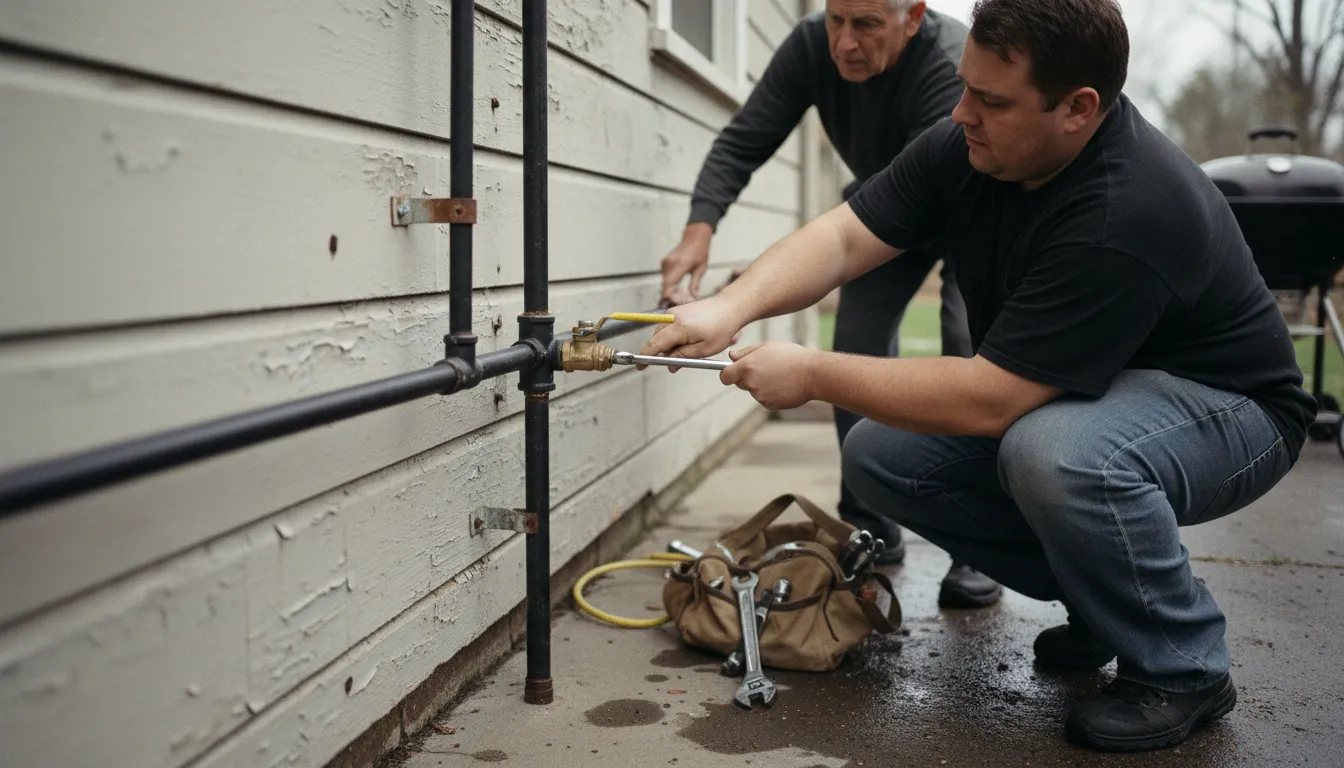
Find the Best Gas Line Plumbing Companies for Your Business
No obligation • Fast responses • Nationwide coverage

Why you can trust Search a Plumber
Search a Plumber is a leading United States resource for finding and evaluating professional plumbing services. Our team researches licensing, experience, and customer feedback to create unbiased, fact-driven overviews. Companies cannot pay to change ratings or placement, ensuring homeowners get trustworthy information.
Search providers near you
Top Gas Line Plumbing Companies in Johns Creek, Georgia Ranked
Gas line installation and repair are critical services for safely connecting your home's appliances to the natural gas supply. Proper gas piping work is essential for the safe operation of furnaces, water heaters, stoves, and fireplaces, ensuring your family's comfort and safety. This guide provides an overview of what to expect when you need gas line services in Johns Creek, from understanding local requirements to finding qualified professionals who can handle the job correctly.
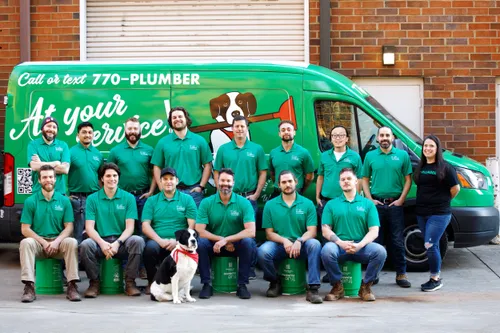
True Plumbing
2650 Pleasantdale Rd, Doraville, GA 30340
True Plumbing is a plumbing service provider based in Atlanta, GA, offering a wide range of services including sewer camera inspections, water heater repair and installation, drain cleaning, sewer line repair, trenchless sewer repair, leak detection, repiping, gas line installation, and toilet repair. They use advanced tools for leak detection and provide trenchless methods for sewer repairs, helping maintain efficient plumbing systems. Established in 2014, True Plumbing focuses on building lasting customer relationships by educating clients and ensuring peace of mind with their work.
Pike Plumbing
4341 Stilesboro Ln NW, Kennesaw, GA 30152
Pike Plumbing is a family-owned plumbing company serving Atlanta, GA, and surrounding areas since 1984. They provide residential and commercial plumbing services including water heater repair, drain cleaning, sewer line repair, gas line installation, and hydro jetting. Known for handling waterline and sewer line work with a lifetime workmanship warranty, Pike Plumbing offers 24/7 emergency plumbing services to address urgent issues at any time.

Honeycomb Plumbing
Atlanta, GA
Honeycomb Plumbing is a residential plumbing company serving Atlanta, GA, and surrounding counties including Cobb, Fulton, Dekalb, and Gwinnett. Founded this year, the company brings a decade of expertise to a wide range of plumbing services such as water heater installation and maintenance, drain cleaning with camera inspections, water softener and filtration system installation, sump pump repairs, gas line installation, and full repiping projects. They offer 24/7 emergency plumbing services to address urgent issues and prevent property damage.
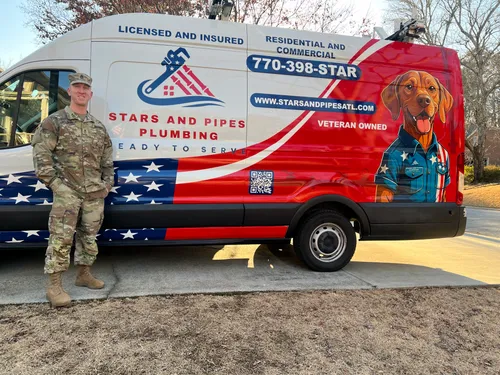
Stars and Pipes Plumbing Atlanta
1014 Parkview Way SW, Lilburn, GA 30047
Stars and Pipes Plumbing Atlanta is a veteran-owned, family-operated plumbing company serving Atlanta, GA, and surrounding counties including Gwinnett, Fulton, and DeKalb. They provide a range of plumbing services such as sewer camera inspections, water heater repair and installation, water softener installation, drain cleaning, hydro jetting, sewer line repair, and gas line installation. Their licensed plumbers use advanced equipment like hydro-jetting and video inspection to diagnose and resolve drainage issues efficiently. With over 10 years of experience, Stars and Pipes Plumbing Atlanta offers certified gas line installations that meet local safety standards and codes.
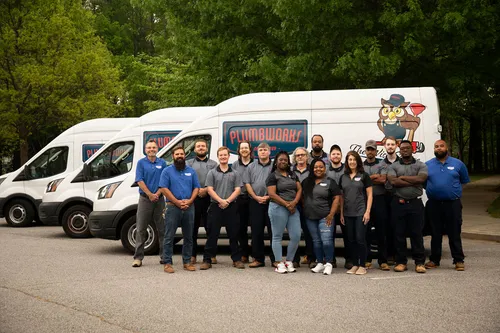
Plumb Works Inc.
3116 Chestnut Dr #101, Atlanta, GA 30340
Plumb Works Inc. is a plumbing company serving the Atlanta, GA area since 1989. They provide a wide range of residential, commercial, and underground plumbing services including sewer camera inspections, water heater repair and installation, sump pump repair, drain cleaning, hydro jetting, sewer line repair, trenchless sewer repair, leak detection, repiping, gas line installation, toilet repair, and garbage disposal repair. The company offers specialized sewer line camera inspections to identify underground pipe issues and provides detailed reports with repair recommendations. Plumb Works also offers emergency plumbing services to address urgent plumbing problems promptly.
Understanding Gas Piping Work in Johns Creek
Installing or repairing a gas line is a specialized task governed by strict safety codes. In Johns Creek, all work involving the installation, alteration, or repair of gas systems requires a city permit and must be performed by a licensed professional. This regulatory framework is in place to prevent dangerous leaks and ensure every gas line project meets the standards set by the International Plumbing Code (IPC) and International Fuel Gas Code (IFC). Whether you're adding a line for a new outdoor grill or replacing old piping, the process involves careful planning, certified materials, and multiple inspections.
The consequences of improper gas line work can be severe, ranging from minor leaks to catastrophic fires or explosions. This is why the city mandates that only licensed contractors who are registered with the Johns Creek Community Development Department can pull the necessary permits. Homeowners should never attempt a DIY gas line project. The complexity involves understanding proper pipe sizing, material selection, pressure testing, and final connection to the meter and appliances-all areas where professional expertise is non-negotiable for safety.
The Step-by-Step Process for Gas Line Projects
A professional gas line installation or repair follows a meticulous sequence. Understanding this process can help you know what to expect from your contractor.
1. Assessment and Design The first step is a site evaluation. A licensed plumber will determine the required pipe size based on the appliance's BTU demand and the length of the run. They will also plan the route, deciding between exposed interior runs or buried exterior lines, and select the appropriate piping material, such as Corrugated Stainless Steel Tubing (CSST), black iron, or copper 1.
2. Permitting Before any work begins, your contractor must register and apply for a permit through the city's Customer Self-Service (CSS) Portal. They will submit the project plans for review. Construction can only start after the permit is issued and all fees are paid. This step ensures the proposed work complies with all local amendments to the state building codes.
3. Excavation and Installation For outdoor lines, this phase involves trenching to the proper depth. The plumber will then install the pipes, making secure connections at joints and potentially cutting access holes through walls or floors as needed 2. Proper support and protection for the piping are crucial at this stage.
Find the perfect gas line plumbing companies for your needs
Get personalized recommendations and expert advice
4. Pressure Testing This is the most critical safety check. The installed line is sealed and pressurized (often to 10-15 PSI) to test for leaks. In Johns Creek, this pressure test is typically witnessed and verified by the city inspector during the mandatory "Rough" inspection 3. A passing test confirms the integrity of all connections before the line is connected to the gas meter.
5. Final Connection and Inspection Once the pressure test passes, the plumber can connect the new line to the gas meter and the appliance. After this connection is made, a "Final" inspection is scheduled. The city inspector will verify that the entire installation is code-compliant and safe for operation. Only after this final approval should the gas be turned on for regular use.
Local Regulations and Permit Requirements
Johns Creek has a clear and enforced process for gas line work. The key requirements every homeowner should know are:
- Permit Required: Yes. A permit is mandatory for any installation, alteration, or repair of gas piping 4.
- Who Applies: The licensed contractor performing the work must register and apply for the permit via the CSS Portal. Homeowners cannot pull permits for this type of work themselves.
- Inspections: Two inspections are standard: a Rough Inspection (to check the piping and pressure test before connection) and a Final Inspection (after the line is connected to the appliance). These inspections must be scheduled sequentially and cannot be combined.
- Re-inspection Fees: If work fails an inspection or is not ready when the inspector arrives, re-inspection fees will apply 5. Hiring a knowledgeable local professional helps avoid these costly delays.
Cost Factors for Gas Line Services
The cost of gas line installation or repair in Johns Creek is not a flat fee; it varies based on several project-specific factors. While prices can fluctuate, understanding the components helps in budgeting.
- Cost per Linear Foot: A common benchmark is $10 to $20 or more per linear foot for residential work 6 7 8. This covers materials and labor. A short run for a stove will cost less than a long run to a detached garage or pool heater.
- Material Choice: The type of pipe used impacts cost. Flexible CSST is popular for its ease of installation but may have a different cost profile than traditional black iron (steel) pipe or copper tubing 9 10.
- Labor and Complexity: Labor rates vary by contractor. Complexity, such as tunneling under a driveway, running pipes through finished walls, or needing extensive trenching, will increase labor time and cost.
- Permit Fees: These are an additional cost typically factored into the contractor's quote. The fee is based on the project's valuation.
- Appliance Type: Simply extending a line for a new gas grill is a smaller project than installing a new main line and branches for a whole-house generator, tankless water heater, and fireplace.
Always get detailed, written estimates from multiple licensed contractors for your specific project to understand the exact pricing.
Choosing the Right Professional in Johns Creek
Your safety depends on the contractor you hire. Look for a plumber who is:
- Licensed in the State of Georgia: This is the baseline requirement.
- Insured and Bonded: Protects you from liability.
- Familiar with Johns Creek Codes: They should know how to navigate the local permit portal (CSS) and inspection schedule seamlessly 11.
- Experienced with Gas Lines: Ask for examples of similar projects, especially if yours involves complex routing or high-BTU appliances.
- Focused on Safety: They should clearly explain their process for pressure testing and obtaining the required city inspections.
Safety First: Recognizing a Gas Leak
Even with a perfect installation, it's vital to know the signs of a leak. Natural gas is odorless, but a chemical called mercaptan is added to give it a distinctive "rotten egg" smell.
- Smell: The most common sign is the smell of sulfur or rotten eggs.
- Sound: Listen for a hissing or whistling sound near a gas line or appliance.
- Sight: Look for dead vegetation in an otherwise green area, bubbles in standing water, or dust blowing from a hole in the ground.
If you suspect a gas leak:
- Leave the area immediately. Do not use electrical switches, phones, or anything that could create a spark.
- Call 911 from a safe location outside.
- Contact your gas utility company.
Frequently asked questions
Sources
Footnotes
-
Expectations During a New Gas Line Installation for Your Home? - https://magnificentplumbing.com/new-gas-line-installation-for-your-home/ ↩
-
A Complete Guide to Gas Line Installation: Tips and Safety Precautions - https://gaeberly.com/gas-line-installation/ ↩
-
Gas Line Pressure Test and Permits - Georgia Plumbing Experts - https://georgiaplumbingexperts.com/gas-line-pressure-test-and-permits/ ↩
-
Building & Permitting - Johns Creek - https://johnscreekga.gov/departments/community-development/building-permitting/ ↩
-
Inspection Policies - Johns Creek - https://johnscreekga.gov/departments/community-development/building-permitting/inspection-policies/ ↩
-
Building FAQs - Johns Creek - https://johnscreekga.gov/departments/community-development/building-permitting/building-faqs/ ↩
-
Gas Line Installation Cost: 2023 Guide - Super Brothers - https://www.superbrothers.com/gas-line-installation-cost-2023-guide/ ↩
-
Gas Line Installation Cost: A Homeowner Budgeting Guide - https://www.bobvila.com/articles/gas-line-installation-cost/ ↩
-
Gas Line Repair Installation - My Georgia Plumber - https://mygeorgiaplumber.com/residential-plumbing/gas-line-repair-installation/ ↩
-
Process of Gas Line Installation: The Step-by-Step From ... - https://www.atlplumbingskills.com/blog/process-of-gas-line-installation-the-step-by-step-from-planning-to-completion ↩
-
johns creek's Trusted Team For gas lines - True Blue Plumbing - https://calltrueblueplumbing.com/johns-creek/gas-lines/ ↩