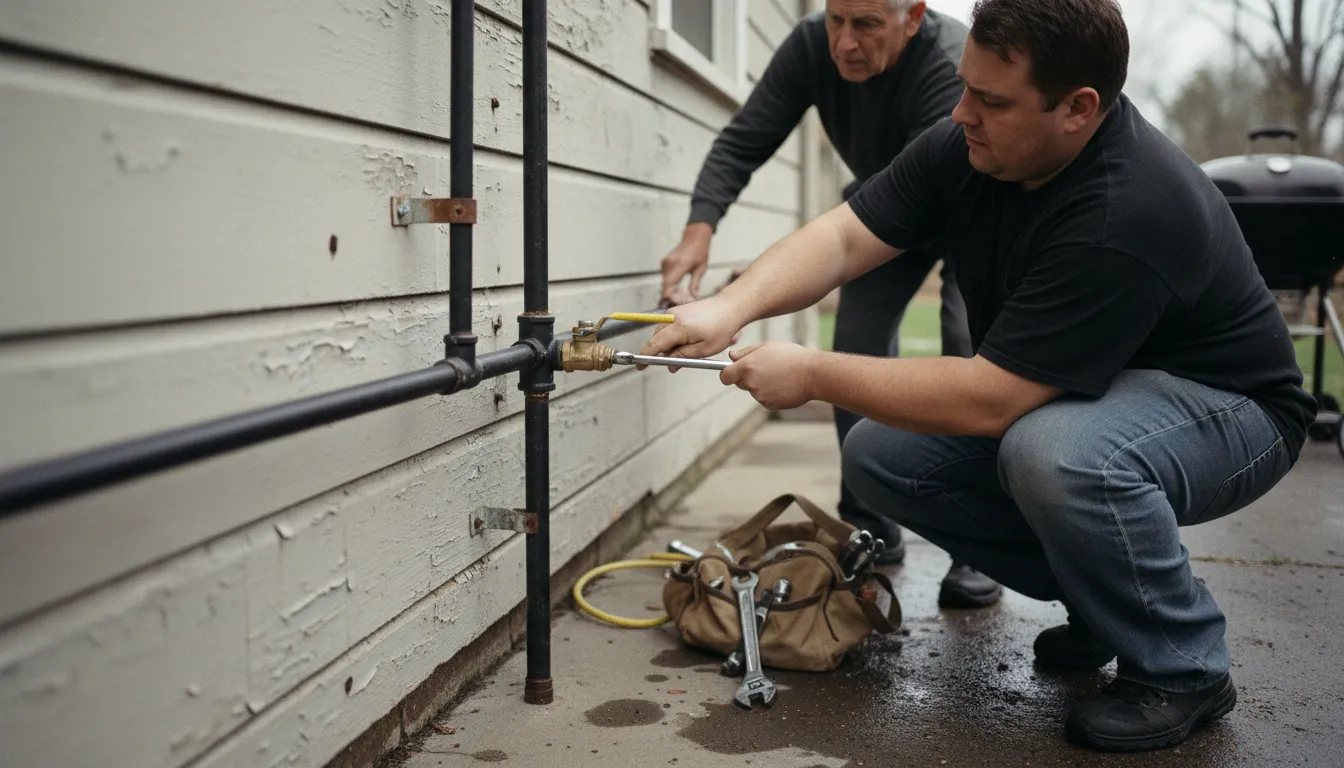
Find the Best Gas Line Plumbing Companies for Your Business
No obligation • Fast responses • Nationwide coverage

Why you can trust Search a Plumber
Search a Plumber is a leading United States resource for finding and evaluating professional plumbing services. Our team researches licensing, experience, and customer feedback to create unbiased, fact-driven overviews. Companies cannot pay to change ratings or placement, ensuring homeowners get trustworthy information.
Search providers near you
Top Gas Line Plumbing Companies in Brookhaven, Georgia Ranked
Navigating gas line installation and repair is a critical task for any homeowner or business in Brookhaven, ensuring safe and efficient fuel delivery for appliances like stoves, water heaters, and furnaces. Proper gas line work is not just about convenience; it's a matter of safety and code compliance, requiring meticulous planning and professional execution. This guide will help you understand the local requirements, processes, and what to look for when you need to find qualified professionals for gas piping services in your area.
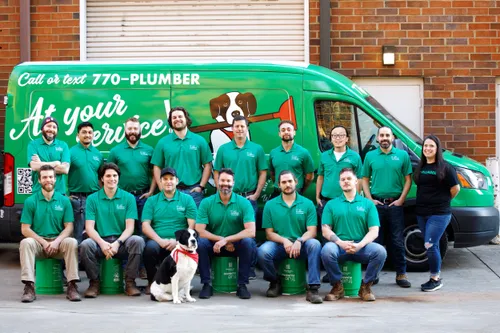
True Plumbing
2650 Pleasantdale Rd, Doraville, GA 30340
True Plumbing is a plumbing service provider based in Atlanta, GA, offering a wide range of services including sewer camera inspections, water heater repair and installation, drain cleaning, sewer line repair, trenchless sewer repair, leak detection, repiping, gas line installation, and toilet repair. They use advanced tools for leak detection and provide trenchless methods for sewer repairs, helping maintain efficient plumbing systems. Established in 2014, True Plumbing focuses on building lasting customer relationships by educating clients and ensuring peace of mind with their work.
Pike Plumbing
4341 Stilesboro Ln NW, Kennesaw, GA 30152
Pike Plumbing is a family-owned plumbing company serving Atlanta, GA, and surrounding areas since 1984. They provide residential and commercial plumbing services including water heater repair, drain cleaning, sewer line repair, gas line installation, and hydro jetting. Known for handling waterline and sewer line work with a lifetime workmanship warranty, Pike Plumbing offers 24/7 emergency plumbing services to address urgent issues at any time.

Honeycomb Plumbing
Atlanta, GA
Honeycomb Plumbing is a residential plumbing company serving Atlanta, GA, and surrounding counties including Cobb, Fulton, Dekalb, and Gwinnett. Founded this year, the company brings a decade of expertise to a wide range of plumbing services such as water heater installation and maintenance, drain cleaning with camera inspections, water softener and filtration system installation, sump pump repairs, gas line installation, and full repiping projects. They offer 24/7 emergency plumbing services to address urgent issues and prevent property damage.
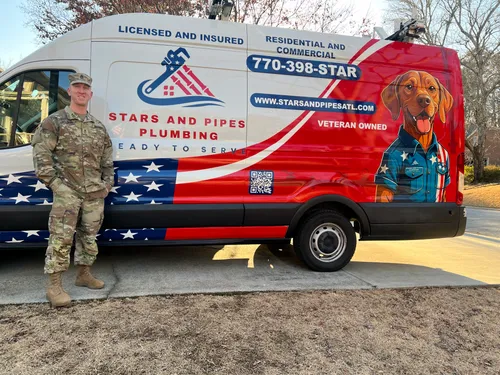
Stars and Pipes Plumbing Atlanta
1014 Parkview Way SW, Lilburn, GA 30047
Stars and Pipes Plumbing Atlanta is a veteran-owned, family-operated plumbing company serving Atlanta, GA, and surrounding counties including Gwinnett, Fulton, and DeKalb. They provide a range of plumbing services such as sewer camera inspections, water heater repair and installation, water softener installation, drain cleaning, hydro jetting, sewer line repair, and gas line installation. Their licensed plumbers use advanced equipment like hydro-jetting and video inspection to diagnose and resolve drainage issues efficiently. With over 10 years of experience, Stars and Pipes Plumbing Atlanta offers certified gas line installations that meet local safety standards and codes.
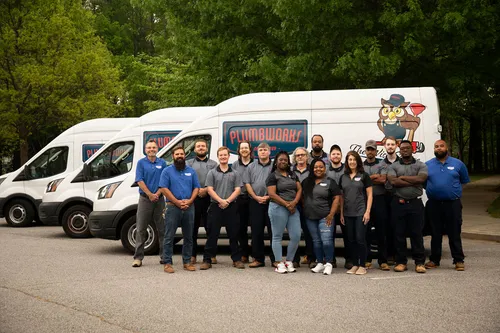
Plumb Works Inc.
3116 Chestnut Dr #101, Atlanta, GA 30340
Plumb Works Inc. is a plumbing company serving the Atlanta, GA area since 1989. They provide a wide range of residential, commercial, and underground plumbing services including sewer camera inspections, water heater repair and installation, sump pump repair, drain cleaning, hydro jetting, sewer line repair, trenchless sewer repair, leak detection, repiping, gas line installation, toilet repair, and garbage disposal repair. The company offers specialized sewer line camera inspections to identify underground pipe issues and provides detailed reports with repair recommendations. Plumb Works also offers emergency plumbing services to address urgent plumbing problems promptly.
Understanding Brookhaven's Gas Line Permit Requirements
Before any work begins on your property's gas system, it's essential to understand the local regulations. In Brookhaven, GA, most gas line installation, alteration, or repair projects require a permit from the City Building Department. The only common exception is for an "ordinary repair," which is typically a minor, like-for-like replacement. The permit application process involves submitting detailed plans for review, which generally takes about 10 business days. This step is non-negotiable for safety and legal reasons, ensuring all planned work meets the stringent national and local fuel gas codes, such as NFPA 54.
Who can pull a permit? While licensed contractors will handle this as part of their service, Georgia law does allow homeowners to pull a permit for work on their own primary residence. However, this requires submitting a notarized affidavit stating you are the owner-occupant. Given the high stakes of gas work, most residents opt to hire a licensed professional who carries the necessary insurance and assumes liability for the project's safety and code adherence.
The Step-by-Step Process for Gas Piping Projects
A successful gas line project follows a logical sequence from planning to final approval. Here's a breakdown of what a professional service will manage.
1. Planning and Utility Location
Every project starts with a plan. A technician will map the route from the gas meter to the new appliance, considering the shortest, safest path. A critical first step is calling 811, the national "Call Before You Dig" number, to have all public underground utilities (water, electric, communications) marked. This free service prevents dangerous and costly strikes. The gas line must also be correctly sized based on the length of the run and the BTU requirements of the appliance it will serve to ensure adequate pressure and flow.
2. Material Selection
The choice of piping material is crucial for longevity and safety. Common options include:
- CSST (Corrugated Stainless Steel Tubing): Flexible, yellow-coated tubing that is easier to install in tight spaces and often used for interior runs.
- Black Iron Pipe (Steel): The traditional, rigid choice known for its durability. It requires threading and more fittings.
- Copper: Sometimes used in certain applications, though local codes will specify approved materials. Your contractor will recommend the best material for your specific project based on code, location (interior vs. exterior), and cost.
3. Installation and Trenching
For exterior lines running to a patio, pool heater, or outdoor kitchen, trenching is usually necessary. This involves digging a trench to the code-required depth (which varies by location and whether the line is under a driveway or yard). The pipe is then laid in the trench with proper bedding. Interior runs involve securing the pipe along joists, walls, or through drilled studs with the correct hangers and clearances.
4. Pressure Testing and Inspections
This is the most critical phase for safety. Before the new gas line is connected to the meter or appliance, the entire system must undergo a pressure test. The line is sealed and pressurized with air to a specific PSI and monitored for any drop, which would indicate a leak 1 2. In Brookhaven, this process is closely watched by city officials. The Brookhaven Fire Marshal and Building Official conduct mandatory on-site inspections at three stages: 50% completion, 80% completion, and 100% final inspection 3. Passing these inspections is mandatory for the project to be approved and the gas utility to perform the final meter connection or turn-on.
Find the perfect gas line plumbing companies for your needs
Get personalized recommendations and expert advice
Safety: Recognizing Gas Leaks and Choosing the Right Pro
Gas line safety is paramount. Natural gas is odorless, but utilities add a mercaptan compound that creates the distinctive "rotten egg" smell. Be alert for this odor, any hissing sounds near a gas line, or visible damage to piping 4. If you suspect a leak, leave the area immediately and call 911 or your gas company from a safe distance.
Choosing the right professional is your first and best safety measure. Always verify that a contractor holds a current state license for plumbing or gas fitting and carries adequate liability insurance. Don't hesitate to ask for proof. A reputable pro will know the Brookhaven permit process inside and out, will call 811, will perform a pressure test, and will schedule all required inspections 5. They ensure the work complies with all City of Brookhaven, State of Georgia, and federal codes, protecting your home and family.
Cost Considerations for Gas Line Work in Brookhaven
The cost of installing or repairing a fuel gas line in Brookhaven can vary widely, from a few hundred to several thousand dollars. It's best to get detailed, written estimates from multiple licensed contractors. Key factors that influence the price include:
- Project Scope & Length: The distance from the meter to the appliance is a primary cost driver. Longer runs require more materials and labor.
- Materials: The type of pipe (CSST, black iron, copper) and the number of fittings, valves, and connectors needed affect material costs.
- Labor Complexity: Is the run straightforward through an unfinished basement, or does it require drilling through multiple finished walls and floors? Does it require extensive trenching through rocky soil or under a driveway?
- Permit Fees: The City of Brookhaven charges fees for permit applications and inspections, which typically range from $100 to $200 or more, depending on the project's valuation.
- Appliance Connection: The final hook-up to the appliance (stove, dryer, heater) is part of the total job cost.
As general reference points (not quotes), material costs can range from $1 to $5 or more per foot, while trenching can cost approximately $100-$300 per 100 feet, though local conditions can greatly alter this 6 7. Labor rates often fall between $50 and $100+ per hour. A qualified contractor will provide a fixed-price quote that encompasses all these elements, including permits and inspections.
Frequently asked questions
Sources
Footnotes
-
How to Install Natural Gas Lines Safely and Correctly - https://bluegasexpress.com/how-to-install-natural-gas-lines/ ↩
-
Process of Gas Line Installation: The Step-by-Step From ... - https://www.atlplumbingskills.com/blog/process-of-gas-line-installation-the-step-by-step-from-planning-to-completion ↩
-
Inspection Process | Brookhaven, GA - https://www.brookhavenga.gov/307/Inspection-Process ↩
-
A Complete Guide to Gas Line Installation: Tips and Safety Precautions - https://gaeberly.com/gas-line-installation/ ↩
-
Building Permits | Brookhaven, GA - https://www.brookhavenga.gov/263/Building-Permits ↩
-
Cost of Natural Gas Line Installation in Acworth, GA - https://acworthgaslineservice.com/cost-of/natural-gas-line-installation ↩
-
How Do You Estimate the Cost of Installing a Gas Line? - https://www.networx.com/article/estimating-the-cost-of-installing-a-gas ↩