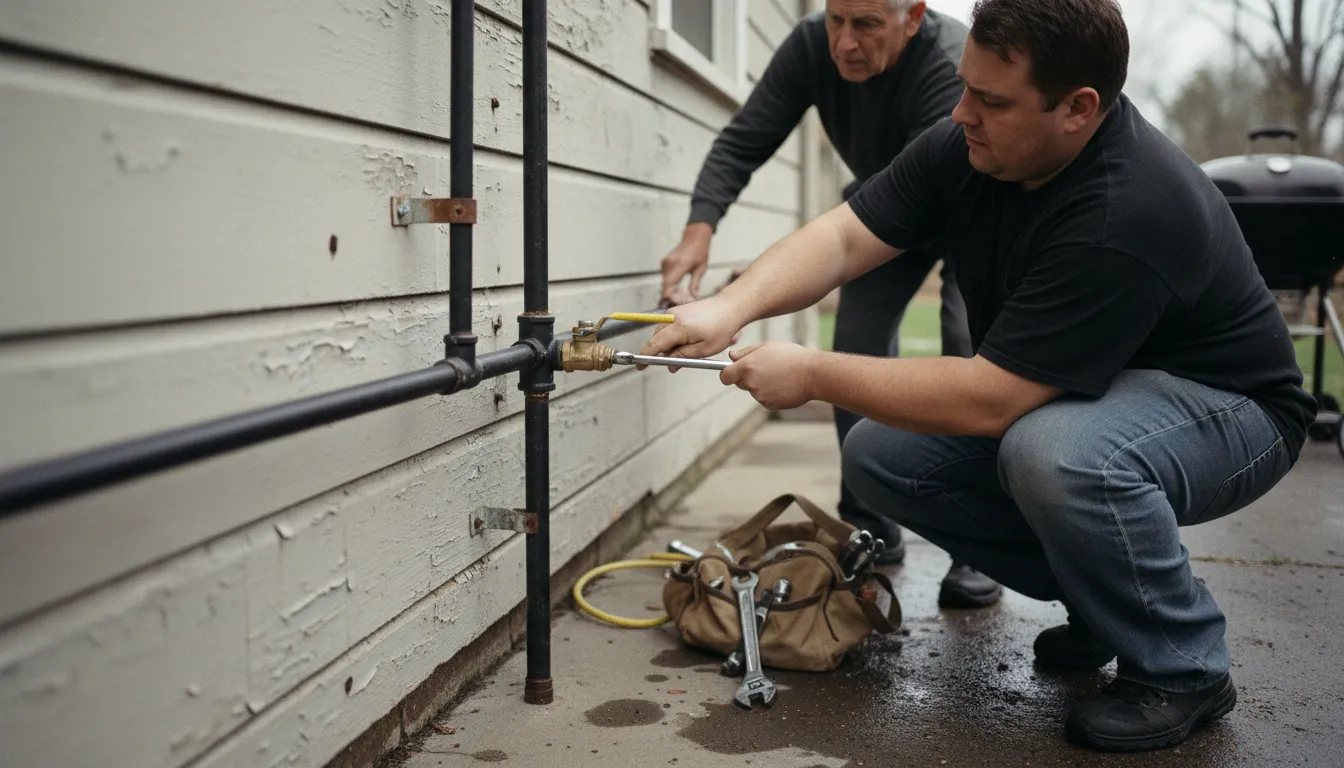
Find the Best Gas Line Plumbing Companies for Your Business
No obligation • Fast responses • Nationwide coverage

Why you can trust Search a Plumber
Search a Plumber is a leading United States resource for finding and evaluating professional plumbing services. Our team researches licensing, experience, and customer feedback to create unbiased, fact-driven overviews. Companies cannot pay to change ratings or placement, ensuring homeowners get trustworthy information.
Search providers near you
Top Gas Line Plumbing Companies in Lodi, California Ranked
Ensuring your home or business has a safe, reliable gas supply is critical for everything from heating and cooking to powering appliances. Gas line work involves specialized knowledge of local building codes, utility requirements, and strict safety protocols. This guide is designed to help Lodi residents and business owners understand the process, regulations, and key considerations for any gas piping project, connecting you with the information needed to find qualified local professionals.
Roto-Rooter Plumbing & Water Cleanup
95 W 11th St #204A, Tracy, CA 95376
Roto-Rooter Plumbing & Water Cleanup offers a wide range of plumbing services in San Jose, CA, including sewer and drain cleaning, water heater repair and installation, sump pump services, and sewer line repair with trenchless options. The company serves both residential and commercial customers, providing specialized solutions such as hydro jetting and gas line installation. Founded in 1935, Roto-Rooter brings decades of experience and advanced technology to plumbing challenges. They also provide 24/7 emergency plumbing services for urgent needs like burst pipes and sewer backups.
Flow Pro Plumbing
103 Technology Ct Suite H, Brentwood, CA 94513
Flow Pro Plumbing is a plumbing company serving Oakland, CA, offering a range of services including sewer camera inspections, water heater repair and installation, tankless water heater services, water softener installation, drain cleaning, leak detection, gas line installation, and toilet repair. They provide plumbing solutions with capabilities such as camera inspections to diagnose issues accurately. The company has built a reputation in the Brentwood area for experienced workmanship and innovative solutions.
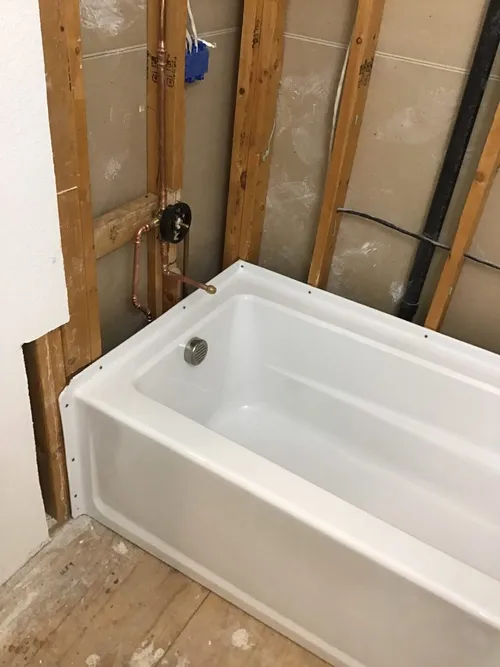
Tony's Plumbing - Stockton
343 E Main St Suite 420, Stockton, CA 95202
Tony's Plumbing - Stockton provides a wide range of plumbing services in Stockton, CA, including water heater repair and installation, drain cleaning, sewer line repair with trenchless technology, leak detection, repiping, gas line installation, and toilet repair. They specialize in advanced sewer repair methods like pipe lining and pipe bursting to minimize property disruption. With 30 years of experience serving both residential and commercial customers, Tony's Plumbing offers expert solutions for plumbing emergencies and routine maintenance alike.
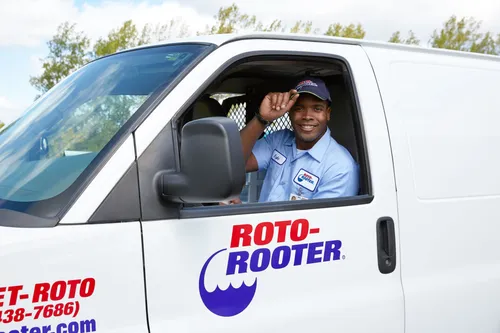
Roto-Rooter Plumbing & Water Cleanup
1210 Central Blvd Ste 123, Brentwood, CA 94513
Roto-Rooter Plumbing & Water Cleanup provides comprehensive plumbing services in Oakland, CA, including sewer line repair, water heater installation and repair, drain cleaning, leak detection, and water softener installation. They serve both residential and commercial clients, offering specialized services such as hydro jetting and trenchless sewer repair. The company is experienced in managing complex plumbing systems and environmental considerations specific to the area. Roto-Rooter offers 24/7 emergency plumbing services to address urgent issues like sewer backups, burst pipes, and clogged drains.
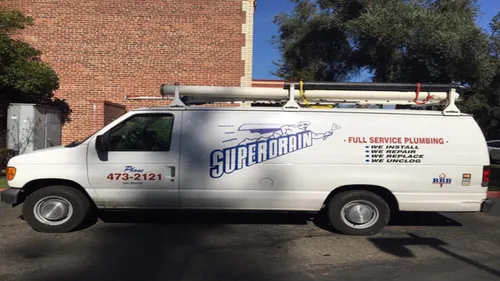
Superdrain Inc.
1221 W Fremont St, Stockton, CA 95203
SuperDrain Inc. is a plumbing company serving Stockton, CA, with over 30 years of experience. They provide a wide range of plumbing services including sewer camera inspections, water heater repair and installation, drain cleaning, sewer line repair, gas line installation, and toilet repair. The company offers 24/7 emergency plumbing services to address urgent plumbing issues at any time. Their team uses advanced technology and techniques to deliver precise and efficient solutions for both residential and commercial clients.
Understanding Gas Line Work in Lodi
Gas line installation and repair, often referred to as gas piping or gas fitting, is a highly regulated trade for good reason. Natural gas is an efficient energy source, but improper handling can lead to dangerous leaks, fire hazards, or carbon monoxide issues. In Lodi, all gas line projects must comply with California state plumbing codes, the specific requirements of Pacific Gas and Electric (PG&E), and the City of Lodi's own permitting process. Whether you're adding a gas line for a new stove, repairing an old pipe, or installing service for an outdoor kitchen, the journey begins with proper planning and permits.
The Essential First Steps: Permits and PG&E
Before any work begins, two critical authorizations are typically required: a city permit and utility approval.
Local Building Permits The City of Lodi's Community Development Department requires a permit for any installation, relocation, or significant repair of a gas piping system 1. This is not just bureaucratic red tape; it's a vital safety check. The permit process ensures your project will be reviewed for code compliance and that the finished work will be inspected by a city official. Starting work without a permit can result in fines, forced removal of non-compliant work, and complications when selling your property.
PG&E Coordination and the "Greenbook" As the natural gas provider, PG&E has strict guidelines known as the Electric & Gas Service Requirements (commonly called the "Greenbook"). This manual dictates the standards for design, materials, and installation for any work connected to their system. If your project involves a new gas service line, moving your meter, or altering the service entrance, you will need PG&E's approval. Your licensed contractor will handle this coordination, but it's a step you should be aware of, as it affects project timing and design.
The Installation Process: From Trench to Test
A professional gas line installation follows a meticulous sequence to ensure long-term safety and reliability.
- Call 811 Before You Dig: This is the non-negotiable first physical step. Dialing 811 or visiting
call811.cominitiates a free service that notifies all relevant utility companies to mark the location of their underground lines (gas, water, electric, telecom) on your property. This prevents accidental strikes that could cause injury, service outages, or costly repairs 2 3. - Trenching and Bedding: For underground lines, a trench is dug to the required depth-often a minimum of 3 feet, and deeper under driveways or roads. The pipe is then laid on a bed of 2-3 inches of clean sand or gravel to provide stable support and protect it from sharp rocks 4.
- Piping and Materials: Approved materials must be used. Common choices include traditional black steel pipe or more flexible Corrugated Stainless Steel Tubing (CSST). The choice depends on the application, local code, and the specific approval of PG&E 5.
- Pressure Testing: This is the most critical safety test. After the lines are run but before they are connected to any appliances, the installer will pressurize the system with air and monitor the pressure gauge for any drop, which would indicate a leak. This test is required by code and must be performed prior to the city's final inspection 6.
- Backfill, Restoration, and Inspection: Once the pressure test passes, the trench is carefully backfilled. The installer then contacts the city for a final inspection. After the inspector signs off, PG&E can be notified to restore or activate service, and appliances can be safely connected.
Safety and Code Compliance: Non-Negotiable Priorities
The rules governing gas work exist solely for safety. Key compliance points include:
- Licensed Professionals: Always hire a contractor licensed specifically for gas line work (often a C-36 Plumbing license in California). They carry the necessary insurance, know the codes, and have the experience to perform the job correctly.
- Proper Pipe Sizing: Gas lines must be correctly sized (diameter) for the length of the run and the total demand (BTU load) of all connected appliances. Undersized pipes can cause appliance malfunction and safety issues.
- Clearance Requirements: Codes specify minimum distances gas pipes must maintain from ignition sources, electrical panels, and building openings. For example, PG&E standards require a 36-inch clearance from ignition sources for meter risers 7.
- Leak Detection: The mandatory pressure test is the primary method for ensuring a leak-free system. Homeowners should also know the smell of natural gas (a rotten egg odor added by the utility) and install carbon monoxide detectors.
Find the perfect gas line plumbing companies for your needs
Get personalized recommendations and expert advice
Common Project Types and Considerations
The scope and cost of gas line projects can vary widely. Here's a breakdown of common scenarios in Lodi:
- New Appliance Hookup: Running a new line for a gas stove, dryer, or fireplace insert. This often involves branching off an existing interior line. Cost can range from $500 to $1,000+, depending on the distance and complexity of the run within the home.
- Outdoor Gas Line Extension: Installing a line for a BBQ grill, patio heater, or outdoor fire pit. This usually requires trenching outdoors and may need a dedicated shut-off valve. These projects often start around $500 and can exceed $1,500 when factoring in permits, trenching, and restoration 8.
- Gas Service Repair or Replacement: Addressing leaks, corrosion, or damage to existing pipes. Repairs must be performed by a professional who can properly diagnose the issue, isolate the system, and ensure the repair meets current code, even on older systems.
- Major Reroute or New Service Line: The largest and most complex projects, such as converting an entire home from electric to gas or installing service for a new construction ADU. These projects involve extensive coordination with PG&E, significant trenching, and a higher meter capacity. Costs can easily reach several thousand dollars based on distance from the main and site conditions.
Why Professional Expertise is Crucial
While some home improvements are suitable for DIY, gas line work is unequivocally not one of them. The risks of error-gas leaks, explosions, carbon monoxide poisoning-are too severe. A licensed gas fitter brings expertise in:
- Code Interpretation: Navigating the combined requirements of state code, PG&E's Greenbook, and Lodi's amendments.
- Proper Technique: Knowing how to correctly thread, seal, and support pipes.
- System Design: Sizing the system appropriately for present and future needs.
- Safety Testing: Conducting the mandatory pressure tests and knowing how to address any failures.
- Utility Liaison: Managing the required notifications and coordination with PG&E and the city inspector.
Your safety and the safety of your neighbors depends on the work being done right. Investing in a qualified professional is the only responsible choice.
Frequently asked questions
Sources
Footnotes
-
Permits & Fees | Lodi, CA - https://www.lodi.gov/303/Fees-Permits ↩
-
Project Description - California Public Utilities Commission - https://ia.cpuc.ca.gov/environment/info/aspen/kirbyhills/pea/2_projdesc.pdf ↩
-
Building and Renovation Services Trenching - PG&E - https://www.pge.com/assets/pge/docs/account/service-requests/BRSC_Guide_Trenching.pdf ↩
-
How to Install Natural Gas Lines Safely and Correctly - https://bluegasexpress.com/how-to-install-natural-gas-lines/ ↩
-
Electric & Gas Service Requirements - PGE - https://www.pge.com/assets/pge/docs/account/service-requests/greenbook_manual.pdf ↩
-
Piping size in inches and length in feet criteria for pressure testing and inspection. - https://up.codes/s/pressure-testing-and-inspection ↩
-
gas design standard gas meter locations j-15 - PG&E - https://www.pge.com/assets/pge/docs/account/service-requests/j-15.pdf ↩
-
Natural Gas Line Installation: Safety Tips and Permits in ... - https://www.aloha-plumbinghvac.com/natural-gas-line-installation/ ↩