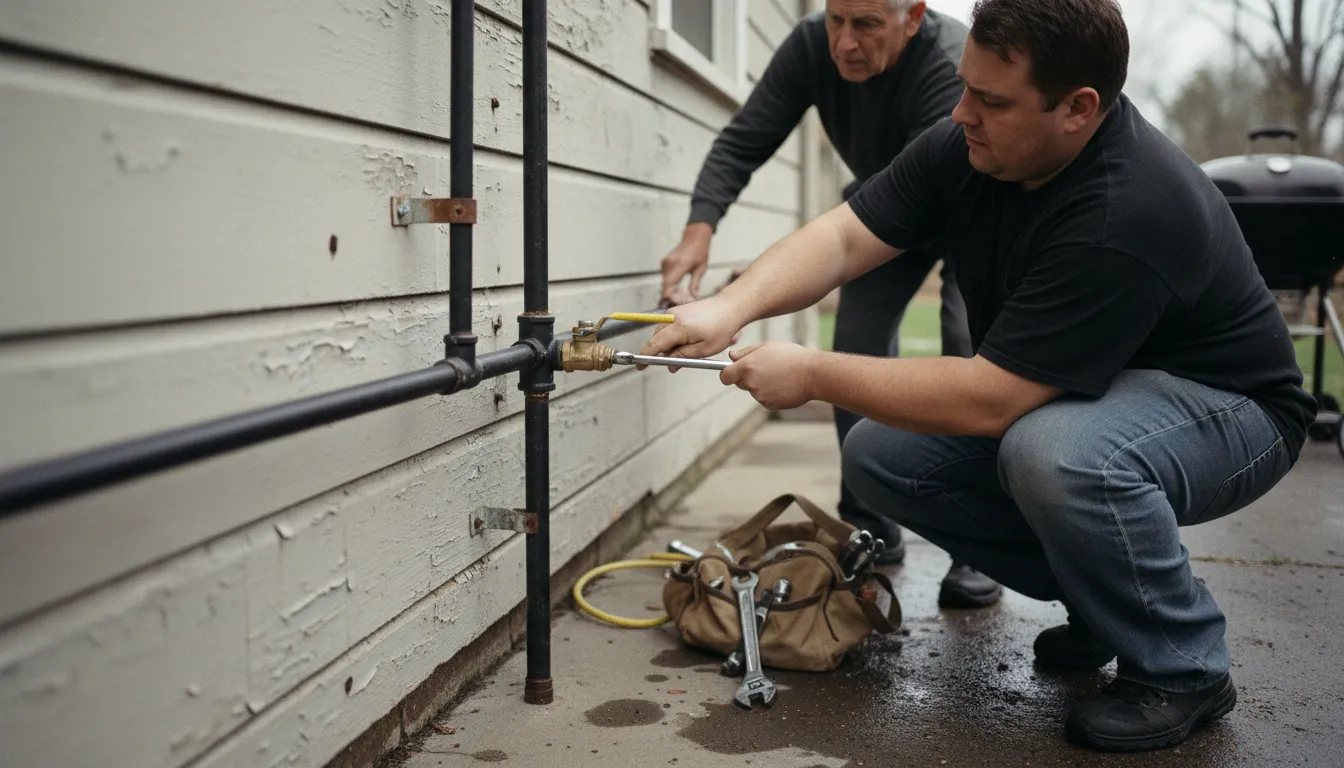
Find the Best Gas Line Plumbing Companies for Your Business
No obligation • Fast responses • Nationwide coverage

Why you can trust Search a Plumber
Search a Plumber is a leading United States resource for finding and evaluating professional plumbing services. Our team researches licensing, experience, and customer feedback to create unbiased, fact-driven overviews. Companies cannot pay to change ratings or placement, ensuring homeowners get trustworthy information.
Search providers near you
Top Gas Line Plumbing Companies in Hanford, California Ranked
Installing or repairing a gas line is a critical home improvement project that directly impacts the safety and functionality of your property. Whether you're adding a gas stove, furnace, or outdoor fire pit, proper gas line work ensures reliable fuel delivery and protects your home from dangerous leaks. For homeowners in Hanford, navigating the process involves understanding local building codes, securing permits, and hiring a qualified professional. This guide will help you understand the essential steps, regulations, and safety considerations for gas line projects in our community.
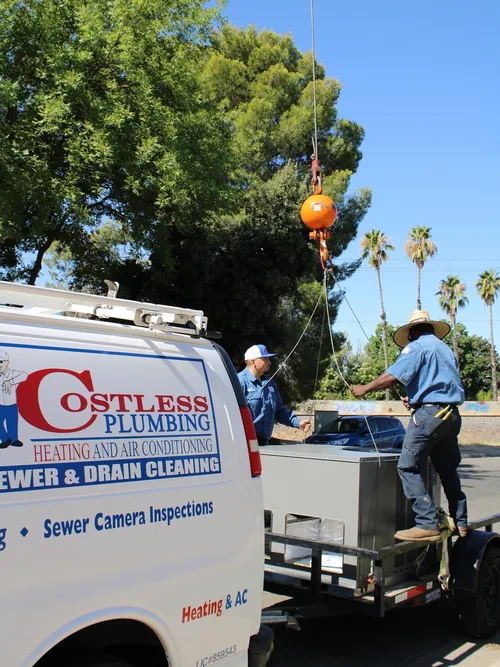
Costless Plumbing Heating & Air Conditioning
1143 N Cypress Ave, Fresno, CA 93727
Costless Plumbing Heating & Air Conditioning provides plumbing, heating, and air conditioning services in Fresno, CA. They offer a range of plumbing solutions including sewer camera inspections, hydro jetting, trenchless sewer repair, leak detection, gas line installation, and repairs for toilets and garbage disposals. The company also handles heating and air conditioning system tune-ups, repairs, and installations, serving residential and commercial customers. One notable capability is their trenchless sewer line repair, which minimizes disruption during sewer maintenance. While the business history is not specified, they emphasize affordable pricing and customer satisfaction.

All Pro Plumbing and Leak Detection
Fresno, CA
All Pro Plumbing and Leak Detection has been serving Fresno, CA, and surrounding areas since 1996. They offer a range of plumbing services including water heater repair and installation, leak detection, gas line installation, and garbage disposal repair. Their licensed team is experienced in residential plumbing and gas system repairs, ensuring safe and efficient service. The company provides 24/7 emergency plumbing services to address urgent needs promptly.
National Plumbing
12500 Ella Ave, Orosi, CA 93647
National Plumbing is a plumbing service provider based in Fresno, CA, serving both residential and commercial clients in the Fresno area and Tulare County. With over 10 years of experience, they offer a wide range of plumbing services including sewer camera inspections, water heater installation, drain cleaning, sewer line repair, leak detection, repiping, gas line installation, toilet repair, and garbage disposal repair. They use video inspections to diagnose sewer line issues and provide repairs for clogs, cracks, or malfunctions. National Plumbing operates 24/7 to accommodate customer schedules and ensure timely service.

Plumbers 911 Fresno
1303 N Rabe Ave, Fresno, CA 93727
Plumbers 911 Fresno is a referral service connecting residents of Fresno, CA with licensed local plumbers for a variety of plumbing needs. They provide access to trained professionals specializing in leak detection, gas line installation, and other residential plumbing repairs. The network includes plumbers who have completed over 10,000 hours of training and are background checked, drug tested, licensed, insured, and bonded. Plumbers 911 Fresno offers 24/7 availability for emergency plumbing services, ensuring help is accessible at any time.
Understanding Gas Line Work in Hanford
Gas line installation and repair encompasses all work related to running pipes that supply natural gas or propane from the main utility meter to your appliances. This includes new installations for renovations or additions, repairs to existing lines, and replacements of outdated or damaged piping. In Hanford, this work is strictly regulated to ensure public safety and must comply with both California state codes and local ordinances enforced by the City of Hanford Building Division.
The process is more complex than standard plumbing because it involves working with a highly combustible fuel. A successful project requires careful planning, the correct materials, and precise execution to pass mandatory pressure tests and city inspections. From the initial permit application to the final inspection, every step is designed to verify the system's integrity and safety.
Why Professional Installation is Non-Negotiable
Hiring a licensed professional for your gas piping project is not just a recommendation-it's a requirement for most work and is absolutely essential for safety. Licensed contractors have the training to understand the complex California Plumbing Code and the specific PG&E Greenbook requirements that govern gas service in our area. They carry the necessary insurance and bonding to protect you in case of an accident.
Professionals also manage the critical relationship with local authorities. They will pull the required permits from the City of Hanford Building Division on your behalf and schedule the mandatory inspections 1 2. Attempting a DIY gas line project is extremely risky, can void your home insurance, and will almost certainly fail inspection, leading to costly rework and potential fines.
The Hanford Permit and Inspection Process
Before any digging or pipe work begins, you must secure a permit. Most gas line installations and repairs in Hanford require a permit from the City of Hanford Building Division. Your licensed contractor will typically handle this, submitting plans that detail the scope of work, materials, and route.
The inspection process is a key safety checkpoint. A city inspector will visit your property at designated stages-often after the trench is dug and the pipe is laid but before it is covered, and again for a final pressure test. The inspector verifies that the trench depth, pipe material, joining methods, and overall installation meet code. Passing this final inspection is required before the utility company will reconnect service or authorize use.
Key Steps in a Gas Line Installation Project
A typical gas line installation follows a structured sequence to ensure safety and compliance.
1. Planning and Design: A professional will assess your needs, calculating the required gas load (in BTUs) for all appliances. They will map the most efficient and code-compliant route from the meter to each appliance, considering obstacles like foundations, driveways, and existing landscaping.
2. Calling 811: This is a crucial and legally required step. At least two business days before digging, you or your contractor must call 811. This free service notifies utility companies like PG&E to come and mark the location of all underground lines on your property, preventing dangerous and costly strikes 3 4.
3. Excavation and Trenching: Trenches are dug along the planned route. Code specifies minimum depths: steel pipe generally requires 12 inches of cover, while plastic piping needs 18 inches. For trenches deeper than 5 feet, OSHA requires protective shoring to prevent collapse. The trench bed is often prepared with sand or gravel to protect the pipe.
4. Pipe Installation: Only approved materials like coated steel (black iron) or specific types of plastic (PE) tubing can be used. The pipe is carefully laid in the trench, with all connections made using proper threading, welding, or mechanical fittings. A critical rule for lines running under a building slab or foundation is that they must be inside a gastight conduit-a protective sleeve that allows for future inspection or replacement.
5. Connection and Pressure Testing: The new line is connected to the existing gas meter or main line. Before the trench is backfilled, the entire new section of piping undergoes a rigorous pressure test. The system is pressurized with air and monitored for any drop, which would indicate a leak. This test is usually witnessed by the city inspector.
6. Final Inspection and Backfill: Once the pressure test passes inspection, the trench can be safely backfilled. The inspector will issue a final approval, and your contractor will coordinate with PG&E if a meter turn-on or final connection is needed.
Find the perfect gas line plumbing companies for your needs
Get personalized recommendations and expert advice
Safety Guidelines and Code Requirements
Adherence to safety protocols is paramount throughout any gas fitting project.
- Licensed Professionals Only: As emphasized, all work should be performed by a contractor holding a valid C-36 (Plumbing) license from the California Contractors State License Board.
- Material Compliance: Use only piping and fittings listed for gas service. The wrong material can degrade and cause leaks 5.
- Proper Depth and Cover: Burying pipe at the correct depth protects it from accidental damage from gardening or other activities.
- Conduit for Slab Penetrations: Never run a gas line directly through a concrete slab. It must be sleeved in an approved conduit to prevent stress on the pipe and allow for future access 6.
- Leak Detection: After the system is activated, a soap solution test should be performed on all fittings to check for leaks. Install carbon monoxide detectors near gas appliances and sleeping areas.
Cost Considerations for Hanford Homeowners
The cost of gas line installation in Hanford can vary widely based on the project's scope. For a simple, short run to a single appliance (like relocating a line for a new dryer), you might expect costs starting in the $500 to $1,200 range.
More complex projects drive the price higher. Factors that increase cost include:
- Length of Run: More pipe and longer trenching equal higher material and labor costs.
- Complexity: Navigating under driveways, sidewalks, or existing foundations requires specialized tunneling equipment and more time.
- Number of Appliances: Running a new main line with multiple branches to serve a kitchen, water heater, and furnace is a larger project.
- Accessibility: Tight crawl spaces or congested utility areas can slow down work.
- Permit and Inspection Fees: These are additional costs factored in by your contractor.
For extensive work, such as a whole-house repipe or a long run to a backyard barbecue island, costs can easily reach $2,000 or more 7 8. Always get detailed, written estimates from multiple licensed professionals.
Working with PG&E and Local Utilities
For projects involving your natural gas meter or service line, coordination with Pacific Gas and Electric (PG&E) is essential. Your contractor's work must comply with the PG&E Greenbook (Gas and Electric Service Requirements), which details standards for meter location, piping, and connections.
If your project requires the meter to be moved or turned off/on, your contractor will need to schedule this with PG&E. The utility also has an inspection desk to answer specific technical questions about service requirements 9. Remember, only PG&E personnel are authorized to work on the meter itself or the service line leading up to it.
Frequently asked questions
Sources
Footnotes
-
section 6.5.1 - field inspection guide - City of Hanford - https://www.cityofhanfordca.com/DocumentCenter/View/199/Field-Inspection-Guide---Single-Family-Dwellings-PDF ↩
-
Do You Need a Permit for Gas Line Work in California? Know the Laws - https://magnificentplumbing.com/do-you-need-permit-for-gas-line-work-california/ ↩
-
Essential Guide to Gas Line Installation: Tips and Safety ... - https://gaeberly.com/gas-line-installation/ ↩
-
What to Know About Utility Trenching in Northern California: Permits ... - https://www.eurekaearthworks.com/blog/blog-post-title-four-bg4ky-bg9ey ↩
-
Essentials of Gas Piping: Installation and Safety Guidelines - https://tulsafintube.com/essentials-of-gas-piping-installation-and-safety-guidelines/ ↩
-
Cal. Code Regs. Tit. 25, § 2216 - Installation | State Regulations - https://www.law.cornell.edu/regulations/california/25-CCR-2216 ↩
-
Natural Gas Line Installation: Safety Tips and Permits in California - https://www.aloha-plumbinghvac.com/natural-gas-line-installation/ ↩
-
Gas Line Installation Cost: 2023 Guide - Super Brothers - https://www.superbrothers.com/gas-line-installation-cost-2023-guide/ ↩
-
Electric & Gas Service Requirements - PGE - https://www.pge.com/assets/pge/docs/account/service-requests/greenbook_manual.pdf ↩