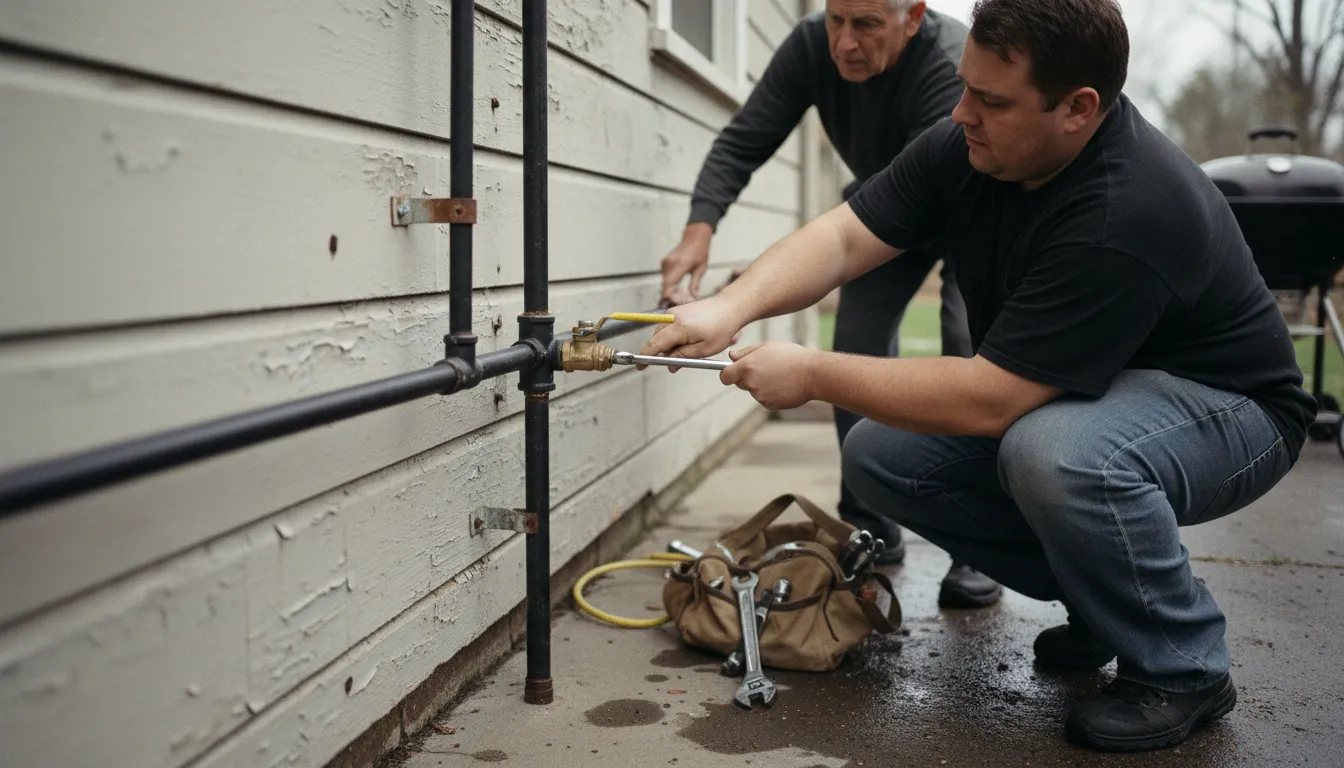
Find the Best Gas Line Plumbing Companies for Your Business
No obligation • Fast responses • Nationwide coverage

Why you can trust Search a Plumber
Search a Plumber is a leading United States resource for finding and evaluating professional plumbing services. Our team researches licensing, experience, and customer feedback to create unbiased, fact-driven overviews. Companies cannot pay to change ratings or placement, ensuring homeowners get trustworthy information.
Search providers near you
Top Gas Line Plumbing Companies in Campbell, California Ranked
Installing or repairing a gas line is a critical home improvement project that directly impacts the safety and functionality of your property. Whether you're adding a gas stove, installing a fire pit, or replacing an old line, this work involves high-pressure systems that require strict adherence to local and state safety codes. For homeowners and businesses in Campbell, navigating the permits, materials, and installation standards can be complex. This guide is designed to help you understand the process, requirements, and key considerations for finding qualified professionals to handle your gas piping project safely and legally.
Roto-Rooter Plumbing & Water Cleanup
1780 Whipple Rd Ste 203G, Union City, CA 94587
Roto-Rooter Plumbing & Water Cleanup provides comprehensive plumbing services in San Jose, CA, specializing in residential and commercial plumbing solutions. Their offerings include sewer and drain cleaning, water heater repair and installation, leak detection, gas line installation, and trenchless sewer repair. The company is equipped to handle emergency plumbing situations with 24/7 availability, ensuring prompt response to issues like burst pipes and sewer backups. With extensive experience and advanced technology, Roto-Rooter addresses complex plumbing challenges efficiently. They also offer floodwater cleanup and mold remediation services, supporting property restoration after water damage. Serving the San Jose area and nearby communities, Roto-Rooter is a licensed and insured provider known for its broad range of plumbing capabilities and emergency service availability.
JB Rooter and Plumbing Inc
2982 Mt Clare Dr, San Jose, CA 95148
JB Rooter and Plumbing Inc is a full-service plumbing company based in San Jose, CA, serving a wide area from San Carlos to Gilroy to Fremont. With over 20 years of experience, they provide a variety of plumbing services including sewer line repair, repiping, and gas line installation. Their team is skilled in handling both residential and commercial plumbing needs, focusing on safe and efficient gas plumbing and expert sewer repairs. JB Rooter and Plumbing Inc is licensed and insured, offering local expertise and competitive pricing to customers across the peninsula.
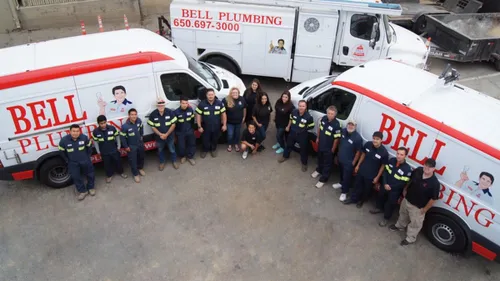
Bell Plumbing
611 Industrial Rd #8, San Carlos, CA 94070
Bell Plumbing is a family-owned plumbing company serving Fremont, CA, and the surrounding Bay Area communities. With nearly 20 years of experience, they offer a wide range of plumbing services including sewer camera inspections, water heater repair and installation, drain cleaning, trenchless sewer repair, leak detection, repiping, gas line installation, toilet and garbage disposal repair. They hold an Underground Construction A License, enabling them to handle complex sewer and plumbing projects efficiently. Bell Plumbing is known for providing trenchless sewer repair options such as pipe bursting and pipe lining, which minimize disruption to properties. Their team is licensed, bonded, and insured, serving both residential and commercial clients across the Bay Area.
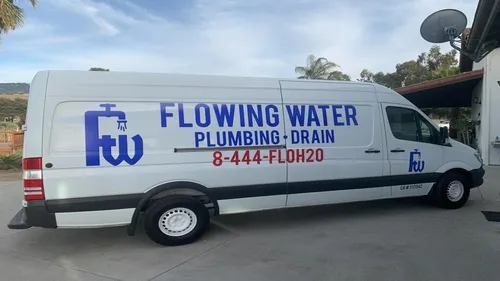
Flowing Water Plumbing
Oakland, CA
Flowing Water Plumbing is a plumbing contractor serving Oakland, CA, with over 40 years of experience. They provide a wide range of plumbing services including sewer line repair, trenchless sewer replacement, water heater installation and repair, drain cleaning, hydrojetting, leak detection, and gas line installation. The company uses advanced techniques such as camera inspections and hydrojetting to diagnose and resolve plumbing issues efficiently. Flowing Water Plumbing is available 24/7 to handle plumbing emergencies and offers transparent pricing without upselling.

Gogo Rooter
326 Phelan Ave #B, San Jose, CA 95112
Gogo Rooter is a plumbing service provider based in San Jose, CA, offering a wide range of residential and commercial plumbing solutions. Their services include sewer camera inspections, water heater repair and installation, drain cleaning, leak detection, gas line installation, and toilet repair. They are equipped to handle emergency plumbing situations with 24/7 availability, ensuring prompt assistance whenever needed. Gogo Rooter uses advanced equipment for rooter repair and sewer video inspections, providing thorough diagnostics and effective solutions. The company emphasizes transparent pricing by charging per job rather than by the hour and offers a satisfaction guarantee on their workmanship.
Understanding Gas Line Projects
Gas line work encompasses any installation, modification, or repair of piping that carries natural gas or propane from the utility meter to your appliances. Common projects in Campbell include running a new line for a tankless water heater, extending gas to an outdoor kitchen or barbecue, replacing corroded black iron pipe, or adding a connection for a gas dryer or fireplace. These are not typical DIY tasks. Working with natural gas carries significant risks of fire, explosion, and carbon monoxide poisoning if not done correctly. Therefore, the State of California and the City of Campbell mandate that this work be performed by licensed professionals following the California Plumbing Code (CPC).
The core of any safe installation is proper planning. This involves creating a diagram of the proposed pipe run, calculating the total British Thermal Unit (BTU) demand of all connected appliances, and correctly sizing the pipe diameter to ensure adequate gas flow. Using the wrong size pipe can lead to appliance malfunction or dangerous pressure drops. A licensed plumbing contractor will handle these calculations and ensure the system design meets all code requirements before the first shovel hits the ground.
The Permit Process in Campbell
A plumbing permit is mandatory for any gas line modification or installation in Campbell. This is non-negotiable and serves as a crucial safety checkpoint. The permit process ensures your project is reviewed for code compliance and inspected at critical stages by city officials.
To obtain a permit, your contractor will typically submit an application to the City of Campbell's Building Division. The application must include detailed plans showing the pipe type, size, length, location, and the BTU requirements of all appliances to be served. The city reviews these plans to verify compliance with the CPC. Once approved, the permit is issued, and inspections are scheduled. Skipping the permit process can result in failed inspections if you sell your home, fines from the city, and most importantly, it may void your homeowner's insurance if an unpermitted gas line causes damage.
Key Steps in Gas Line Installation
A professional gas line installation follows a meticulous sequence to ensure safety and longevity.
- Utility Locate (Call 811): Before any digging, your contractor must call 811, the national "Call Before You Dig" hotline. This free service alerts all local utility companies to come and mark the location of their underground lines (electric, water, sewer, communications) on your property. This critical step prevents catastrophic damage, service interruptions, and personal injury 1.
- Trenching: Once utilities are marked, trenching can begin. The CPC specifies minimum burial depths. For example, steel pipe generally must be buried at least 18 inches deep. The trench must be dug carefully to avoid other marked utilities and provide a stable base for the pipe 2.
- Piping and Installation: Only approved materials may be used. Common choices include:
- Black Steel Pipe: The traditional, robust choice, often used for exterior and underground runs.
- CSST (Corrugated Stainless Steel Tubing): A flexible, yellow-jacketed tubing that is easier to install through walls and attics, though it has specific bonding requirements for safety.
- Copper Tubing: Approved for certain gas applications but must be of the correct type. The licensed plumber will install the pipe, ensuring proper support, installing necessary shut-off valves, and making secure connections at the meter and appliances.
- Pressure Testing: This is a mandatory safety inspection. Before the trench is backfilled or walls are closed up, the new piping system is subjected to an air pressure test. A common test involves pressurizing the system to 10 PSI and monitoring it for 15 minutes. Any drop in pressure indicates a leak that must be repaired before proceeding. This test must be witnessed and passed during the city's rough-in inspection 3.
- Final Inspection: After the pipe is buried, appliances are connected, and the system is activated, a final inspection is required to ensure everything is complete, safe, and operational.
Find the perfect gas line plumbing companies for your needs
Get personalized recommendations and expert advice
Why a Licensed Professional is Non-Negotiable
Hiring a licensed, insured plumbing contractor specializing in gas line work is the most important decision you will make. Their expertise is your primary safeguard. They understand the intricate requirements of the CPC, know how to navigate the Campbell permit process efficiently, and possess the specialized tools for proper installation and testing. They also coordinate necessary interactions with PG&E for meter upgrades or service connections 4 5.
Perhaps the most critical reason is liability and insurance. A licensed contractor carries both liability and worker's compensation insurance. If an accident occurs on your property, you are protected. If an unlicensed individual causes damage or gets hurt, you as the homeowner could be held financially responsible. Furthermore, a professional's work is typically guaranteed, providing peace of mind long after the project is complete.
Understanding Project Costs
Pricing for gas line projects in Campbell varies widely based on scope, materials, and site complexity. It's essential to get multiple detailed quotes from licensed professionals. Costs generally break down into several components:
- Permit Fees: Paid to the City of Campbell, these can range from approximately $100 to over $500 depending on the project's valuation 6.
- Labor: Licensed plumbers typically charge between $100 and $200+ per hour. A complex project with extensive trenching will naturally incur more labor costs.
- Materials: Black steel pipe is relatively affordable. CSST tubing is more expensive per foot but can reduce labor time for complicated runs. Fittings, valves, and protective coatings add to the material cost.
- Equipment & Testing: This includes trenching equipment rental and the tools required for pressure testing.
To provide a general frame of reference (though your quote will be specific):
- A simple appliance line (e.g., for a new gas dryer or water heater) might range from $300 to $800+.
- A new line for an outdoor kitchen or fire pit, involving trenching across a yard, could cost $1,000 to $3,000+.
- A major service reroute or a completely new gas service from the meter could range from $2,000 to $5,000 or more 7 8.
Always ensure your written quote itemizes permits, materials, labor, and testing.
Safety and Code Compliance Highlights
Beyond the basic steps, several key points underscore the importance of professional gas fitting:
- Material Approval: Using unapproved or incorrect materials (like certain types of plastic pipe) is a common reason for inspection failure and poses a severe safety risk 9.
- Appliance Venting: Installing a gas appliance also requires proper venting to expel combustion gases. This is a separate but equally critical code requirement that your professional will address.
- Odorant and Leak Detection: Natural gas has a distinctive rotten egg smell added for leak detection. If you ever smell gas, leave the area immediately and call 911 and PG&E from a safe distance.
- Earthquake Safety: In California, gas lines must often include an automatic seismic shut-off valve at the meter, which stops gas flow during significant ground movement.
Frequently asked questions
Sources
Footnotes
-
Frequently Asked Questions - CivicPlus.CMS.FAQ - https://www.rpvca.gov/faq.aspx?TID=40 ↩
-
Building and Renovation Services Trenching - PG&E - https://www.pge.com/assets/pge/docs/account/service-requests/BRSC_Guide_Trenching.pdf ↩
-
BOILER - https://www.cityofpaloalto.org/files/assets/public/v/1/development-services/building-division/commercial-guidelines/inspections/boiler3.4.11.pdf ↩
-
Natural Gas Service Guidebook - Socalgas - https://www.socalgas.com/documents/construction/GasServiceGuidebook.pdf?_ga=2.196390636.1546684087.1721667536-1070557308.1671065368 ↩
-
Electric & Gas Service Requirements - PGE - https://www.pge.com/assets/pge/docs/account/service-requests/greenbook_manual.pdf ↩
-
GENERAL TRADE PERMITS (MEP) - Campbell, CA - https://www.campbellca.gov/DocumentCenter/View/16601/General-Trade-Permits-MEP-Application-Guide ↩
-
Do You Need a Permit for Gas Line Work in California? - https://magnificentplumbing.com/do-you-need-permit-for-gas-line-work-california/ ↩
-
BUILDING INSPECTION REQUIREMENTS - https://www.contracosta.ca.gov/DocumentCenter/View/44633/RESIDENTIAL-GAS-PIPING ↩
-
Natural Gas Line Installation: Safety Tips and Permits in ... - https://www.aloha-plumbinghvac.com/natural-gas-line-installation/ ↩