Find the Best Water Treatment Installation Companies for Your Business
No obligation • Fast responses • Nationwide coverage

Why you can trust Search a Plumber
Search a Plumber is a leading United States resource for finding and evaluating professional plumbing services. Our team researches licensing, experience, and customer feedback to create unbiased, fact-driven overviews. Companies cannot pay to change ratings or placement, ensuring homeowners get trustworthy information.
Search providers near you
Best Water Treatment Installation Companies in Vermont Ranked
Clean, safe water is essential for your health, home, and peace of mind. In Vermont, water quality can vary significantly depending on whether your home is served by a public system or a private well, with common issues ranging from hard water and iron to more serious concerns like arsenic, bacteria, and PFAS chemicals. A properly selected water treatment system can protect your plumbing, improve the taste of your water, and safeguard your family's health. This guide will help you understand Vermont's specific water challenges, the types of filtration and softening solutions available, and how to find qualified local professionals to assess your needs and install the right system for your home.
Common Water Quality Issues in Vermont
Vermont's water quality is generally good, but specific contaminants are prevalent due to the state's unique geology and environmental history. The primary concerns differ between municipal water supplies and private wells, which serve approximately 40% of Vermonters 1.
Natural Contaminants in Groundwater
- Arsenic, Manganese, and Iron: These elements occur naturally in Vermont's bedrock and can dissolve into groundwater, particularly in private wells. Arsenic is a serious health concern with no taste or odor, while iron and manganese cause staining, metallic tastes, and can clog plumbing.
- Hard Water: Vermont's water is typically classified as moderately hard (around 60 parts per million of calcium carbonate), but levels can be higher in certain areas 2 3. Hard water leads to scale buildup in pipes and appliances, reduces soap efficiency, and leaves spots on dishes and glassware.
- Uranium: Another naturally occurring contaminant found in some bedrock wells, requiring specific treatment.
Biological Contaminants
Private wells are vulnerable to bacterial contamination from surface water runoff or nearby septic systems. Bacteria like E. coli indicate the presence of fecal matter and pose an immediate health risk, necessitating disinfection solutions such as ultraviolet (UV) light or chlorination 4 5.
Human-Made Contaminants
- Lead and Copper: These metals rarely come from the source water itself but leach from older household plumbing pipes, solder, and fixtures 6. This is a concern for both well and municipal water users in homes built before 1986.
- PFAS (Per- and Polyfluoroalkyl Substances): These industrial chemicals are a significant concern in certain regions of Vermont, notably from historical contamination in areas like Bennington County 7. They are persistent in the environment and require advanced filtration to remove.
- Disinfection Byproducts: Public water systems add chlorine to kill microbes, which can create byproducts and cause unpleasant taste and odor in tap water 8.
Types of Water Treatment Systems
Choosing the right system depends entirely on a professional water test that identifies your specific contaminants. Here are the most common solutions for Vermont homes.
Water Softeners
Softeners address hard water by using an ion-exchange process to remove calcium and magnesium ions, replacing them with sodium or potassium ions.
- How they work: A resin bed inside the tank traps hardness minerals. The system periodically regenerates by flushing the resin with a salt (brine) solution.
- Best for: Homes with moderate to high hardness, and systems can also be effective for low levels of dissolved iron and manganese.
- Types: Salt-based softeners are most common and effective. Salt-free conditioners (often using template-assisted crystallization) alter minerals to prevent scaling but do not remove them, making them better for moderately hard water.
Filtration Systems
Filtration covers a broad category of systems designed to remove specific particles and chemicals.
- Activated Carbon Filters: Excellent for removing chlorine, bad tastes, odors, volatile organic compounds (VOCs), and are a primary technology for reducing PFAS. They come in whole-house (point-of-entry) or under-sink (point-of-use) formats.
- Oxidation and Filtration: Specifically designed for high levels of iron and manganese. These systems inject an oxidizing agent (like air or chlorine) to convert dissolved metals into solid particles that can then be filtered out.
- Sediment Filters: Simple, pre-filter cartridges that remove sand, silt, rust, and other particulates, protecting downstream appliances and treatment equipment.
Reverse Osmosis (RO) Systems
RO is a highly effective point-of-use treatment, typically installed at the kitchen sink for drinking and cooking water.
- How they work: Water is forced through a semi-permeable membrane that filters out a vast array of contaminants, including arsenic, lead, fluoride, nitrates, and PFAS 9.
- Considerations: RO systems produce wastewater and require pre-filtration (like sediment and carbon filters) to protect the membrane. They are often the final stage in a comprehensive treatment plan.
Disinfection: UV Light Systems
For homes with private wells, ultraviolet disinfection is a chemical-free method to ensure water is microbiologically safe.
- How they work: Water passes through a chamber where a UV lamp emits light at a germicidal wavelength, destroying bacteria, viruses, and parasites 10.
- Critical Note: UV systems are only effective if the water is clear. Pre-treatment for hardness, iron, or sediment is often required to prevent the microorganisms from "hiding" behind particles.
The Importance of Professional Water Testing
You cannot treat a problem you haven't identified. The Vermont Department of Health strongly recommends annual testing of private wells for bacteria and testing every five years for a broader suite of contaminants, including arsenic, fluoride, heavy metals, and nitrates 11. Even if you have a treatment system in place, regular testing is the only way to verify it is working correctly and your water remains safe 12.
A professional water test provides a detailed contaminant report, which is the essential blueprint for designing an effective treatment system. It tells you exactly what you need to remove and in what concentrations, preventing you from overspending on unnecessary equipment or, worse, installing a system that doesn't address your core issues 13.
Find the perfect water treatment installation companies for your needs
Get personalized recommendations and expert advice
Installation: DIY vs. Professional
The complexity of the system dictates the installation approach.
- Professional Installation Required: Whole-house systems-including softeners, multi-stage filtration, and UV lights-almost always require a professional. Installation involves cutting into the main water line, configuring bypass valves, ensuring proper drainage for regeneration or backwashing, and correctly sizing the equipment for your home's water usage and pressure. This ensures optimal performance and maintains any manufacturer warranties.
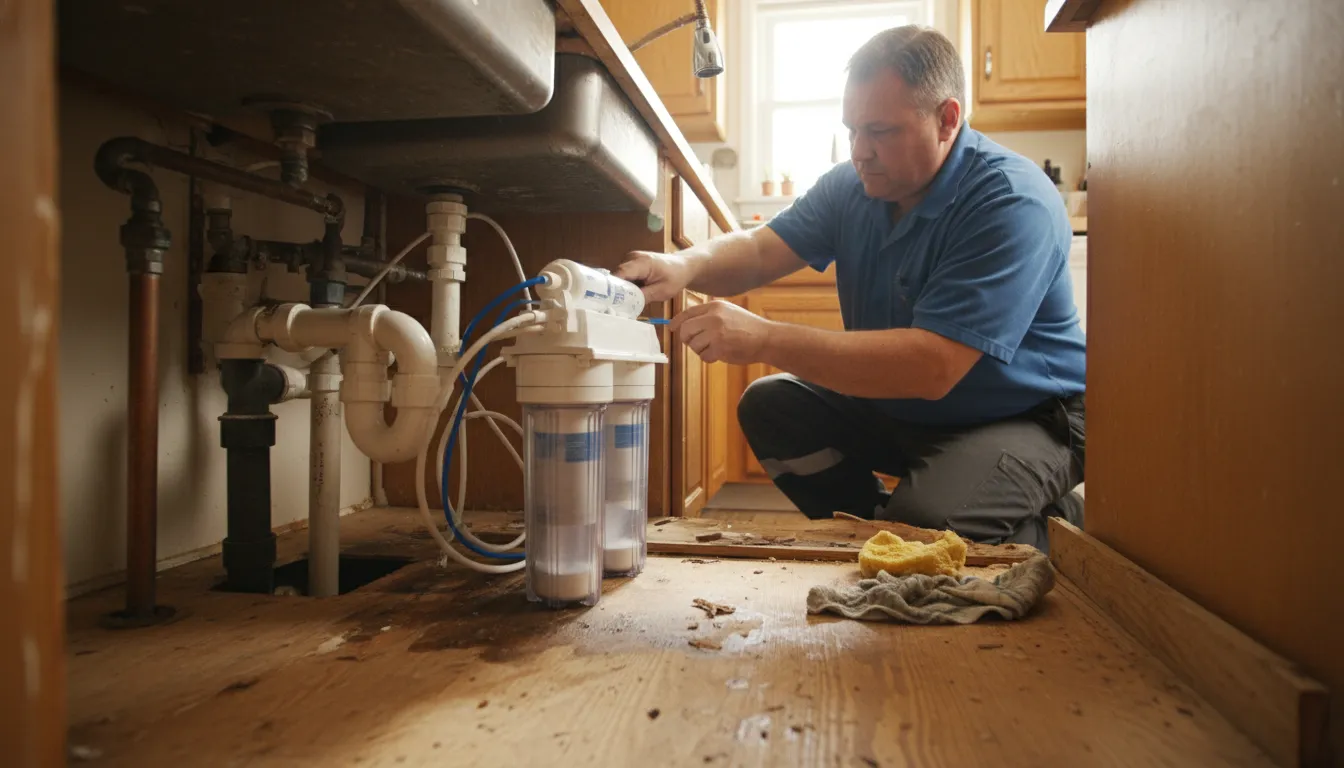
- Suitable for DIY: Simple point-of-use systems, such as under-sink carbon filters, countertop units, or faucet-mounted filters, are designed for homeowner installation with basic tools. These are good for addressing specific, localized concerns like drinking water taste.
Maintenance and Ongoing Costs
All water treatment systems require regular maintenance to function properly. Factor these into your long-term planning.
- Filter Changes: Carbon filters, sediment filters, and RO pre/post-filters typically need replacement every 6 to 12 months, depending on usage and water quality 14 15.
- Salt Replenishment: Salt-based water softeners require you to keep the brine tank filled with salt pellets or blocks. Frequency depends on your water hardness and household size.
- UV Bulb Replacement: The germicidal UV lamp must be replaced annually to ensure it emits light at the correct intensity to kill microorganisms.
- System Checks: Have a professional service your system periodically to check for leaks, calibrate controls, and ensure all components are working efficiently.
Cost Guide for Water Treatment in Vermont
Costs vary widely based on system type, capacity, brand, and installation complexity 16.
- Basic Point-of-Use Systems: A quality under-sink filtration or reverse osmosis system, with installation, can range from $100 to $500 for the unit and setup.
- Water Softeners: The total cost for a salt-based softener system, including professional installation, typically falls between $800 and $4,000.
- Whole-House Filtration Systems: For comprehensive treatment (e.g., for iron, manganese, and sediment), total installed costs often range from $2,000 to $5,00017. Advanced multi-stage systems targeting contaminants like PFAS can be higher.
- Professional Installation Labor: The labor cost to install a whole-house system averages between $500 and $1,500, depending on the project's complexity and plumbing modifications required 18 19.
Finding the Right Water Treatment Professional in Vermont
When searching for a provider, look for companies that:
- Insist on Water Testing: Reputable professionals will not recommend a system without first reviewing current, comprehensive water test results from a certified lab.
- Offer Multiple Solutions: They should explain the pros and cons of different technologies (softeners vs. conditioners, carbon vs. RO for PFAS, etc.) without being tied to a single brand.
- Provide Detailed Quotes: A good quote will itemize equipment, installation labor, any necessary plumbing modifications, and an estimate of first-year maintenance costs.
- Have Local Experience: Vermont's water issues are specific. A provider familiar with regional geology and common contaminants (like arsenic in certain counties or PFAS in others) can offer more targeted advice.
- Offer Service and Support: Choose a company that provides ongoing maintenance, filter delivery services, and is available for emergency repairs.
Frequently asked questions
Sources
Footnotes
-
Drinking Water | Vermont Department of Health - https://www.healthvermont.gov/environment/tracking/drinking-water ↩
-
Hardness in Drinking Water | Vermont Department of Health - https://www.healthvermont.gov/environment/drinking-water/hardness-drinking-water ↩
-
Vermont - HydroFLOW USA: Award Winning Water Treatment ... - https://hydroflow-usa.com/vermont-water-hardness/ ↩
-
Drinking Water | Vermont Department of Health - https://www.healthvermont.gov/environment/drinking-water ↩
-
Potential Well Water Contaminants and Their Impacts | US EPA - https://www.epa.gov/privatewells/potential-well-water-contaminants-and-their-impacts ↩
-
Lead in Drinking Water - Vermont Department of Health - https://www.healthvermont.gov/environment/drinking-water/lead-drinking-water ↩
-
PFAS in Drinking Water - Vermont Natural Resources Council - https://vnrc.org/toxic-free-environment/clean-safe-drinking-water/ ↩
-
2023 Annual Water Quality Report | Burlington, VT - https://www.burlingtonvt.gov/DocumentCenter/View/2728/2023-Consumer-Confidence-Report-PDF ↩
-
Treating for PFAS in Drinking Water | Vermont Department of ... - https://www.healthvermont.gov/environment/drinking-water/treating-pfas-drinking-water ↩
-
How Home Water Filtration Protects Your Vermont Home - https://www.clearwaterfiltration.com/blog/how-home-water-filtration-protects-your-vermont-home/ ↩
-
How to Test Your Drinking Water - Vermont Department of Health - https://www.healthvermont.gov/environment/drinking-water/how-test-your-drinking-water ↩
-
How to Maintain Your Water Treatment System | Kinetico SWFL - https://kineticoswfl.com/how-to-maintain-your-water-treatment-system/ ↩
-
Choosing the Right Water Treatment System for Your Well - https://www.youtube.com/watch?v=-BP3FkhqbDo ↩
-
How Home Water Filtration Protects Your Vermont Home - https://www.clearwaterfiltration.com/blog/how-home-water-filtration-protects-your-vermont-home/ ↩
-
How to Treat Your Drinking Water | Vermont Department of ... - https://www.healthvermont.gov/environment/drinking-water/how-treat-your-drinking-water ↩
-
Pros & Cons of Water Filtration Systems | Saffer Plumbing - https://www.safferplumbing.com/pros-and-cons-of-water-filtration-systems/ ↩
-
Home Water Filtration System Cost - https://www.puresoftwatertreatments.com/home-water-filtration-system-cost ↩
-
Water Softener System Cost in 2025: Types, Installation & ... - https://anchorplumbingservices.com/water-softener-system-cost/ ↩
-
Water Filtration System Costs & Installation Guide - https://www.benjaminfranklinplumbing.com/league-city/blog/2025/january/how-much-does-water-filtration-system-cost-a-comprehensive-pricing-guide/ ↩