Find the Best Water Treatment Installation Companies for Your Business
No obligation • Fast responses • Nationwide coverage
Why you can trust Search a Plumber
Search a Plumber is a leading United States resource for finding and evaluating professional plumbing services. Our team researches licensing, experience, and customer feedback to create unbiased, fact-driven overviews. Companies cannot pay to change ratings or placement, ensuring homeowners get trustworthy information.
Search providers near you
Best Water Treatment Installation Companies in South Carolina Ranked
Improving your home's water quality is a practical investment in your health, your plumbing, and your daily comfort. South Carolina residents often face specific challenges like hard water, iron staining, acidic water, and chlorine taste. A properly selected and installed water treatment system can address these issues, protecting your appliances, improving skin and hair feel, and providing better-tasting water. This guide will help you understand the common water problems in the state, the types of systems available, and what to consider when looking for a qualified professional to assess your needs and install a solution.
Common Water Quality Issues in South Carolina
The water in your South Carolina home can come with a unique set of challenges depending on whether you're on a municipal supply or a private well. Identifying the specific problem is the first step toward an effective solution.
- Hard Water: This is one of the most widespread issues across the state. Hard water contains high levels of dissolved calcium and magnesium. You'll notice its effects as stubborn soap scum in showers and sinks, white limescale buildup on faucets and showerheads, and reduced lathering from soaps and detergents. Over time, this scale can build up inside water heaters and appliances, reducing their efficiency and lifespan.
- Iron and Manganese: Common in well water, these metals can cause metallic-tasting water and unsightly staining. Iron leaves reddish-brown stains on fixtures, sinks, tubs, and laundry, while manganese can create dark gray or black staining 1.
- Low pH (Acidic Water): Water with a pH below 6.5 is considered acidic and corrosive. This is a particular concern in parts of South Carolina 2. Acidic water can corrode copper pipes and plumbing fixtures, potentially leading to pinhole leaks and the leaching of metals like copper and lead into your drinking water 3 4.
- Chlorine Taste and Odor: Municipal water suppliers use chlorine or chloramines to disinfect water and ensure it's safe from pathogens as it travels to your home. While essential for public health, this treatment often leaves an unpleasant chemical taste and smell in drinking water and can dry out skin and hair 5.
- Tannins: Found in water sourced from areas with decaying vegetation, such as swampy or coastal regions, tannins can give water a yellow or tea-like color and a musty odor 6.
- Sediment and Turbidity: Sand, silt, rust flakes, and other particulates can be present, especially after heavy rains or in older plumbing systems. This sediment can clog faucet aerators and appliance valves.
- Microbiological Contaminants: For private well owners, bacteria, viruses, and other microorganisms are a potential risk, particularly after flooding or if the well casing is compromised 7. Regular well testing is crucial.
Types of Water Treatment Systems
Once you know what's in your water, you can explore the right technology to address it. Systems are often combined for comprehensive treatment.
- Water Softeners: These are the go-to solution for hard water. They use an ion-exchange process, trading calcium and magnesium ions for sodium or potassium ions. The result is "soft" water that prevents scale, makes cleaning easier, and helps soaps lather. Modern softeners are efficient and can be programmed based on your household's water usage 8 9.
- Whole-House Filtration Systems: Installed at the point where water enters your home, these systems treat all the water you use.
- Sediment Filters: Act as a first line of defense, removing sand, dirt, and rust particles. They are often used as a pre-filter for other systems 10.
- Carbon Filters: Excellent for removing chlorine, chloramines, bad tastes, odors, and some organic chemicals. They provide noticeably better-tasting water from every tap.
- Acid Neutralizers: These systems raise the pH of corrosive, acidic water by passing it through a calcite or magnesium oxide media tank. This protects your plumbing from corrosion and metal leaching.
- Oxidizing Filters: Used for iron, manganese, and hydrogen sulfide (rotten egg smell) removal. They oxidize the dissolved metals, causing them to form particles that are then filtered out.
- Point-of-Use Systems: These treat water at a specific faucet or appliance.
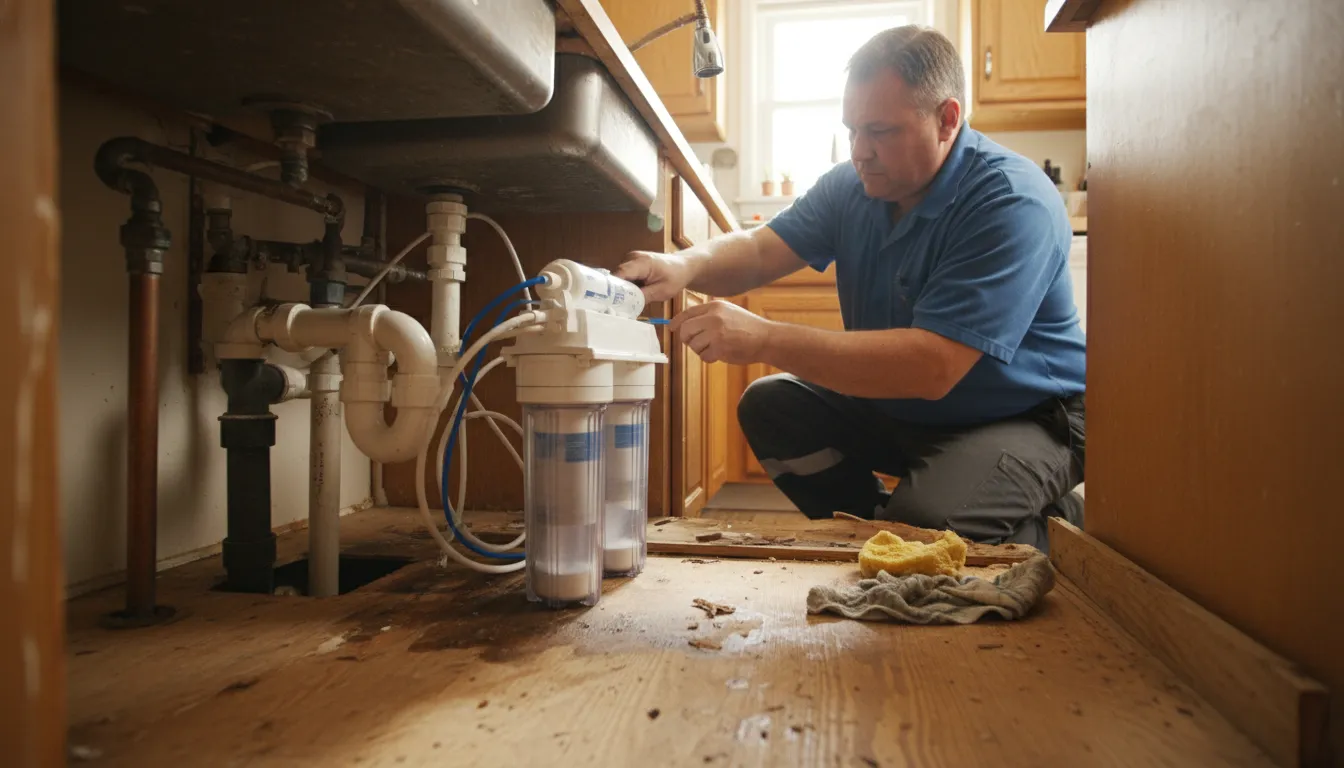
- Reverse Osmosis (RO) Systems: Typically installed under the kitchen sink, RO is one of the most effective methods for producing purified drinking water. It forces water through a semi-permeable membrane, removing up to 99% of dissolved solids, including heavy metals, nitrates, and fluoride 11 12.
- Undersink or Countertop Carbon Filters: Provide an economical way to get filtered drinking and cooking water without whole-house installation.
- Specialty Systems for Well Water:
- UV Purification Systems: Use ultraviolet light to disinfect water, killing bacteria, viruses, and other microorganisms without adding chemicals. They are a common final stage in well water treatment.
- Multi-Stage Well Water Systems: A typical setup for a problematic well might include a sediment pre-filter, an air injection or chemical oxidizer for iron, a water softener, and a final UV light for disinfection 13.
Find the perfect water treatment installation companies for your needs
Get personalized recommendations and expert advice
Professional Installation: What to Expect
While some basic filters are DIY-friendly, most whole-house water softeners and filtration systems require professional installation for optimal performance, warranty compliance, and safety. Here's a general overview of the process a qualified technician will follow 14 15 16:
- Comprehensive Water Testing: A professional should always start with a water test. This may include an on-site test for hardness, pH, iron, and chlorine, and a recommendation for a certified lab test for a broader contaminant scan. The results dictate the exact system design 17.
- System Sizing and Selection: Based on your test results, water usage (number of bathrooms, occupants), and plumbing configuration, the installer will recommend a system with the correct capacity and features.
- Site Preparation and Bypass Installation: The installer will identify the best location, usually near the main water line entry and where a drain and power outlet are accessible. They will shut off the main water supply and install a bypass valve. This crucial component allows water to flow to your home during system maintenance or in an emergency 18 19.
- Plumbing and Electrical Connections: The main water line is cut, and the treatment system is plumbed in with the proper fittings. For softeners and some filters, a drain line is routed to a floor drain or utility sink. Electrical connections are made for control valves and UV systems 20.
- Startup, Programming, and Education: Once everything is connected, the water is slowly turned back on and the system is checked for leaks. The control unit is programmed with settings like regeneration time (for softeners) based on your water hardness. A good installer will walk you through basic operation, maintenance schedules, and answer your questions 21.
Understanding Costs and Maintenance
Investing in water treatment involves upfront equipment and installation costs, plus ongoing maintenance to keep the system working effectively.
Installation Costs in South Carolina: Costs vary significantly based on system complexity, home size, and plumbing accessibility 22 23 24.
- Basic Whole-House Carbon Filter: $1,000 - $3,000 installed.
- Standard Water Softener System: $800 - $4,000+ installed.
- Point-of-Use Reverse Osmosis System: $500 - $2,500+ installed.
- Comprehensive Well Water System (softener + sediment/iron filter + UV): $3,000 - $7,500+ installed 25 26.
Ongoing Maintenance and Annual Costs: A system is only as good as its upkeep. Budget for these recurring items 27 28:
- Salt for Softeners: Requires refilling every 1-3 months. Annual cost: $50 - $150.
- Filter Replacements: Sediment and carbon filters typically need changing every 6-12 months. RO system membranes and filters last 2-5 years. Annual filter cost: $100 - $300.
- Annual Professional Service: A yearly check-up by a technician to clean components, check settings, and ensure proper operation is highly recommended. Service call: $100 - $200.
- Total Estimated Annual Maintenance: $150 - $900, depending on system complexity 29.
Finding the Right Professional in South Carolina
Choosing a qualified installer is as important as choosing the right equipment. Look for a provider who:
- Offers Free, No-Pressure Water Testing: They should base recommendations on data, not assumptions.
- Is Licensed and Insured: Verify they hold the appropriate South Carolina plumbing or water treatment contractor licenses.
- Has Local Experience: They should understand the regional water issues specific to your area, whether you're in the Upstate, Midlands, or Coastal regions.
- Provides Clear, Detailed Quotes: The quote should break down equipment, labor, and any necessary plumbing modifications.
- Explains Warranties: Understand what is covered on both parts and labor, and for how long.
- Offers Maintenance Plans: Many reputable companies provide reminder services for filter changes and annual check-ups.
Frequently asked questions
Sources
Footnotes
-
Concerns with Drinking Water - https://des.sc.gov/programs/bureau-water/drinking-water/concerns-drinking-water ↩
-
SOUTH CAROLINA GROUND-WATER QUALITY - https://pubs.usgs.gov/of/1987/0751/report.pdf ↩
-
Common Regional Water Problems: Eastern and ... - https://www.water-right.com/homeowner-resources/regional-water-problems-southeast/ ↩
-
Drinking Water - https://des.sc.gov/sites/des/files/Library/CR-006453.pdf ↩
-
Protecting Your Drinking Water and FAQs - https://des.sc.gov/programs/bureau-water/drinking-water/protecting-your-drinking-water-and-faqs ↩
-
Residential Drinking Water Wells: Water Quality (2nd in Series) - https://hgic.clemson.edu/factsheet/residential-drinking-water-wells-water-quality-2nd-in-series/ ↩
-
Consumer Safe System - SC Ground Water Association - https://scgwa.org/page/consumersafesystem ↩
-
Water Softener Install in York, SC - 1st Choice Plumbing - https://1st-choiceplumbing.net/services/water-filtration-softener-systems/ ↩
-
Whole-House Water Softener System Installation in Columbia ... - https://www.meetzeplumbing.com/water-treatment/water-softeners/ ↩
-
Residential Water Filtration System Installation - https://bbfamilyplumbing.com/residential-water-filtration-systems/ ↩
-
Types of Water Treatment Systems - https://espwaterproducts.com/pages/water-filtration-systems ↩
-
Types of Water Filtration Systems Available to Homeowners in ... - https://ncwaterconsultants.com/types-of-water-filtration-systems-available-to-homeowners-in-north-and-south-carolina/ ↩
-
Selecting the Best Well Filtration System in South Carolina - https://jesseswellrepair.com/blog-details/selecting-the-best-well-filtration-system-in-south-carolina ↩
-
How to Install a Water Softener (DIY Guide) - https://www.springwellwater.com/how-to-install-a-water-softener-diy-guide/ ↩
-
How To Install A Water Softener Yourself - DIY Guide - https://www.apecwater.com/blogs/water-quality/how-to-install-a-water-softener ↩
-
How Much Does A Water Softener Cost? - https://www.callmattioni.com/blog/t-water-softener-cost/ ↩
-
Professional Water Filtration System Installation vs DIY - https://www.cleanwaterstore.com/blog/hiring-a-pro-vs-installing-yourself/ ↩
-
Home Water Softener Installation: A Complete Guide - https://www.raynewater.com/faq/home-water-softener-installation-a-complete-guide/ ↩
-
Ultimate Guide to Water Softener Installation - Just Plumbing - https://justplumbingaz.com/blog/ultimate-guide-to-water-softener-installation-step-by-step-instructions-for-homeowners/ ↩
-
How to Install a Water Softener at Home? - Waterdrop - https://www.waterdropfilter.com/blogs/home-and-wellness/how-to-install-a-water-softener ↩
-
EcoWater of Greenville - Water Filtration Systems & Water ... - https://www.ecowaterofgreenville.com/ ↩
-
2026 Water Softener Costs by Capacity, Size, Type & More - https://modernize.com/water-treatment/types/water-softener-installation-cost ↩
-
Home Water Filtration System Cost - https://www.puresoftwatertreatments.com/home-water-filtration-system-cost ↩
-
Water Filtration System Costs & Installation Guide - https://www.benjaminfranklinplumbing.com/league-city/blog/2025/january/how-much-does-water-filtration-system-cost-a-comprehensive-pricing-guide/ ↩
-
Water Softener System Cost in 2025: Types, Installation & ... - https://anchorplumbingservices.com/water-softener-system-cost/ ↩
-
Best Residential Water Filtration System: Homeowner's Guide - https://www.jpstx.pro/best-residential-water-filtration-system/ ↩
-
Home Water Treatment Systems: Types, Features, Benefits & More - https://modernize.com/water-treatment ↩
-
Expert Water Filtration Services - Rocky Mount - https://www.metro-maintenance.com/plumbing/water-quality ↩
-
Troubled Waters? Common Signs a Water Treatment System Needs a Check-Up - Fussell Well Drilling - https://www.fussellwelldrilling.com/blog/troubled-waters-common-signs-a-water-treatment-system-needs-a-check-up ↩