Find the Best Water Treatment Installation Companies for Your Business
No obligation • Fast responses • Nationwide coverage

Why you can trust Search a Plumber
Search a Plumber is a leading United States resource for finding and evaluating professional plumbing services. Our team researches licensing, experience, and customer feedback to create unbiased, fact-driven overviews. Companies cannot pay to change ratings or placement, ensuring homeowners get trustworthy information.
Search providers near you
Top Water Treatment Installation Companies in Brick, New Jersey Ranked
Clean, safe water is essential for every home in Brick, but the water entering your pipes may contain minerals, chemicals, or other contaminants that affect taste, appearance, and even your plumbing. Water treatment systems, including softeners and filters, are designed to address these specific issues, providing better water for drinking, cleaning, and bathing. This guide will help you understand the common water quality concerns in Brick, the types of treatment systems available, and how to connect with local professionals who can test your water and recommend the right solution for your home.

Understanding Brick's Water Quality
The first step in choosing a water treatment system is understanding what's in your water. Brick primarily uses municipal water, but private wells are also used in some areas. Each source has its own potential concerns that a proper filtration or softening system can address.
Municipal Water in Brick Water provided by the municipal system meets federal safety standards, but it can still contain substances you may wish to remove for taste, odor, or additional safety. Common concerns in treated municipal water include chlorine (used for disinfection), which can affect taste and smell, and potential traces of metals like copper from household plumbing 1. While safe for the general population, some contaminants may be present at levels above non-enforceable EPA health goals, making certified filtration a wise consideration, especially for vulnerable groups 1 2.
Private Well Water If your home in Brick is on a private well, you are solely responsible for your water's safety and quality. The New Jersey Department of Environmental Protection (NJDEP) strongly recommends annual testing for bacteria, nitrates, and any local contaminants of concern. Well water in our area can be susceptible to hardness minerals, iron, manganese, arsenic, lead, and bacterial contamination, often requiring a multi-stage treatment approach.
The Issue of Hard Water A prevalent issue across New Jersey, including Brick, is hard water. Hardness is caused by dissolved calcium and magnesium minerals. While not a health risk, hard water can cause significant nuisances like scale buildup in pipes and appliances, soap scum on fixtures, and spots on dishes and glassware. It can also reduce the efficiency and lifespan of water heaters, dishwashers, and coffee makers.
Types of Water Treatment Systems
Water treatment isn't one-size-fits-all. Different systems are engineered to solve specific problems. Here's a breakdown of the most common technologies used by homeowners in Brick.
Water Softeners (Ion Exchange) This is the primary solution for hard water. A water softener uses an ion exchange process to remove calcium and magnesium ions, replacing them with sodium or potassium ions 3. The result is "soft" water that lathers easily with soap, prevents scale, and can make skin and hair feel smoother. It's important to note that a softener addresses hardness but does not remove other contaminants like chlorine or bacteria 4.
Carbon Filters (Granular Activated Carbon - GAC) Carbon filtration is excellent for improving taste and odor. Activated carbon is highly effective at adsorbing chlorine, volatile organic compounds (VOCs), and some chemicals. These filters are often used as point-of-entry (whole-house) systems or point-of-use systems (like under-sink filters).
Sediment Filters These are typically the first line of defense in a multi-stage system. A sediment filter is a physical barrier that removes suspended particles like rust, dirt, sand, and silt from the water. They protect downstream equipment, like softeners and carbon filters, from clogging.
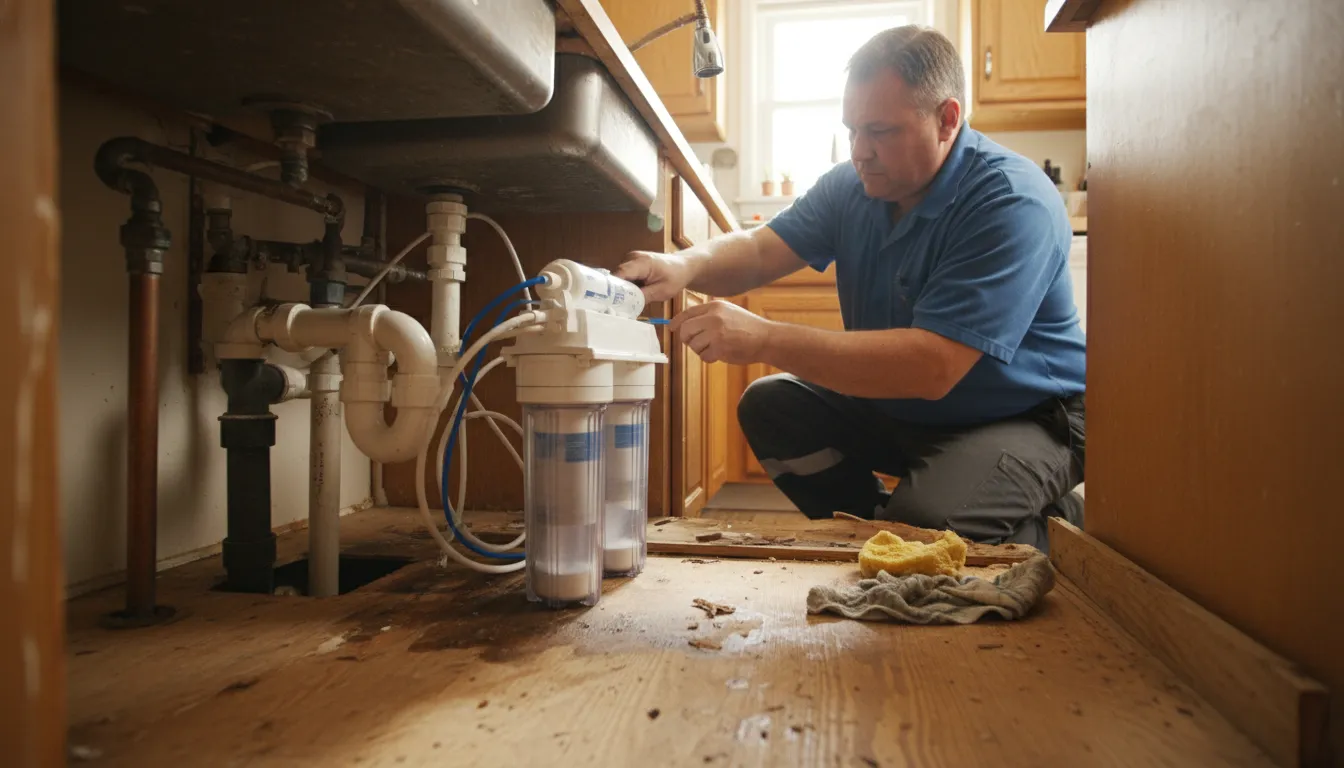
Reverse Osmosis (RO) Systems For the purest drinking water, a reverse osmosis system is highly effective. RO forces water through a semi-permeable membrane, removing a wide array of dissolved solids and contaminants, including lead, nitrates, arsenic, and fluoride 5. It's important to note that RO systems produce wastewater and are typically installed as point-of-use systems under the kitchen sink.
UV Purification Systems Ultraviolet (UV) systems are designed for microbiological safety. They use UV light to disinfect water by inactivating bacteria, viruses, and other pathogens. This technology is highly recommended for homes with untreated well water that tests positive for bacterial contamination.
Whole-House vs. Point-of-Use Systems Your choice depends on your goals:
- Whole-House Systems: Installed where water enters your home, these treat all the water for bathing, laundry, and appliances. Common combinations include a sediment pre-filter, a carbon filter, and a water softener 6.
- Point-of-Use Systems: Installed at a single tap, such as the kitchen sink or a refrigerator line, these are ideal for providing filtered drinking and cooking water. RO systems are a popular point-of-use choice.
Find the perfect water treatment installation companies for your needs
Get personalized recommendations and expert advice
The Process: From Testing to Installation
Investing in a water treatment system is a process best handled with professional guidance. Here's a typical roadmap for Brick homeowners.
1. Professional Water Testing This is the non-negotiable first step. A local water treatment professional can perform a comprehensive test to identify the exact contaminants and hardness level in your water 7. For well owners, testing should follow NJDEP guidelines to check for a full suite of potential health and aesthetic contaminants 8.
2. System Selection and Sizing Based on your test results, water usage, and home size, a pro can recommend the right type and size of system. For example, a home with very hard water and high iron content from a well might need an iron-filtering water softener, while a home on municipal water might prioritize a carbon filter for chlorine and a softener for scale prevention.
3. Professional Installation Proper installation is critical for performance and warranty. Local companies specialize in installing these systems, which typically involves connecting to the main water line, setting up drainage for softener brine or RO wastewater, and ensuring electrical connections for control panels or UV lights 9. Installation for a whole-house system can often be completed in one to two days.
Example Cost Ranges for Brick Costs vary widely based on system complexity and home specifics. Here are general ranges for unit and professional installation in our area:
- Carbon/Sediment Filter Combo: ~$800 - $1,700+
- Standard Water Softener: ~$800 - $3,800+
- Multi-Stage or UV System (for wells): ~$2,800 - $5,500+ 10
Maintenance and Long-Term Considerations
A water treatment system is an appliance that requires regular upkeep to function effectively.
Ongoing Maintenance Tasks
- Filter Changes: Sediment and carbon filters need replacement every 3 to 12 months, depending on water quality and usage.
- Salt for Softeners: Ion exchange softeners require regular additions of salt (or potassium chloride) pellets to the brine tank. The cost and frequency depend on your water's hardness and household consumption 11.
- RO Membrane Replacement: The membrane in a reverse osmosis system typically lasts 2-3 years before needing replacement.
- Professional Servicing: Annual check-ups by a technician can ensure all components are working correctly and efficiently.
Important Considerations
- Sodium Intake: If you are on a sodium-restricted diet, consult your doctor about softened water. Potassium chloride can be used as an alternative regenerant.
- Pipe Corrosion: There is some evidence that softened water can be more corrosive to certain household plumbing, particularly if pH is not balanced. A professional can advise on this during the system design phase.
- Environmental Impact: Softeners discharge chloride (from salt) into wastewater, and RO systems produce wastewater. Discuss these aspects with your installer.
Frequently asked questions
Sources
Footnotes
-
Brick Twp Tap Water Quality: Safe to Drink? 2025 Report - https://www.tapwaterdata.com/nj/brick-twp ↩ ↩2
-
Brick Tap Water Quality: Safe to Drink? 2025 Report | TapWaterData - https://www.tapwaterdata.com/nj/brick ↩
-
Water softening process overview - Luminor UV - https://www.luminoruv.com/education/water-softening/ ↩
-
Water Softener vs. Water Filter - https://www.culligan.com/blog/water-softening-vs-water-filtration ↩
-
Water Softener and Filtration Systems Explained - https://www.pbwatersoftening.com/water-softener-and-filtration-systems-explained/ ↩
-
New Jersey Water Purification - Whole House Water Filters ... - https://newjerseywaterpurification.com/ ↩
-
Local Brick Water Quality Guide - HomeWater - https://www.homewater.com/water-quality/brick-nj ↩
-
NJDEP| Private Wells | Well Water Treatment - https://dep.nj.gov/privatewells/treatment/ ↩
-
Home water filtration system in Brick, NJ - Get A Free Quote - https://newjerseywaterpurification.com/residential/home-water-filtration-system-in-brick-nj/ ↩
-
Installing a Whole House Water Filter for New Jersey Residents - https://infoblogify.home.blog/2025/08/13/installing-a-whole-house-water-filter-for-new-jersey-residents/ ↩
-
Home Water Softening Frequently Asked Questions - MN Dept. of Health - https://www.health.state.mn.us/communities/environment/water/factsheet/softening.html ↩