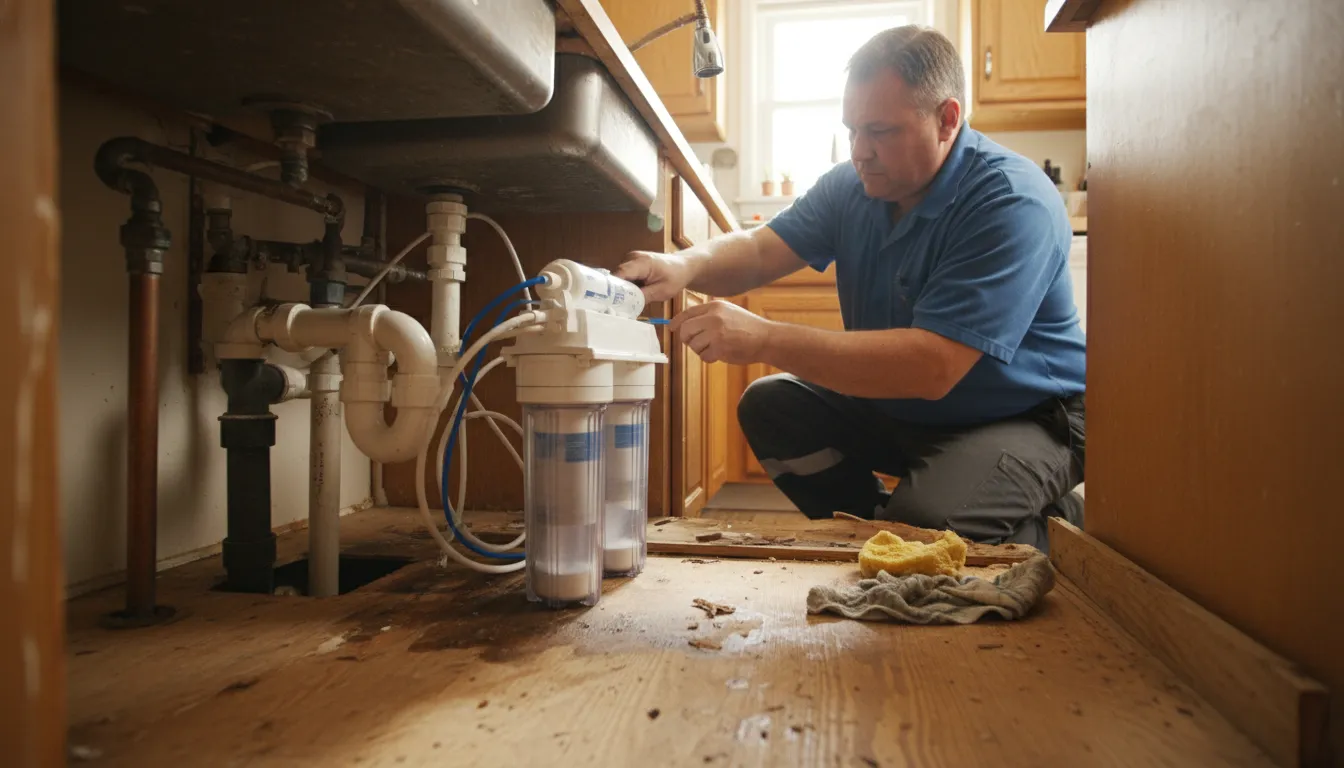
Find the Best Water Treatment Installation Companies for Your Business
No obligation • Fast responses • Nationwide coverage

Why you can trust Search a Plumber
Search a Plumber is a leading United States resource for finding and evaluating professional plumbing services. Our team researches licensing, experience, and customer feedback to create unbiased, fact-driven overviews. Companies cannot pay to change ratings or placement, ensuring homeowners get trustworthy information.
Search providers near you
Top Water Treatment Installation Companies in Wake Forest, North Carolina Ranked
Living in Wake Forest means enjoying beautiful neighborhoods and a vibrant community, but it also often means dealing with the challenges of hard water. The minerals in our water supply can leave behind scale on fixtures, reduce appliance efficiency, and affect skin and hair. Beyond hardness, you might want to improve the overall taste and purity of your water by addressing other potential contaminants. This guide explores water treatment solutions, from whole-home softening to targeted filtration, to help you understand your options for cleaner, better-tasting water in your home.
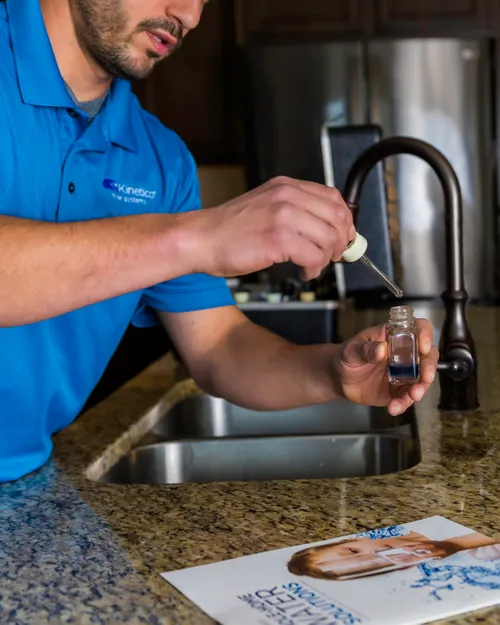
Kinetico Advanced Water Systems of SENC
128 US-70 Suite A, Garner, NC 27529
Kinetico Advanced Water Systems of SENC is a water treatment provider located in Raleigh, NC. They offer custom water solutions including water softener installation, filtration, purification, and sanitization systems tailored to individual needs. Their services cover the Raleigh-Durham area and extend to parts of the Southeast, including Savannah, GA, and Charleston and Hilton Head Island, SC. Kinetico is known for its ion exchange water softeners that address hard water issues and for providing maintenance and repairs on various water filtration systems regardless of the original installer. The company is guided by a Ph.D. geologist and chemist, ensuring a science-driven approach to water treatment. They have been serving customers for over five years and provide industry-leading warranties on their products.
Air Works Heating & Air
5100 Unicon Dr #107, Wake Forest, NC 27587
Air Works Heating & Air is a family-owned company serving Raleigh, NC, and Wake County with heating, air conditioning, and plumbing services. Since 2007, they have provided furnace replacements, AC tune-ups, plumbing repairs, and indoor air quality services. Their certified technicians handle installations and repairs for heating and cooling systems, including water softener installation. The company offers flat-rate pricing and a one-year parts and labor warranty on their work.
Arcane Plumbing Solutions, LLC
Raleigh, NC
Arcane Plumbing Solutions, LLC is a plumbing contractor based in Apex, NC, serving the greater Raleigh area. With 30 years of experience, they offer a wide range of residential plumbing services including water heater repair and installation, tankless water heater services, repiping, leak detection, drain cleaning, gas line installation, and sewer camera inspections. Their certified technicians provide expert repairs and installations, specializing in Rinnai tankless water heaters and whole-home repiping to ensure durable plumbing systems. They also offer emergency services every weekend to address urgent plumbing needs promptly.
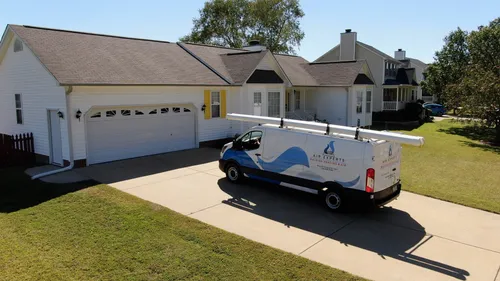
Air Experts Heating & Cooling
7 Rupert Rd, Raleigh, NC 27603
Air Experts Heating & Cooling is a licensed and insured HVAC and plumbing company serving Raleigh, NC. They provide a wide range of services including sewer camera inspections, water heater repair and installation, tankless water heater services, water softener installation, drain cleaning, leak detection, gas line installation, and toilet repair. With over 35 years of experience in the Triangle region, Air Experts offers comprehensive plumbing and HVAC solutions backed by their Super Seven Guarantee. They also provide 24/7 emergency service to address urgent needs promptly.

Service Experts Heating & Air Conditioning
2815 S Wilmington St, Raleigh, NC 27603
Service Experts Heating & Air Conditioning has been serving Raleigh, NC, and the surrounding Triangle Area since 1971. They provide a wide range of HVAC and plumbing services, including water heater repair, tankless water heater installation, and water softener installation. Their team is licensed, bonded, and ACE-certified, offering expert care for home heating, cooling, and plumbing systems. Known for their comprehensive home system services, they operate 24 hours a day to address urgent repairs and maintenance needs promptly.
Understanding Wake Forest's Water
The first step in choosing a water treatment system is understanding what's in your water. Wake Forest, like much of the Triangle region, is known for having hard water. This means your water contains elevated levels of dissolved minerals, primarily calcium and magnesium. While the municipal water supply meets all federal safety standards, treatment focuses on improving water quality for daily use, not just safety 1.
Common issues associated with Wake Forest water include:
- Limescale Buildup: Hard water leaves chalky, white deposits on showerheads, faucets, and inside appliances like dishwashers and water heaters, reducing their efficiency and lifespan 2.
- Skin and Hair Concerns: Minerals can strip natural oils, leading to dry, itchy skin and dull, brittle hair.
- Soap and Detergent Inefficiency: Hard water prevents soap from lathering fully, leading to more product use and less effective cleaning.
- Potential Contaminants: While safe, tap water can contain trace amounts of substances like chlorine (used for disinfection), sediment, or other minerals that affect taste and odor.
A professional water test is the only way to know your water's specific hardness level (measured in grains per gallon, or GPG) and identify any other contaminants you may wish to target 3.
Types of Water Treatment Systems
Water treatment isn't one-size-fits-all. The right system for your home depends on your water test results and your specific goals-whether that's eliminating scale, improving taste, or both.
Water Softeners (Ion Exchange)
This is the most common and effective solution for combating hard water. Traditional salt-based softeners use a process called ion exchange, where calcium and magnesium ions are swapped for sodium or potassium ions. This effectively "softens" the water throughout your entire home.
- Best For: Homes with moderate to severe hard water problems.
- Considerations: Requires periodic salt refills and a drain line for the regeneration process.
Salt-Free Water Conditioners
Often called "descalers" or "conditioners," these systems use a physical or catalytic process to alter the structure of hardness minerals so they don't stick to surfaces. They do not remove the minerals, so the water is still technically "hard," but they prevent scale formation.
- Best For: Homes with lower to moderate hardness or for homeowners looking to avoid adding sodium to their water and the maintenance of salt bags.
- Considerations: May not be as effective in areas with very high hardness levels.
Whole-Home Filtration Systems
These multi-stage systems are installed at the point where water enters your home. They are designed to reduce a broad spectrum of contaminants, including sediment, chlorine, chloramines, and some chemicals, improving the taste, odor, and overall quality of water at every tap 4.
- Best For: Homes where overall water quality, not just hardness, is the primary concern.
- Considerations: A whole-home filter often works in tandem with a softener for comprehensive treatment.
Point-of-Use Filters: Reverse Osmosis (RO)
For the purest drinking and cooking water, an under-sink Reverse Osmosis system is a powerful addition. RO systems force water through a semi-permeable membrane, removing up to 99% of contaminants, including heavy metals, nitrates, and dissolved solids 5. They are typically installed at the kitchen sink.
- Best For: Providing ultra-pure water for drinking and cooking.
- Considerations: RO systems produce wastewater and are usually paired with a pre-filter (like a whole-home system or softener) to protect the membrane.
Find the perfect water treatment installation companies for your needs
Get personalized recommendations and expert advice
Professional Installation and Sizing
Proper installation is critical for a water treatment system to function correctly and efficiently. The process is more than just hooking up a unit; it requires plumbing expertise to integrate the system into your home's main water line.
A typical professional installation includes:
- Final System Selection & Sizing: Based on your water test and daily water usage, a technician will determine the correct system capacity (e.g., grain capacity for a softener) 6.
- Plumbing Integration: The system is installed on the main water line, usually after the water meter and pressure regulator. This involves cutting into the main pipe, installing bypass valves (for maintenance), and connecting a drain line for softener regeneration.
- Configuration & Setup: The control valve is programmed for regeneration cycles (for softeners) or filter change alerts. The system is tested for leaks and proper operation.
- Education: A good installer will walk you through system operation, maintenance schedules, and answer any questions.
Attempting a DIY installation can lead to improper sizing, plumbing leaks, or voided warranties, so working with a qualified local professional is highly recommended.
Investment and Ongoing Maintenance
The cost of a water treatment system is an investment in your home's plumbing infrastructure and your family's comfort. Prices vary significantly based on the type of system, its capacity, and the complexity of installation.
Estimated Investment Ranges (including professional installation):
- Traditional Water Softener: $1,800 - $6,500 7
- Salt-Free Water Conditioner: $3,000 - $3,500
- Under-Sink Reverse Osmosis System: $1,000 - $3,000 8
- Whole-Home Filtration System: Costs vary widely based on the stages and technology used.
Ongoing maintenance is required to keep any system performing optimally:
- Salt-Based Softeners: Require regular salt refills, typically every 1-2 months depending on usage and hardness.
- All Filter-Based Systems: Have cartridges that need periodic replacement, from every 3 months to annually.
- System Components: The resin in a softener or the membrane in an RO unit will eventually need replacement, often after several years of service.
While there is an ongoing cost, it is generally modest compared to the potential savings on soap, detergent, energy bills (from scale-free appliances), and plumbing repairs.
Finding the Right Solution for Your Home
The best way to navigate your options is to start with a professional water analysis. Many reputable local providers offer this service for free 9. This test provides the concrete data needed to make an informed recommendation. Be prepared to discuss your household size, any specific water-related issues you've noticed (spots on glasses, dry skin), and your goals for water quality.
A qualified specialist can then explain which type of treatment-whether a softening system, a filtration unit, or a combination-makes the most sense for your Wake Forest home, providing a tailored quote and a clear plan for installation and future service.
Frequently asked questions
Sources
Footnotes
-
Local Wake Forest Water Quality Guide - HomeWater - https://www.homewater.com/water-quality/wake-forest-nc ↩
-
5 Signs You Need a Water Softener in Raleigh NC - https://outthedoorplumbing.com/5-signs-you-need-a-water-softener-raleigh-nc/ ↩
-
North Carolina - HydroFLOW USA: Award Winning Water ... - https://hydroflow-usa.com/north-carolina-water-hardness/ ↩
-
Water Treatment Systems, Wake Forest, NC - https://cleanyourwater.com/water-filtration-wake-forest/water-treatment-systems/ ↩
-
Water Softener vs. Water Filtration System: What's Best for ... - https://culligantriangle.com/water-softener-vs-water-filtration-system-whats-best-for-your-raleigh-home/ ↩
-
Purchasing and Maintaining A Water Softener | Department of Energy - https://www.energy.gov/energysaver/purchasing-and-maintaining-water-softener ↩
-
2025 Culligan Water Softener Costs: Price by System & Type - Modernize - https://modernize.com/water-treatment/culligan-cost/water-softener ↩
-
2026 Water Softener Costs by Capacity, Size, Type & More - https://modernize.com/water-treatment/types/water-softener-installation-cost ↩
-
Kinetico Water Softeners & Water Treatment in Wake Forest, NC - https://www.kineticoadvancedwatersystems.com/locations/raleigh-nc/wake-forest/ ↩