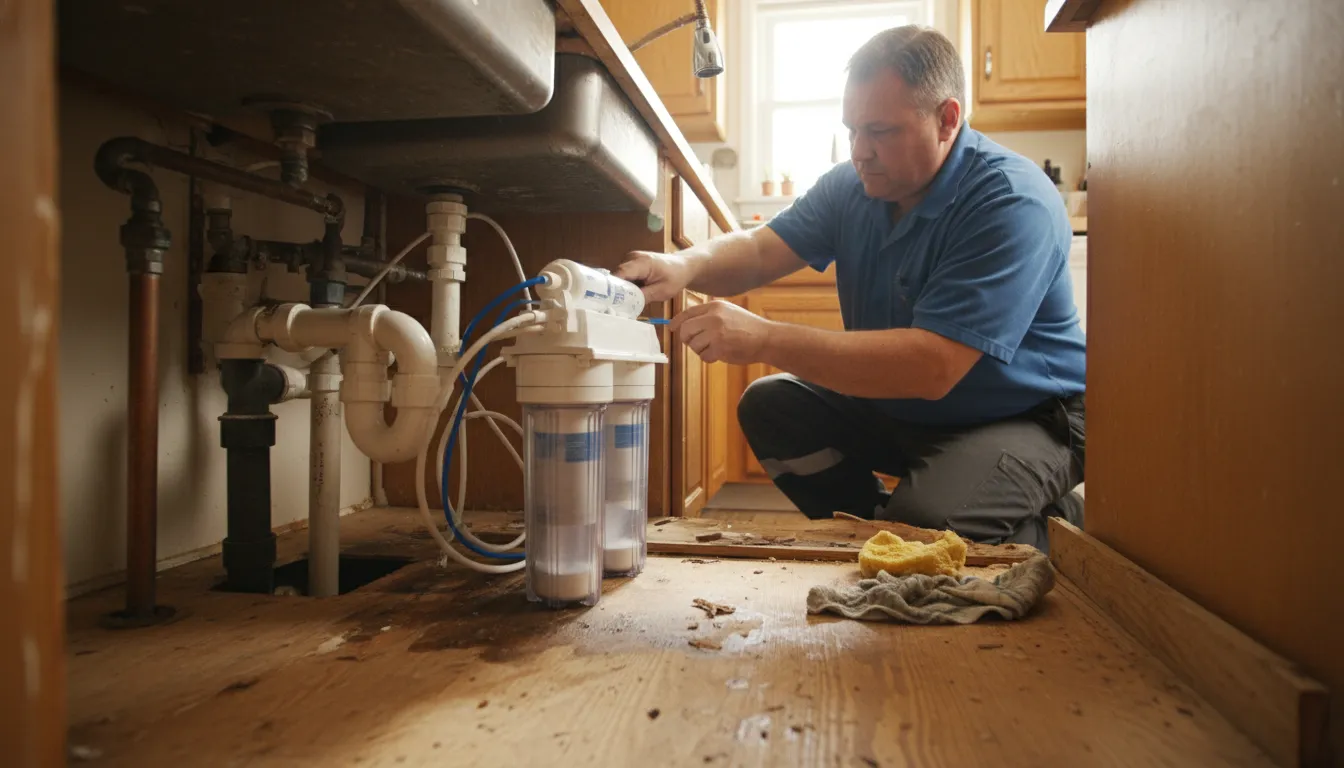
Find the Best Water Treatment Installation Companies for Your Business
No obligation • Fast responses • Nationwide coverage

Why you can trust Search a Plumber
Search a Plumber is a leading United States resource for finding and evaluating professional plumbing services. Our team researches licensing, experience, and customer feedback to create unbiased, fact-driven overviews. Companies cannot pay to change ratings or placement, ensuring homeowners get trustworthy information.
Search providers near you
Top Water Treatment Installation Companies in Cary, North Carolina Ranked
Living in Cary means enjoying a high quality of life, but the quality of the water flowing from your taps is another matter entirely. While the municipal supply meets all federal safety standards, many homeowners seek water treatment solutions to improve taste, protect plumbing, and ensure peace of mind against potential contaminants. Water filtration and softening systems are specialized investments that can transform your home's water from merely safe to truly exceptional. This guide will help you understand your local water profile, explore the most suitable treatment options for Cary homes, and navigate the process of selecting and installing a system that meets your specific needs.
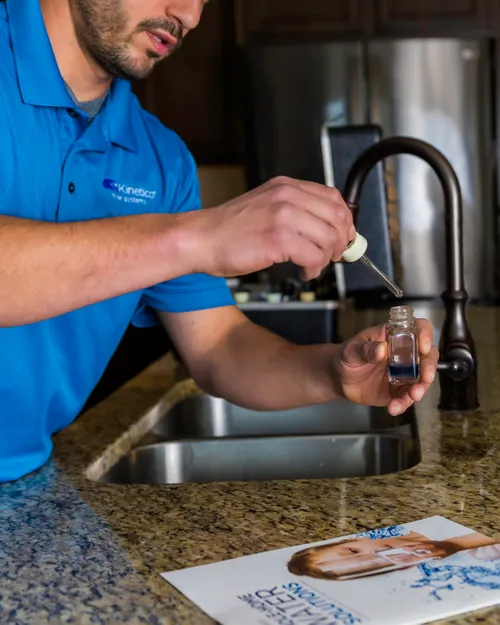
Kinetico Advanced Water Systems of SENC
128 US-70 Suite A, Garner, NC 27529
Kinetico Advanced Water Systems of SENC is a water treatment provider located in Raleigh, NC. They offer custom water solutions including water softener installation, filtration, purification, and sanitization systems tailored to individual needs. Their services cover the Raleigh-Durham area and extend to parts of the Southeast, including Savannah, GA, and Charleston and Hilton Head Island, SC. Kinetico is known for its ion exchange water softeners that address hard water issues and for providing maintenance and repairs on various water filtration systems regardless of the original installer. The company is guided by a Ph.D. geologist and chemist, ensuring a science-driven approach to water treatment. They have been serving customers for over five years and provide industry-leading warranties on their products.
Air Works Heating & Air
5100 Unicon Dr #107, Wake Forest, NC 27587
Air Works Heating & Air is a family-owned company serving Raleigh, NC, and Wake County with heating, air conditioning, and plumbing services. Since 2007, they have provided furnace replacements, AC tune-ups, plumbing repairs, and indoor air quality services. Their certified technicians handle installations and repairs for heating and cooling systems, including water softener installation. The company offers flat-rate pricing and a one-year parts and labor warranty on their work.
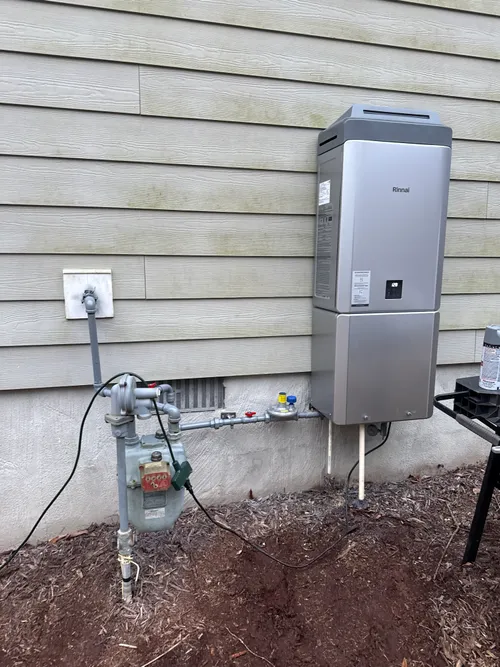
Thor's Plumbing Solutions
1223 Byrdsville Rd, Hillsborough, NC 27278
Thor's Plumbing Solutions is a locally and family-owned plumbing company serving Durham, NC, and nearby areas. With over 20 years of experience, they offer a wide range of plumbing services including sewer camera inspections, water heater repairs and installations, drain cleaning, leak detection, repiping, and gas line installations. The company uses advanced diagnostic tools to identify issues such as sewer line problems and provides tailored solutions for both residential and commercial properties. They also provide 24/7 emergency services to address plumbing needs at any time.
Arcane Plumbing Solutions, LLC
Raleigh, NC
Arcane Plumbing Solutions, LLC is a plumbing contractor based in Apex, NC, serving the greater Raleigh area. With 30 years of experience, they offer a wide range of residential plumbing services including water heater repair and installation, tankless water heater services, repiping, leak detection, drain cleaning, gas line installation, and sewer camera inspections. Their certified technicians provide expert repairs and installations, specializing in Rinnai tankless water heaters and whole-home repiping to ensure durable plumbing systems. They also offer emergency services every weekend to address urgent plumbing needs promptly.
Air Experts Heating & Cooling
7 Rupert Rd, Raleigh, NC 27603
Air Experts Heating & Cooling is a licensed and insured HVAC and plumbing company serving Raleigh, NC. They provide a wide range of services including sewer camera inspections, water heater repair and installation, tankless water heater services, water softener installation, drain cleaning, leak detection, gas line installation, and toilet repair. With over 35 years of experience in the Triangle region, Air Experts offers comprehensive plumbing and HVAC solutions backed by their Super Seven Guarantee. They also provide 24/7 emergency service to address urgent needs promptly.
Understanding Cary's Water Profile
The first step in choosing a water treatment system is understanding what's in your water. Cary's water is sourced from both the B. Everett Jordan Lake and the Cary/Apex Water Treatment Facility, and it undergoes rigorous treatment to meet Environmental Protection Agency (EPA) standards 1. The good news for residents is that Cary's water is considered soft, with a hardness level around 27.5 parts per million (ppm) or 1.7 grains per gallon 2. This low mineral content means you are unlikely to experience the classic signs of hard water, such as stubborn scale buildup on fixtures, spotty dishes, or stiff laundry.
However, meeting safety standards doesn't mean the water is perfect for every palate or concern. The treatment process often leaves behind chlorine or chloramines, which are essential for disinfecting the water as it travels through miles of pipes but can impart an unpleasant taste and odor. Furthermore, while the water leaving the plant is clean, it can pick up trace metals like lead or copper from older home plumbing systems, or other contaminants like nitrates. For these reasons, water filtration in Cary is often pursued not for hardness, but for taste enhancement and targeted contaminant removal.
Is a Water Softener Necessary in Cary?
Given the naturally soft water, a traditional water softener is generally not a necessity for most Cary homes 3. These systems are designed to remove calcium and magnesium ions-the minerals that cause hardness. Installing one when hardness is already low can be an unnecessary expense and adds maintenance, like regularly adding salt.
That said, there are exceptions. If you notice minor scaling, have particularly sensitive skin, or use a significant amount of hot water (as in a large household), a small-capacity softener might provide a marginal benefit4. It's crucial to get a professional water test first to confirm your specific home's hardness level before investing in softening equipment. In most cases, residents are better served by focusing on filtration rather than softening.
Water Filtration Options for Cary Homes
Since filtration is the primary goal for improving Cary's water, you have several effective systems to choose from. The right one depends on whether you want to treat all the water entering your home or just the water you use for drinking and cooking.
Whole-House Filtration Systems Also known as point-of-entry (POE) systems, these are installed where the main water line enters your home. They treat every drop of water used for bathing, laundry, and washing dishes.
- Activated Carbon Filters: The most popular whole-house option for Cary. These systems are excellent at removing chlorine, chloramines, and associated tastes and odors, resulting in better-tasting water and softer-feeling skin and hair. They also filter out some larger sediment and organic compounds.
- Whole-House Reverse Osmosis: This is a comprehensive but costly solution that provides highly purified water to every faucet. It's extremely effective but involves significant water waste and higher ongoing maintenance costs.
Point-of-Use Filtration Systems These systems treat water at a single outlet, such as your kitchen sink or a dedicated drinking water faucet.
- Reverse Osmosis (RO) Systems: Often installed under the kitchen sink, an RO system is considered the gold standard for drinking water purification5. It forces water through a semi-permeable membrane, removing up to 99% of dissolved solids, including lead, nitrates, arsenic, and fluoride. This is an ideal solution if your main concern is the purity of water used for consumption.
- Faucet-Mounted or Countertop Filters: These are simple, low-cost options that use carbon filters to reduce chlorine taste and odor. They are easy to install but have a limited capacity and filter life.
Find the perfect water treatment installation companies for your needs
Get personalized recommendations and expert advice
The Process: From Testing to Installation
Investing in a water treatment system should be a deliberate process, not an impulse buy. Following these steps will ensure you get the right system for your home.
- Test Your Water: This is the non-negotiable first step. A professional water test will identify the specific contaminants present and their concentrations6 7. Many local water treatment companies offer free or low-cost testing. This data is essential for matching a system's capabilities to your actual needs.
- Define Your Goals & Budget: Are you most concerned about the taste of your drinking water? The smell of chlorine in the shower? Protecting your appliances from any potential scale? Your goals will dictate whether you need a point-of-use RO system, a whole-house carbon filter, or a combination. Budget is equally important, as costs range dramatically from a few hundred dollars for an under-sink unit to several thousand for a whole-house system.
- Choose the Right System: With your test results and goals in hand, you can evaluate systems. For most Cary homes targeting taste and odor, a whole-house carbon filter paired with an under-sink RO system for drinking water is a highly effective and popular combination.
- Professional Installation: While some point-of-use filters are DIY-friendly, whole-house systems require cutting into your main water line and involve plumbing and electrical connections that must comply with local codes. Professional installation ensures the system is set up correctly, functions safely, doesn't void any warranties, and is optimized for your home's water pressure and flow rate.
Cost Considerations for Water Treatment
The cost of water treatment in Cary varies widely based on the type and scale of the system. Here's a general breakdown to help you plan:
- Whole-House Carbon Filtration System: Installation typically ranges from $1,200 to $3,000+, depending on the system's flow rate and complexity.
- Water Softener (if recommended): If your test indicates a need, a softener can cost between $1,000 and $7,000+, with price increasing for larger capacity or more advanced models8.
- Reverse Osmosis System: An under-sink drinking water RO system is more affordable, often $300-$800 installed. A whole-house RO system is a major investment, ranging from $4,800 to $8,000+9 10.
- Ongoing Maintenance: All systems require upkeep. Budget approximately $100 to $300+ per year for replacement filters, membranes, and for softeners, salt11 12. This maintenance is critical for the system to continue performing effectively.
Maintaining Your System
A water treatment system is an appliance that requires regular care. Neglecting maintenance can lead to reduced performance, bacterial growth within the filters, and even damage to the system itself.
- Filter Changes: Carbon pre-filters and post-filters in RO systems typically need replacement every 6-12 months. The RO membrane lasts 2-3 years.
- Salt Replenishment: If you have a softener, you'll need to add salt to the brine tank regularly, often monthly.
- Sanitization: Periodic system sanitization is recommended to keep it clean and functioning properly. Many companies offer annual service plans to handle these tasks, providing convenience and ensuring your system is always working at its best.
Frequently asked questions
Sources
Footnotes
-
Cary Tap Water Quality: Safe to Drink? 2026 Report | TapWaterData - https://www.tapwaterdata.com/nc/cary ↩
-
Water Hardness North Carolina | Aquatell US. - https://www.aquatell.com/pages/water-hardness-north-carolina ↩
-
FAQ | Town of Cary - https://www.carync.gov/connect-engage/town-departments-offices/public-works/faq ↩
-
Water Softener vs. Water Filter - https://www.culligan.com/blog/water-softening-vs-water-filtration ↩
-
Best Water Treatment Systems for Homes in Cary, NC - https://www.thewaterspecialist.com/choosing-the-right-water-treatment-system-for-your-cary-home/ ↩
-
Water Filtration, Cary, NC | Progressive Water Solutions - https://cleanyourwater.com/water-filtration-cary/ ↩
-
What to Think About Before Your Water Softener Installation - https://ncwaterconsultants.com/__trashed-35/ ↩
-
2026 Water Softener Costs by Capacity, Size, Type & More - https://modernize.com/water-treatment/types/water-softener-installation-cost ↩
-
Choosing the Right Water Filtration System for Your Home in ... - https://royalwaterworks.com/2024/10/choosing-the-right-water-filtration-system-for-your-home-in-north-carolina/ ↩
-
How Much Does It Cost to Install a Water Filtration System In 2026? - https://modernize.com/water-treatment/types/water-filtration-system-cost ↩
-
What Does a Home Water Filtration System Cost? - https://nexgenairandplumbing.com/blog/what-does-a-home-water-filtration-system-cost/ ↩
-
2025 Water Softener Costs by Capacity, Size, Type & More - https://modernize.com/water-treatment/types/water-softener-installation-cost ↩