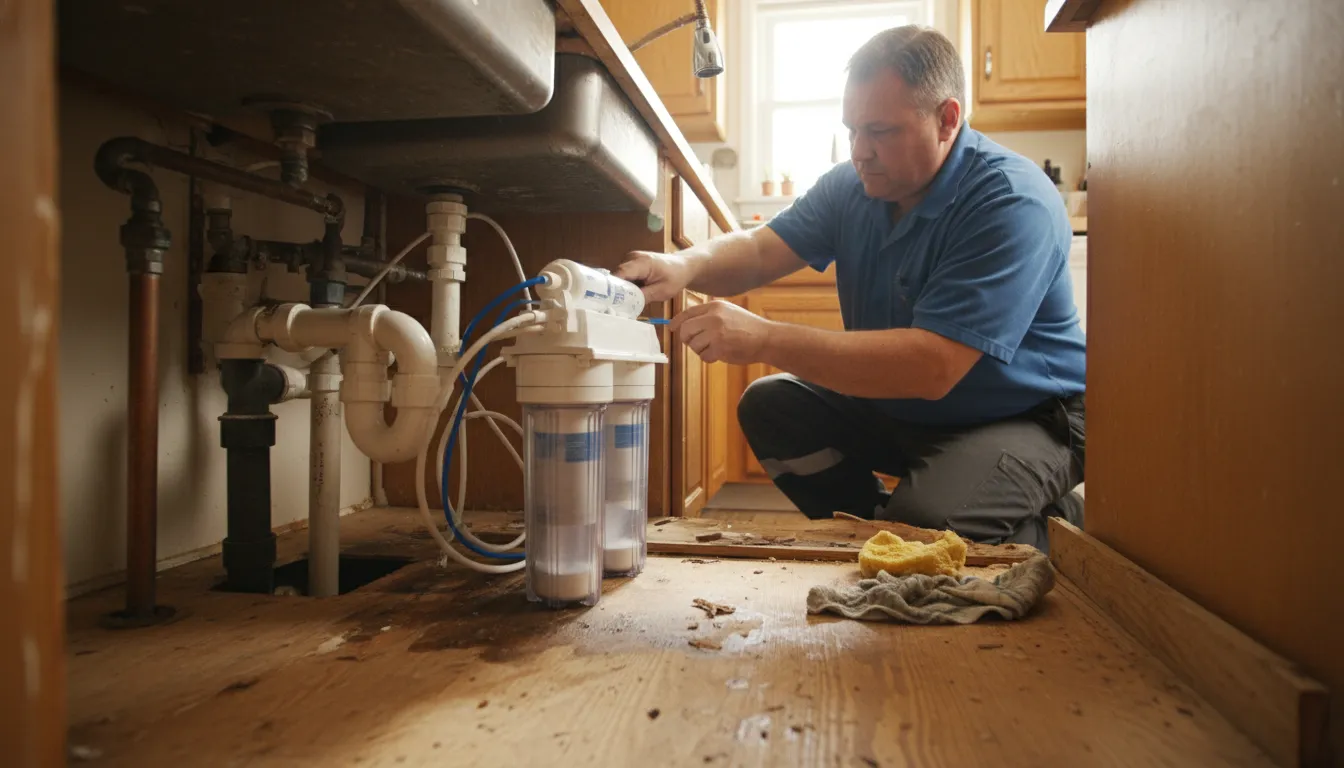
Find the Best Water Treatment Installation Companies for Your Business
No obligation • Fast responses • Nationwide coverage

Why you can trust Search a Plumber
Search a Plumber is a leading United States resource for finding and evaluating professional plumbing services. Our team researches licensing, experience, and customer feedback to create unbiased, fact-driven overviews. Companies cannot pay to change ratings or placement, ensuring homeowners get trustworthy information.
Search providers near you
Top Water Treatment Installation Companies in Taunton, Massachusetts Ranked
Living in Taunton means enjoying the charm of Southeastern Massachusetts, but it can also mean dealing with the region's notoriously hard water. If you've noticed stubborn scale on your fixtures, dry skin after showering, or a film on your glassware, you're experiencing the effects of hard water firsthand. A properly designed water treatment system, whether a water softener, a filtration unit, or a combination of both, is the solution to protect your plumbing, improve your water's feel and taste, and extend the life of your appliances. This guide will help you understand your local water quality, the types of systems available, and how to find the right professional in Taunton to assess your needs and install an effective solution.
Yellow Dog Plumbing, Heating & Cooling
19 Kearney Rd, Needham, MA 02494
Yellow Dog Plumbing, Heating & Cooling is a plumbing and HVAC company based near Boston, MA, serving Newton and surrounding areas. They offer a range of services including water heater repair and installation, water softener installation, leak detection, and toilet repair. The company emphasizes technical expertise combined with attentive customer care and provides same-day service when possible. They work with various brands and handle both residential and light commercial projects. Yellow Dog Plumbing, Heating & Cooling also offers 24/7 live answering and online scheduling to support customer needs around the clock.
Premier Water Systems, Inc
Headquarters: (Serving Ma & RI, 591 Providence Hwy, Walpole, MA 02081
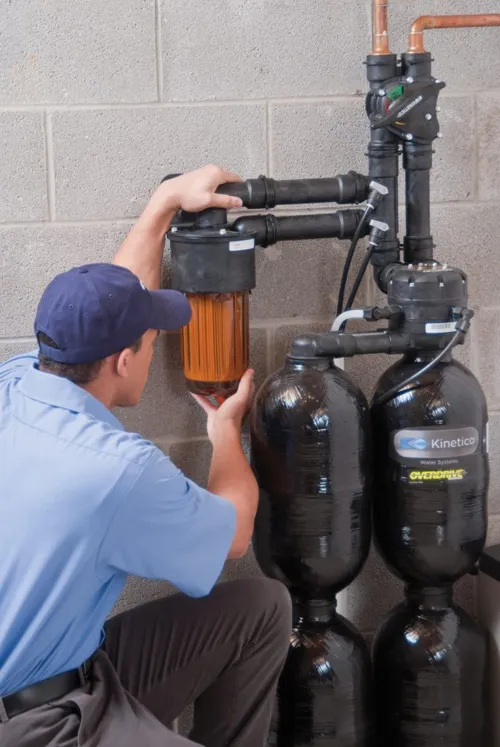
Premier Water Systems, Inc provides water softener installation and plumbing services in Boston, MA. They specialize in professional water filtration installation and maintenance, focusing on improving water quality with Kinetico water treatment systems. With 36 years of experience, their certified professionals deliver tailored solutions to address hard water, contaminants, and other common water issues. Premier Water Systems serves the New England and Rhode Island areas, offering advanced water softeners and filtration systems designed to enhance water safety and taste.
Readville Plumbing & Heating, LLC
Boston, MA
Readville Plumbing & Heating, LLC provides a wide range of plumbing, heating, and HVAC services in Boston, MA. Their offerings include faucet repairs, water heater installations, drain and sewer cleaning, gas line installations, and boiler services. They also handle HVAC repairs and maintenance to ensure year-round home comfort. The company serves Boston and surrounding communities including Readville, Hyde Park, Milton, and others in the Greater Boston area. One notable capability is their comprehensive drain and sewer services, which cover cleaning, inspections, and repairs to maintain proper plumbing function.
Roto-Rooter Plumbing & Water Cleanup
175 Maple St, Stoughton, MA 02072
Roto-Rooter Plumbing & Water Cleanup provides comprehensive residential and commercial plumbing services in Boston, MA, and the surrounding areas. They specialize in sewer line inspections, repairs, and trenchless pipe replacement, as well as water heater installation and repair, drain cleaning, leak detection, and water softener installation. The company is equipped to handle emergency plumbing situations with 24/7 availability, including floodwater cleanup and mold remediation. With extensive experience servicing the local community, Roto-Rooter uses advanced technology such as hydro jetting to address tough clogs and sewer line issues efficiently.
Trust 1 Services Plumbing, Heating, and Air Conditioning
11-17 Newbury St #2, Quincy, MA 02171
Trust 1 Services Plumbing, Heating, and Air Conditioning is a plumbing and HVAC company serving Boston, MA. They provide a range of services including water heater repair and installation, tankless water heater plumbing, and water softener installation. The company also offers furnace, boiler, heat pump, and air conditioning repair and installation, along with heating maintenance and drain repair. Their capabilities include handling ductless mini splits and water filtration systems.
Understanding Taunton's Water Quality
The first step in choosing a water treatment system is understanding what's in your water. In Taunton, your water source is a primary factor. If you're on the municipal supply managed by the Taunton Department of Public Works (DPW), your water is treated to meet safety standards but may still contain minerals and treatment byproducts. If your home uses a private well, testing is even more critical, as you are responsible for addressing contaminants like bacteria, iron, manganese, or other naturally occurring substances.
The most common issue for New England homes, including those in Taunton, is water hardness. Hard water contains high levels of dissolved calcium and magnesium, measured in grains per gallon (gpg). While specific hardness levels can vary even within the city, the effects are universal: scale buildup inside pipes and water heaters, reduced efficiency and lifespan of appliances like dishwashers and washing machines, poor soap lathering, and spots on dishes and shower doors. Beyond hardness, you might consider filtration to address aesthetic concerns like chlorine taste or odor, sediment, or specific contaminants.
Types of Water Treatment Systems
Not all water problems require the same solution. Here's a breakdown of the primary systems designed to improve your home's water.
Water Softeners (Ion Exchange)
This is the go-to technology for combating hard water. An ion exchange water softener uses a tank filled with resin beads that attract and hold the calcium and magnesium ions, swapping them for sodium or potassium ions. This process effectively "softens" the water throughout your entire home. These systems require periodic regeneration, which uses salt or potassium chloride to flush the accumulated minerals and recharge the resin beads 1. They are installed as a point-of-entry (POE) system, treating all the water entering your home.
Whole-Home Filtration Systems
While a softener handles minerals, a filtration system targets particulates and chemicals. Common types include:
- Sediment Filters: Remove sand, silt, rust, and other physical particles.
- Carbon Filters: Use granular activated carbon (GAC) to adsorb chlorine, chloramines, bad tastes, and odors, providing better-tasting water for drinking and cooking. These are also typically installed at the point of entry, protecting your plumbing and providing cleaner water to every tap.
Hybrid or Combination Systems
Many homes benefit from a multi-stage approach. A common and effective setup is a sediment pre-filter followed by a carbon filter, then a water softener. This comprehensive treatment removes particles and chlorine first (which can extend the life of the softener's resin) and then addresses hardness 2. Some advanced systems integrate these stages into a single, compact unit.
Reverse Osmosis (RO) Systems
For the purest drinking water, a point-of-use Reverse Osmosis system is often installed under the kitchen sink. RO forces water through a semi-permeable membrane, removing up to 99% of contaminants, including dissolved solids, heavy metals, and certain chemicals 3. It's important to note that RO works slowly and produces wastewater, making it ideal for a dedicated drinking water tap rather than whole-home use.
Find the perfect water treatment installation companies for your needs
Get personalized recommendations and expert advice
Key Steps for System Selection and Installation
Choosing and installing a water treatment system is not a one-size-fits-all process. Following these steps will ensure you get a system that meets your household's specific needs.
-
Get Your Water Tested: This is the most critical step. A professional test will quantify your water's hardness (in gpg) and identify specific contaminants 4. You can start with a free in-home assessment offered by many local companies or use a certified lab for a more detailed analysis, especially for well water.
-
Determine the Correct Size: For softeners, size refers to its grain capacity (e.g., 32,000-grain, 48,000-grain). Proper sizing is based on your water hardness and your household's daily water usage 5. An undersized unit will run out of capacity too quickly, while an oversized one is inefficient. A qualified technician will calculate this for you.
-
Plan the Installation Location: Most whole-house systems are installed where the main water line enters your home, typically in a basement, garage, or utility room. They need access to a drain line for the regeneration cycle, a power outlet for the control valve, and enough space for the tank(s) and salt bin if applicable 6.
-
Professional Installation is Key: While DIY kits exist, professional installation by a licensed plumber or water treatment specialist is highly recommended. They will ensure the system is correctly plumbed into your main line, the drain and electrical connections are safe and to code, and the control head is programmed properly for your water conditions.
Cost Considerations for Taunton Homeowners
Investing in water quality involves upfront equipment and installation costs, plus ongoing maintenance. Here's a general breakdown of what to expect in the Taunton area.
- Equipment Costs: The price of the unit itself varies widely. A basic water softener can start around $300, while a high-capacity, efficient model or a comprehensive hybrid system with filtration can range from $1,500 to $3,000 or more 7 8.
- Installation Costs: Professional installation typically adds between $500 and $3,000+ to the total project cost 9. The final price depends on the complexity of the plumbing work required, the type of system, and local labor rates.
- Ongoing Maintenance & Operating Costs:
- Salt: For ion exchange softeners, you'll need to replenish salt pellets or blocks, costing roughly $10-$20 per bag 10.
- Annual Service: A yearly check-up by a professional to clean the brine tank, inspect connections, and ensure proper operation can cost between $100 and $300 11.
- Filter & Membrane Replacements: Pre-filters and carbon filters need changing every 6-12 months. An RO membrane typically needs replacement every 2-3 years at a cost of $50-$100 or more 12.
When evaluating cost, consider the long-term savings a system provides: reduced soap and detergent use, longer appliance lifespans, and avoided plumbing repairs from scale buildup.
Finding a Local Water Treatment Professional in Taunton
For residents of Taunton, working with a local expert who understands the area's water profile is invaluable. These professionals can provide accurate testing, recommend systems suited to local conditions, and offer reliable service and support. When researching companies like H2O Care, Colonial Water Solutions, or Greenlight Home Services, look for established businesses with positive customer reviews, proper licensing, and clear warranties on both equipment and labor 13. A trustworthy provider will offer a detailed quote, explain their sizing calculations, and walk you through the installation process without high-pressure sales tactics.
Frequently asked questions
Sources
Footnotes
-
Purchasing and Maintaining A Water Softener | Department of Energy - https://www.energy.gov/energysaver/purchasing-and-maintaining-water-softener ↩
-
How to Choose a Water Softener for Your Home | Step-by-Step Guide - https://homewater101.com/articles/find-water-softening-solution ↩
-
How Much Does A Water Softener Cost? - https://www.callmattioni.com/blog/t-water-softener-cost/ ↩
-
Purchasing and Maintaining A Water Softener | Department of Energy - https://www.energy.gov/energysaver/purchasing-and-maintaining-water-softener ↩
-
Water Softener Sizing Chart - https://www.discountwatersofteners.com/water-softener-sizing/ ↩
-
How to Size a Water Softener | Angi - https://www.angi.com/articles/what-size-water-softener-do-i-need.htm ↩
-
2026 Water Softener Costs by Capacity, Size, Type & More - https://modernize.com/water-treatment/types/water-softener-installation-cost ↩
-
2025 Culligan Water Softener Costs: Price by System & Type - Modernize - https://modernize.com/water-treatment/culligan-cost/water-softener ↩
-
How Much to Install a Water Softener: Comprehensive Cost Guide - https://www.benjaminfranklinplumbing.com/league-city/blog/2025/march/how-much-to-install-a-water-softener-comprehensive-cost-guide/ ↩
-
Guide to Cost-Effectiveness of a Florida Water Softener 2024 - https://onegreenfilter.com/cost-effectiveness-of-florida-water-softener/ ↩
-
Water Softener for Home: Everything You Need to Know Before You Buy - https://www.frizzlife.com/blogs/guide/water-softener-for-home-everything-you-need-to-know-before-you-buy ↩
-
What Does a Home Water Filtration System Cost? - https://nexgenairandplumbing.com/blog/what-does-a-home-water-filtration-system-cost/ ↩
-
THE BEST 10 WATER PURIFICATION SERVICES in TAUNTON, MA - https://m.yelp.com/search?cflt=waterpurification&find_loc=Taunton%2C+MA ↩