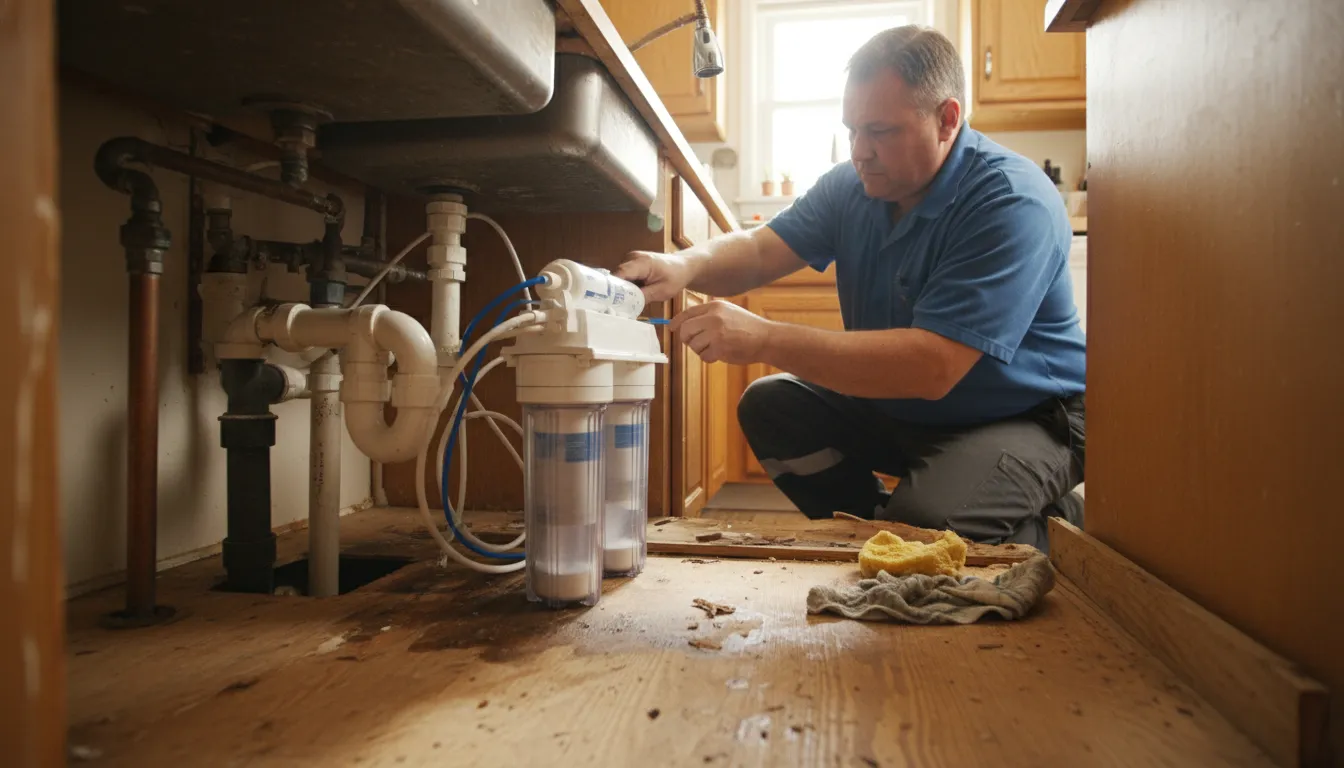
Find the Best Water Treatment Installation Companies for Your Business
No obligation • Fast responses • Nationwide coverage

Why you can trust Search a Plumber
Search a Plumber is a leading United States resource for finding and evaluating professional plumbing services. Our team researches licensing, experience, and customer feedback to create unbiased, fact-driven overviews. Companies cannot pay to change ratings or placement, ensuring homeowners get trustworthy information.
Search providers near you
Top Water Treatment Installation Companies in Evanston, Illinois Ranked
If you live in Evanston, you've likely noticed the telltale signs of hard water: stubborn spots on dishes, scale buildup on fixtures, and dry skin after a shower. The water flowing into your home contains minerals and other substances that affect its quality, taste, and impact on your plumbing and appliances. A water treatment system, whether a softener, a filter, or a combination of both, is the solution for transforming your home's water. This guide will help you understand the specific water conditions in Evanston, the types of systems available, and how to find the right local professional to assess your needs and install an effective solution.
Excellent Plumbing
785 Oakwood Rd Suite E101, Lake Zurich, IL 60047
Excellent Plumbing is a family-owned plumbing company serving Chicago, IL, and the northern Chicagoland suburbs since 2006. They offer a wide range of plumbing services, including drain cleaning, sewer line repair, water heater installation and repair, leak detection, and water softener installation. Their team is equipped to handle specialized plumbing tasks such as high-pressure hydro jetting and comprehensive boiler and radiator services. With over 17 years of experience, Excellent Plumbing provides 24/7 emergency service and same-day appointments to address urgent plumbing needs promptly.
Legendary Service
960 Rand Rd Suite 200F, Des Plaines, IL 60016
Legendary Service is a plumbing and home comfort provider serving Chicago, IL. They offer a range of services including water heater repair and installation, water softener installation, drain cleaning, repiping, toilet repair, and garbage disposal repair. With over 40 years of combined experience, their licensed team handles plumbing and HVAC needs with thoroughness and professionalism. They also provide indoor air quality solutions and maintenance plans to support ongoing home system care.
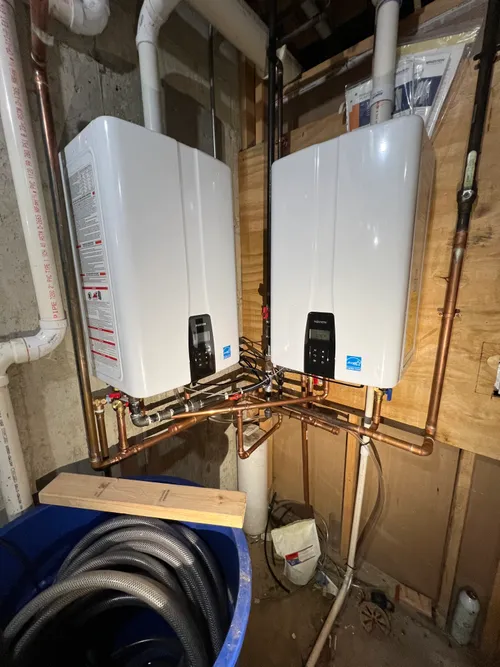
The All Pipes INC.
255 Holly Ln, Elk Grove Village, IL 60007
The All Pipes INC. is a licensed and insured plumbing company serving Chicago, IL. They provide a wide range of plumbing services including water heater repair and installation, trenchless sewer repair, sump pump installation, leak detection, and hydro jetting for drain cleaning. The company offers both residential and commercial plumbing solutions and specializes in tankless water heater installations to help reduce energy costs. Founded by Grigor Ganchev, who has built his career in plumbing over many years, The All Pipes INC. emphasizes integrity and clear communication with clients to maintain lasting relationships.
Rescue Plumbing
1137 W Webster Ave, Chicago, IL 60614
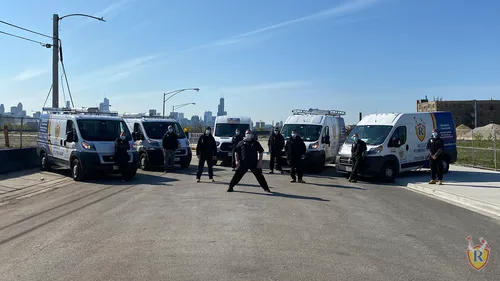
Rescue Plumbing is a licensed plumbing service provider based in Chicago, IL, offering a wide range of residential and commercial plumbing solutions. Their services include sewer camera inspections, water heater repair and installation, water softener installation, drain cleaning, hydro jetting, sewer line repair, leak detection, and toilet repair. Equipped with professional-grade tools, they provide 24/7 emergency plumbing services to address urgent issues such as burst pipes and clogged drains. With over 150 years of combined team experience, Rescue Plumbing serves Chicago and surrounding suburbs, including Evanston, Skokie, Wilmette, Lincolnwood, Deerfield, and Oak Park.
Vanguard Plumbing and Sewer, Inc.
4352 N Kenneth Ave, Chicago, IL 60641
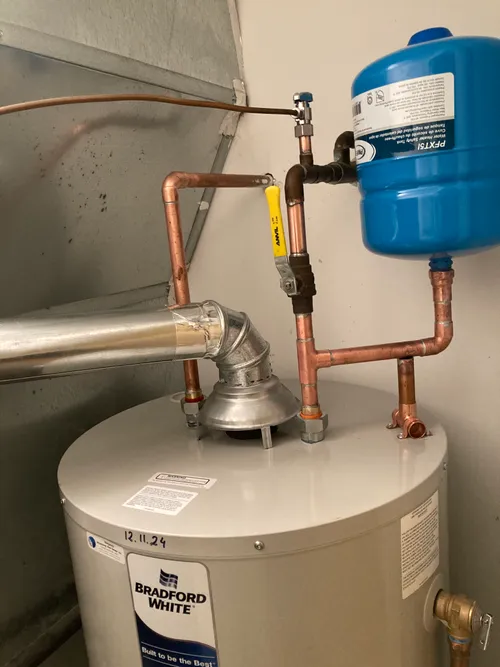
Vanguard Plumbing and Sewer, Inc. provides a wide range of residential plumbing services in Chicago, IL. Their offerings include sewer camera inspections, water heater repair and installation (both tanked and tankless), water softener installation, sump pump repair, drain cleaning, sewer line repair, leak detection, repiping, gas line installation, toilet and garbage disposal repair, and custom plumbing solutions. They use advanced plumbing camera technology for thorough video inspections and have expertise in handling multiunit plumbing projects. Vanguard is known for clear pricing and licensed, insured plumbers. While primarily serving residential customers, they occasionally assist local businesses. Their service area covers Chicago and its northern suburbs.
Understanding Evanston's Water Quality
The first step in choosing a water treatment system is understanding what's in your water. Evanston's municipal water supply is sourced from Lake Michigan and is generally safe to drink, but it has specific characteristics that homeowners often want to address.
Moderate Hardness: Evanston's water is classified as moderately hard, averaging around 134 parts per million (ppm) or 7.9 grains per gallon (GPG) 1. Water hardness is caused by dissolved calcium and magnesium. At this level, you can expect scale buildup inside pipes, water heaters, and appliances, which reduces their efficiency and lifespan. You'll also use more soap and detergent and may struggle with spotty glassware and dry skin.
Common Contaminants: Beyond minerals, municipal water treatment involves adding chlorine to disinfect the supply, which can affect taste and odor. The water may also contain low levels of volatile organic compounds (VOCs), sediments, or trace heavy metals 2. While these are typically within federal safety standards, many homeowners opt for additional filtration for improved taste, odor, and peace of mind.
Types of Water Treatment Systems
Not all systems do the same thing. Some are designed specifically to remove hardness minerals, while others target a broader range of contaminants. Here's a breakdown of the primary technologies suitable for Evanston homes.
Water Softeners (Ion Exchange)
This is the most common and effective solution for hard water. An ion exchange water softener uses a tank filled with resin beads charged with sodium (or potassium) ions. As hard water passes through, the resin beads swap the sodium ions for the calcium and magnesium ions, effectively "softening" the water.
- Best For: Eliminating scale, improving soap lather, protecting plumbing and appliances, and reducing skin irritation.
- Considerations: Requires periodic regeneration with salt (or potassium chloride), producing a brine waste discharge. It does not remove other contaminants like chlorine or chemicals 3.
Water Filtration Systems
Filtration systems target specific contaminants to improve water's taste, smell, and purity. They do not soften water.
- Activated Carbon Filters: These are excellent for removing chlorine, chloramines, bad tastes, odors, and some VOCs. They can be installed as point-of-use (under a sink) or as whole-house systems.
- Reverse Osmosis (RO) Systems: RO is a highly effective filtration process that forces water through a semi-permeable membrane, removing up to 99% of dissolved solids, including salts, metals, and many chemicals 4. RO systems are typically point-of-use, installed under the kitchen sink for drinking and cooking water, though whole-house RO systems are available at a higher cost.
Combination and Hybrid Systems
For comprehensive water treatment, many Evanston homeowners choose systems that address both hardness and contaminants.
- Softener + Carbon Filter: A popular setup involves a whole-house water softener followed by an activated carbon filter. This combination softens the water and removes chlorine, providing better-tasting, scale-free water to every tap.
- Integrated Hybrid Units: Some systems combine softening and filtration media into a single tank, offering a space-saving solution for whole-house treatment of hardness, chlorine, and sediment.
Find the perfect water treatment installation companies for your needs
Get personalized recommendations and expert advice
The Installation Process: What to Expect
Professional installation ensures your system is correctly sized, properly connected, and compliant with local codes. Here's a general overview of the process:
- Professional Water Testing: A reputable installer will begin by testing your water. While you can get a general hardness reading from a test strip, a professional test can identify your exact GPG level and screen for other common contaminants, providing the data needed to recommend the right system.
- System Sizing and Selection: The technician will calculate your home's peak water demand based on the number of bathrooms and occupants. An undersized softener won't keep up with demand, while an oversized one is inefficient. They will then recommend a specific model and type (softener, filter, or hybrid) based on your test results and household needs.
- Installation Day: The installer will identify the best location, typically where the main water line enters your home (e.g., basement, garage, or utility room). They will shut off the water, cut into the main line, and install the unit with the necessary bypass valves and connections for drain (for softener regeneration) and, if needed, a power source 5. Proper installation is critical for performance and to avoid leaks.
- Permits and Regulations: Your installer should handle checking for any required local permits in Evanston, ensuring the installation meets plumbing code requirements.
Cost Considerations for Equipment and Upkeep
Investing in water treatment involves upfront equipment and installation costs, plus ongoing maintenance. Here's a typical breakdown:
Equipment Costs:
- Whole-House Water Softener: $1,000 - $3,000+ for the unit itself, depending on capacity, brand, and features (like demand-initiated regeneration).
- Reverse Osmosis System (Point-of-Use): $300 - $1,000+ for an under-sink drinking water system.
- Whole-House Filtration System: $500 - $2,000+ for a carbon or sediment filter system.
- Hybrid/Combination Systems: $2,000 - $5,000+, depending on complexity and capacity.
Installation Costs: Professional installation typically adds $1,000 to $3,000 to the total project cost. This varies based on the complexity of your plumbing, the location of the install, and if any additional plumbing work is required.
Annual Maintenance & Operating Costs:
- Salt for Softeners: $100 - $200 per year, depending on water usage and hardness 6.
- Filter Replacements: For carbon pre-filters, post-filters, and RO membranes, budget $100 - $300+ annually 7 8.
- Resin Bed Cleaning/Replacement: The softening resin may need cleaning every few years and could require replacement every 10-20 years, adding to long-term costs.
Tailored Recommendations for Evanston Homes
Given Evanston's moderately hard water and the presence of chlorine, a two-pronged approach is often most effective. A salt-based water softener paired with a whole-house carbon filter is a highly recommended combination for most households 9 10. This setup removes the hardness minerals that cause scale and simultaneously eliminates the chlorine that affects taste and odor, delivering comprehensively treated water to every faucet and appliance.
For those primarily concerned with drinking water quality, an under-sink reverse osmosis system at the kitchen tap, potentially in addition to a whole-house softener, provides the purest water for cooking and drinking by removing a vast array of dissolved contaminants 11.
The most important step is to start with a professional water test. This data-driven approach ensures you invest in a system that solves your specific water challenges without paying for over-treatment.
Frequently asked questions
Sources
Footnotes
-
Water Hardness Illinois | Aquatell US. - https://www.aquatell.com/pages/water-hardness-illinois ↩
-
What is hard water? - Washington Water Service - https://www.wawater.com/help/water-quality/hard-water/ ↩
-
Water Softening Vs. Water Filtration: Which Do You Need? - Culligan - https://www.culligan.com/blog/featured-article/water-softening-vs-water-filtration-which-do-you-need-38 ↩
-
How to Choose a Water Softener for Your Home | Step-by-Step Guide - https://homewater101.com/articles/find-water-softening-solution ↩
-
Looking for Whole House Softener - Cardinal Plumbing - https://callcardinalplumbing.com/whole-house-softener/ ↩
-
2026 Water Softener Costs by Capacity, Size, Type & More - https://modernize.com/water-treatment/types/water-softener-installation-cost ↩
-
What Does a Home Water Filtration System Cost? - https://nexgenairandplumbing.com/blog/what-does-a-home-water-filtration-system-cost/ ↩
-
How Much to Install a Water Softener: Comprehensive Cost Guide - https://www.benjaminfranklinplumbing.com/league-city/blog/2025/march/how-much-to-install-a-water-softener-comprehensive-cost-guide/ ↩
-
Water Softeners vs. Water Filtration Systems for Illinois Homes - https://www.trusttiger.com/blog/water-softeners-vs-water-filtration/ ↩
-
Evanston - Wellness Water Filtration Systems - https://wellnesswaterfiltrationsystems.com/locations/illinois/evanston-2/ ↩
-
Water Softeners & Filters in Evanston IL | Whole House Filtration ... - https://purespringwatersoftenersfilterschicago.com/evanston-il/ ↩