Find the Best Water Treatment Installation Companies for Your Business
No obligation • Fast responses • Nationwide coverage

Why you can trust Search a Plumber
Search a Plumber is a leading United States resource for finding and evaluating professional plumbing services. Our team researches licensing, experience, and customer feedback to create unbiased, fact-driven overviews. Companies cannot pay to change ratings or placement, ensuring homeowners get trustworthy information.
Search providers near you
Top Water Treatment Installation Companies in Fort Lauderdale, Florida Ranked
Living in Fort Lauderdale means enjoying beautiful weather and coastal living, but it also means dealing with specific water quality challenges. The municipal water supply is moderately hard and contains chlorine used for disinfection, which can affect everything from your skin and hair to your appliances and plumbing fixtures. A tailored water treatment system is the key to transforming your home's water into a cleaner, softer, and better-tasting resource. This guide will help you understand your local water profile, explore the most effective treatment options for Fort Lauderdale homes, and know what to look for when connecting with a qualified professional for installation and service.
Paramount Plumbing Services
20911 Johnson St #130, Pembroke Pines, FL 33029
Paramount Plumbing Services provides a wide range of plumbing solutions in Miami, FL, including sewer camera inspections, water heater repairs and installations, drain cleaning, hydro jetting, and trenchless sewer repairs. They specialize in emergency plumbing services, offering 24/7 availability for urgent issues such as burst pipes, sewage backups, and gas leaks. Their team uses specialized equipment like submersible pumps and night vision tools to manage crises effectively. Paramount Plumbing Services also supports customers with insurance documentation and post-emergency follow-up to ensure complete restoration.
Sparky Plumbing
4839 Pembroke Rd, Hollywood, FL 33021
Sparky Plumbing provides a wide range of plumbing services in Miami, FL, serving both residential and commercial clients. Their offerings include sewer camera inspections, water heater installation and repair, drain cleaning, leak detection, repiping, gas line installation, and fixture upgrades. They specialize in trenchless sewer repair and use advanced tools for sewer line inspection and repairs to minimize disruption. Sparky Plumbing also offers 24/7 emergency plumbing services to address urgent issues at any time.
Roto-Rooter Plumbing & Water Cleanup
560 Lincoln Rd #300-6, Miami Beach, FL 33139
Roto-Rooter Plumbing & Water Cleanup provides a wide range of plumbing services in Miami, FL, including sewer camera inspections, water heater repairs and installations, drain cleaning, hydro jetting, sewer line repair, trenchless sewer repair, and water softener installation. They serve both residential and commercial clients, including hotels, retail centers, and marine industries. Their capabilities include high-pressure water jetting to clear drains and sewer lines efficiently. Roto-Rooter offers 24/7 emergency service to address urgent plumbing issues promptly.
Aquakleen Miami
3450 Lakeside Dr #135, Miramar, FL 33027
Aquakleen Miami provides water softener installation and plumbing services in Miami, FL. They specialize in water treatment systems that refine, soften, neutralize, clarify, and filter water to improve its quality for drinking, cooking, and bathing. Their system helps reduce minerals and contaminants that can damage plumbing and appliances. Aquakleen Miami aims to deliver water that is clean, clear, and odor-free as intended by nature.
Dovis Plumbing
20217 NE 15th Ct, Miami, FL 33179
Dovis Plumbing is a plumbing service provider based in Miami, FL, specializing in a range of plumbing solutions including water heater installation and repair, tankless water heater services, sewer camera inspections, drain cleaning, leak detection, gas line installation, and water softener installation. They serve the Miami area and are equipped to handle plumbing issues with modern techniques such as camera-inspected drain cleaning. The company emphasizes quality workmanship backed by a full warranty and offers same-day service with fully stocked vans to address plumbing needs efficiently.
Understanding Fort Lauderdale's Water Profile
To choose the right treatment system, you first need to know what's in your water. Fort Lauderdale's water supply presents two primary concerns for homeowners: hardness and chlorine.
Water Hardness: The water in Fort Lauderdale is classified as moderately hard, measuring between 7 to 10 grains per gallon (gpg) or 120-180 mg/L of calcium and magnesium. While not extremely hard, this level is sufficient to cause gradual scale buildup. You might notice this as white, chalky deposits on showerheads, faucet aerators, and inside your kettle or coffee maker. Over time, this limescale can reduce water flow, decrease the efficiency and lifespan of water heaters and other appliances, and leave spots on dishes and glassware.
Chlorine and Disinfection Byproducts: Like most municipal systems, Fort Lauderdale treats its water with chlorine to eliminate harmful bacteria and pathogens, ensuring its safety from the treatment plant to your tap 1. However, this necessary chemical can leave an unpleasant taste and odor in your drinking water. Furthermore, chlorine can react with organic matter in the water to form disinfection byproducts (DBPs) like trihalomethanes (THMs), which are a health concern at elevated levels over long periods. Chlorine can also dry out skin and hair and may cause fading in fabrics over time.
Treatment Solutions for South Florida Homes
Addressing Fort Lauderdale's water issues typically involves a combination of technologies. The most common and effective approach pairs a system to handle hardness with one to remove chlorine and improve taste.
1. Water Softeners (Ion Exchange Systems)
This is the most effective technology for truly "softening" water by removing the hardness minerals (calcium and magnesium ions).
- How They Work: Traditional salt-based softeners use a process called ion exchange. Hard water flows through a tank filled with resin beads charged with sodium or potassium ions. The beads swap these ions for the calcium and magnesium ions, effectively removing the hardness from the water.
- Benefits: These systems eliminate scale buildup, protect plumbing and appliances, make soaps and detergents lather more effectively (using less product), and can leave skin and hair feeling softer.
- Considerations: They require periodic regeneration using salt (or potassium chloride) and produce a brine waste water that must be drained. Professional installation by a licensed plumber is crucial to ensure proper connection to the main water line and drain.
2. Salt-Free Water Conditioners
Often called "descalers" or "conditioners," these are a popular alternative for those looking to avoid salt and brine.
- How They Work: Instead of removing minerals, these systems, such as template-assisted crystallization (TAC) or Halo systems, alter the structure of calcium and magnesium crystals 2. The minerals remain in the water but are prevented from sticking to surfaces as hard scale.
- Benefits: They prevent scale without adding sodium to the water, require no electricity or salt, and produce no waste water. They retain beneficial minerals that can improve water taste.
- Considerations: They do not produce "soft" water in the traditional sense (soap lather may not improve as dramatically), and they are generally best for addressing scale prevention rather than removing existing buildup.
3. Whole-House Carbon Filtration Systems
To tackle chlorine, taste, and odor issues, a whole-house carbon filter is highly recommended.
- How They Work: These systems typically use activated carbon blocks or granular media. As water passes through the carbon, chlorine and many organic compounds are adsorbed, significantly improving the water's taste and smell.
- Benefits: They provide filtered water to every tap in the house, protecting skin and fabrics from chlorine and improving the taste of drinking and cooking water. They can also reduce certain DBPs 3.
- Considerations: The carbon filters have a lifespan and must be replaced periodically (typically every 6-12 months, depending on usage and water quality) to remain effective.
The Popular Fort Lauderdale Combination
For comprehensive treatment, many local experts recommend a two-pronged approach: a salt-based water softener to handle the moderate hardness and prevent scale, paired with a whole-house carbon filter to remove chlorine and its byproducts. This combination addresses the two major local contaminants, providing both scale protection and better-tasting water throughout the home.
Find the perfect water treatment installation companies for your needs
Get personalized recommendations and expert advice
Professional Installation: What to Expect
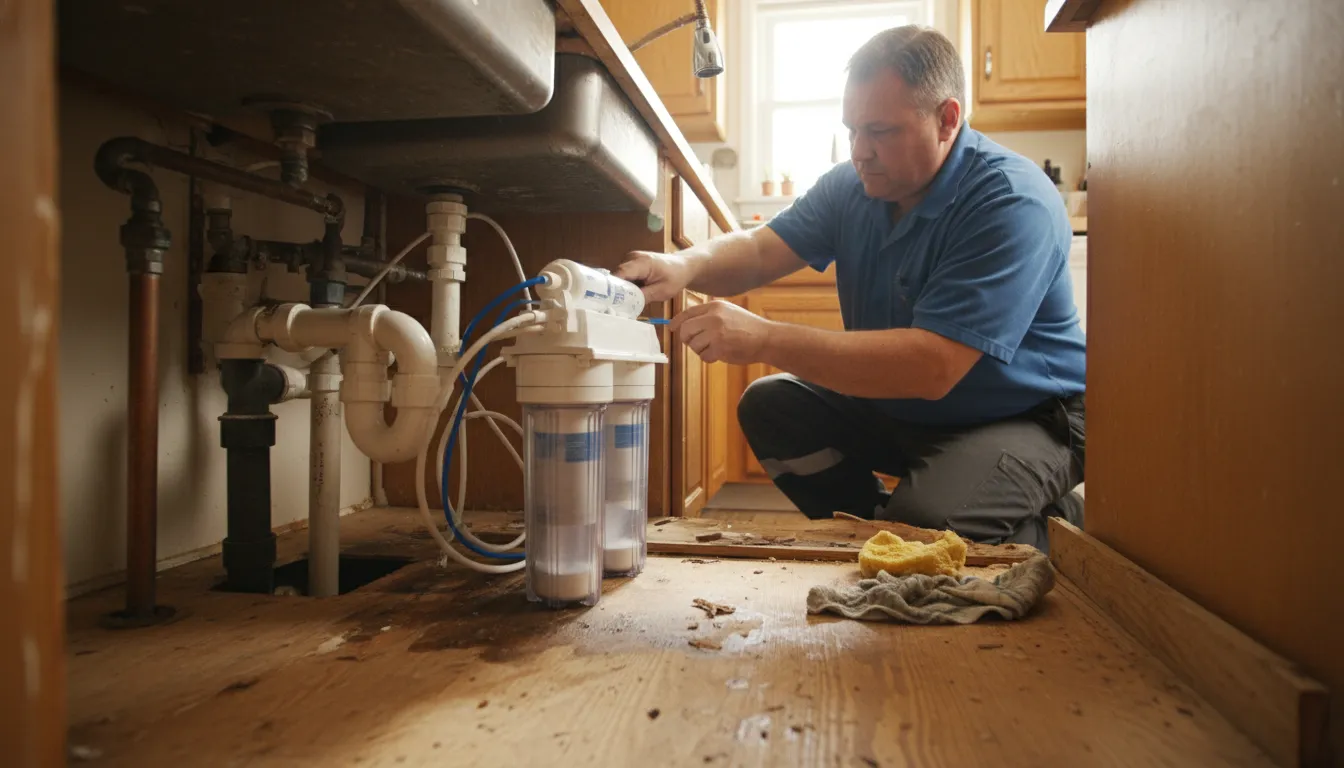
Installing a whole-house water treatment system is not a typical DIY project. It involves tying into your main water line, which requires knowledge of local plumbing codes and proper techniques to ensure a leak-free and effective setup.
The Installation Process:
- Assessment & Sizing: A professional will first test your water to confirm hardness levels and may discuss your water usage patterns to recommend a correctly sized system.
- Location: The system is installed where the main water line enters your home, typically in the garage, utility room, or near the water heater. This ensures all water flowing into the house is treated.
- Plumbing Tie-Ins: The licensed plumber will cut into the main line, install the treatment system (and often a bypass valve for maintenance), and connect a drain line for the softener's regeneration cycle if applicable 4 5.
- Configuration & Education: Once installed, the technician will program the system's controls based on your water hardness and household size, and walk you through its operation and basic maintenance.
Hiring a licensed and insured local professional ensures the installation is done correctly, maintains your home's warranty compliance, and provides you with ongoing support for maintenance and filter changes.
Cost Considerations for Water Treatment
Investing in a water treatment system involves both upfront and ongoing costs, which vary based on the technology and the size of your home.
- Salt-Based Water Softener: The installed cost for a quality system typically ranges from $1,400 to $2,500 or more. Ongoing costs include salt (approximately $20-$30 per month) and an annual service check, which can be around $150.
- Whole-House Carbon Filter: Installed systems generally cost between $1,200 and $2,500+6 7. The primary ongoing cost is filter replacement, which runs $150 to $300 and is needed every 6 to 12 months 6.
- Salt-Free Water Conditioners: These often have a higher upfront purchase price compared to traditional softeners but have minimal ongoing costs-usually just an occasional media change every few years.
While the initial investment may seem significant, it should be weighed against the costs of scale-damaged appliances, higher energy bills from inefficient water heaters, increased soap and detergent use, and potential plumbing repairs.
Maintaining Your System
Regular maintenance is essential for optimal performance and longevity.
- Water Softeners: Keep the brine tank filled with salt (or potassium). Schedule an annual professional inspection to clean the brine tank, check the resin bed, and verify system settings.
- Carbon Filters: Adhere strictly to the filter replacement schedule. A clogged or exhausted filter will not remove contaminants and can hinder water pressure.
- General: Periodically check for leaks around connections and listen for unusual sounds during regeneration cycles. Many local service providers offer convenient maintenance plans to handle these tasks for you.
Frequently asked questions
Sources
Footnotes
-
Ft. Lauderdale Water Hardness - HydroFLOW USA - https://hydroflow-usa.com/ft-lauderdale-water-hardness/ ↩
-
Water-Softener Types - Florida Water Treatment - https://www.flawatertreatment.com/understanding-the-different-types-of-water-softeners-for-homes ↩
-
Whole House Water Filter Before or After Water Softener? - https://waterfilterguru.com/whole-house-water-filter-before-or-after-water-softener/ ↩
-
Professional Water Softener Installation in Florida - https://www.flpureh2o.com/professional-water-softener-installation-in-florida ↩
-
Understanding Water Softener Installation and Its Benefits - https://tridentcleanwater.com/blog/understanding-water-softener-installation-and-its-benefits/ ↩
-
Water Filtration Systems: Complete Guide for South Florida ... - https://www.waterwizards.ai/blog/water-filtration-systems-complete-guide-for-south-florida-homeowners ↩ ↩2
-
Water Filtration Systems Fort Lauderdale - South Florida - https://www.lindstromair.com/water-filtration/ ↩