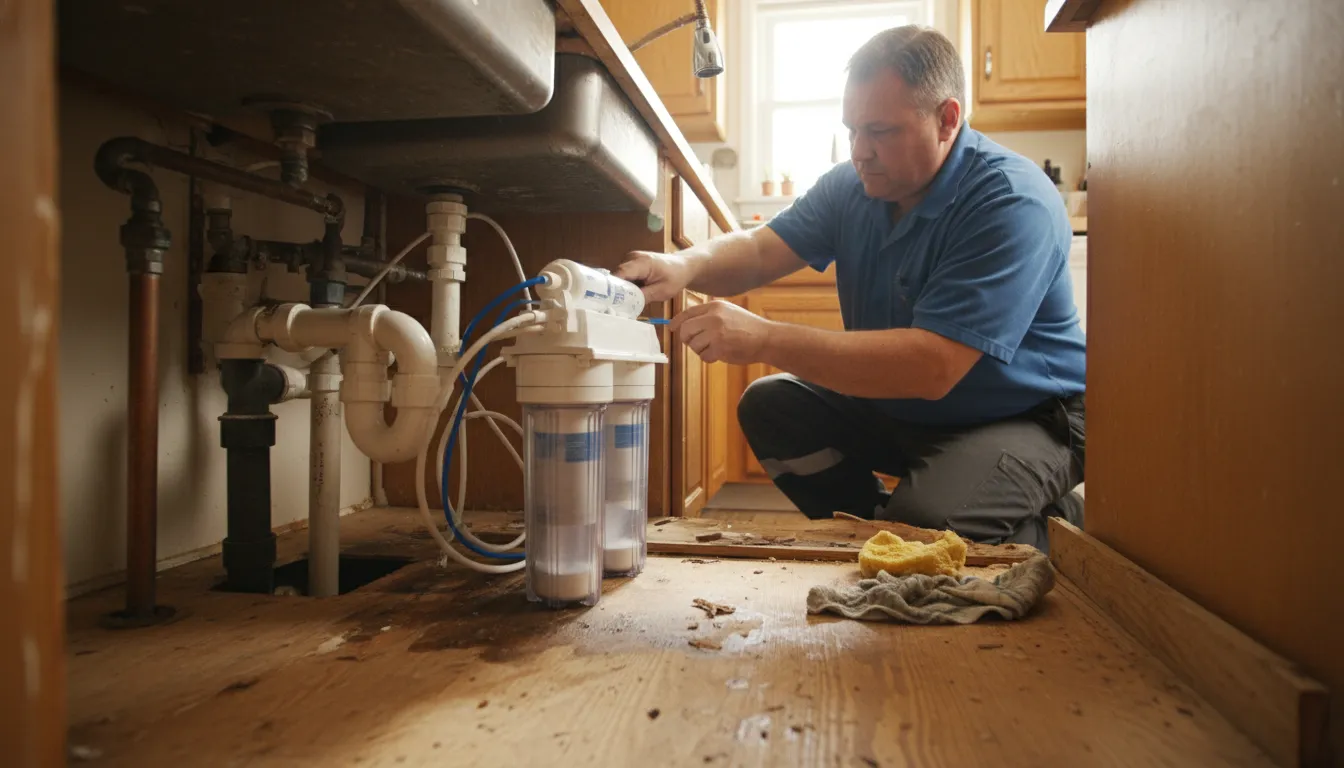
Find the Best Water Treatment Installation Companies for Your Business
No obligation • Fast responses • Nationwide coverage

Why you can trust Search a Plumber
Search a Plumber is a leading United States resource for finding and evaluating professional plumbing services. Our team researches licensing, experience, and customer feedback to create unbiased, fact-driven overviews. Companies cannot pay to change ratings or placement, ensuring homeowners get trustworthy information.
Search providers near you
Top Water Treatment Installation Companies in Walnut Creek, California Ranked
While Walnut Creek's tap water meets federal safety standards, many residents choose to enhance their home's water quality to address common issues like hardness and potential contaminants. Installing a water treatment system can protect your plumbing, improve appliance efficiency, and provide better-tasting water for your family. This guide will help you understand your options for water softening and filtration, the key considerations for our local area, and how to connect with qualified professionals who can assess your specific needs.
Roto-Rooter Plumbing & Water Cleanup
1780 Whipple Rd Ste 203G, Union City, CA 94587
Roto-Rooter Plumbing & Water Cleanup provides comprehensive plumbing services in San Jose, CA, specializing in residential and commercial plumbing solutions. Their offerings include sewer and drain cleaning, water heater repair and installation, leak detection, gas line installation, and trenchless sewer repair. The company is equipped to handle emergency plumbing situations with 24/7 availability, ensuring prompt response to issues like burst pipes and sewer backups. With extensive experience and advanced technology, Roto-Rooter addresses complex plumbing challenges efficiently. They also offer floodwater cleanup and mold remediation services, supporting property restoration after water damage. Serving the San Jose area and nearby communities, Roto-Rooter is a licensed and insured provider known for its broad range of plumbing capabilities and emergency service availability.
Service Pros Plumbers, Inc.
1320 Willow Pass Rd, Concord, CA 94520
Service Pros Plumbers, Inc. is a family-owned plumbing company serving Oakland, CA, with over 25 years of experience. They provide a wide range of plumbing services for residential and commercial customers, including water heater repair and installation, drain cleaning, sewer line replacement with trenchless options, leak detection, and gas line installation. Their licensed plumbers also offer whole-house repiping to improve water pressure and system efficiency. Service Pros Plumbers offers 24/7 emergency plumbing services to address urgent issues such as burst pipes and clogged drains promptly.
Polis Plumbing Inc
Oakland, CA
Polis Plumbing Inc is a licensed and insured plumbing company serving Oakland, CA. They provide residential and commercial plumbing services, including water heater installation and repair, tankless water heater services, water softener and filtration system installation, and gas line installation and repair. The company focuses on delivering customized plumbing solutions and maintaining trusted relationships with customers. Polis Plumbing Inc is equipped to handle a wide range of plumbing needs with a commitment to accuracy and efficiency.
Almighty Plumbing
1309 Mokelumne Dr, Antioch, CA 94531
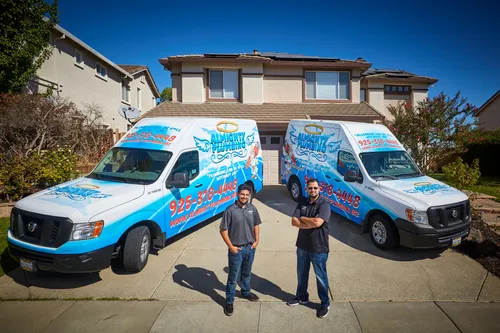
Almighty Plumbing is a family-owned and operated plumbing company serving Oakland, CA, and the greater East Bay area. They provide a wide range of plumbing services including water heater repair and installation, tankless water heater services, water softener installation, drain cleaning, sewer line repair, repiping, and garbage disposal repair. The company also specializes in bathroom remodeling and water filtration system installation. With a focus on honest, fair service tailored to customer needs, Almighty Plumbing offers multi-year warranties on repairs and installations. They also provide emergency plumbing services to address urgent issues promptly.
URV Projects Plumbing Service
1048 Serpentine Ln # 312, Pleasanton, CA 94566
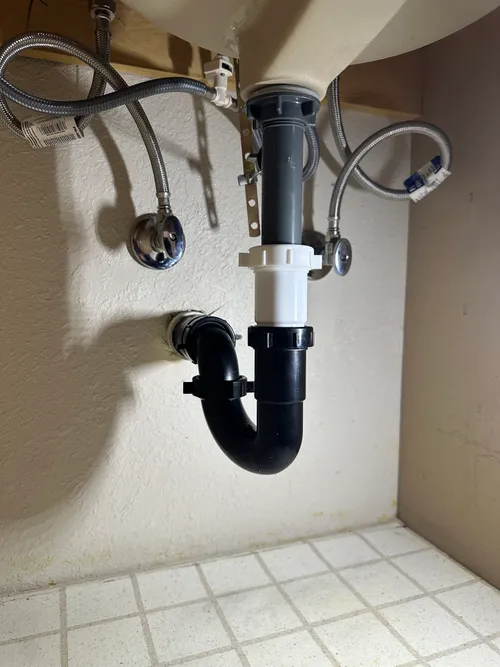
URV Projects Plumbing Service is a licensed and insured full-service plumbing company serving Fremont, CA, and nearby cities. They offer a wide range of residential plumbing services including water heater repair and installation, water softener installation, drain cleaning, sewer line repair, and leak detection. The company is experienced in handling complex plumbing projects that require detailed planning and skilled workmanship. Their team uses advanced techniques for leak detection and provides reliable water heater services to ensure consistent hot water supply. URV Projects Plumbing Service is known for using high-quality materials and delivering guaranteed work.
Understanding Walnut Creek's Water Quality
The first step in choosing a water treatment solution is understanding what's in your water. The City of Walnut Creek provides water that complies with all Environmental Protection Agency (EPA) regulations, meaning it is considered safe for general consumption 1. However, "safe" doesn't always mean "ideal" for your home or personal preference.
A primary concern for many homeowners is water hardness. While specific granularity for Walnut Creek is not always published, data from surrounding Contra Costa County and broader California indicates that hard water is a very common issue 2. Hard water contains high levels of dissolved minerals like calcium and magnesium. You might notice its effects as white, chalky scale buildup on faucets and showerheads, spots on dishes, reduced lather from soap, and stiff laundry.
Beyond hardness, some residents opt for additional filtration to address other aesthetic qualities or trace contaminants that may be present even within legal limits. This is often a personal choice based on health considerations, taste preferences, or a desire for an extra layer of protection for vulnerable household members.
Types of Water Treatment Systems
There are several main types of systems designed to improve home water quality, each with a different function. It's important to distinguish between water softeners, which specifically remove hardness minerals, and water filters, which target a broader range of contaminants.
Salt-Based Water Softeners
This is the most traditional and effective method for treating very hard water. These systems use a process called ion exchange, where resin beads inside a tank swap sodium (or potassium) ions for the calcium and magnesium ions that cause hardness. The system periodically regenerates by flushing the captured minerals to a drain and recharging with salt from a separate brine tank.
Pros:
- Highly effective at eliminating scale-causing minerals.
- Proven technology with reliable results.
- Can lead to longer lifespans for water heaters, dishwashers, and plumbing.
Cons:
- Requires regular purchase and addition of salt.
- Adds a small amount of sodium to the water (potassium chloride is an alternative).
- Produces brine wastewater during regeneration, which is a consideration under California's environmental regulations.
Salt-Free Water Conditioners
Often called "descalers" or "conditioners," these systems do not remove hardness minerals. Instead, they use technologies like Template Assisted Crystallization (TAC) to alter the structure of the minerals, preventing them from sticking to surfaces and forming scale.
Pros:
- No salt, no wastewater, and no added sodium to the water.
- Virtually maintenance-free (no bags of salt to carry).
- Environmentally friendly and compliant with strict local discharge rules.
Cons:
- Does not technically "soften" the water; minerals remain present.
- Effectiveness can vary depending on water chemistry and flow rate.
- May be better suited for moderately hard water conditions.
Whole-House Filtration Systems
These systems are installed at the point where water enters your home. They are designed to reduce sediment, chlorine, certain chemicals, and other specific contaminants throughout the entire house. A whole-house filter is often paired with a softener or conditioner for comprehensive treatment.
Reverse Osmosis (RO) Systems
RO systems provide the highest level of purification for drinking water. Typically installed under a kitchen sink, they force water through a semi-permeable membrane, removing up to 99% of dissolved solids, including hardness minerals, lead, arsenic, nitrates, and more 3. They are an excellent point-of-use solution for cooking and drinking water, often used in conjunction with a whole-house system for scale prevention.
Key Considerations for Walnut Creek Homeowners
Choosing the right system isn't just about water hardness; local factors play a significant role.
1. Get Your Water Tested: Don't guess. The most important step is to have your home's specific water tested. Many local water treatment professionals offer free, in-home water analysis. This test will give you a precise grains per gallon (GPG) hardness number and can identify other characteristics to guide your system selection 4.
2. Understand California's Regulatory Environment: Certain municipalities in California have restrictions or bans on traditional salt-based softeners due to concerns about chloride and salt discharge into wastewater treatment systems and local watersheds 5. While Walnut Creek may not have an outright ban, the state's focus on water quality and conservation makes high-efficiency softeners (those that use less salt and water to regenerate) or salt-free alternatives particularly attractive and future-proof choices for local homeowners.
3. Evaluate Your Home's Needs: Consider the size of your household, your average water usage, and your primary goals. Is eliminating scale your biggest concern? Are you more focused on the taste and purity of your drinking water? Your answers will point you toward a whole-house softener, a point-of-use RO system, or a combination.
Find the perfect water treatment installation companies for your needs
Get personalized recommendations and expert advice
The Professional Installation Process & Cost Overview
For most whole-house systems, professional installation is recommended. It involves plumbing modifications, connection to a drain line (for salt-based systems), and proper setup to ensure optimal performance and warranty protection.
The typical process involves:
- Consultation & Water Testing: A technician tests your water and discusses your goals.
- System Sizing & Recommendation: Based on test results and your household size, the right system capacity is selected.
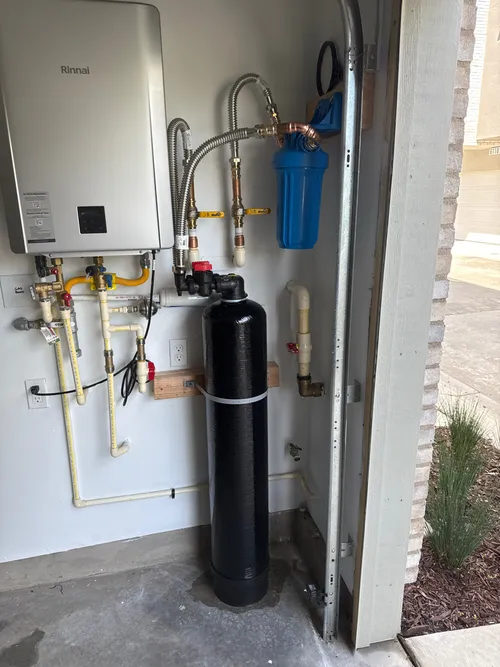
- Installation: The professional will install the unit on your main water line, typically in a garage, basement, or utility room.
- Programming & Orientation: The system is programmed for your water usage, and you are shown how to maintain it.
Costs can vary widely based on the technology, system capacity, brand, and installation complexity.
- Equipment Costs: Basic systems can start around $1,000, while high-capacity, dual-tank, or advanced filtration systems can range from $2,500 to $4,000 or more 6.
- Installation Costs: Professional installation often adds $500 to $1,500+ to the total project cost.
- Ongoing Costs: Plan for annual maintenance costs of $100 to $300+ for salt refills, filter changes, or periodic servicing 7 8.
Investing in a quality system installed by a certified professional can provide peace of mind, protect your home's infrastructure, and improve your daily water experience for years to come.
Maintaining Your Water System
Regular maintenance is crucial for performance and longevity.
- Salt-Based Softeners: You will need to add salt pellets to the brine tank every 1-2 months, depending on usage. Occasional cleaning of the brine tank may also be needed.
- Salt-Free Conditioners: These require very little maintenance, though the media inside the tank will eventually need replacement after several years.
- Filtration Systems: Whole-house filters and pre-filters have cartridges that must be changed on a schedule (e.g., every 6-12 months). Reverse osmosis systems have multiple filters and a membrane that need periodic replacement.
- Professional Service: Consider an annual check-up by a technician to ensure everything is functioning correctly and efficiently.
Frequently asked questions
Sources
Footnotes
-
Walnut Creek Tap Water Quality: Safe to Drink? 2026 Report - https://www.tapwaterdata.com/ca/walnut-creek ↩
-
Do I Need a Water Softener in Orange County? - https://culliganlaoc.com/blog/do-i-need-a-water-softener-in-orange-county/ ↩
-
How to Choose a Water Softener for Your Home | Step-by-Step Guide - https://homewater101.com/articles/find-water-softening-solution ↩
-
TOP 10 BEST Water Softener in Walnut Creek, CA - Yelp - https://m.yelp.com/search?find_desc=Water+Softener&find_loc=Walnut+Creek%2C+CA ↩
-
Why are water softeners being banned in California? - https://hydroflow-usa.com/blog/commercial-blogs/why-are-water-softeners-being-banned-in-california/ ↩
-
How Much Does a Water Treatment System Cost? [2025 Data] | Angi - https://www.angi.com/articles/whole-house-water-filtration-system-cost.htm ↩
-
Water Softener System Cost in 2025: Types, Installation & ... - https://anchorplumbingservices.com/water-softener-system-cost/ ↩
-
Water Softener for Home: Everything You Need to Know Before You Buy - https://www.frizzlife.com/blogs/guide/water-softener-for-home-everything-you-need-to-know-before-you-buy ↩