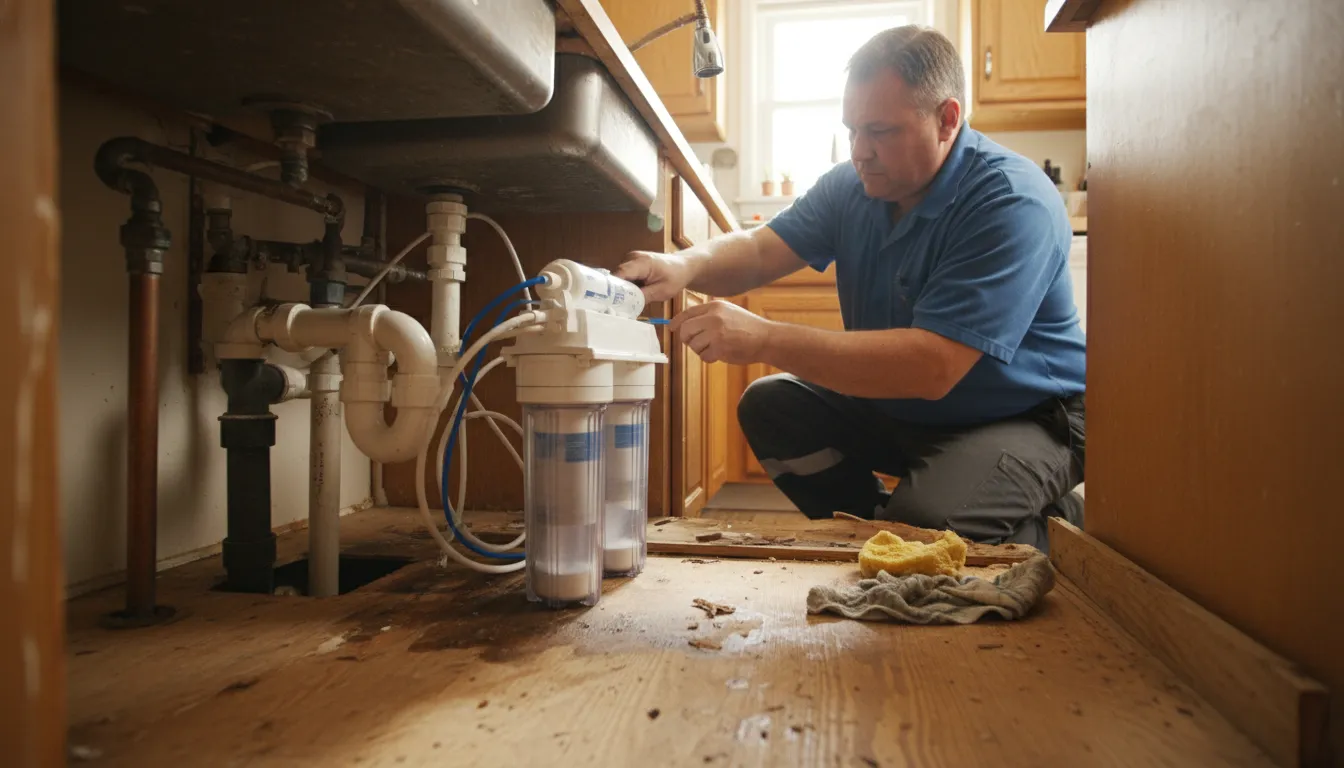
Find the Best Water Treatment Installation Companies for Your Business
No obligation • Fast responses • Nationwide coverage

Why you can trust Search a Plumber
Search a Plumber is a leading United States resource for finding and evaluating professional plumbing services. Our team researches licensing, experience, and customer feedback to create unbiased, fact-driven overviews. Companies cannot pay to change ratings or placement, ensuring homeowners get trustworthy information.
Search providers near you
Top Water Treatment Installation Companies in Gardena, California Ranked
Living in Gardena means enjoying Southern California's sunshine, but it also means dealing with the region's challenging water quality. The water supplied to your home is generally moderate to very hard, which can lead to scale buildup in pipes and appliances, dry skin, and spotty dishes. Beyond hardness, you may want extra protection from other common municipal water additives. Investing in a home water treatment system is a proactive step to protect your plumbing, improve your water's feel and taste, and provide peace of mind. This guide will help you understand your local water profile, explore the types of water softeners and filtration systems suitable for Gardena homes, and outline what to expect from the professional installation process.
Dymek's Freedom Plumbing, Inc
2921 E Miraloma Ave #17, Anaheim, CA 92806
Dymek's Freedom Plumbing, Inc is a plumbing service provider based in Anaheim, CA, offering a wide range of residential and commercial plumbing solutions. Their services include sewer camera inspections, water heater installation and repair, drain cleaning, hydro jetting, trenchless sewer repair, leak detection, repiping, and garbage disposal repairs. They utilize advanced technology such as electronic slab leak detection and sewer video inspection to diagnose and address plumbing issues efficiently. With over 25 years of experience, the company emphasizes old-fashioned values combined with modern technology and is available 24/7 for emergency plumbing needs.
Carlson Plumbing Pros
17150 Newhope St Suite 301-302, Fountain Valley, CA 92708
Carlson Plumbing Pros is a licensed plumbing company serving Santa Ana, CA, and the broader Orange County area. They offer a wide range of plumbing services including water heater repair, water softener installation, drain cleaning, sewer line repair, leak detection, repiping, and gas line installation. With over 20 years of experience, they provide skilled plumbing solutions and are equipped to handle emergencies with 24/7 availability.
All City Plumbing, Air & Electrical
221 Allen Ave, Glendale, CA 91201
All City Plumbing, Air & Electrical is a family-owned business serving Los Angeles, CA, and surrounding areas. They provide a wide range of plumbing, heating, air conditioning, and electrical services including leak detection, drain cleaning, water heater installation and repair, sewer line repair, and hydro-jetting. Their team of ACE-certified technicians is trained to handle various home comfort needs with a focus on quality workmanship. With over 13 years of experience, they offer dependable service backed by a satisfaction guarantee.
LA Water Solutions, Inc.
9830 Foothill Blvd, Sylmar, CA 91342
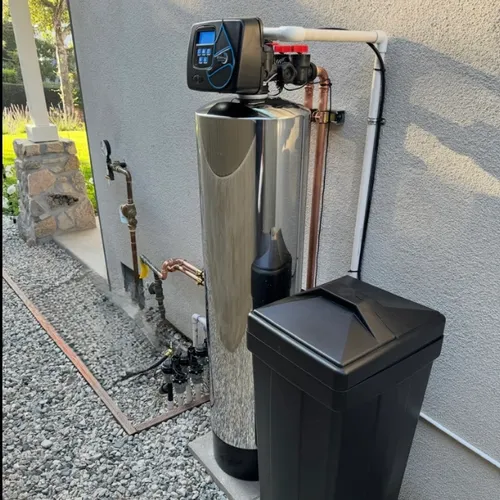
LA Water Solutions, Inc. is a family-owned company based in Los Angeles, CA, specializing in water filtration, softening, reverse osmosis systems, and plumbing services including water heater installation and leak detection. They serve the greater Los Angeles area, offering whole house water filtration and drinking water systems designed to remove contaminants such as chlorine, chloramine, PFAS, and heavy metals, improving water quality and protecting home appliances. Their certified plumbers provide expert installation and maintenance, ensuring efficient operation of water systems and plumbing fixtures.
DeVinney Plumbing, Inc.
7501 Slater Ave L, Huntington Beach, CA 92647
DeVinney Plumbing, Inc. is a family-owned plumbing company serving Santa Ana, CA, and the surrounding Orange County area. With 40 years of experience, they provide a wide range of residential and commercial plumbing services including water heater installation and repair, tankless water heaters, water softener installation, drain cleaning, sewer line repair, leak detection, and gas line installation. They specialize in challenging issues like underground water leaks, gas leaks, and slab leaks. Their advanced electronic leak detection helps locate hidden leaks efficiently, minimizing damage and repair costs.
Understanding Gardena's Water Profile
The first step in choosing the right system is understanding what's in your water. Gardena's water supply, like much of Los Angeles County, originates from a blend of local groundwater and imported sources, which contributes to its specific characteristics.
Hardness Levels: Water hardness is measured in Grains Per Gallon (GPG). Gardena's water typically ranges from 6 to 18 GPG, which is classified as moderately hard to very hard 1. At these levels, you'll likely notice mineral scale on showerheads, inside kettles, and reduced efficiency of water heaters and other appliances.
Beyond Hardness: While municipal water meets federal safety standards, some contaminants may be present at levels that exceed non-enforceable health guidelines 2. Common concerns in the area can include chlorine (used for disinfection), chloramines, and trace minerals. A comprehensive water test is the best way to identify your home's specific needs, whether that's primarily softening, filtration, or a combination of both.
Types of Water Treatment Systems for Your Home
There is no one-size-fits-all solution. The right system depends on your water test results, household size, budget, and local regulations. Here are the primary technologies used in residential water treatment.
1. Ion Exchange Water Softeners (Salt-Based)
This is the most traditional and effective method for removing hardness minerals like calcium and magnesium.
- How it Works: The system passes hard water through a resin tank filled with tiny beads charged with sodium or potassium ions. The beads swap these ions for the calcium and magnesium ions, effectively "softening" the water.
- Best For: Homes with very hard water (high GPG) where scale prevention is the primary goal.
- Consideration: These systems require regular replenishment of salt pellets and produce a brine discharge during regeneration. Crucially, some areas in California have restrictions or bans on salt-based softeners due to their impact on wastewater and groundwater, so checking local Gardena ordinances is essential.
2. Salt-Free Water Conditioners
Often called "descalers" or "conditioners," these systems are a popular alternative where salt-based units are restricted.
- How it Works: Instead of removing minerals, they use a process like Template Assisted Crystallization (TAC) to alter the structure of hardness minerals, preventing them from forming scale on pipes and surfaces.
- Best For: Homes with moderate hardness levels or those in areas with salt-softener restrictions. They are maintenance-free (no salt or electricity required) but do not technically produce "soft" water in the traditional sense.
3. Whole-House Filtration and Hybrid Systems
These systems address a broader range of water quality issues beyond just hardness.
- Carbon Filtration: Excellent for removing chlorine, chloramines, bad tastes, and odors from all the water entering your home.
- Hybrid Systems: Combine a water softener with a filtration stage, offering both scale prevention and chemical/odor removal in one unit. This is an ideal solution for Gardena homes that want comprehensive treatment.
4. Point-of-Use (POU) Filters
These systems treat water at a single tap, typically for drinking and cooking.
- Reverse Osmosis (RO) Systems: Installed under the kitchen sink, RO is considered the gold standard for drinking water purification. It forces water through a semi-permeable membrane, removing up to 99% of dissolved solids, including salts, metals, and many contaminants. Many homeowners pair a whole-house softener or conditioner with an under-sink RO system for ideal water quality throughout the home.
The Professional Installation Process
Installing a whole-house water treatment system is not a typical DIY project. It involves connecting to your main water line and requires the expertise of a licensed plumbing professional to ensure proper function, code compliance, and to avoid leaks or damage.
- Professional Water Assessment: A reputable provider will often begin with a detailed water test, either with test strips on-site or by sending a sample to a lab. This quantifies your hardness level and identifies other specific concerns 3.
- System Sizing and Selection: Based on the test results and your household's daily water usage (number of bathrooms, occupants), the professional will recommend a correctly sized system. An undersized unit will not keep up with demand, while an oversized one is unnecessarily expensive.
- Installation Day: The technician will locate your main water line, shut off the water, and install the system. This includes plumbing it in-line, adding a bypass valve for future maintenance, setting up a drain line for regeneration or filter backwash, and for salt-based systems, positioning the brine tank. Proper installation ensures optimal performance and protects your home's plumbing.
Find the perfect water treatment installation companies for your needs
Get personalized recommendations and expert advice
Cost Overview for Water Treatment Systems
Investing in water quality involves upfront equipment and installation costs, plus ongoing maintenance expenses. Prices can vary based on system capacity, technology, and brand.
Upfront Costs (Equipment + Professional Installation):
- Ion Exchange Softeners: A basic, single-tank system can range from $1,000 to $3,000+, while high-capacity or dual-tank models for larger homes can cost between $3,000 and $6,000+.
- Hybrid Systems: Combining softening with filtration increases complexity and cost, typically ranging from $2,000 to $7,000+ installed.
- Salt-Free Conditioners: These often range from $1,500 to $3,000+ installed.
- Reverse Osmosis (POU): A quality under-sink RO system with professional installation typically costs between $100 and $500+ for the unit and setup.
Ongoing Maintenance Costs:
- Salt: For ion exchange softeners, expect to spend approximately $20 to $50 per month on salt pellets, depending on your water usage and hardness 4.
- Filter Replacements: Whole-house carbon filters and RO system membranes need periodic replacement. Budget roughly $100 to $300 or more per year for these consumables to keep your system effective 5 6 7.
Key Local Considerations for Gardena Residents
When planning your water treatment solution, keep these Southern California-specific factors in mind:
- Local Regulations: Always verify the current rules in Gardena regarding water softener discharge. Restrictions on salt-based systems are in place in many California communities to protect groundwater and wastewater treatment processes 8 9. A local professional will be knowledgeable about these regulations.
- Water Efficiency: California prioritizes water conservation. Look for water treatment systems that are certified to be water-efficient, with features like demand-initiated regeneration that only runs when needed.
- Space Requirements: Whole-house systems require adequate space, typically in a garage, basement, or utility room. Ensure you have the necessary clearance for the unit, and for salt-based systems, room for salt bag storage.
Choosing to improve your home's water is an investment in your property's longevity and your family's comfort. By understanding your options and working with a qualified local expert, you can find the perfect water softening and filtration solution for your Gardena home.
Frequently asked questions
Sources
Footnotes
-
Does LA County Have Hard Water? What Homeowners Need to Know - https://www.raynewater.com/blog/does-la-county-have-hard-water/ ↩
-
Gardena Tap Water Quality: Safe to Drink? 2026 Report - https://www.tapwaterdata.com/ca/gardena ↩
-
TOP 10 BEST Water Filtration System in Gardena, CA - Yelp - https://m.yelp.com/search?find_desc=Water+Filtration+System&find_loc=Gardena%2C+CA ↩
-
2025 Culligan Water Softener Costs: Price by System & Type - Modernize - https://modernize.com/water-treatment/culligan-cost/water-softener ↩
-
2026 Water Softener Costs by Capacity, Size, Type & More - https://modernize.com/water-treatment/types/water-softener-installation-cost ↩
-
How to Choose a Water Softener for Your Home | Step-by-Step Guide - https://homewater101.com/articles/find-water-softening-solution ↩
-
2025 Culligan Water Softener Costs: Price by System & Type - https://modernize.com/water-treatment/culligan-cost/water-softener ↩
-
California's #1 Approved Water Softener - NorCal Water Systems - https://www.norcalwater.net/legal-water-softeners-california/ ↩
-
Where Are Water Softeners Banned? (And Why It Matters) - https://www.lifesourcewater.com/blog/where-are-water-softeners-banned ↩