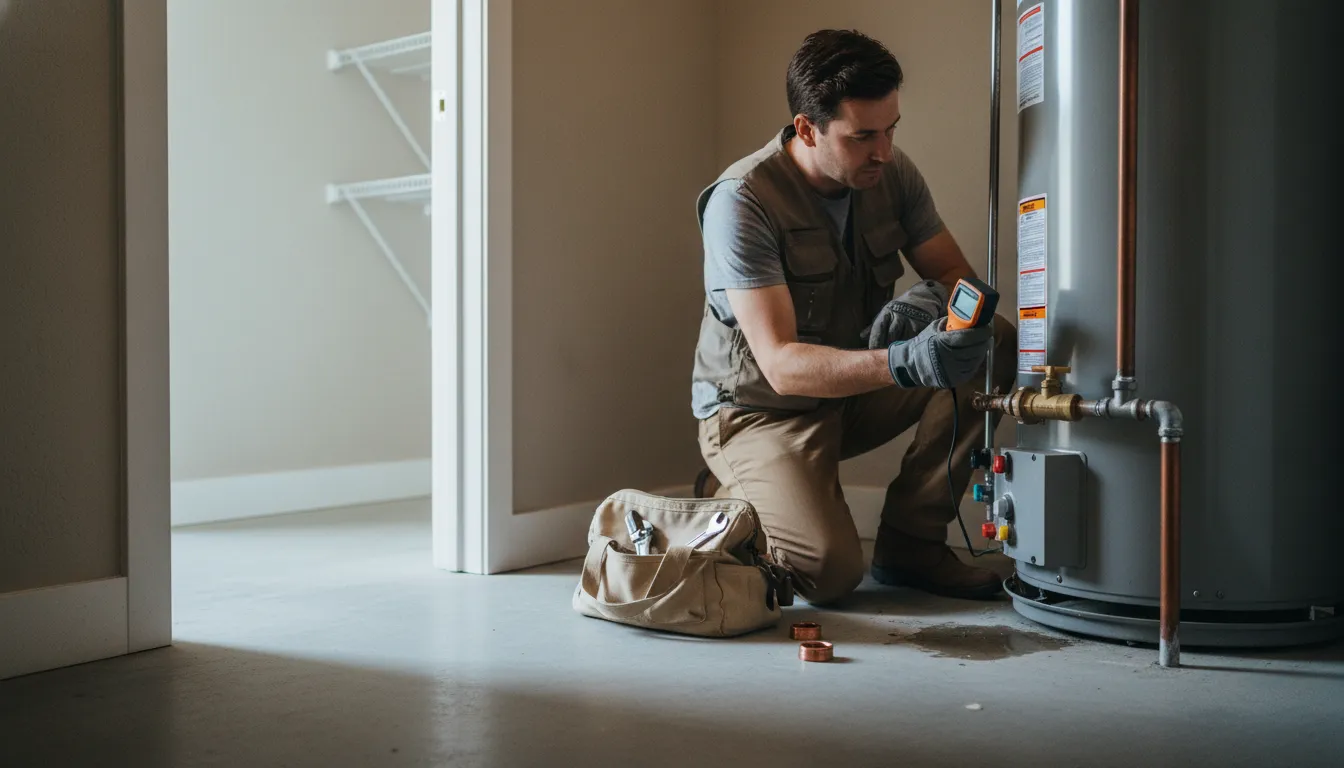
Find the Best Water Heater Repair Companies for Your Business
No obligation • Fast responses • Nationwide coverage

Why you can trust Search a Plumber
Search a Plumber is a leading United States resource for finding and evaluating professional plumbing services. Our team researches licensing, experience, and customer feedback to create unbiased, fact-driven overviews. Companies cannot pay to change ratings or placement, ensuring homeowners get trustworthy information.
Search providers near you
Best Water Heater Repair Companies in Texas Ranked
A reliable hot water heater is essential for daily comfort in any Texas home, from morning showers to washing dishes. When your unit malfunctions, it disrupts your routine and can signal underlying issues that need prompt attention. Water heater repair involves diagnosing and fixing problems with components like heating elements, thermostats, valves, and tanks to restore safe, efficient operation. This guide explains common issues, repair processes, and costs for Texas homeowners, helping you understand when to seek professional help to get your hot water flowing again.
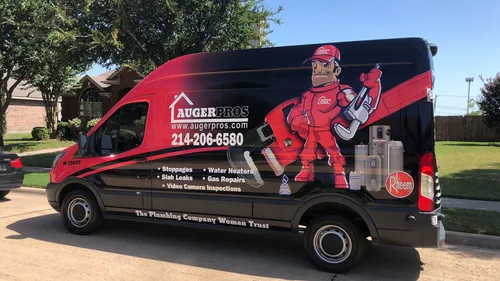
Augerpros Plumbing and Drain
206 W McDermott Dr #120, Allen, TX 75013
Augerpros Plumbing and Drain is a licensed and insured plumbing company serving Dallas, TX, and the greater North Dallas area. They provide a wide range of plumbing services including sewer camera inspections, water heater repair and installation, drain cleaning, sewer line repair, leak detection, gas line installation, toilet repair, and garbage disposal repair. The company uses advanced sewer and video equipment to diagnose and address plumbing issues thoroughly. Recognized nationally as a Best of the Best winner for three consecutive years, Augerpros Plumbing and Drain combines decades of technical training with customer-focused service.
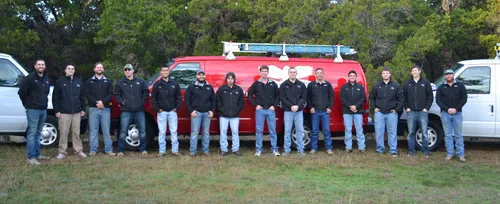
Chambliss Plumbing Company
1875 E Borgfeld Dr, San Antonio, TX 78260
Chambliss Plumbing Company is a family-owned plumbing business serving San Antonio, TX, and nearby communities since 1991. They offer a wide range of residential plumbing services including water heater repair and installation, water softener installation, drain cleaning, leak detection, and sewer camera inspections. The company is a certified Rinnai ACE dealer with plumbers trained in multiple levels of Rinnai tankless water heater expertise. Chambliss Plumbing uses advanced equipment for leak detection and provides hydro jetting to clear clogged drains. With over 30 years of experience, they maintain an A+ rating with the Better Business Bureau and provide emergency service when needed.
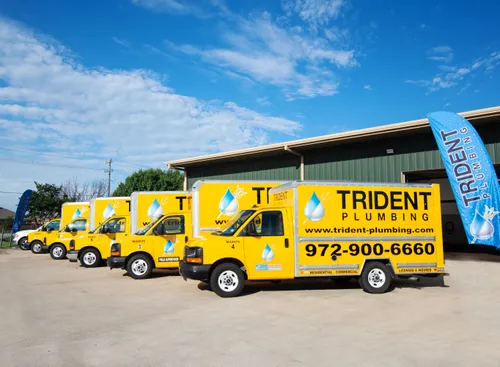
Trident Plumbing
15222 King Rd Ste 301, Frisco, TX 75034
Trident Plumbing provides a range of plumbing services in Garland, TX, including water heater repair and installation, tankless water heater services, water softener installation, drain cleaning, sewer line repair, leak detection, and gas line installation. Their team includes Master Plumbers, licensed Journeymen, and Technicians who receive ongoing professional education. Trident Plumbing also offers specialized slab leak detection and repair, supporting both residential and commercial plumbing needs.

GPS Plumbing
3064 Kentshire Ln, Frisco, TX 75034
GPS Plumbing is a family owned and operated residential plumbing company serving Garland, TX, and the surrounding North Dallas area. With over 26 years of experience, they provide a wide range of plumbing services including water heater repair and installation, drain cleaning, leak detection, gas line installation, and toilet repair. Their team is skilled in slab leak detection and gas leak repairs, helping to maintain safety and prevent costly damage. GPS Plumbing has built a reputation for dependable service across multiple communities in Denton and Collin counties.
Platinum Plumbing of DFW LLC
Fort Worth, TX
Platinum Plumbing of DFW LLC offers a range of plumbing services in Fort Worth, TX. Their work includes water heater repair, drain cleaning, leak detection, and gas line installation. They handle residential plumbing needs such as slab leaks, drain clogs, gas repairs, and yard leaks, providing comprehensive solutions for home plumbing issues.
Common Water Heater Problems in Texas
Texas homes face unique challenges with water heaters, largely due to the prevalence of hard water across much of the state. This mineral-rich water leads to sediment buildup inside the tank, which is a primary culprit behind many malfunctions and reduced efficiency for both gas and electric models. Recognizing the early signs of trouble can help you address repairs before a minor issue becomes a major leak or complete failure.
The most frequent problems homeowners encounter include a complete lack of hot water, inconsistent water temperatures, strange noises like popping or rumbling from the tank, and visible leaks or discolored water coming from the faucet 1. Each symptom points to different potential failures within the system.
No Hot Water
This is the most obvious sign of a problem. The cause differs significantly between gas and electric units.
- Gas Water Heaters: A lack of hot water often stems from issues with the ignition system. This could be a faulty pilot light that won't stay lit, a malfunctioning thermocouple (a safety device that senses the pilot flame), or a failed gas control valve.
- Electric Water Heaters: The problem is typically electrical. A tripped circuit breaker, one or more failed heating elements, or a tripped high-limit cutoff switch are common causes.
Inconsistent or Insufficient Hot Water
If your water runs hot and then suddenly cold, or you run out of hot water faster than usual, sediment is often to blame.
- Gas & Electric Units: Sediment buildup at the bottom of the tank acts as an insulator. In gas units, it separates the burner flame from the water, reducing heating efficiency. In electric units, it coats the heating elements. This buildup can also cause the lower thermostat in an electric heater to malfunction, leading to temperature swings.
Strange Noises: Popping, Rumbling, or Banging
Loud noises from your water heater are almost always a cry for help related to sediment. As water becomes trapped beneath the layer of sediment and heats, it can boil and create steam pockets that erupt, causing loud popping or rumbling sounds. This is a very common issue in Texas due to hard water and indicates the tank needs to be flushed.
Leaks and Water Discoloration
Any sign of water around the base of your heater or rusty water from your hot taps requires immediate attention.
- Leaks: Small leaks can occur at pipe connections, the temperature and pressure (T&P) relief valve, or the drain valve. These are often repairable. However, if the steel tank itself is leaking, it indicates internal corrosion has created a hole. A leaking tank cannot be repaired and must be replaced 2.
- Discolored Water: Rusty hot water typically signals corrosion inside the tank, often from a failing anode rod-the component that sacrificially corrodes to protect the tank lining.
Gas vs. Electric Water Heater Repairs
While the core function is the same, the repair approach and components differ. Understanding these differences can help you communicate better with a professional.
| Problem | Gas Water Heater Specifics | Electric Water Heater Specifics |
|---|---|---|
| No Hot Water | Often due to a faulty pilot light or thermocouple, or a malfunctioning gas control valve. | Often due to a tripped breaker, a failed heating element, or a high-limit cutoff switch. |
| Inconsistent Temperature | Can be caused by sediment buildup, a faulty thermostat, or burner issues. | Usually points to a malfunctioning thermostat or a worn heating element. |
| Noises & Sediment | Hard water leads to sediment buildup, causing loud popping/rumbling noises as trapped water boils. | Same issue with sediment buildup; the sediment insulates the heating element, reducing efficiency. |
| Leaks | Leaks can occur at valves or fittings. A leaking tank indicates internal corrosion and requires full replacement. | Similar leak points, but electrical connections add a safety hazard. A leaking tank is unrepairable. |
| Safety Concerns | Gas leaks (rotten egg smell) and improper ventilation leading to carbon monoxide are serious hazards. | Electrical faults and tripped breakers are key safety concerns. |
Critical Safety Note: Gas water heater repairs involve flammable gas and potential carbon monoxide risks. Electric repairs involve high-voltage components near water. For these reasons, most repairs, especially those involving gas lines, electrical connections, or internal components, should be handled by a licensed professional to ensure safety and compliance with Texas building codes.
The Professional Water Heater Repair Process
When you call a professional plumber in Texas for water heater service, they typically follow a structured process to ensure a safe and effective repair.
- Safety First: The technician will begin by shutting off the water supply to the unit and then disabling the power source-either by turning off the gas supply valve or switching off the correct circuit breaker for electric models 3 4.
- Diagnosis: The plumber will perform a thorough inspection. This includes checking for visible leaks, testing valves, inspecting the burner assembly (on gas models) or heating elements (on electric models), and assessing the condition of the anode rod and tank interior for sediment or corrosion 5.
- Repair or Replacement Recommendation: Based on the diagnosis, the professional will explain the faulty component (e.g., a failed thermocouple, a scaled-up heating element, a faulty pressure relief valve) and recommend either repair or, if the tank is compromised, full replacement.
- The Repair: After obtaining your approval, the technician will replace the defective part. This may involve draining the tank, removing old components, installing new ones, and reassembling the unit.
- Testing and Cleanup: The system is refilled with water, the power or gas is restored, and the unit is tested to ensure it heats water properly and operates safely, with no leaks. A reputable professional will also clean up the work area and haul away any old parts 6 7.
Find the perfect water heater repair companies for your needs
Get personalized recommendations and expert advice
Understanding Water Heater Repair Costs in Texas
Repair costs in Texas vary based on the specific problem, the cost of replacement parts, and local labor rates, which can range from $50 to $200 per hour 8 9. The average cost for water heater repairs in the state falls between $185 and $894. The price is heavily influenced by whether you have a gas or electric model and which component has failed.
Here is a breakdown of typical repair costs (including parts and labor):
| Repair Type | Typical Cost (Parts + Labor) | Applicable Unit |
|---|---|---|
| Anode Rod Replacement | $125 - $225 | Both Gas & Electric |
| Tank Flush (Sediment Removal) | $160 - $200 | Both Gas & Electric |
| Thermostat Replacement | $150 - $250 | Both Gas & Electric |
| Pressure Relief Valve Replacement | ~$200 | Both Gas & Electric |
| Heating Element Replacement | $200 - $300 | Electric Only |
| Thermocouple Replacement | ~$150 or less | Gas Only |
| Gas Control Valve Replacement | $250 - $400+ | Gas Only |
It's important to weigh the cost of repair against the age and condition of your unit. If your water heater is over 10-12 years old and requires a repair that costs several hundred dollars, it may be more economical in the long run to invest in a new, more efficient model. This is especially true if the tank itself is leaking, as a leaking tank cannot be repaired and replacement costs for a standard tank unit typically range from $1,000 to $1,900 installed 10 11.
When to Repair vs. Replace Your Water Heater
Making the decision between fixing an old unit or installing a new one depends on several factors:
- Age of the Unit: Most traditional tank water heaters have a lifespan of 8-12 years. If yours is within this range or older, replacement should be strongly considered.
- Cost of Repair: A good rule of thumb is if the repair cost is more than half the price of a new unit, replacement is usually the wiser financial choice.
- Frequency of Repairs: If you're calling for service more than once a year for different issues, the unit is likely failing.
- Condition of the Tank: If the tank is leaking or shows significant internal corrosion, replacement is the only option.
- Energy Efficiency: Newer models are significantly more energy-efficient. Upgrading can reduce your monthly utility bills, offsetting the cost of replacement over time.
Maintaining Your Water Heater to Prevent Repairs
Proactive maintenance can extend the life of your water heater and prevent many common Texas problems.
- Annual Tank Flushing: Draining a few gallons from the tank once a year helps remove sediment buildup, improving efficiency and preventing noise and damage 12.
- Test the T&P Valve: Lift the lever on the temperature and pressure relief valve briefly once a year to ensure it operates freely and allows water to discharge. This is a critical safety device.
- Check the Anode Rod: Inspect the sacrificial anode rod every 2-3 years. If it's more than 50% corroded, replace it to protect your tank from rust.
- Set the Temperature: Keep your thermostat set to 120°F. This is hot enough for household needs, reduces energy use, and minimizes sediment buildup and scalding risk.
Frequently asked questions
Sources
Footnotes
-
7 Warning Signs You Need Water Heater Repair in DFW - https://christmasair.com/signs-you-need-water-heater-repair/ ↩
-
10 Common Water Heater Problems | Mr. Rooter Plumbing - https://www.mrrooter.com/about/expert-tips/water-heaters/common-water-heater-problems/ ↩
-
Gas Water Heater Repair Southlake TX | Licensed Plumbers - https://www.berkeys.com/southlake/plumber/gas-water-heater-repair/ ↩
-
Fast Hot Water Heater Repair in Denton & North Texas - https://kneedeepplumbingtx.com/water-heater-repair/ ↩
-
Water Heater Installation Guide - Texas Quality Plumbing - https://www.texasqualityplumbing.com/blog/process-of-water-heater-installation/ ↩
-
Water Heaters Installation & Repair In Texas - https://lonestarwaterservice.com/water-heater/ ↩
-
Water heater repair/replacement recommendations? : r/Austin - https://www.reddit.com/r/Austin/comments/1i6mrfr/water_heater_repairreplacement_recommendations/ ↩
-
How Much Does Water Heater Repair Cost in Houston, TX? - https://www.angi.com/articles/how-much-does-it-cost-repair-water-heater/tx/houston ↩
-
Cost to Repair a Hot Water Heater [2026 Data] | Angi - https://www.angi.com/articles/how-much-does-it-cost-repair-water-heater.htm ↩
-
Dallas Water Heater Repair & Replacement | 2025 Guide - https://www.pureplumbingdfw.com/dallas-water-heater-repair-replacement-costs-2025/ ↩
-
Dallas Water Heater Repair & Replacement | 2025 Guide - https://www.pureplumbingdfw.com/dallas-water-heater-repair-replacement-costs-2025/ ↩
-
Texas Water Heaters Work Harder in Winter - Signs Yours Is ... - https://www.jensenplumbingllc.com/post/texas-water-heaters-work-harder-in-winter-signs-yours-is-about-to-fail ↩