Find the Best Water Heater Installation Companies for Your Business
No obligation • Fast responses • Nationwide coverage

Why you can trust Search a Plumber
Search a Plumber is a leading United States resource for finding and evaluating professional plumbing services. Our team researches licensing, experience, and customer feedback to create unbiased, fact-driven overviews. Companies cannot pay to change ratings or placement, ensuring homeowners get trustworthy information.
Search providers near you
Top Water Heater Installation Companies in Long Beach, California Ranked
Ensuring your Long Beach home has a reliable and efficient hot water supply is essential for daily comfort. Whether your current unit is failing or you're looking to upgrade to a more energy-efficient model, understanding your options for water heater installation and replacement is the first step. This guide will help you navigate the types of systems available, the professional installation process, and key considerations for our specific climate, empowering you to make an informed decision for your household.

All City Plumbing, Air & Electrical
5612 E La Palma Ave, Anaheim, CA 92807
All City Plumbing, Air & Electrical is a full-service plumbing, HVAC, and electrical provider located in Anaheim, CA. They offer a wide range of services including water heater repair and installation, drain cleaning, hydro jetting, sewer line repair, leak detection, repiping, and toilet repair. Their team is licensed, bonded, and insured, with technicians who are ACE Certified and available 24/7 for emergency plumbing and HVAC needs. With over 13 years of experience serving Anaheim and surrounding areas, they use advanced technology to ensure efficient and reliable service.
Dymek's Freedom Plumbing, Inc
2921 E Miraloma Ave #17, Anaheim, CA 92806
Dymek's Freedom Plumbing, Inc is a plumbing service provider based in Anaheim, CA, offering a wide range of residential and commercial plumbing solutions. Their services include sewer camera inspections, water heater installation and repair, drain cleaning, hydro jetting, trenchless sewer repair, leak detection, repiping, and garbage disposal repairs. They utilize advanced technology such as electronic slab leak detection and sewer video inspection to diagnose and address plumbing issues efficiently. With over 25 years of experience, the company emphasizes old-fashioned values combined with modern technology and is available 24/7 for emergency plumbing needs.

Merry Plumbing
1465 San Marino Ave, San Marino, CA 91108
Merry Plumbing is a well-established plumbing company serving Los Angeles, CA, and nearby areas including Pasadena, San Marino, and Glendora. With 79 years in business since 1946, they provide a wide range of plumbing services such as sewer camera inspection, water heater repair and installation, drain cleaning, hydro jetting, sewer line repair, leak detection, and repiping. Their team is equipped to handle both residential and commercial plumbing needs with modern tools and on-site parts availability. Merry Plumbing emphasizes clear, upfront estimates and has built a reputation for thorough and dependable service over many decades.
PDS Plumbing and Air
9706 Alondra Blvd, Bellflower, CA 90706
PDS Plumbing and Air is a veteran-owned company based in Los Angeles, CA, specializing in plumbing and HVAC services. They provide water heater repair and installation along with air conditioning solutions to keep homes comfortable and safe. Serving Bellflower and nearby areas, the company brings decades of combined experience to each job, ensuring skilled workmanship. Their team is licensed and committed to community-focused service.

Benjamin Franklin Plumbing of Long Beach
20032 State Rd, Cerritos, CA 90703
Benjamin Franklin Plumbing of Long Beach provides plumbing services in Long Beach, CA, specializing in water heater installation and repair, sewer line repair, drain cleaning, leak detection, and sewer camera inspections. They offer 24/7 emergency plumbing service to address urgent issues at any time. The company also supports water conservation through upgrades like tankless water heaters and smart leak detectors. Regular maintenance services include annual drain cleaning and water heater flushing to help prevent common plumbing problems and extend equipment life.
Understanding Your Water Heater Options
Modern water heaters come in several distinct types, each with its own operational method, efficiency profile, and ideal use case. Choosing the right one depends on your home's fuel source, available space, hot water demand, and long-term energy goals.
Traditional Storage Tank Water Heaters
The most common type found in homes, these units heat and store a reservoir of water in an insulated tank. They are available in both gas and electric models.
- How They Work: A heating element (either a gas burner or electric coils) warms the water inside the tank, maintaining it at a set temperature until it's needed at a faucet or appliance.
- Pros: Lower upfront purchase and installation costs, straightforward technology that most plumbers are familiar with, and a wide availability of sizes and models.
- Cons: Standby heat loss (energy used to keep the tank hot even when no water is being used), finite hot water supply that can run out, and a shorter average lifespan compared to some alternatives. For Long Beach homes, they represent a standard, lower upfront cost option but can be less efficient long-term.
Tankless (On-Demand) Water Heaters
These compact units heat water directly as it flows through the device, eliminating the need for a storage tank.
- How They Work: When a hot water tap is turned on, cold water travels through a pipe into the unit, where it is rapidly heated by a powerful gas burner or electric element, providing a continuous supply.
- Pros: Highly energy-efficient due to the elimination of standby heat loss, compact size saves floor space, and provides virtually unlimited hot water. They have a longer lifespan than traditional tanks.
- Cons: Higher initial purchase and installation cost, and the flow rate (measured in gallons per minute) can limit simultaneous use of multiple fixtures if the unit is not properly sized.
Heat Pump (Hybrid) Water Heaters
This innovative technology moves heat from the surrounding air into the water, rather than generating heat directly. It functions like a refrigerator in reverse.
- How They Work: An electric heat pump, mounted on top of a storage tank, extracts ambient heat from the air and transfers it to the water inside. It can be several times more energy-efficient than standard electric resistance models 1.
- Pros: Extremely high energy efficiency, leading to significant savings on electric bills. They are an excellent choice for our mild Long Beach climate, where the ambient air temperature is ideal for their operation year-round.
- Cons: Higher upfront cost, requires installation in a location with sufficient air volume (typically a minimum of 1,000 cubic feet of space, like a garage or basement), and may not perform as efficiently in very cold, confined spaces.
Solar Water Heaters
These systems use solar thermal collectors, typically mounted on the roof, to capture the sun's energy and heat a transfer fluid, which then warms the water in a storage tank.
- Pros: Utilizes renewable energy, leading to very low operating costs and reduced environmental impact once installed.
- Cons: Very high initial investment, dependent on sunlight availability, and usually requires a traditional backup system (gas or electric) for cloudy days or periods of high demand.
Why Your Long Beach Climate Matters
The specific weather patterns in Southern California directly influence which water heater technology makes the most financial and practical sense for your home.
- Mild Winters Maximize Efficiency: Our temperate climate is perfectly suited for heat pump (hybrid) water heaters. These units operate most efficiently in ambient temperatures between 40°F and 90°F, a range that encompasses most of the year in Long Beach. This makes them a top-tier choice for maximizing energy savings.
- Focus on Energy Savings: With California's energy costs consistently above the national average, investing in a high-efficiency model-whether a hybrid, tankless, or high-efficiency gas tank-can lead to substantial reductions in monthly utility bills. The slightly higher initial investment is often recouped through lower operating expenses over the life of the unit 2 3.
The Professional Installation Process: What to Expect
A proper water heater installation is not a simple swap. It involves multiple technical and regulatory steps to ensure safety, efficiency, and compliance with local codes.
- Initial Assessment and Consultation: A qualified professional will visit your home to assess your hot water needs based on household size, peak usage, and fixture count. They will evaluate the existing setup, including fuel type (gas or electric), available space, venting, and drainage. This is when you'll discuss different model options, efficiency ratings, and receive a detailed estimate.
- Permit Acquisition: In Long Beach, a permit is required for water heater replacement. Reputable professionals handle this process, ensuring the planned work meets all current plumbing, electrical, and building codes, including California's strict energy and seismic safety standards.
- Safe Removal and Disposal: The old unit is safely disconnected from the gas, water, and electrical lines. The water is drained, and the old heater is removed and prepared for proper disposal or recycling, often included in the service 4.
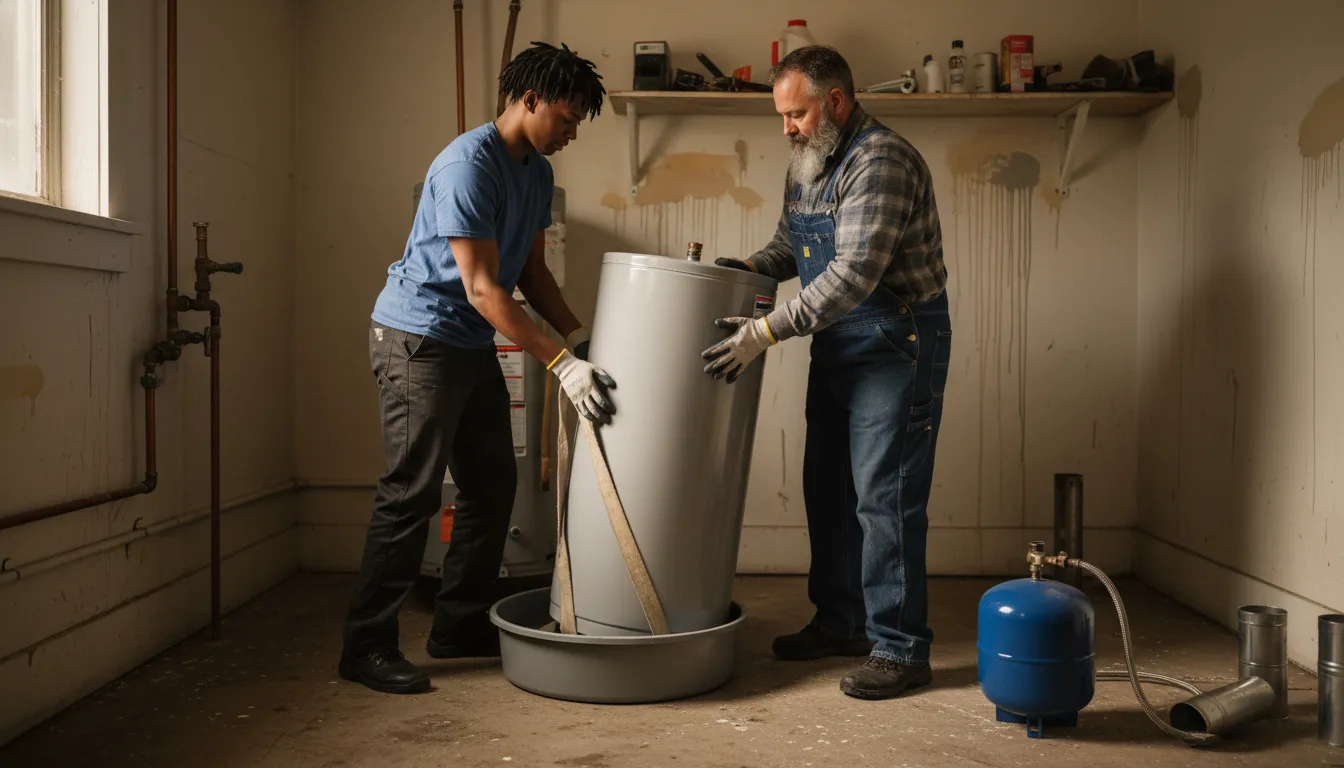
- Preparation and Installation: The new unit is positioned. Critical steps include installing new water connections, gas line (if applicable), and electrical wiring. For gas models, proper venting is crucial to safely exhaust combustion gases. An expansion tank is often required by code to manage thermal expansion in the closed plumbing system. Seismic strapping is also mandated to secure the unit against earthquake movement.
- System Activation and Testing: Once connected, the system is filled with water, purged of air, and the power or gas is restored. The installer will light the pilot (on gas models), check for leaks at all connections, verify proper venting, and ensure the temperature and pressure relief valve is operating correctly. They will test the unit to confirm it is heating water properly 5.
- Review and Warranty Registration: The installer will review the unit's operation with you, explain basic maintenance, and help you register the manufacturer's warranty. You should receive documentation for the permit and final inspection.
Find the perfect water heater installation companies for your needs
Get personalized recommendations and expert advice
Understanding Investment and Value
The total cost for a water heater installation in Long Beach can vary widely based on the type of unit, the complexity of the installation, and necessary upgrades to meet code. Here's a general breakdown of what homeowners can expect:
- Standard Tank Water Heater (Gas or Electric): Typically ranges from $2,000 to $4,300 installed. This includes a standard 40- or 50-gallon unit, basic labor, disposal, and permits. Costs rise if the installation requires relocating the unit, upgrading gas lines or electrical service, or adding complex venting 6.
- Tankless Water Heater: Generally a more significant investment, ranging from $4,000 to $7,500 or more. The higher cost accounts for the unit itself and more intensive installation labor, which may involve upgrading gas lines to a larger diameter, installing new dedicated electrical circuits, and modifying venting systems 7 8.
- Heat Pump (Hybrid) Water Heater: Installation costs are often competitive with tankless systems, generally starting in the $4,000+ range. The value is in the long-term operational savings, which can be substantial given their high efficiency and our favorable climate 9 10.
It's important to view quotes in detail. A comprehensive estimate should itemize the cost of the unit, all labor, materials (pipes, fittings, vents, straps, expansion tank), permit fees, and disposal. The lowest price may not include essential code upgrades, which could lead to problems down the line or fail inspection.
Key Considerations Before You Replace
- Fuel Type: Is your home set up for natural gas, propane, or electricity? Switching fuel types can add considerable cost to the project.
- Size and Capacity: A unit that's too small will leave you running out of hot water; one that's too large wastes energy. Your contractor should perform a "first-hour rating" or similar calculation to recommend the correct size.
- Energy Factor (EF): This rating measures the overall efficiency of the unit. A higher EF means greater efficiency and lower operating costs. Compare EF ratings within the same category (e.g., gas tank vs. gas tank).
- Space and Location: Tankless units free up floor space. Heat pump hybrids need ample air space and may produce cool, dry exhaust air-a potential benefit for a garage. Consider where the unit will live and how it affects the surrounding area.
- Long-Term Costs: Factor in the estimated annual operating cost along with the purchase price. An ENERGY STAR certified heat pump water heater, for example, can save a household of four approximately $350 per year on electric bills compared to a standard electric model 11.
Frequently asked questions
Sources
Footnotes
-
Heat Pump Water Heater 101 - 2025 with Eric Aune - https://www.youtube.com/watch?v=SlZVfaoZVi0 ↩
-
Long Beach Water Heater Installation & Replacement Guide - https://www.powerproplumbing.com/blog/water-heater-installation-replacement ↩
-
How much does a water heater replacement cost in California - https://fuseservice.com/water-heater-replacement-cost-california/ ↩
-
Home Depot Quote for Water Heater Replacement - Good $$ Cost or no? - https://www.reddit.com/r/HomeImprovement/comments/171j5b3/home_depot_quote_for_water_heater_replacement/ ↩
-
Water Heater Installation - https://www.petes-plumbing.com/water-heater-installation ↩
-
Pricing Guide: Water Heater Installation Cost - Burgeson's - https://www.burgesons.com/blog/how-much-does-it-cost-to-install-a-water-heater-in-southern-california-burgesons ↩
-
How Much Does Water Heater Installation Cost in California? ... - https://paylesswaterheaters.com/how-much-does-water-heater-installation-cost-in-california ↩
-
Choosing the Right Water Heater for Your California Home - https://airandplumbing.com/choosing-the-right-water-heater-for-california-home/ ↩
-
The 5 Best Water Heater Replacements in Long Beach, CA - https://www.powerproplumbing.com/blog/water-heater-replacement-long-beach-guide ↩
-
How Much Does It Cost to Replace a 50-Gallon Water Heater in 2026? - https://www.searshomeservices.com/blog/how-much-does-it-cost-to-replace-a-50-gallon-water-heater ↩
-
How Hybrid Heat Pump Water Heaters Can Slash Your Energy Bills in California - https://paylesswaterheaters.com/how-hybrid-heat-pump-water-heaters-can-slash-your-energy-bills-in-california ↩