Find the Best Trenchless Sewer Repair Companies for Your Business
No obligation • Fast responses • Nationwide coverage

Why you can trust Search a Plumber
Search a Plumber is a leading United States resource for finding and evaluating professional plumbing services. Our team researches licensing, experience, and customer feedback to create unbiased, fact-driven overviews. Companies cannot pay to change ratings or placement, ensuring homeowners get trustworthy information.
Search providers near you
Top Trenchless Sewer Repair Companies in Racine, Wisconsin Ranked
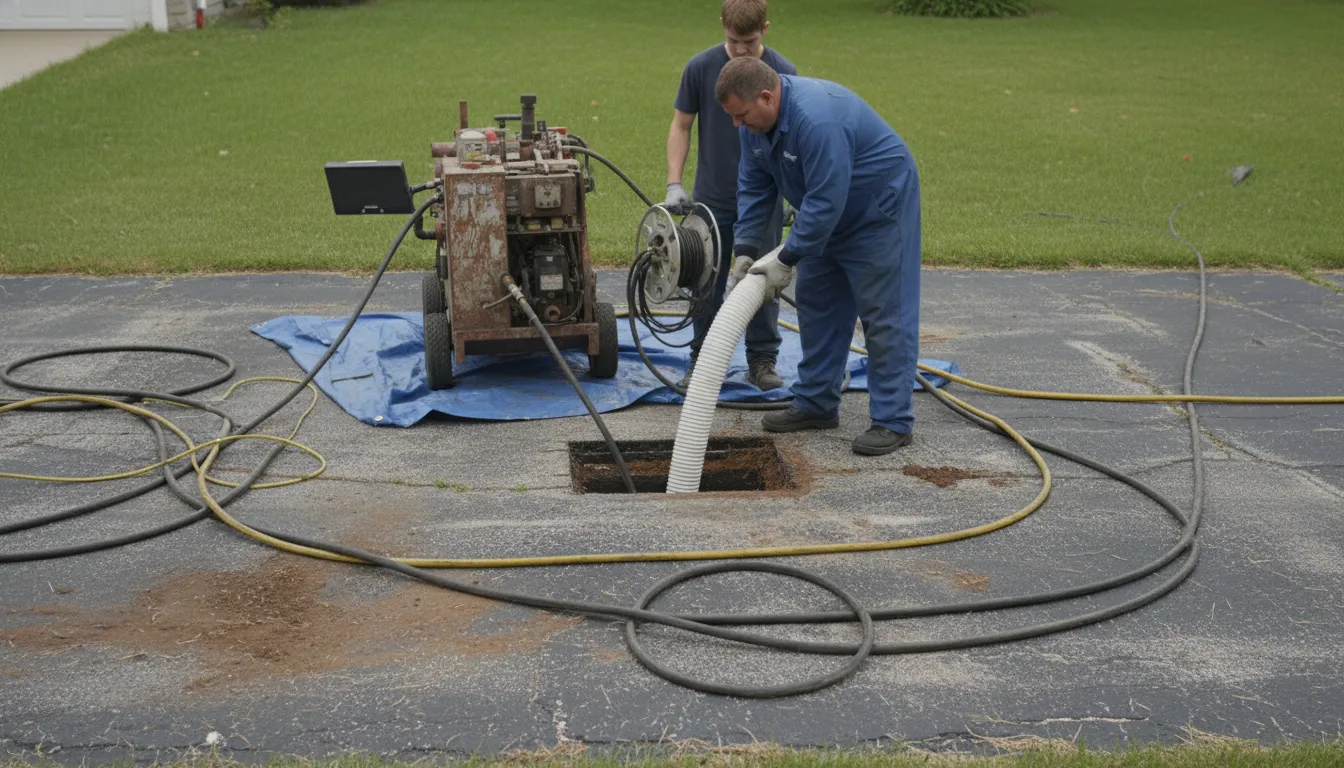
A damaged sewer line is a serious problem for any Racine homeowner, but the traditional fix-digging a massive trench across your yard-can be a nightmare. Trenchless sewer repair offers a modern, less invasive solution to restore your home's essential plumbing without destroying your driveway, landscaping, or peace of mind. This guide explains how no-dig sewer repair works, when it's the right choice for your property, and what you can expect from the process, helping you connect with qualified local specialists who can assess your situation.
Sewer Ninjas
3435 N 127th St, Brookfield, WI 53005
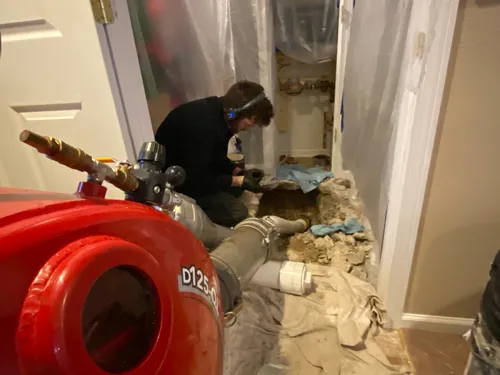
Sewer Ninjas is a plumbing and sewer repair company serving Milwaukee, WI. They specialize in sewer camera inspections, drain cleaning, sewer line repairs, and trenchless sewer repair using no-dig technology. Their services include video inspections to assess pipe conditions, Ninja Drain Cleaning™ for clearing tough clogs, and sewer relining with Cured-in-Place Pipe (CIPP) technology to repair damaged laterals without excavation. Sewer Ninjas has completed over 20,000 linear feet of sewer lining and saved more than 400 homeowners from sewer issues. They operate with a focus on minimizing disruption and protecting property during repairs.
Subterranean
3021 N Pierce St, Milwaukee, WI 53212
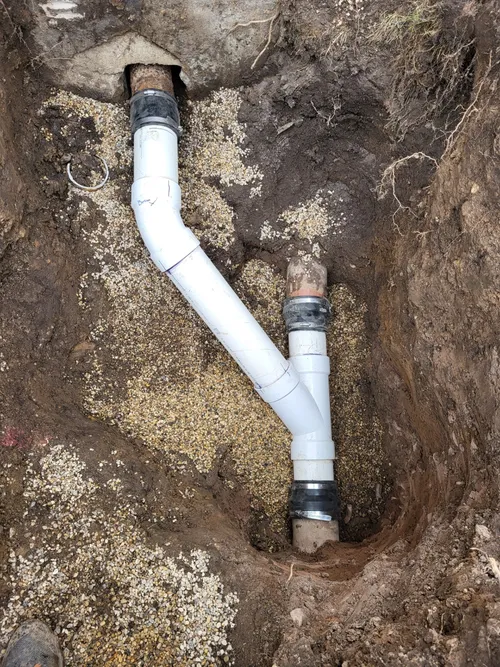
Subterranean is a plumbing company based in Milwaukee, WI, specializing in sewer and drain services. They offer sewer lateral repair, trenchless CIPP sewer lining, basement drain line repair, house trap removal, camera inspections, drain cleaning, hydro jetting, pipe bursting, and water service replacement. Their expertise includes advanced trenchless sewer repair techniques, such as CIPP lining and pipe bursting, which minimize excavation. Subterranean serves the Milwaukee area with a focus on sewer system maintenance and repair.
Heiden Plumbing, Heating & Cooling
1100 W Bruce St, Milwaukee, WI 53204
Heiden Plumbing, Heating & Cooling is a Milwaukee, WI-based company offering a wide range of plumbing and HVAC services. Their expertise includes trenchless sewer line repair, hydro jetting, sewer camera inspections, water heater installation and repair, sump pump repair, leak detection, and toilet repair. The company is one of the few in Wisconsin providing trenchless pipe bursting and cast-in-place piping (CIPP) for sewer and water line repairs. With a focus on both residential and commercial clients, Heiden Plumbing also offers 24/7 emergency services to address urgent plumbing and HVAC issues at any time.
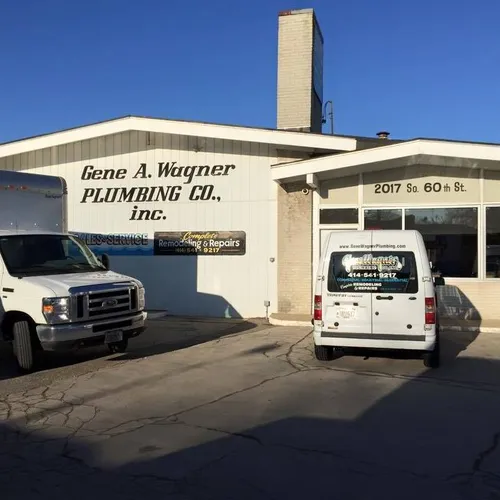
Gene Wagner Plumbing Co., Inc.
2017 S 60th St, West Allis, WI 53219
Gene Wagner Plumbing Co., Inc. is a full-service plumbing company based in Milwaukee, WI. They provide residential, commercial, and industrial plumbing services including installations, repairs, and maintenance. Their expertise covers drain cleaning, sewer line repair, and trenchless sewer repair, with a notable capability in sewer jetting to maintain pipe efficiency. The company also offers trenchless technology for water line installations and repairs, helping to preserve landscaping during projects. Gene Wagner Plumbing has a long-standing presence in the Milwaukee area and serves a wide range of plumbing needs.
Understanding Trenchless Sewer Line Solutions
Trenchless technology refers to methods that repair or replace underground sewer pipes with minimal excavation. Instead of a backhoe tearing up your entire yard, technicians typically only need to dig two small access holes: one at the beginning and one at the end of the damaged section. This approach is designed to solve common Wisconsin sewer problems like cracks, leaks, and root intrusion while preserving your property.
The two primary trenchless techniques are Cured-In-Place Pipe (CIPP) lining and pipe bursting. CIPP lining involves inserting a flexible, resin-saturated tube into the old pipe. Once in place, it's inflated and cured with heat or UV light, forming a seamless, durable "pipe within a pipe." Pipe bursting is used for more severely damaged lines; a conical bursting head is pulled through the old pipe, fracturing it outward while simultaneously pulling in a new high-density polyethylene (HDPE) pipe behind it. Both methods are engineered to meet modern building codes and can significantly extend the life of your sewer system.
Is Trenchless Repair Right for Your Racine Home?
Not every sewer problem is suited for a trenchless fix. Understanding the distinction helps in planning the most effective and economical repair.
When Trenchless is Ideal: This method is highly effective for pipes that are structurally compromised but not completely destroyed. Common scenarios in Racine include:
- Root Intrusion: Tree roots seeking moisture can infiltrate pipe joints, causing blockages and cracks.
- Cracks & Leaks: Aging clay, cast iron, or Orangeburg pipes can develop fractures, allowing sewage to leak into the soil and groundwater to enter the line.
- Corrosion & Deterioration: Gradual wear that reduces flow capacity but hasn't caused a full collapse.
- Minor Misalignment or Bellying: Sections of pipe that have settled or sunk, creating a low spot that collects waste.
A key advantage is its use under obstacles. If your damaged sewer line runs under a concrete driveway, a mature garden, a patio, or between tree roots, trenchless repair can fix it without disturbing these expensive or cherished features 1 2.
When Traditional Excavation May Be Necessary: There are times when a full dig is the only viable option. This includes situations with:
- Complete Pipe Collapse: If the pipe has been crushed or has fully imploded, there may be no continuous path for a liner or bursting head.
- Severe Offsets or Breaks: Major separations in the pipe line that cannot be bypassed with lining.
- Access Limitations: If there aren't suitable points to insert the liner or bursting equipment, excavation might be required to create them.
A professional diagnosis via a sewer camera inspection is the only way to determine the correct approach for your specific property 3.
The Step-by-Step Trenchless Repair Process
Knowing what to expect can make the repair process less stressful. Here's a typical workflow for a trenchless sewer line project in Racine:
- Comprehensive Camera Inspection: A licensed plumber will first perform a detailed video inspection. A high-definition camera is fed through an existing cleanout or access point to travel the length of the sewer line. This critical step identifies the exact location, nature, and extent of the damage, providing a clear roadmap for the repair.
- Obtaining Permits: Before any work begins, your plumbing contractor will pull the necessary permits from the City of Racine. Permit costs can vary based on the scope and location of the project but are a mandatory step to ensure all work meets local building and plumbing codes.
- Site Preparation & Access: Instead of a long trench, the crew will excavate two small, strategically placed access pits. These are typically dug at the home's main cleanout (near the foundation) and at the connection to the city main (usually near the curb or property line).
- The Repair Method:
- For CIPP Lining: The epoxy-saturated liner is fed through one access hole and guided through the old pipe. It is then inflated, pressing the resin against the interior walls. The resin is cured, hardening to form a new, jointless pipe. The ends are trimmed, and the line is ready for service 4 5.
- For Pipe Bursting: The bursting head and new HDPE pipe are set up at the entry pit. The head is pulled through the old pipe, breaking it apart and displacing the fragments into the surrounding soil while the new pipe is drawn in behind it. This results in a completely new, slightly larger diameter pipe 6.
- Final Inspection & Restoration: Once the repair is complete, a follow-up camera inspection is often performed to verify the work's integrity. This may also be required by the city inspector before the permit is signed off. The small access pits are then backfilled, requiring minimal restoration compared to the massive landscaping overhaul needed after traditional excavation.
Find the perfect trenchless sewer repair companies for your needs
Get personalized recommendations and expert advice
Cost Considerations for Trenchless Sewer Repair
The cost of trenchless sewer repair in Racine is influenced by several factors. While it often has a higher per-foot material cost than traditional digging, it can be more economical overall by eliminating thousands of dollars in landscape, concrete, and hardscape restoration.
Primary Cost Factors:
- Length of Damaged Pipe: Costs are frequently calculated per linear foot. The longer the section that needs repair, the higher the total cost.
- Repair Method: CIPP lining and pipe bursting have different material and equipment costs, which affect the price.
- Depth & Accessibility: Pipes buried very deep or located under complex obstacles can increase labor and equipment time.
- Pipe Diameter: Larger diameter pipes require more material.
- Permits & Inspections: The City of Racine requires permits and inspections, which add to the project cost. Inspection fees alone can range from $175 to $350 or more 7 8.
- Local Labor Rates: Costs can vary between different plumbing contractors based on expertise, equipment, and overhead.
Understanding Price Ranges: Based on current industry data, here are general cost frameworks for trenchless repair 9 10:
- Per-Foot Costs: CIPP lining typically ranges from $135 to $150 per foot, while pipe bursting can range from $150 to $190 per foot. Complex cases can exceed $285 per foot.
- Typical Residential Job: For a common repair of 30 to 75 feet, total project costs often fall between $1,900 and $10,000+. It's important to get detailed, itemized estimates from local providers, as the final price is highly specific to your property's conditions.
Maintaining Your Repaired Sewer Line
After investing in a trenchless repair, proper maintenance will help protect your investment and prevent future issues. Avoid planting trees with aggressive root systems near your sewer line. Be mindful of what goes down your drains; grease, wipes (even those labeled "flushable"), and other non-biodegradable materials can cause buildup. Consider scheduling a periodic sewer camera inspection every few years as a preventative measure to catch minor issues before they become major problems. A well-maintained sewer line, especially one with a smooth, jointless CIPP liner, can provide reliable service for 50 years or more.
Frequently asked questions
Sources
Footnotes
-
Trenchless Sewer Line Repair vs. Sewer Line Excavation - https://dandfplumbing.com/sewer-line-repair-vs-sewer-line-excavation/ ↩
-
Trenchless Sewer Repair vs. Traditional Excavation - AQUALIS - https://aqualisco.com/trenchless-sewer-repair-vs-traditional/ ↩
-
Is Trenchless Sewer Repair Right for Your Wisconsin Property? - https://www.sewerninjas.com/is-trenchless-sewer-repair-right-for-your-wisconsin-property/ ↩
-
Trenchless Sewer Repairs Racine WI - https://wisconsin.1daytrenchlesssewerrepair.com/trenchless-sewer-repairs-racine-wi/ ↩
-
Trenchless Sewer Repair vs Traditional - https://piperestorationsolutions.com/trenchless-sewer-repair-vs-traditional/ ↩
-
Trenchless Sewer Repair | Steve's Plumbing & Heating - WI - https://www.stevesplumbingandheating.com/Plumbing/Trenchless-Sewer-Repair ↩
-
Empower Your Decision: Decoding Trenchless Sewer Repair Costs - Pipeliner Pros - https://pipelinerpros.com/trenchless-sewer-repair-cost/ ↩
-
How Much Does Trenchless Sewer Line Piping Cost? [2026 Data] - https://www.angi.com/articles/trenchless-sewer-line-replacement-cost.htm ↩
-
What Trenchless Sewer Repair Costs & What Impacts the Price - https://www.sunsethc.com/what-trenchless-sewer-repair-really-costs-and-what-impacts-the-price/ ↩
-
How much does it cost to repair a sewer using trenchless methods? - https://sewerpros.com/trenchless-sewer-repair-cost/ ↩