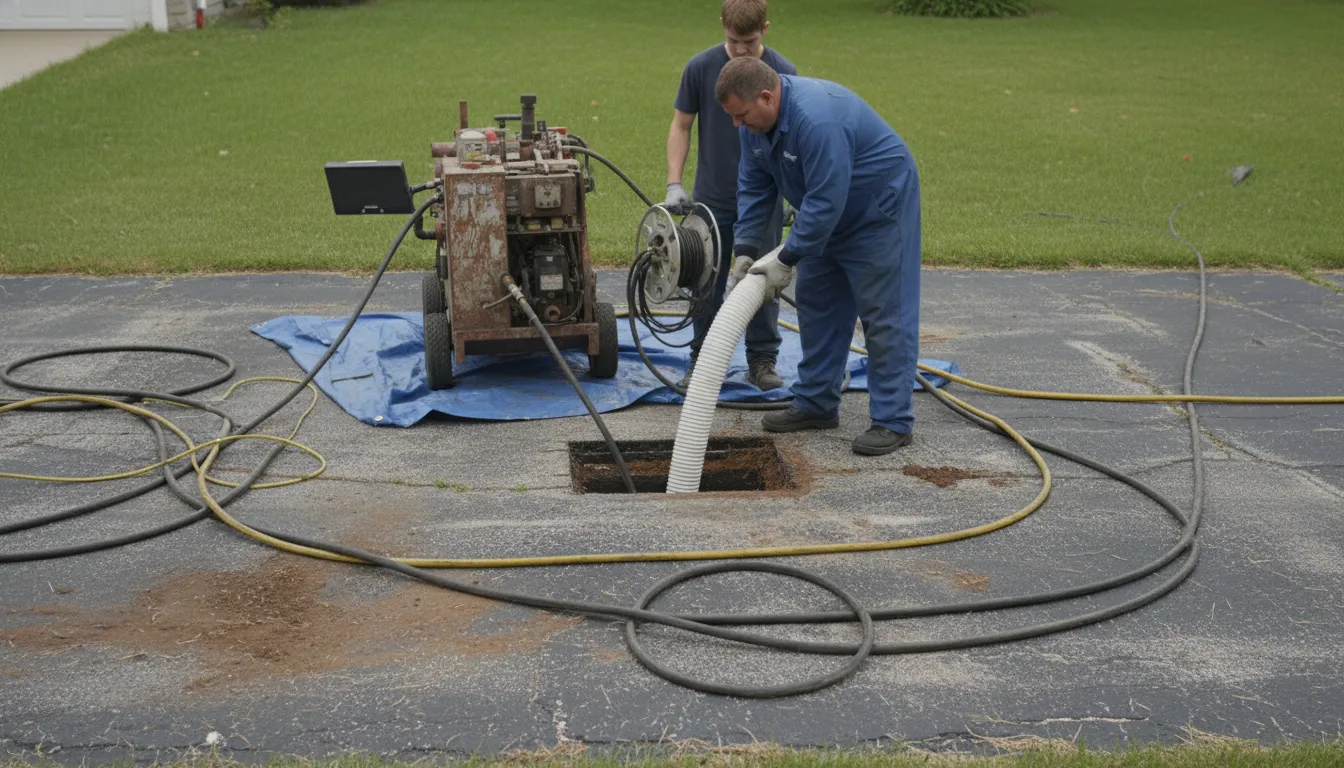
Find the Best Trenchless Sewer Repair Companies for Your Business
No obligation • Fast responses • Nationwide coverage

Why you can trust Search a Plumber
Search a Plumber is a leading United States resource for finding and evaluating professional plumbing services. Our team researches licensing, experience, and customer feedback to create unbiased, fact-driven overviews. Companies cannot pay to change ratings or placement, ensuring homeowners get trustworthy information.
Search providers near you
Top Trenchless Sewer Repair Companies in Kent, Washington Ranked
Trenchless sewer repair is a modern method for fixing damaged sewer lines without the need for extensive, disruptive digging across your property. This approach is crucial for maintaining your home's essential plumbing infrastructure while preserving your yard, driveway, and landscaping. If you're dealing with sewer line issues in Kent, understanding your repair options can help you connect with the right local professionals for a solution that minimizes hassle and long-term cost.

Homeservice Plumbers
13306 SE 30th St, Bellevue, WA 98005
Homeservice Plumbers is a licensed, bonded, and insured plumbing company serving Seattle, WA. They specialize in sewer camera inspections, drain cleaning, sewer line repair, and trenchless sewer repair for both residential and commercial properties. The company offers 24/7 emergency services with no trip or after-hours charges, ensuring help is available anytime plumbing issues arise. Homeservice Plumbers provides a one-year warranty on plumbing, sewer, and drain services, reflecting their commitment to quality and reliability.
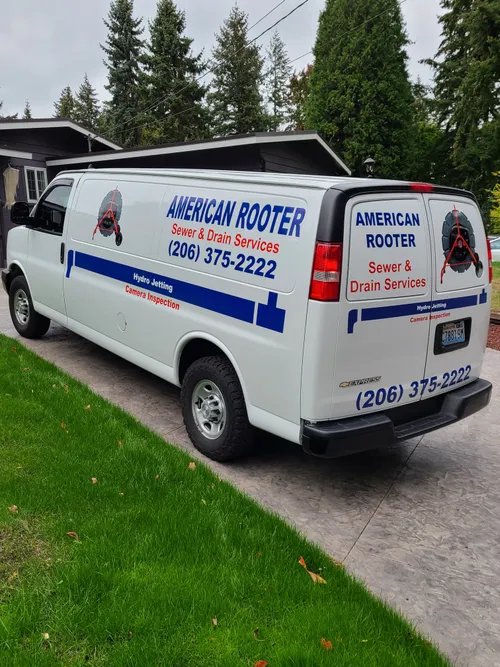
American Rooter Sewer & Drain Service LLC
1623 151st Ave SE, Bellevue, WA 98007
American Rooter Sewer & Drain Service LLC provides comprehensive sewer and drain solutions in Seattle, WA. Serving both residential and commercial clients, they offer services such as sewer line replacement, camera inspection, trenchless sewer repair, drain cleaning, and hydro jetting. With over 35 years of experience in King County, the company uses advanced technology to address a wide range of sewer and drain issues. They are licensed, bonded, and insured, and provide 24/7 availability for emergency and routine service needs.
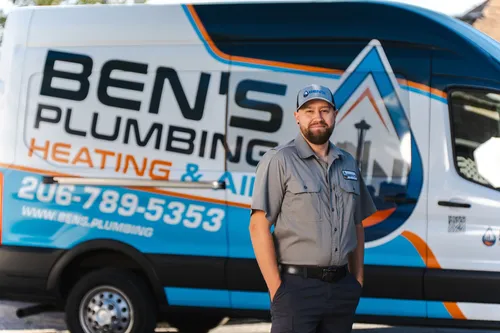
Ben’s Plumbing & Drain Cleaning
1141 NW 53rd St, Seattle, WA 98107
Ben's Plumbing & Drain Cleaning is a licensed plumbing and HVAC company serving Seattle, WA. The company offers a wide range of services including plumbing repairs, water heater installation and repair, drain cleaning, sewer line repair with trenchless options, leak detection, and repiping. They use advanced equipment such as drain inspection cameras and video inspection for sewer lines to accurately diagnose and resolve issues. Founded by industry veteran Ben Foster, Ben's Plumbing has over 25 years of experience providing personalized plumbing and HVAC services to both residential and commercial clients in the Seattle area.
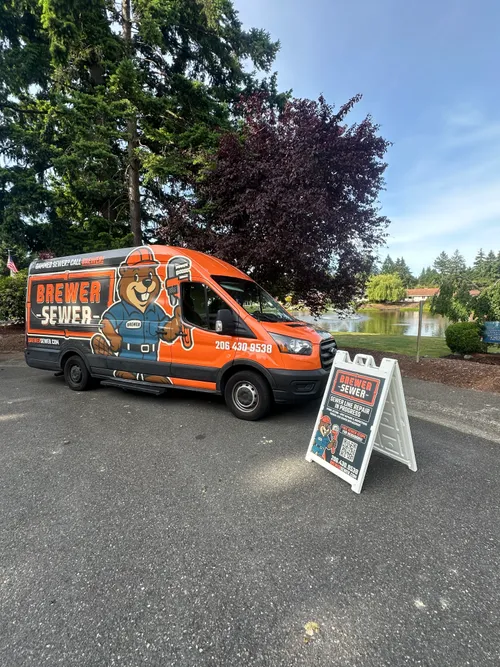
Brewer's Sewer Repair
11224 26th Ave SW, Seattle, WA 98146
Brewer's Sewer Repair is a locally owned company based in Seattle, WA, specializing in sewer line repair and replacement services. They offer a range of solutions including trenchless sewer repair methods such as pipe bursting and cured-in-place pipe (CIPP) lining, hydro jetting, drain cleaning, and sewer camera inspections. The team provides same-day inspections and 24/7 emergency repairs, aiming to address sewer issues promptly and efficiently. With over a decade of experience, Brewer's Sewer Repair focuses on clear communication and quality restoration to ensure long-term results for residential customers.
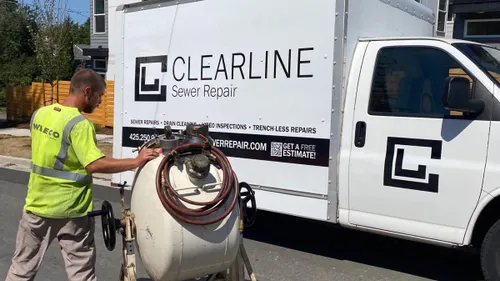
Clearline Sewer Repair
1417 NW 54th St Suite #248, Seattle, WA 98107
Clearline Sewer Repair is a plumbing company based in Seattle, WA, specializing in sewer and drain services. Since 2017, they have provided a range of solutions including sewer camera inspections, drain cleaning, hydro jetting, sewer line repair, and trenchless sewer repair. Their use of video inspection cameras allows precise identification of sewer issues, supporting effective repairs. The company offers trenchless sewer repair to minimize excavation and disruption. Clearline Sewer Repair operates with 24/7 emergency availability to address urgent plumbing needs.
What is Trenchless Sewer Line Repair?
Often called "no-dig" sewer repair, trenchless technology encompasses advanced techniques designed to rehabilitate or replace underground pipes with minimal excavation. Instead of digging a long, deep trench to access the entire length of the pipe, technicians typically only need to create two small access holes at the beginning and end of the damaged section. This process is ideal for addressing common problems like root intrusion, cracks, leaks, or minor sags in your residential sewer lateral-the pipe that runs from your home to the city main.
The core benefit is the dramatic reduction in property disruption. Traditional excavation can tear up lawns, gardens, patios, and even require cutting through concrete driveways or sidewalks. Trenchless methods bypass most of this destruction, focusing the work underground. For homeowners in Kent, where preserving a beautiful landscape is a priority, this can be a significant advantage. The repair is performed from within the pipe itself, using specialized equipment to insert a durable new lining or to pull through a replacement pipe.
How Trenchless Repair Works: A Step-by-Step Guide
The trenchless process is methodical and relies on precision technology. It typically follows these key stages:
- Camera Inspection: The first and most critical step is a thorough video camera inspection. A high-resolution, waterproof camera is snaked through the sewer line to pinpoint the exact location, nature, and extent of the damage. This diagnostic tool is essential for determining if a trenchless method is suitable and for planning the repair.
- Creating Access Points: Based on the inspection, technicians will identify the best locations for access. This usually involves digging two small, strategic holes: one at a cleanout near the home and another at the point where the lateral connects to the city sewer. These "entry and exit" pits are the only digging required.
- Pipe Cleaning: Before any repair can begin, the existing pipe must be thoroughly cleaned. High-pressure water jetting or mechanical scraping tools remove debris, roots, and buildup to create a smooth surface for the new liner or pipe.
- The Repair Process: This is where the specific trenchless technique is applied.
- For CIPP Lining (Cured-In-Place Pipe): A flexible, resin-saturated felt tube is inverted or pulled into the old pipe. Using air pressure or hot water, the liner is expanded to press tightly against the host pipe's walls. The resin then cures and hardens, forming a seamless, jointless "pipe within a pipe" that is highly resistant to corrosion and root intrusion.
- For Pipe Bursting: A conical bursting head is pulled through the old, damaged pipe. As it moves, it fractures the old pipe outward while simultaneously pulling a new, high-density polyethylene (HDPE) pipe into place behind it. This method completely replaces the old line with a new one of equal or larger diameter.
- Final Inspection and Restoration: A post-repair camera inspection verifies the integrity and smoothness of the new pipe. The small access pits are then backfilled, compacted, and the surface (grass, gravel, etc.) is restored. The result is a fully functional sewer line with barely a trace of the work done 1.
Trenchless vs. Traditional Excavation: Which is Right for Your Kent Home?
Choosing between trenchless rehabilitation and traditional excavation depends entirely on the condition of your existing sewer line. Here's a breakdown to help you understand the best application for each method.
When Trenchless Repair is the Best Solution: Trenchless methods are exceptionally effective for specific, common types of damage. They are the preferred choice for:
- Cracks and Fractures: Horizontal cracks caused by ground settlement or age.
- Root Intrusion: Where tree roots have infiltrated pipe joints or cracks.
- Corrosion and Deterioration: In old cast iron or clay pipes that are thinning or losing integrity.
- Minor Misalignments or Sags: Sections where the pipe has settled slightly, creating a belly that traps waste.
- Leaking Joints: In pipes where the seals between sections have failed.
The no-dig approach is particularly advantageous when the damaged pipe runs under expensive or difficult-to-replace features like driveways, foundations, patios, mature trees, or elaborate landscaping 2 3 4. By avoiding major excavation, you save thousands on landscape and hardscape restoration.
When Traditional Excavation May Be Necessary: There are situations where open-trench excavation is unavoidable. This traditional method involves digging a trench along the entire length of the pipe to expose it fully. It is typically required for:
- Complete Pipe Collapse: When the pipe has been crushed and no longer has an open passageway for lining or bursting tools.
- Severe Offsets or Bellies: Major misalignments where sections of pipe have shifted dramatically, creating severe dips or separations.
- Multiple, Widespread Failures: When a pipe is damaged beyond a reasonable point for a spot repair or continuous lining.
- Material Incompatibility: Certain old pipe materials or configurations may not be suitable hosts for a CIPP liner 5 6.
While excavation provides direct access and allows for a complete visual inspection, the trade-off is significant property disruption, higher restoration costs, and a longer project timeline 7.
Find the perfect trenchless sewer repair companies for your needs
Get personalized recommendations and expert advice
Understanding Costs and Permits for Kent Residents
The cost of trenchless sewer repair in Kent is influenced by several factors, but it often provides better long-term value compared to excavation.
Cost Factors: Trenchless repair is typically priced per linear foot, with the total project cost depending on the length of the damaged section. In the Kent area, homeowners can expect a cost range of $80 to $250 or more per linear foot 8. A typical residential project often falls within a total range of $1,900 to $6,000+ 9. Variables that affect price include:
- Pipe Diameter and Material: Larger or more challenging pipes cost more to line or replace.
- Depth and Accessibility: Deeper pipes or those with difficult access points can increase labor.
- Extent of Damage: The repair method (simple lining vs. full pipe bursting) is determined by the damage, impacting cost.
- Site Conditions: The presence of obstacles like large trees or other utilities can add complexity.
While the upfront per-foot cost for trenchless might sometimes be higher than basic excavation, it's crucial to consider the avoided costs. Traditional digging requires expensive landscape rehabilitation, concrete repair, and patio reconstruction, which can add many thousands to the final bill 10 11. Trenchless repair sidesteps nearly all of that.
Permits and Inspections: In Kent, a permit from the City's Public Works Department is required for any sewer line repair or replacement on private property 12. The permitting process ensures the work meets city codes and standards. Permit fees can vary but often add $300 to $1,000 or more to the overall project cost 12. After the work is completed, a city or county inspector will visit to verify the repair was done correctly and complies with all regulations. Always confirm the specific requirements and associated fees with the Kent Public Works Department before any work begins 12.
Long-Term Benefits of a Trenchless Solution
Investing in a trenchless sewer repair offers advantages that extend far beyond the completion date of the project:
- Preserved Property: Your lawn, garden, and hardscapes remain largely intact, saving you the time, expense, and heartache of rebuilding your outdoor space.
- Durability: CIPP liners and HDPE pipes are highly resistant to chemical corrosion and root intrusion, often carrying warranties of 50 years or more.
- Speed: Most trenchless repairs can be completed in one to two days, compared to the week or more often needed for excavation, backfilling, and restoration.
- Increased Flow Capacity: Pipe bursting can install a new pipe with a slightly larger diameter, and CIPP liners create a smooth interior that improves flow compared to old, rough pipes.
- Environmental Consideration: Minimizing excavation reduces soil disruption and disturbance to tree root systems, making it a more environmentally conscious choice.
Frequently asked questions
Sources
Footnotes
-
Trenchless Sewer Pipe Replacement in Seattle, WA - https://www.strictlysewersinc.com/services/trenchless-sewer-pipe-replacement/ ↩
-
Trenchless Sewer Line Repair vs. Sewer Line Excavation - https://dandfplumbing.com/sewer-line-repair-vs-sewer-line-excavation/ ↩
-
Trenchless Sewer Repair Kent - Drain Pro Plumbing and Septic - https://drainproplumbing.net/trenchless-sewer-repair-kent ↩
-
Open Excavation versus Trenchless Repair - T3 Lining Supply - https://www.t3liningsupply.com/blog/open-excavation-versus-trenchless ↩
-
Trenchless Sewer Repair vs Traditional - https://piperestorationsolutions.com/trenchless-sewer-repair-vs-traditional/ ↩
-
What Are The Pros and Cons of Trenchless Sewer Repair? - https://www.southernairnow.com/blog/what-are-the-pros-and-cons-of-trenchless-sewer-repair/ ↩
-
Trenchless Sewer Repair vs. Traditional Excavation - AQUALIS - https://aqualisco.com/trenchless-sewer-repair-vs-traditional/ ↩
-
How Much Does Trenchless Sewer Repair Cost In Seattle? - https://www.secondopinionsewer.com/how-much-does-trenchless-sewer-repair-cost/ ↩
-
Trenchless Sewer Repair vs. Traditional Excavation - https://tdtplumbing.com/trenchless-sewer-repair/difference-to-traditional-repair/ ↩
-
Trenchless Sewer Repair: Lower Cost, Lower Impact Sewer Repair - https://www.sewerflowllc.com/2025/03/06/trenchless-sewer-repair-lower-cost-lower-impact-sewer-repair/ ↩
-
Trenchless Sewer Repair vs. Traditional Excavation - https://alphaenvironmental.net/blog/trenchless-sewer-repair-vs-traditional-excavation-which-is-better/ ↩
-
How Much Does Trenchless Sewer Line Piping Cost? [2026 Data] - https://www.angi.com/articles/trenchless-sewer-line-replacement-cost.htm ↩ ↩2 ↩3