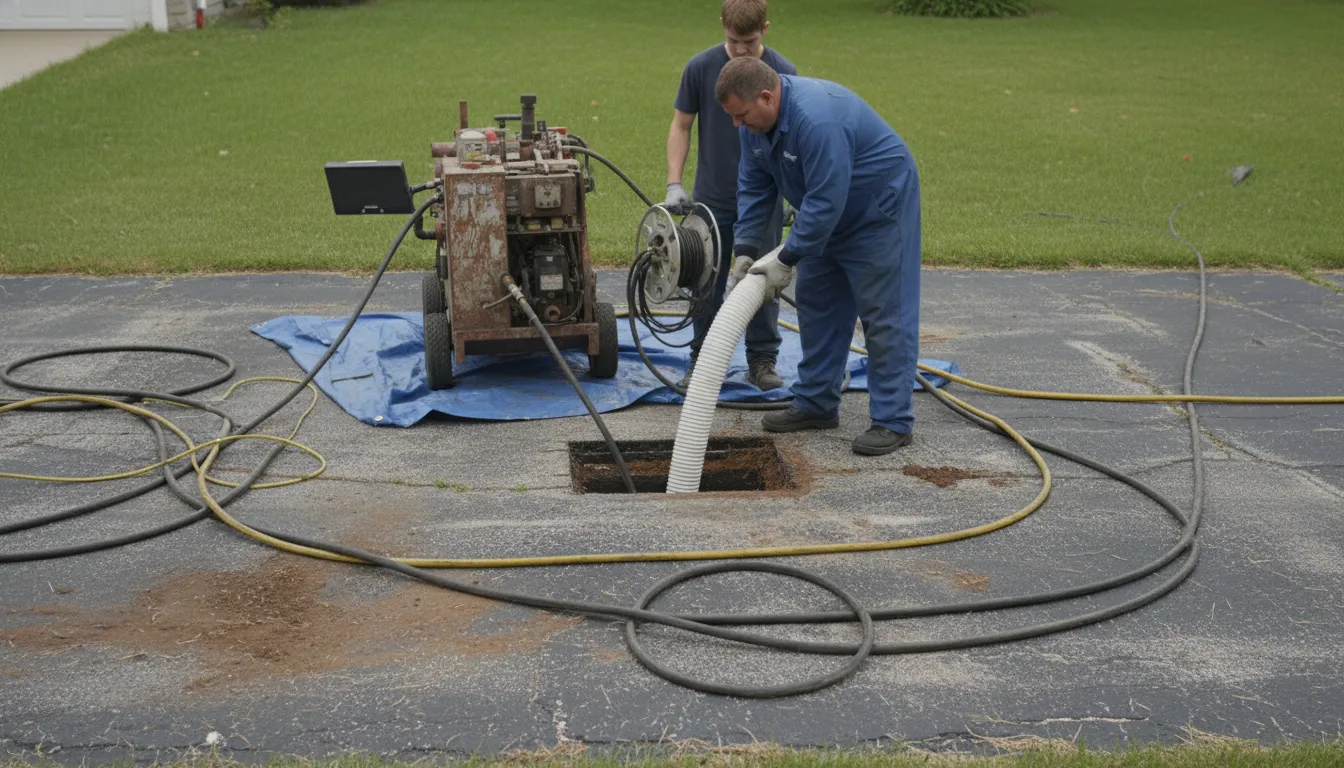
Find the Best Trenchless Sewer Repair Companies for Your Business
No obligation • Fast responses • Nationwide coverage

Why you can trust Search a Plumber
Search a Plumber is a leading United States resource for finding and evaluating professional plumbing services. Our team researches licensing, experience, and customer feedback to create unbiased, fact-driven overviews. Companies cannot pay to change ratings or placement, ensuring homeowners get trustworthy information.
Search providers near you
Top Trenchless Sewer Repair Companies in Lewisville, Texas Ranked
Trenchless sewer repair is a modern method for fixing damaged underground sewer lines without the need for extensive, disruptive digging across your property. This approach is crucial for maintaining your home's essential plumbing infrastructure while preserving your yard, driveway, and landscaping. If you're dealing with slow drains, backups, or suspect a sewer line issue, this guide will help you understand your options and how to connect with qualified local specialists who can assess and resolve the problem efficiently.
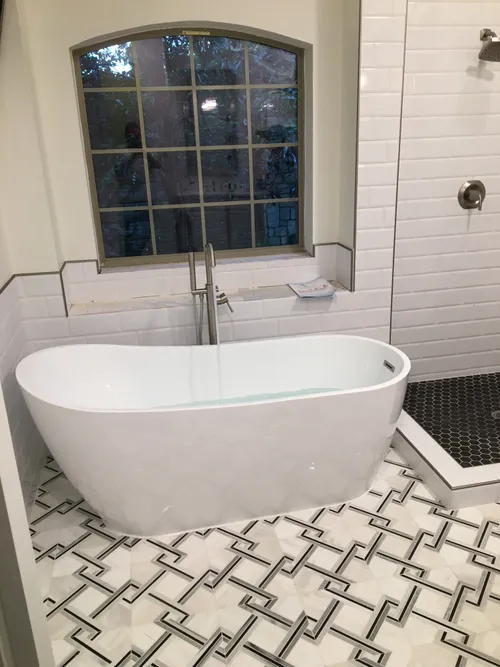
Adr plumbing Co
Plano, TX
Adr Plumbing Co is a plumbing service provider based in Plano, TX, offering a wide range of services including water heater repair and installation, tankless water heater services, drain cleaning, sewer line repair, leak detection, repiping, toilet repair, and garbage disposal repair. They serve residential and property management clients with expertise in trenchless sewer repair and tunneling for under-slab repairs. Established in 2019, Adr Plumbing Co combines over 20 years of industry experience with well-stocked service vehicles to efficiently handle plumbing issues from minor leaks to major sewer line replacements. The company operates around the clock to address plumbing emergencies and routine maintenance needs.
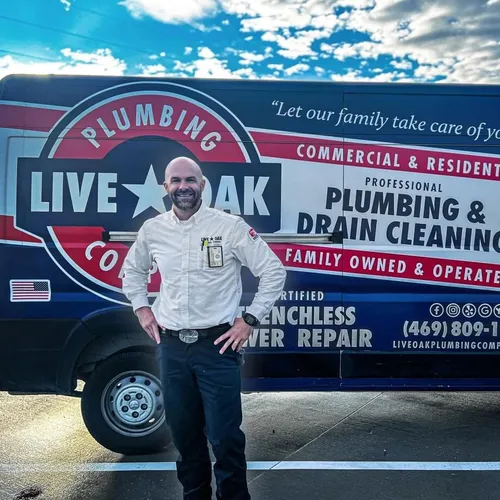
Live Oak Plumbing Company
2201 Spinks Rd Suite 312, Flower Mound, TX 75022
Live Oak Plumbing Company provides a range of plumbing services in Dallas, TX, including water heater repair and installation, water softener installation, drain cleaning, sewer line repair, leak detection, and gas line installation. They offer certified trenchless sewer repair and are a Picote certified installer, which highlights their capability in advanced sewer maintenance techniques. The company also provides backflow testing and water filtration services. Live Oak Plumbing Company aims to assist customers with plumbing needs and offers support outside of normal business hours when possible.
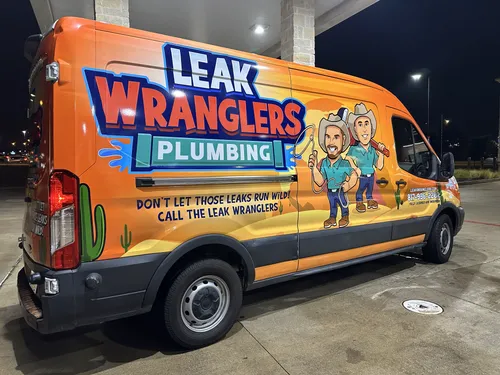
Leak Wranglers Plumbing & HVAC
8376 Davis Blvd #165, North Richland Hills, TX 76182
Leak Wranglers Plumbing & HVAC provides a wide range of plumbing and HVAC services in Fort Worth, TX. Since 2024, they have served both residential and commercial clients with expertise in leak detection, drain cleaning including hydro jetting, sewer line repair, gas line installation, and water heater services including tankless models. Their team includes master plumbers and HVAC technicians equipped to handle complex repairs and upgrades, such as trenchless water line replacements and HVAC system overhauls. They offer same-day appointments for emergencies and support Spanish-speaking customers.
Plumbing Unit
6704 McCallum Blvd, Dallas, TX 75252
Plumbing Unit is a licensed plumbing company serving Dallas, TX, and the greater Dallas-Fort Worth metroplex. They offer a wide range of plumbing services including sewer camera inspections, water heater repair and installation, water softener installation, drain cleaning, hydro jetting, sewer line repair, trenchless sewer repair, leak detection, repiping, gas line installation, toilet and garbage disposal repair. The company has over 40 years of experience and provides 24/7 emergency plumbing services to address urgent issues at any time. Their capabilities include advanced leak detection and trenchless sewer line repair to minimize disruption during repairs.
Cattlemans Plumbing
6120 Carr Crk Trl, Fort Worth, TX 76179
Cattlemans Plumbing is a full-service plumbing company based in Fort Worth, TX. They provide a wide range of plumbing services including sewer camera inspections, water heater installation and repair, water softener installation, sewer line and trenchless sewer repairs, leak detection, and toilet repairs. Their team uses advanced technology such as state-of-the-art camera inspections and offers trenchless sewer repair to minimize property disruption. With over 25 years of experience serving the Fort Worth community, Cattlemans Plumbing emphasizes integrity, quality, and safety in every job.
Understanding Trenchless Sewer Line Solutions
When a sewer line fails, the traditional image involves a crew with backhoes tearing up your yard to reach a buried pipe. Trenchless technology offers a smarter alternative. These no-dig methods address common problems like cracks, root intrusion, and minor misalignments by repairing or replacing the pipe from the inside out, using just one or two small access points. For Lewisville homeowners, this means a solution that is often faster, cleaner, and can be more cost-effective when considering the total project impact, including the avoidance of expensive landscape restoration.
The core principle is simple: create a new, durable pipe within the old, damaged one. This process not only fixes the immediate issue but also typically results in a pipe that is more resistant to future root intrusion and corrosion. It's a long-term investment in your property's plumbing health.
Trenchless Repair vs. Traditional Excavation: Choosing the Right Method
Not every sewer problem can be solved trenchlessly. Understanding the distinction helps set realistic expectations when consulting with a professional.
Trenchless Repair (Pipe Lining or Pipe Bursting) is best suited for pipes that are damaged but still retain their basic structure. This includes:
- Cracks or fractures in the pipe.
- Infiltration from tree roots seeking moisture.
- Small offsets or misalignments at pipe joints.
- Minor collapses or bellies where the pipe hasn't fully disintegrated. The significant advantage is the minimal surface disruption, saving your lawn, gardens, patios, and driveways from being torn apart.
Traditional Excavation (Open-Trench Repair) becomes necessary in more severe scenarios. This method is required for:
- Sewer lines that have completely collapsed.
- Major misalignments or severe sags (bellies) that cannot be pulled straight.
- Situations where the existing pipe is too degraded to support a trenchless liner or bursting process 1 2. While more invasive, excavation is sometimes the only viable option to fully restore function. A professional diagnosis is essential to determine the correct path forward.
The Step-by-Step Trenchless Repair Process
A professional trenchless sewer repair follows a systematic, multi-stage workflow to ensure a lasting solution.
- Camera Inspection: The first and most critical step is a video camera inspection. A specialized, waterproof camera is snaked through the sewer line to provide a real-time visual diagnosis. This identifies the exact location, nature, and extent of the damage, which is crucial for determining if a no-dig repair is feasible and for planning the repair.
- Hydro Jetting/Cleaning: Before any repair can begin, the pipe must be thoroughly cleaned. High-pressure water jetting scours the interior walls, removing roots, grease, scale, and debris to create a clean surface for the new liner to adhere to.
- The Repair Method:
- Pipe Lining (Cured-in-Place Pipe - CIPP): A flexible tube saturated with a resin (like epoxy) is inverted or pulled into the old pipe. It is then inflated and left to cure, often using hot water or UV light. Once hardened, it forms a seamless, jointless "pipe-within-a-pipe" that is highly durable.
- Pipe Bursting: Used for more significant damage or when upsizing a pipe is desired. A conical bursting head is pulled through the old pipe, fracturing it outward while simultaneously pulling a new, high-density polyethylene (HDPE) pipe into place behind it.
- Reinstatement and Testing: After the new pipe is in place, the lateral connections from toilets, sinks, and cleanouts are reinstated internally. The entire new line is then tested to ensure it is watertight and meets all flow requirements before the job is considered complete 3.
Permits and Inspections in Lewisville
Sewer line repairs, including trenchless methods, are not DIY projects and typically require official oversight. In Lewisville, the City of Lewisville Public Works or Utility Department manages permits and inspections for sewer work on private property. Reputable contractors will usually handle this process for you. The permit ensures the work complies with local building and plumbing codes, and inspections at key stages (like post-repair) verify the installation is sound and safe. Always confirm that your chosen professional is familiar with and will obtain the necessary local permits 4.
Find the perfect trenchless sewer repair companies for your needs
Get personalized recommendations and expert advice
What to Expect: Costs of Trenchless Sewer Repair
The cost of trenchless sewer line repair in Lewisville is not a flat fee; it varies based on several project-specific factors. Understanding these can help you interpret estimates.
- Primary Cost Driver: Pricing is most commonly calculated per linear foot. For trenchless repairs, you can expect a range of $80 to $250 or more per foot 5.
- Method Matters: Pipe lining is generally less expensive per foot than pipe bursting, which requires more specialized equipment 6.
- Scope of Damage: The severity and type of damage (simple crack vs. multiple root intrusions) influence the complexity and cost.
- Pipe Specifications: The diameter, material (clay, cast iron, PVC), and depth of your existing line affect the price.
- Access and Location: The ease of accessing the line and its path under structures or landscaping can add to the cost.
A typical residential project often involves repairing a section of 50 to 100 feet. Therefore, total project costs frequently fall between $2,000 and $8,000 or more 7 8. It's important to note that while the upfront per-foot cost of trenchless may sometimes be higher than excavation, the total project cost is often lower because it eliminates thousands of dollars in landscape, concrete, and hardscape restoration 9 10.
A detailed camera inspection, which may cost $250 to $600 if performed separately, is usually a prerequisite for an accurate quote and is often rolled into the total repair cost if you proceed with the work 11 12.
Key Advantages of the No-Dig Approach
Choosing a trenchless solution offers benefits that extend beyond just fixing the pipe:
- Minimal Disruption: Your daily life and property aesthetics suffer little interruption. There's no massive trench through your yard.
- Speed: Most trenchless repairs can be completed in one to two days, compared to potentially weeks for excavation and restoration.
- Preserved Landscaping: Mature trees, shrubs, gardens, and irrigation systems remain untouched.
- Durability: The new pipe liners are typically resistant to root intrusion, corrosion, and cracking, offering a lifespan of 50 years or more.
- Structural Integrity: The process does not disturb the soil around the pipe, preventing future settling that can occur after backfilling a large trench.
Frequently asked questions
Sources
Footnotes
-
Trenchless Sewer Repair vs. Traditional Excavation - AQUALIS - https://aqualisco.com/trenchless-sewer-repair-vs-traditional/ ↩
-
What Are The Pros and Cons of Trenchless Sewer Repair? - https://www.southernairnow.com/blog/what-are-the-pros-and-cons-of-trenchless-sewer-repair/ ↩
-
Trenchless Sewer Repair vs Traditional - https://piperestorationsolutions.com/trenchless-sewer-repair-vs-traditional/ ↩
-
Trenchless Sewer Repair vs. Traditional Excavation - https://alphaenvironmental.net/blog/trenchless-sewer-repair-vs-traditional-excavation-which-is-better/ ↩
-
What Are the Cost Implications of Trenchless Sewer Repair? - https://www.advancedtrenchlesssolutions.com/blog/what-are-the-cost-implications-of-trenchless-sewer-repair ↩
-
What Trenchless Sewer Repair Costs & What Impacts the Price - https://www.sunsethc.com/what-trenchless-sewer-repair-really-costs-and-what-impacts-the-price/ ↩
-
How Much Does Sewer Line Repair Cost in San Antonio? - https://anchorplumbingservices.com/sewer-line-repair-cost/ ↩
-
How much does it cost to repair a sewer using trenchless methods? - https://sewerpros.com/trenchless-sewer-repair-cost/ ↩
-
No Dig Sewer Repair: What to Expect in Fort Worth - Mother - https://www.callmother.com/blogs/no-dig-sewer-repair-fort-worth ↩
-
Trenchless vs. Traditional Sewer Repair - https://sewerlinesonly.com/trenchless-vs-traditional-sewer-repair-which-is-more-cost-effective-for-lakewood-homeowners/ ↩
-
Trenchless Sewer Repair vs. Traditional Excavation - https://tdtplumbing.com/trenchless-sewer-repair/difference-to-traditional-repair/ ↩
-
How Much Does Trenchless Sewer Line Repair Cost? - https://alphaenvironmental.net/blog/how-much-does-trenchless-sewer-repair-cost/ ↩