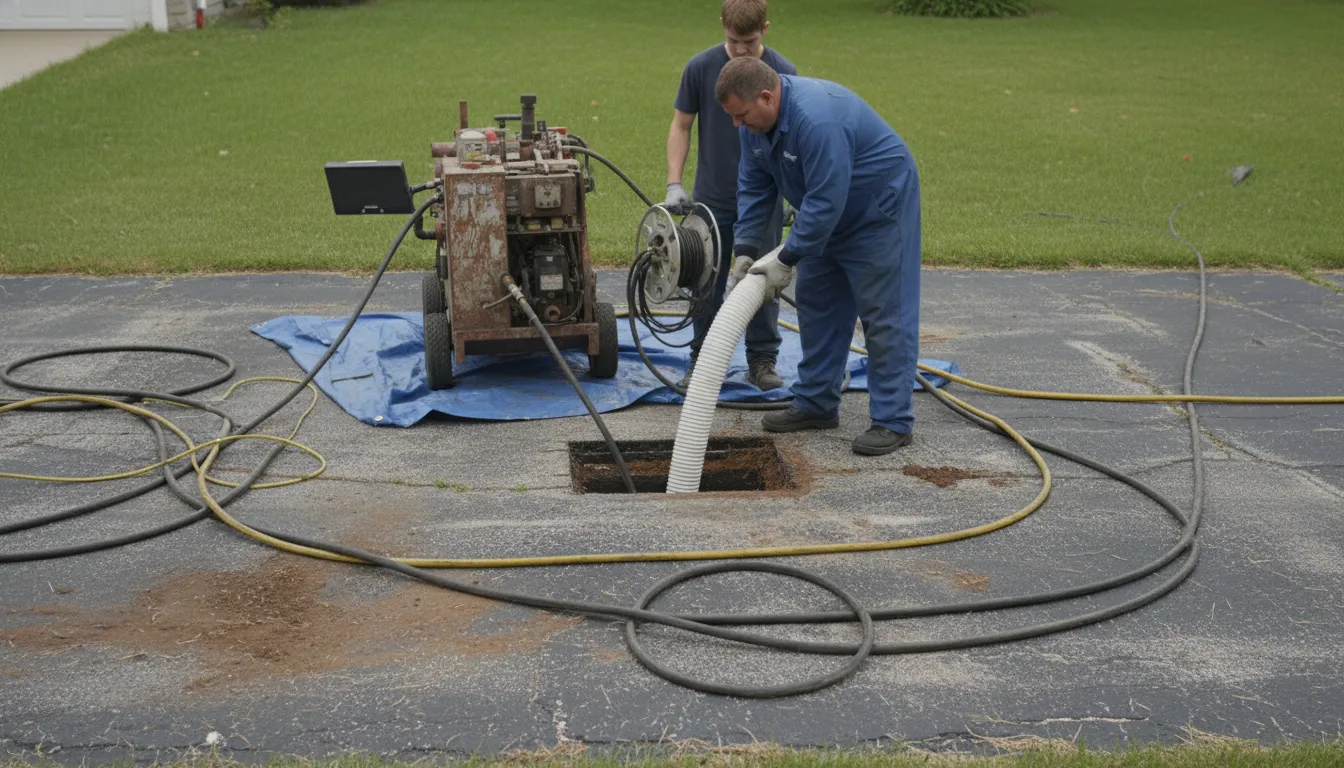
Find the Best Trenchless Sewer Repair Companies for Your Business
No obligation • Fast responses • Nationwide coverage

Why you can trust Search a Plumber
Search a Plumber is a leading United States resource for finding and evaluating professional plumbing services. Our team researches licensing, experience, and customer feedback to create unbiased, fact-driven overviews. Companies cannot pay to change ratings or placement, ensuring homeowners get trustworthy information.
Search providers near you
Top Trenchless Sewer Repair Companies in Grand Prairie, Texas Ranked
When your home's sewer line fails, the thought of a massive, disruptive excavation tearing up your yard, driveway, or landscaping is daunting. Fortunately, for many Grand Prairie homeowners, there's a modern, less invasive solution. Trenchless sewer repair is a method that fixes damaged underground pipes with minimal digging, preserving your property while restoring your plumbing system's function. This guide explains what trenchless sewer line repair is, when it's the right choice for your home, and how you can find qualified local specialists to assess and solve your sewer problems efficiently.
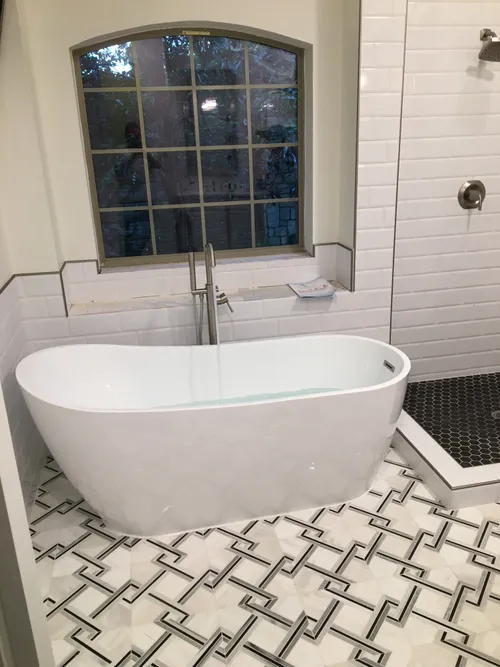
Adr plumbing Co
Plano, TX
Adr Plumbing Co is a plumbing service provider based in Plano, TX, offering a wide range of services including water heater repair and installation, tankless water heater services, drain cleaning, sewer line repair, leak detection, repiping, toilet repair, and garbage disposal repair. They serve residential and property management clients with expertise in trenchless sewer repair and tunneling for under-slab repairs. Established in 2019, Adr Plumbing Co combines over 20 years of industry experience with well-stocked service vehicles to efficiently handle plumbing issues from minor leaks to major sewer line replacements. The company operates around the clock to address plumbing emergencies and routine maintenance needs.
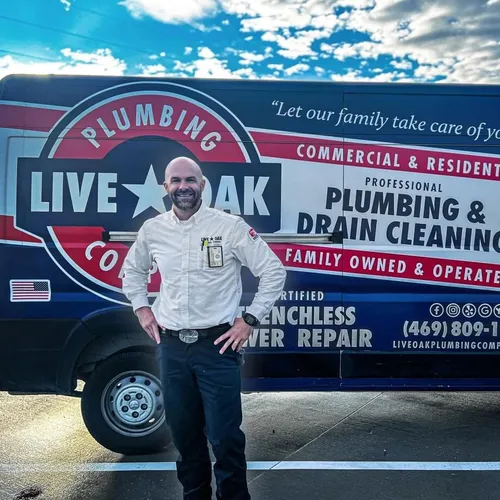
Live Oak Plumbing Company
2201 Spinks Rd Suite 312, Flower Mound, TX 75022
Live Oak Plumbing Company provides a range of plumbing services in Dallas, TX, including water heater repair and installation, water softener installation, drain cleaning, sewer line repair, leak detection, and gas line installation. They offer certified trenchless sewer repair and are a Picote certified installer, which highlights their capability in advanced sewer maintenance techniques. The company also provides backflow testing and water filtration services. Live Oak Plumbing Company aims to assist customers with plumbing needs and offers support outside of normal business hours when possible.
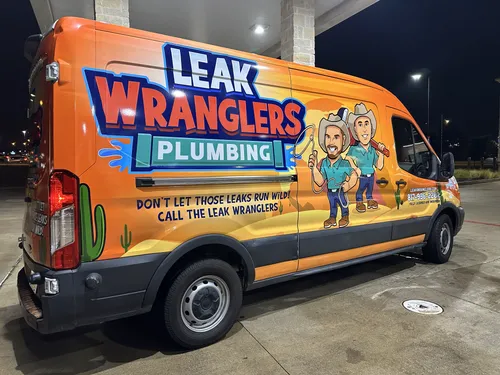
Leak Wranglers Plumbing & HVAC
8376 Davis Blvd #165, North Richland Hills, TX 76182
Leak Wranglers Plumbing & HVAC provides a wide range of plumbing and HVAC services in Fort Worth, TX. Since 2024, they have served both residential and commercial clients with expertise in leak detection, drain cleaning including hydro jetting, sewer line repair, gas line installation, and water heater services including tankless models. Their team includes master plumbers and HVAC technicians equipped to handle complex repairs and upgrades, such as trenchless water line replacements and HVAC system overhauls. They offer same-day appointments for emergencies and support Spanish-speaking customers.
Plumbing Unit
6704 McCallum Blvd, Dallas, TX 75252
Plumbing Unit is a licensed plumbing company serving Dallas, TX, and the greater Dallas-Fort Worth metroplex. They offer a wide range of plumbing services including sewer camera inspections, water heater repair and installation, water softener installation, drain cleaning, hydro jetting, sewer line repair, trenchless sewer repair, leak detection, repiping, gas line installation, toilet and garbage disposal repair. The company has over 40 years of experience and provides 24/7 emergency plumbing services to address urgent issues at any time. Their capabilities include advanced leak detection and trenchless sewer line repair to minimize disruption during repairs.
Cattlemans Plumbing
6120 Carr Crk Trl, Fort Worth, TX 76179
Cattlemans Plumbing is a full-service plumbing company based in Fort Worth, TX. They provide a wide range of plumbing services including sewer camera inspections, water heater installation and repair, water softener installation, sewer line and trenchless sewer repairs, leak detection, and toilet repairs. Their team uses advanced technology such as state-of-the-art camera inspections and offers trenchless sewer repair to minimize property disruption. With over 25 years of experience serving the Fort Worth community, Cattlemans Plumbing emphasizes integrity, quality, and safety in every job.
What is Trenchless Sewer Repair?
Trenchless sewer repair, often called trenchless pipe lining or no-dig sewer repair, refers to advanced techniques that rehabilitate existing sewer pipes without the need for extensive trenching. Instead of digging a long, deep trench to expose the entire pipe, technicians create one or two small access points. Through these openings, they can install a durable, resin-saturated liner inside the old pipe or burst the old pipe apart while simultaneously pulling in a new one. The core appeal is clear: it solves serious underground plumbing issues while causing significantly less disruption to your property in Grand Prairie.
The most common trenchless methods are Cured-In-Place Pipe (CIPP) lining and pipe bursting.
- CIPP Lining: A flexible tube coated with a resin (like epoxy) is inverted or pulled into the damaged pipe. It is then inflated and cured using hot water or UV light, forming a hard, seamless "pipe within a pipe." This method is excellent for fixing cracks, leaks, and corrosion.
- Pipe Bursting: A conical bursting head is pulled through the old, broken pipe, fracturing it outward. Attached directly behind the head is a new, high-density polyethylene (HDPE) pipe that is pulled into place, completely replacing the old line. This is used for more severely damaged or undersized pipes.
Both methods offer a permanent fix, with new linings or pipes often rated to last 50 years or more.
Is Trenchless Repair Right for Your Grand Prairie Home?
Trenchless technology is a fantastic solution, but it's not a universal fix for every sewer problem. Understanding when it's ideal versus when traditional excavation might be necessary can help you have an informed discussion with a professional.
Trenchless repair is typically the best option for:
- Root Intrusion: Tree roots seeking moisture can infiltrate pipe joints and cause blockages and cracks.
- Cracks, Holes, or Leaks: Deterioration from age, ground movement, or corrosion.
- Bellied Pipes: A section of pipe that has sunk, creating a low spot that collects waste and causes blockages.
- Minor Collapses or Corrosion: Localized damage where the pipe structure is still largely intact.
- Pipes Under Landscaping, Driveways, or Foundations: Situations where digging would be exceptionally costly and destructive 1 2.
Traditional excavation may still be required for:
- Severely Collapsed Pipes: If the pipe is completely flattened or shattered, a liner may not be able to pass through.
- Major Misalignments or Offsets: Significant separation of pipe sections.
- Complete System Replacement: When the entire line needs to be upsized or rerouted.
- Lack of Access Points: If there are no viable entry points for trenchless equipment 3.
A professional diagnosis always starts with a sewer camera inspection. A small, high-resolution camera is snaked through the line, providing a real-time video feed to pinpoint the exact location, nature, and extent of the damage. This critical step determines the most effective and economical repair strategy for your specific situation.
The Trenchless Repair Process: Step-by-Step
Knowing what to expect can ease concerns about any repair project. A professional trenchless sewer repair in Grand Prairie generally follows a streamlined process designed for efficiency and minimal fuss.
- Comprehensive Inspection: A thorough sewer camera inspection is conducted to diagnose the problem and plan the repair.
- Preparation & Access: The existing pipe is cleaned of debris, roots, and blockages. Small access pits (typically at the cleanout and/or at a strategic point) are dug-these are much smaller than a full trench.
- Lining or Bursting: For CIPP, the resin-saturated liner is fed into the pipe and cured. For pipe bursting, the old pipe is fractured and the new one is pulled into place. This is often the fastest phase of the project.
- Final Inspection & Restoration: A post-repair camera inspection verifies the repair is seamless and fully functional. The small access pits are backfilled, leaving your property nearly as it was found 4.
Find the perfect trenchless sewer repair companies for your needs
Get personalized recommendations and expert advice
Benefits of Choosing Trenchless Methods
The advantages of trenchless sewer line replacement and repair extend far beyond just avoiding a big hole in your yard. For Grand Prairie homeowners, the benefits are substantial:
- Minimal Property Disruption: This is the most significant advantage. Your lawn, gardens, sidewalks, and driveways remain largely untouched, saving you thousands in landscaping and hardscape restoration.
- Speed and Efficiency: Most trenchless repairs can be completed in a single day, compared to the days or even weeks required for excavation, repair, and site restoration 5.
- Long-Term Durability: The new epoxy liners or HDPE pipes are highly resistant to root intrusion, corrosion, and cracking, often carrying a 50-year lifespan 6.
- Potential Cost-Effectiveness: While the upfront material costs for trenchless can be higher, you save massively on labor, excavation equipment, and, most importantly, property restoration costs. For many projects, the total cost can be comparable to or even less than traditional digging 7 8.
Understanding Costs and Permits in Grand Prairie
The cost of trenchless sewer repair is not a flat fee; it depends on several variables specific to your property and problem.
Primary Cost Factors:
- Pipe Length and Depth: Longer or deeper lines require more material and labor.
- Extent and Type of Damage: Simple cracks are less costly than multiple breaks or severe root damage.
- Access Difficulty: The ease of creating necessary entry points.
- Required Permits: The City of Grand Prairie typically requires permits, especially if work touches the public right-of-way (like the section from the curb to the main city line). A final inspection by city officials is also standard to ensure the repair meets all plumbing codes.
On average, homeowners can expect trenchless repair costs to range from $100 to $300 or more per linear foot. A typical residential repair for a 20-50 foot lateral line often falls between $1,000 and $5,000+, though complex jobs can exceed $10,000 9 10 11. A detailed, written estimate from a licensed professional after a camera inspection is essential for an accurate price.
Finding a Qualified Trenchless Specialist
Choosing the right contractor is crucial for a successful, long-lasting repair. Look for a licensed, insured plumber or sewer specialist with specific, proven experience in trenchless technology. They should be willing and able to conduct a preliminary camera inspection and explain their findings clearly. Check for local reviews, ask for references, and verify they will handle all necessary Grand Prairie permits and inspections 12. A reputable professional will transparently discuss whether your situation is suitable for a no-dig solution or if traditional excavation is the more reliable choice.
Frequently asked questions
Sources
Footnotes
-
Trenchless Sewer Repair vs Traditional - https://piperestorationsolutions.com/trenchless-sewer-repair-vs-traditional/ ↩
-
What Are The Pros and Cons of Trenchless Sewer Repair? - https://www.southernairnow.com/blog/what-are-the-pros-and-cons-of-trenchless-sewer-repair/ ↩
-
Trenchless Sewer Line Repair vs. Sewer Line Excavation - https://dandfplumbing.com/sewer-line-repair-vs-sewer-line-excavation/ ↩
-
Trenchless Sewer Repair vs. Traditional Excavation - AQUALIS - https://aqualisco.com/trenchless-sewer-repair-vs-traditional/ ↩
-
Trenchless Sewer Line Replacement - Free Estimates - https://reliantplumbing.com/drains/sewer-system-repair/trenchless-pipe-repair/ ↩
-
Trenchless Sewer Line Repair in Dallas Fort Worth (DFW) - https://kitchingco.com/services/trenchless-sewer-line-repair/ ↩
-
Trenchless Sewer Repair vs. Traditional Excavation - https://alphaenvironmental.net/blog/trenchless-sewer-repair-vs-traditional-excavation-which-is-better/ ↩
-
Trenchless vs. Traditional Sewer Repair - https://sewerlinesonly.com/trenchless-vs-traditional-sewer-repair-which-is-more-cost-effective-for-lakewood-homeowners/ ↩
-
Empower Your Decision: Decoding Trenchless Sewer Repair Costs - Pipeliner Pros - https://pipelinerpros.com/trenchless-sewer-repair-cost/ ↩
-
What Trenchless Sewer Repair Costs & What Impacts the Price - https://www.sunsethc.com/what-trenchless-sewer-repair-really-costs-and-what-impacts-the-price/ ↩
-
How much does it cost to repair a sewer using trenchless methods? - https://sewerpros.com/trenchless-sewer-repair-cost/ ↩
-
Permit and Code Essentials for Trenchless Projects: What Inspectors ... - https://www.wefixdrains.com/blog/permit-and-code-essentials-for-trenchless-projects-what-inspectors-check/ ↩