Find the Best Trenchless Sewer Repair Companies for Your Business
No obligation • Fast responses • Nationwide coverage

Why you can trust Search a Plumber
Search a Plumber is a leading United States resource for finding and evaluating professional plumbing services. Our team researches licensing, experience, and customer feedback to create unbiased, fact-driven overviews. Companies cannot pay to change ratings or placement, ensuring homeowners get trustworthy information.
Search providers near you
Top Trenchless Sewer Repair Companies in Frisco, Texas Ranked
A damaged sewer line is a serious problem that can disrupt your home and threaten your property. Trenchless sewer repair offers a modern, minimally invasive solution to fix broken pipes without the need for extensive, destructive digging across your yard. This method is especially valuable in a city like Frisco, where preserving manicured lawns, landscaping, and hardscapes is a priority for homeowners. This guide explains how trenchless technology works, when it's the right choice, and how you can find qualified local specialists to assess and resolve your sewer line issues efficiently.
Adr plumbing Co
Plano, TX
Adr Plumbing Co is a plumbing service provider based in Plano, TX, offering a wide range of services including water heater repair and installation, tankless water heater services, drain cleaning, sewer line repair, leak detection, repiping, toilet repair, and garbage disposal repair. They serve residential and property management clients with expertise in trenchless sewer repair and tunneling for under-slab repairs. Established in 2019, Adr Plumbing Co combines over 20 years of industry experience with well-stocked service vehicles to efficiently handle plumbing issues from minor leaks to major sewer line replacements. The company operates around the clock to address plumbing emergencies and routine maintenance needs.
Live Oak Plumbing Company
2201 Spinks Rd Suite 312, Flower Mound, TX 75022
Live Oak Plumbing Company provides a range of plumbing services in Dallas, TX, including water heater repair and installation, water softener installation, drain cleaning, sewer line repair, leak detection, and gas line installation. They offer certified trenchless sewer repair and are a Picote certified installer, which highlights their capability in advanced sewer maintenance techniques. The company also provides backflow testing and water filtration services. Live Oak Plumbing Company aims to assist customers with plumbing needs and offers support outside of normal business hours when possible.
Leak Wranglers Plumbing & HVAC
8376 Davis Blvd #165, North Richland Hills, TX 76182
Leak Wranglers Plumbing & HVAC provides a wide range of plumbing and HVAC services in Fort Worth, TX. Since 2024, they have served both residential and commercial clients with expertise in leak detection, drain cleaning including hydro jetting, sewer line repair, gas line installation, and water heater services including tankless models. Their team includes master plumbers and HVAC technicians equipped to handle complex repairs and upgrades, such as trenchless water line replacements and HVAC system overhauls. They offer same-day appointments for emergencies and support Spanish-speaking customers.
Plumbing Unit
6704 McCallum Blvd, Dallas, TX 75252
Plumbing Unit is a licensed plumbing company serving Dallas, TX, and the greater Dallas-Fort Worth metroplex. They offer a wide range of plumbing services including sewer camera inspections, water heater repair and installation, water softener installation, drain cleaning, hydro jetting, sewer line repair, trenchless sewer repair, leak detection, repiping, gas line installation, toilet and garbage disposal repair. The company has over 40 years of experience and provides 24/7 emergency plumbing services to address urgent issues at any time. Their capabilities include advanced leak detection and trenchless sewer line repair to minimize disruption during repairs.

Milestone Electric, A/C, & Plumbing
5414 Forest Ln, Dallas, TX 75229
Milestone Electric, A/C, & Plumbing is a full-service plumbing company based in Dallas, TX. They provide a wide range of plumbing services including water heater installation and repair, sewer line repair, drain cleaning, leak detection, and repiping. The company uses advanced tools such as sewer camera inspections and hydro jetting to address plumbing issues efficiently. Established in 2004, Milestone has a long history of serving the Dallas area and offers 24/7 emergency plumbing services to handle urgent repairs at any time.
Understanding Trenchless Sewer Line Rehabilitation
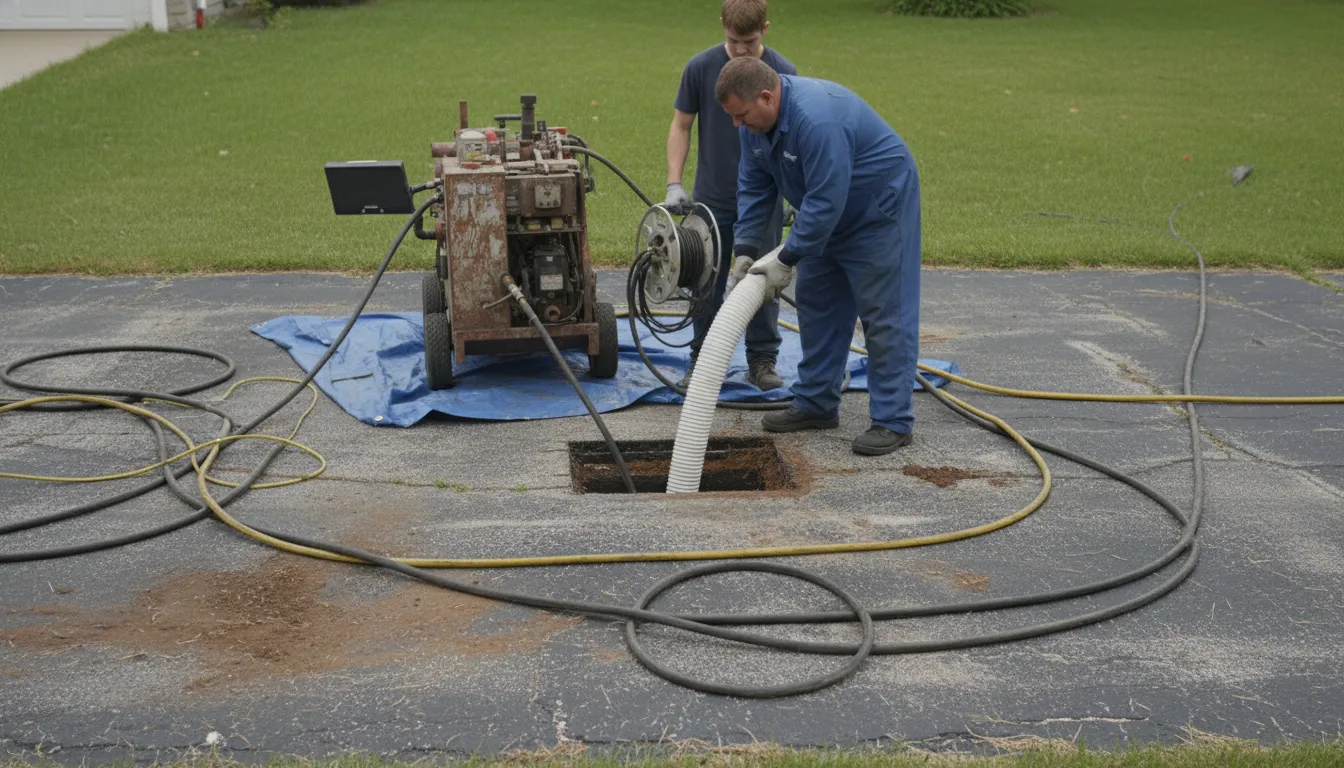
Often called "no-dig" sewer repair, trenchless technology is a method for repairing or replacing underground sewer pipes with minimal excavation. Instead of digging a long, deep trench to access the entire pipe, technicians use specialized equipment to repair the line from the inside out. The primary goal is to restore function and structural integrity while causing the least possible disruption to your property's surface. For Frisco residents, this means protecting expensive sod, irrigation systems, patios, and driveways from being torn up.
The process relies on accessing the sewer line through existing cleanouts or by creating small, strategic access pits at the beginning and end of the damaged section. A camera inspection is first used to pinpoint the exact location and nature of the problem-whether it's cracks, corrosion, or root intrusion. Once the issue is confirmed, the trenchless repair can proceed, often completing the core repair work in just one to two days.
Common Trenchless Methods: CIPP Lining and Pipe Bursting
Two main techniques dominate the trenchless repair industry, both commonly used by Frisco plumbing professionals.
Cured-In-Place Pipe (CIPP) Lining: This is the most common form of trenchless rehabilitation. A flexible, resin-saturated liner (often made of felt or fiberglass) is inserted into the damaged host pipe. The liner is then inflated and cured using hot water, steam, or UV light, hardening it into a durable, seamless "pipe-within-a-pipe". This new liner seals cracks, blocks root entry, and resists corrosion, effectively creating a new structural pipe. CIPP lining is ideal for pipes that are structurally degraded but haven't completely collapsed.
Pipe Bursting: This method is used for full trenchless replacement. A conical bursting head is pulled through the old, damaged pipe, fracturing it outward while simultaneously pulling a new, high-density polyethylene (HDPE) pipe into place behind it. Pipe bursting is suitable when the old pipe is too compromised for lining or needs a larger diameter. While it requires slightly more force, it still only needs small access pits and avoids a continuous trench.
When is Trenchless Sewer Repair the Right Solution?
Trenchless technology is a powerful tool, but it's not a universal fix for every sewer problem. Understanding its ideal applications will help you discuss options more effectively with a technician.
Use Trenchless Repair For:
- Cracks, Holes, or Corrosion: When the pipe is mostly intact but leaking due to wear, joint failure, or chemical corrosion.
- Minor Root Intrusion: Roots that have penetrated cracks or joints but haven't completely collapsed the pipe.
- Preserving Landscapes: When the sewer line runs under lawns, gardens, trees, driveways, patios, or pools where excavation would be costly and destructive 1.
- Speed and Convenience: Projects where minimizing downtime and property disruption is a critical factor.
Traditional Excavation May Be Necessary For:
- Complete Collapses: If the pipe has fully collapsed or is severely misaligned, a liner or bursting head cannot pass through.
- Severe Sags (Bellies): Sections where the pipe has sunk, creating a low spot that collects waste. Excavation is often required to correct the pipe's grade 2.
- Multiple Major Issues: When a very long section of pipe has numerous, severe problems, a full excavation and replacement might be more cost-effective.
- Access Limitations: If there are no viable access points for trenchless equipment.
A professional diagnosis via a sewer camera inspection is the only way to determine the most appropriate and cost-effective method for your specific situation 3 4.
The Step-by-Step Trenchless Repair Process
Knowing what to expect can make the repair process less stressful. Here's a typical sequence for a CIPP lining project in Frisco:
- Camera Inspection: A high-resolution video camera is snaked through the sewer line to visually confirm the damage, its location, and the pipe's condition.
- Pipe Cleaning: Any debris, roots, or blockages are thoroughly hydro-jetted or mechanically cleared to prepare the host pipe for the liner.
- Liner Insertion: The custom-fabricated, resin-impregnated liner is fed into the pipe through an access point, typically a cleanout.
- Curing: The liner is inflated against the host pipe's walls. Heat (from hot water, steam, or UV light) is applied to cure the resin, hardening it into a rigid, jointless new pipe 5.
- Final Inspection and Reconnection: After curing, a final camera inspection ensures a perfect install. Any lateral connections (like from sinks or toilets) are internally reopened with a robotic cutter, and the system is restored to full operation.
Find the perfect trenchless sewer repair companies for your needs
Get personalized recommendations and expert advice
The Traditional Excavation Alternative
While trenchless methods are popular, traditional "open-cut" excavation is still a necessary and sometimes better option. This process involves:
- Permits and Marking: Obtaining necessary permits from the City of Frisco and having all public and private underground utilities marked (call 811) to avoid strikes.
- Excavation: Using a backhoe or other machinery to dig a trench along the entire length of the damaged pipe, exposing it fully.
- Replacement: Removing the old pipe and installing a new section, ensuring proper slope for drainage.
- Backfill and Compaction: Refilling the trench and compacting the soil in layers to prevent future sinking.
- Inspection and Restoration: Passing a final city inspection for code compliance and then restoring the landscape, which can involve resodding, replanting, and repairing hardscapes 6. This restoration phase is where costs and inconvenience can increase significantly.
Permits, Inspections, and Local Codes in Frisco
Sewer repair, whether trenchless or traditional, is regulated to ensure public health and safety. For excavation projects, permits from the City of Frisco are typically required, especially when a new sewer line is being installed. These permits ensure the work meets local plumbing and building codes.
Inspections are a standard part of the process, particularly for excavation. A city inspector will usually check the newly installed pipe's grade, connections, and overall installation before the trench is backfilled. For trenchless repairs, while the internal repair may not always require a city inspection, reputable contractors will follow all applicable codes and provide detailed documentation of the work performed. Always verify that any professional you hire is familiar with and will handle Frisco's specific permitting requirements.
Cost Considerations for Sewer Repair in Frisco
The cost of sewer repair is highly variable, depending on the method, the extent of damage, access difficulty, and local labor rates. However, general comparisons can be made:
- Trenchless Repair Costs: Often quoted on a per-linear-foot basis. In the Frisco area, costs for CIPP lining or pipe bursting can range from $100 to $250 or more per linear foot 7 8 9. For a typical residential repair of 30-50 feet, total project costs often fall between $3,000 and $6,000+ 7 10. The key financial advantage of trenchless is the significant savings on landscape and hardscape restoration that excavation necessitates.
- Traditional Excavation Costs: These can vary even more widely. While the cost per foot for the pipe itself might be lower, the total project cost is frequently higher due to the intensive labor, heavy equipment use, and-most notably-the expensive and time-consuming process of restoring your yard, driveway, or patio to its original condition 11.
It's crucial to get detailed, line-item estimates that compare both the repair costs and the restoration costs for each method to understand the true long-term value.
Choosing a Qualified Professional in Frisco
Selecting the right contractor is the most important step. Look for a licensed, insured plumber with specific, proven experience in trenchless sewer repair. They should perform a mandatory camera inspection before providing a firm quote and be willing to explain why they recommend one method over another. Check for local references, read reviews, and ensure they offer warranties on both materials and labor. A trustworthy professional will be transparent about the entire process, including potential challenges, and will secure all required permits for your Frisco home.
Frequently asked questions
Sources
Footnotes
-
Trenchless vs. Traditional Sewer Repair - https://sewerlinesonly.com/trenchless-vs-traditional-sewer-repair-which-is-more-cost-effective-for-lakewood-homeowners/ ↩
-
Trenchless Sewer Repair and Pipe Liners - Champion AC - https://www.championac.com/plumbing-services/trenchless/ ↩
-
Trenchless Sewer Repair vs Traditional - https://piperestorationsolutions.com/trenchless-sewer-repair-vs-traditional/ ↩
-
Is Trenchless Sewer Repair Right For Your Home? - https://www.callmattioni.com/blog/t-trenchless-sewer-repair/ ↩
-
Sewer Repair Options: Trenchless vs. Traditional Methods | TYCO - https://tycoplumbingco.com/sewer-repair-options-trenchless-vs-traditional-methods/ ↩
-
Professional Sewer Repair in Frisco, TX - https://lexsplumbing.com/frisco/sewer-repair/ ↩
-
No Dig Sewer Repair: What to Expect in Fort Worth - Mother - https://www.callmother.com/blogs/no-dig-sewer-repair-fort-worth ↩ ↩2
-
Trenchless Sewer Repair: Lower Cost, Lower Impact Sewer ... - https://www.sewerflowllc.com/2025/03/06/trenchless-sewer-repair-lower-cost-lower-impact-sewer-repair/ ↩
-
Trenchless Sewer Repair vs. Traditional Excavation - https://tdtplumbing.com/trenchless-sewer-repair/difference-to-traditional-repair/ ↩
-
Trenchless Sewer Line Replacement - Free Estimates - https://reliantplumbing.com/drains/sewer-system-repair/trenchless-pipe-repair/ ↩
-
Trenchless Sewer Line Repair vs. Sewer Line Excavation - https://dandfplumbing.com/sewer-line-repair-vs-sewer-line-excavation/ ↩