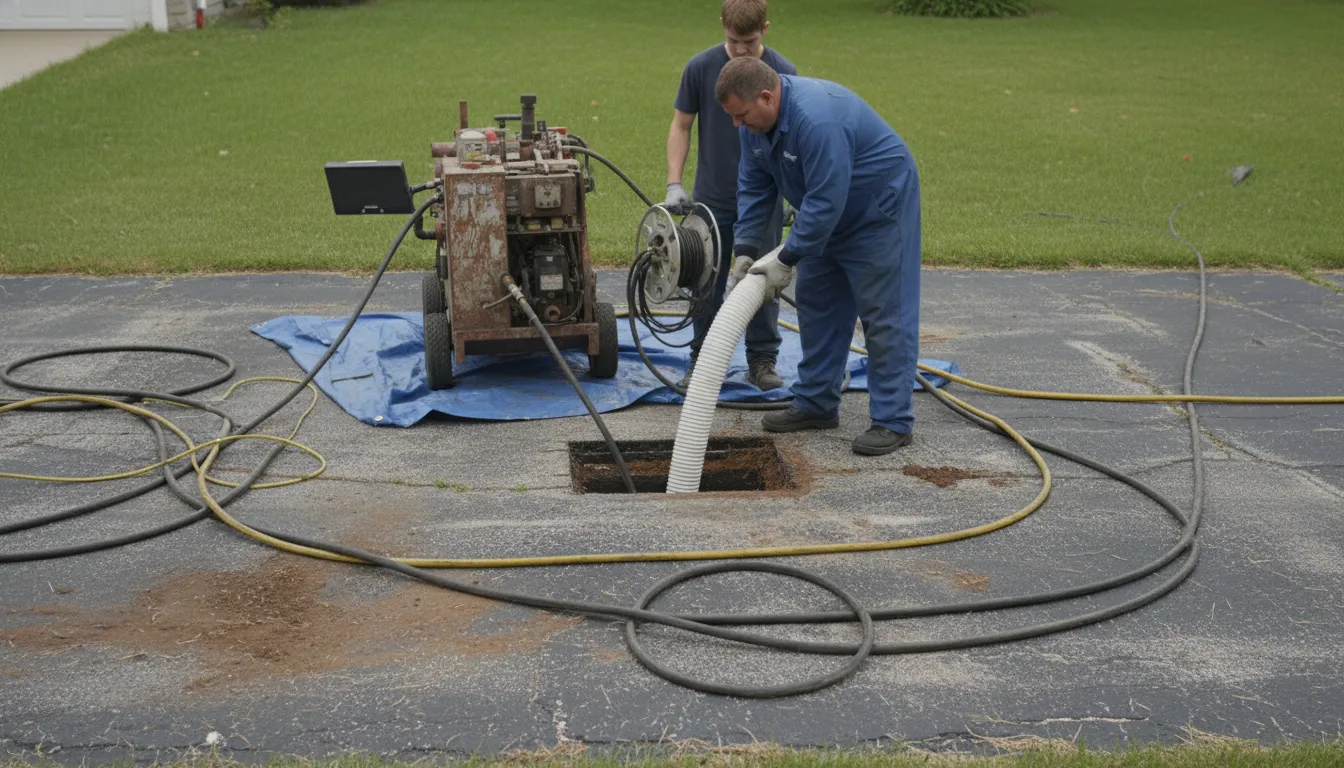
Find the Best Trenchless Sewer Repair Companies for Your Business
No obligation • Fast responses • Nationwide coverage

Why you can trust Search a Plumber
Search a Plumber is a leading United States resource for finding and evaluating professional plumbing services. Our team researches licensing, experience, and customer feedback to create unbiased, fact-driven overviews. Companies cannot pay to change ratings or placement, ensuring homeowners get trustworthy information.
Search providers near you
Top Trenchless Sewer Repair Companies in Coppell, Texas Ranked
A damaged sewer line is a serious problem that can disrupt your home and threaten your property. Trenchless sewer repair is a modern, minimally invasive method for fixing underground pipes without the need for extensive digging. This approach is crucial for preserving Coppell's landscaping, driveways, and patios while efficiently restoring your home's plumbing. The following guide will help you understand how no-dig sewer line repair works, when it's the right solution, and what to expect when seeking professional service in the Coppell area.
Adr plumbing Co
Plano, TX
Adr Plumbing Co is a plumbing service provider based in Plano, TX, offering a wide range of services including water heater repair and installation, tankless water heater services, drain cleaning, sewer line repair, leak detection, repiping, toilet repair, and garbage disposal repair. They serve residential and property management clients with expertise in trenchless sewer repair and tunneling for under-slab repairs. Established in 2019, Adr Plumbing Co combines over 20 years of industry experience with well-stocked service vehicles to efficiently handle plumbing issues from minor leaks to major sewer line replacements. The company operates around the clock to address plumbing emergencies and routine maintenance needs.
Live Oak Plumbing Company
2201 Spinks Rd Suite 312, Flower Mound, TX 75022
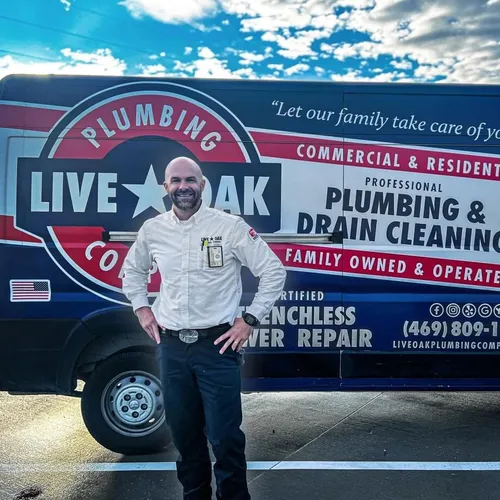
Live Oak Plumbing Company provides a range of plumbing services in Dallas, TX, including water heater repair and installation, water softener installation, drain cleaning, sewer line repair, leak detection, and gas line installation. They offer certified trenchless sewer repair and are a Picote certified installer, which highlights their capability in advanced sewer maintenance techniques. The company also provides backflow testing and water filtration services. Live Oak Plumbing Company aims to assist customers with plumbing needs and offers support outside of normal business hours when possible.
Leak Wranglers Plumbing & HVAC
8376 Davis Blvd #165, North Richland Hills, TX 76182
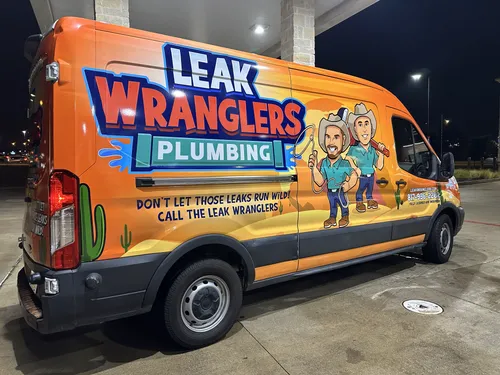
Leak Wranglers Plumbing & HVAC provides a wide range of plumbing and HVAC services in Fort Worth, TX. Since 2024, they have served both residential and commercial clients with expertise in leak detection, drain cleaning including hydro jetting, sewer line repair, gas line installation, and water heater services including tankless models. Their team includes master plumbers and HVAC technicians equipped to handle complex repairs and upgrades, such as trenchless water line replacements and HVAC system overhauls. They offer same-day appointments for emergencies and support Spanish-speaking customers.
Plumbing Unit
6704 McCallum Blvd, Dallas, TX 75252
Plumbing Unit is a licensed plumbing company serving Dallas, TX, and the greater Dallas-Fort Worth metroplex. They offer a wide range of plumbing services including sewer camera inspections, water heater repair and installation, water softener installation, drain cleaning, hydro jetting, sewer line repair, trenchless sewer repair, leak detection, repiping, gas line installation, toilet and garbage disposal repair. The company has over 40 years of experience and provides 24/7 emergency plumbing services to address urgent issues at any time. Their capabilities include advanced leak detection and trenchless sewer line repair to minimize disruption during repairs.

Cattlemans Plumbing
6120 Carr Crk Trl, Fort Worth, TX 76179
Cattlemans Plumbing is a full-service plumbing company based in Fort Worth, TX. They provide a wide range of plumbing services including sewer camera inspections, water heater installation and repair, water softener installation, sewer line and trenchless sewer repairs, leak detection, and toilet repairs. Their team uses advanced technology such as state-of-the-art camera inspections and offers trenchless sewer repair to minimize property disruption. With over 25 years of experience serving the Fort Worth community, Cattlemans Plumbing emphasizes integrity, quality, and safety in every job.
What is Trenchless Sewer Repair?
Trenchless sewer repair, often called no-dig or pipe lining, is a technique that rehabilitates existing underground sewer pipes from the inside. Instead of digging a long, deep trench across your yard to access and replace the pipe, technicians use small access points-often at existing cleanouts or via strategically dug pits-to insert a new lining or pipe. This process creates a durable, seamless pipe-within-a-pipe, effectively sealing cracks, blocking root intrusion, and restoring full flow. For Coppell homeowners, this means a solution that is typically faster, less destructive, and often more cost-effective when considering the avoided costs of landscape and hardscape restoration 1 2.
Trenchless Repair vs. Traditional Excavation
Understanding the difference between these two methods is key to making an informed decision for your property.
When Trenchless is Ideal: Trenchless sewer line repair is an excellent solution for many common problems, especially in established Coppell neighborhoods. It is highly effective for:
- Cracks, leaks, or holes in the pipe.
- Root infiltration and damage.
- Minor pipe misalignment or offset joints.
- Corroded or degraded pipes that are still structurally sound.
- Pipes running under driveways, sidewalks, patios, gardens, or close to home foundations where excavation would be highly disruptive and expensive to restore.
When Traditional Excavation is Necessary: There are situations where a full dig-and-replace excavation is the only viable option. This traditional method is required for:
- Completely collapsed sewer lines.
- Pipes with severe, widespread joint failures.
- Major pipe breaks where the existing line cannot serve as a host for a new liner.
- Instances where the existing pipe material or condition makes lining or bursting impossible 3 4.
A professional camera inspection is the definitive way to determine which method is appropriate for your specific situation.
The Trenchless Repair Process: Step-by-Step
A professional trenchless repair follows a systematic workflow to ensure a lasting fix.
- Camera Inspection: The process always begins with a thorough video camera inspection. A plumber feeds a specialized camera down your sewer line to pinpoint the exact location, nature, and extent of the problem, such as specific cracks or root masses.
- Access Point Preparation: Technicians locate or create small access points to the sewer line. This is typically done at existing cleanouts or by digging small, targeted pits at the beginning and end of the damaged section.
- Pipe Cleaning: Before any repair can happen, the existing pipe must be meticulously cleaned. High-pressure hydro-jetting is commonly used to scour the interior, removing debris, roots, and scale to create a clean surface for the new liner.
- The Repair/Replacement: This is where the core trenchless technology is applied. There are two primary methods:
- Cured-in-Place Pipe (CIPP) Lining: A flexible, resin-saturated felt tube is inverted or pulled into the old pipe. Using air pressure or hot water, the liner is expanded against the host pipe's walls and cured, forming a rigid, jointless "new pipe" inside the old one.
- Pipe Bursting: For pipes that need complete replacement, a bursting head is pulled through the old pipe, fracturing it outward while simultaneously pulling in a new, high-density polyethylene (HDPE) pipe behind it 5 6.
- Testing & Restoration: A final camera inspection verifies the repair's integrity and smooth interior. The sewer system is then tested. Finally, the small access pits are backfilled, resulting in minimal surface disruption compared to a traditional trench 7.
Find the perfect trenchless sewer repair companies for your needs
Get personalized recommendations and expert advice
Permits, Inspections, and Coppell City Requirements
Sewer line work in Coppell is not a DIY project and requires adherence to local codes. Permits are typically required for any significant sewer line repair or replacement. The City of Coppell, like others in the DFW metroplex, will require inspections to ensure the work meets plumbing and safety standards. This often includes a pre-repair camera inspection for the permit, a post-repair camera inspection by the contractor, and a final inspection by a city official. A reputable plumbing professional will handle the permit application and coordinate all necessary inspections, which is a critical factor to confirm when hiring a service provider.
Understanding the Costs of Trenchless Sewer Repair
The cost of a no-dig sewer repair in Coppell is influenced by several variables. It's important to view the price in the context of the total project, including avoided restoration costs.
Primary Cost Factors:
- Extent of Damage: The length and severity of the damaged section.
- Pipe Details: The material (clay, cast iron, PVC), diameter, and depth of the existing pipe.
- Location & Accessibility: How easy it is to reach the pipe and the proximity to structures or landscaping.
- Labor & Method: The specific trenchless technique (lining vs. bursting) and local labor rates.
- Permits & Inspections: City fees, which can add to the total project cost.
Cost Ranges: While every project is unique, general cost frameworks can provide a guideline:
- Per-Foot Cost: Trenchless methods like lining or bursting often range from $80 to $250 or more per linear foot 8.
- Project Range: A typical CIPP lining project may range from $1,900 to $6,000 or more, while pipe bursting or longer line replacements (e.g., 75-100 feet) can range from $4,500 to $25,000+ 9 10.
- Permit/Inspection Fees: These can add an estimated $175 to $1,000 to the overall cost, depending on the scope 11.
The key takeaway is that while the upfront per-foot cost of trenchless may sometimes be higher than excavation, the total project cost is frequently lower because it eliminates thousands of dollars in landscape, concrete, and hardscape restoration 12. Always obtain a detailed, written estimate that includes a camera inspection report, the proposed method, and all permit fees.
Choosing the Right Service in Coppell
Selecting a qualified professional is the most important step. Look for a licensed, insured plumber with specific, verifiable experience in trenchless sewer repair. They should insist on a camera inspection to diagnose the problem before recommending a solution. Ask for references or case studies from local Coppell or DFW area projects. Ensure they are familiar with and will handle all City of Coppell permitting and inspection requirements. A trustworthy provider will clearly explain why a particular method (lining, bursting, or excavation) is recommended for your situation and provide a transparent, detailed quote 13.
Frequently asked questions
Sources
Footnotes
-
Trenchless Sewer Line Repair vs. Sewer Line Excavation - https://dandfplumbing.com/sewer-line-repair-vs-sewer-line-excavation/ ↩
-
No Dig Sewer Repair: What to Expect in Fort Worth - Mother - https://www.callmother.com/blogs/no-dig-sewer-repair-fort-worth ↩
-
Trenchless vs. Traditional Sewer Repair - https://sewerlinesonly.com/trenchless-vs-traditional-sewer-repair-which-is-more-cost-effective-for-lakewood-homeowners/ ↩
-
What Are The Pros and Cons of Trenchless Sewer Repair? - https://www.southernairnow.com/blog/what-are-the-pros-and-cons-of-trenchless-sewer-repair/ ↩
-
Empower Your Decision: Decoding Trenchless Sewer Repair Costs - https://pipelinerpros.com/trenchless-sewer-repair-cost/ ↩
-
Trenchless Sewer Repair vs Traditional Method - CPI Service - https://cpiservice.com/blog/trenchless-pipe-repair-vs-traditional-method/ ↩
-
Trenchless Sewer Repair vs. Traditional Excavation - https://alphaenvironmental.net/blog/trenchless-sewer-repair-vs-traditional-excavation-which-is-better/ ↩
-
Trenchless Sewer Repair vs. Traditional Excavation - https://tdtplumbing.com/trenchless-sewer-repair/difference-to-traditional-repair/ ↩
-
What Trenchless Sewer Repair Costs & What Impacts the Price - https://www.sunsethc.com/what-trenchless-sewer-repair-really-costs-and-what-impacts-the-price/ ↩
-
How much does it cost to repair a sewer using trenchless methods? - https://sewerpros.com/trenchless-sewer-repair-cost/ ↩
-
How Much Does Trenchless Sewer Line Piping Cost? [2026 Data] - https://www.angi.com/articles/trenchless-sewer-line-replacement-cost.htm ↩
-
Trenchless Sewer Repair vs Traditional - https://piperestorationsolutions.com/trenchless-sewer-repair-vs-traditional/ ↩
-
Trenchless Sewer Repair Odessa TX | NuFlow Case Study - I Fix Pipe - https://ifixpipe.com/trenchless-sewer-repair-explained-how-nuflow-saves-odessa-homes-case-study-cost-breakdown/ ↩