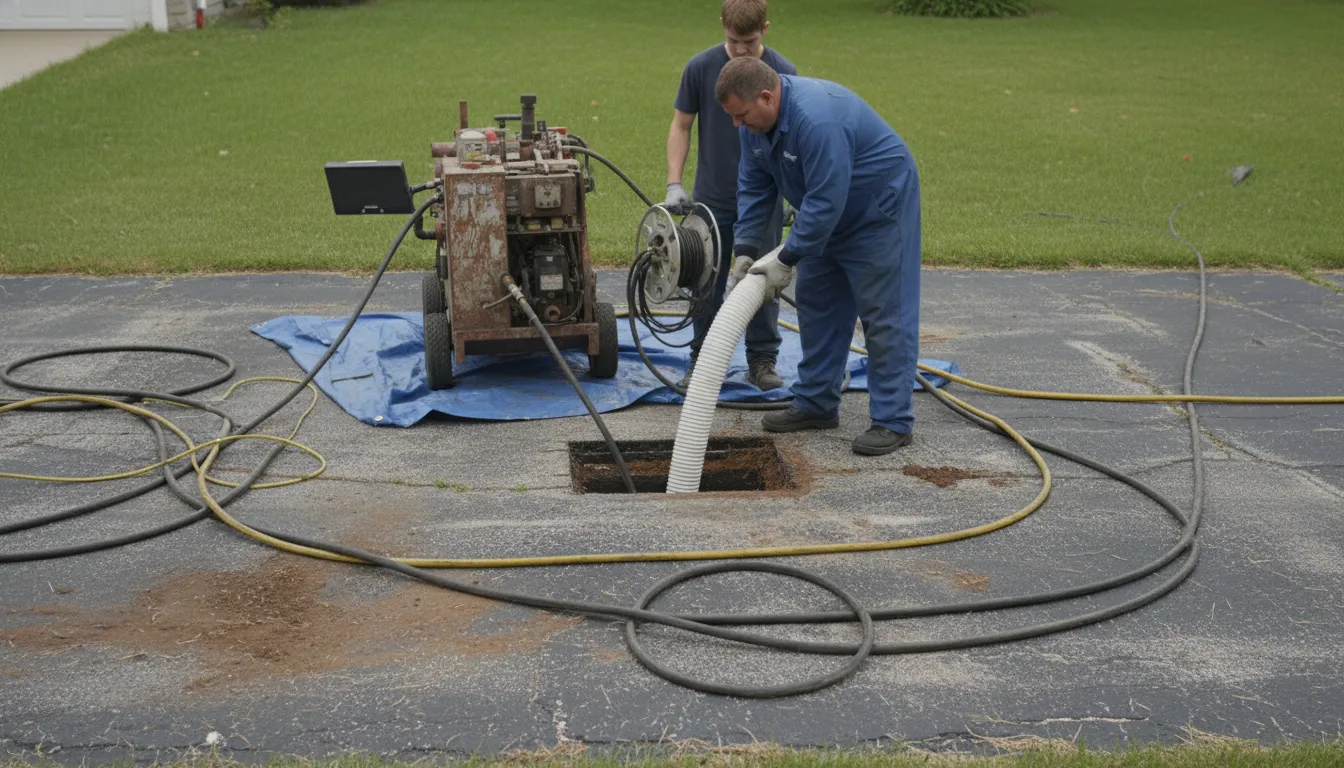
Find the Best Trenchless Sewer Repair Companies for Your Business
No obligation • Fast responses • Nationwide coverage

Why you can trust Search a Plumber
Search a Plumber is a leading United States resource for finding and evaluating professional plumbing services. Our team researches licensing, experience, and customer feedback to create unbiased, fact-driven overviews. Companies cannot pay to change ratings or placement, ensuring homeowners get trustworthy information.
Search providers near you
Top Trenchless Sewer Repair Companies in Howell, New Jersey Ranked
Facing a damaged sewer line can be a stressful prospect for any homeowner, often conjuring images of massive trenches tearing up your yard, driveway, or landscaping. Fortunately, modern trenchless sewer repair offers a sophisticated, less invasive solution. This advanced method allows for the repair or replacement of underground pipes with minimal digging, preserving your property and saving significant time and restoration costs. For Howell residents dealing with common issues like root intrusion or cracks, understanding this technology and connecting with experienced local specialists is the key to a swift and effective resolution.
Command Plumbing Inc.
305 Amboy Ave, Woodbridge, NJ 07095
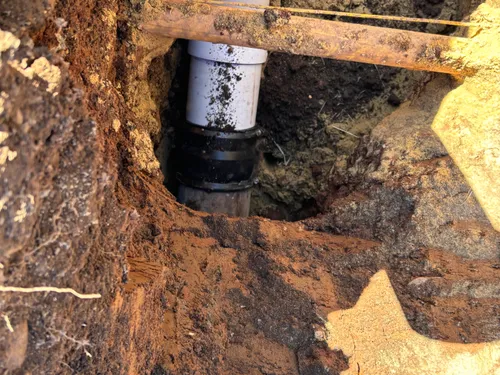
Command Plumbing Inc. offers a range of plumbing services in New York, NY, including sewer camera inspections, drain cleaning, hydro jetting, sewer line repair, and trenchless sewer repair. They serve both residential and commercial clients and use high-definition video inspection equipment to diagnose sewer line issues accurately. The company has developed a preventive maintenance program for commercial sewer lines and provides certified repairs such as pipe lining and pipe bursting. Command Plumbing Inc. is available for emergency maintenance and has experience serving multiple areas in New Jersey and New York.
Metro Sewer Service LLC
18 Covington Cir, Staten Island, NY 10312
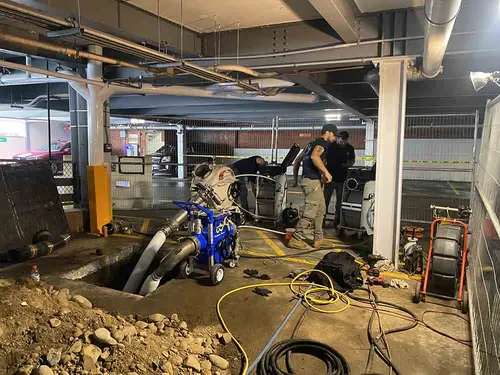
Metro Sewer Service LLC provides sewer and drain inspections, repairs, and water heater installations in New York, NY. They use advanced CCTV technology for visual inspections to identify sewer line defects and offer trenchless sewer repair methods such as pipe bursting and a trenchless brush coating system for pipe restoration. The company also detects leaks and performs repiping services. Their trenchless brush coating system offers a durable, corrosion-resistant repair with a combined 20-year warranty. Metro Sewer Service LLC serves residential and commercial properties with a focus on minimizing excavation and disruption.
Integrated construction & utilities
59 Suydam Ave, Edison, NJ 08817
Integrated Construction & Utilities is a sewer repair contractor serving New York, NY, specializing in trenchless sewer line repair and replacement. The company offers customized solutions for sewer backups, pipe defects, and root intrusion, using advanced methods like pipe bursting and cured-in-place pipe (CIPP) lining to minimize excavation. Their expertise includes high-pressure jetting for pipe cleaning and sewer camera inspections to diagnose issues accurately. Integrated Construction & Utilities has established itself with innovative sewer repair techniques and a focus on tailored service for complex sewer conditions.
What is Trenchless Sewer Repair?
Trenchless sewer repair is a collective term for modern techniques that fix or replace buried sewer pipes without the need for extensive excavation. Instead of digging a long, deep trench to access the entire pipe, technicians use specialized equipment to install a new pipe lining or pull a new pipe through the old one from just two small access points. This approach is a game-changer for residential sewer lateral repairs, transforming a traditionally disruptive project into a much more manageable one. The core principle is to rehabilitate the pipeline from the inside, creating a durable, new pipe within the old structure or replacing it entirely with minimal surface disturbance.
Common Sewer Problems in Howell Suitable for Trenchless Repair
Not every sewer issue requires a full excavation. Trenchless methods are specifically engineered to address the types of damage most frequently encountered by homeowners in our area. If you're experiencing slow drains, frequent clogs, or unexplained soggy patches in your yard, your sewer lateral may be suffering from one of these common problems that trenchless technology can effectively fix:
- Tree Root Intrusion: Howell's mature trees have roots that seek out moisture and can infiltrate small cracks or loose joints in clay or older pipes, causing blockages and damage.
- Cracks, Fractures, and Leaks: Aging pipes, ground shifting, or corrosion can lead to cracks that allow wastewater to escape into the surrounding soil and groundwater to seep in.
- Offset or Separated Joints: Sections of pipe can become misaligned over time, creating a ledge that catches debris and leads to chronic blockages.
- Minor Sags or Bellies: A low spot in the pipe line where waste and solids collect, preventing proper flow toward the municipal main.
- Corrosion and Deterioration: Over decades, pipes can simply wear thin and lose their structural integrity from the inside out.
Trenchless Methods: Pipe Lining vs. Pipe Bursting
There are two primary trenchless technologies used, each suited for slightly different situations. A professional diagnosis via camera inspection is crucial to determine the best method for your specific pipe condition.
Pipe Lining (Cured-in-Place Pipe - CIPP)
Often called pipe relining or epoxy lining, this is a rehabilitation technique. A flexible tube saturated with a resin (like epoxy) is inverted or pulled into the damaged host pipe. It is then inflated, pressing the liner against the interior walls. The resin is cured using hot water or UV light, forming a rigid, seamless, and corrosion-resistant "pipe-within-a-pipe."
- Best For: Pipes with cracks, holes, root damage, or corrosion that have not completely collapsed. It is ideal for repairing pipes under driveways, sidewalks, or landscaping where surface access is severely limited.
- Key Benefit: It slightly reduces the internal diameter of the pipe (typically by about 1/4 inch), but the smooth new surface often improves flow capacity. It's generally the faster and more cost-effective trenchless option for rehabilitation.
Pipe Bursting
This is a true trenchless replacement method. A conical bursting head is pulled through the old, damaged pipe, fracturing it outward into the surrounding soil. Simultaneously, it pulls a new, high-density polyethylene (HDPE) or PVC pipe behind it, immediately replacing the old line.
- Best For: Severely compromised pipes that are collapsed, extensively crushed, or have major misalignments. It's also the preferred method if you need to increase the size of the existing pipe.
- Key Benefit: It creates a brand-new, same-size or larger pipe with no reduction in diameter. It completely removes the old, failed material from the ground.
The Trenchless Repair Process: Step-by-Step
Understanding the workflow can demystify the project and set clear expectations. Reputable local providers follow a meticulous process to ensure a lasting repair.
- Comprehensive Camera Inspection: A specialized sewer camera is snaked through the line to pinpoint the exact location, nature, and extent of the damage. This video evidence is essential for diagnosing the problem and deciding between lining, bursting, or, in rare cases, traditional excavation 1.
- High-Pressure Jetting: Before any repair, the pipe must be thoroughly cleaned. Hydro-jetting uses powerful streams of water to scour the interior, removing roots, grease, scale, and debris to create a clean surface for the liner or to prepare for bursting.
- Creating Access Points: Two small, strategic holes are excavated-one at the beginning and one at the end of the damaged section. These are typically at existing cleanouts or where the line exits the home and meets the main. This is the only digging required 2.
- Executing the Repair:
- For Lining: The resin-saturated liner is fed into one access hole and guided through the pipe. It is then inflated and cured, hardening into a solid new interior wall 3.
- For Bursting: The bursting head and new pipe are set up at the start hole. A powerful machine pulls the head through, breaking the old pipe and laying the new one in its path 4 5.
- Final Inspection and Clean-up: A post-repair camera inspection is conducted to verify the integrity and quality of the new pipe. The small access pits are backfilled, and the worksite is tidied, leaving your property virtually untouched 6.
Find the perfect trenchless sewer repair companies for your needs
Get personalized recommendations and expert advice
Trenchless vs. Traditional Excavation: A Clear Comparison
When is a full dig necessary, and when does trenchless make sense? Here's a breakdown to help clarify the key differences.
| Factor | Trenchless Repair (Lining/Bursting) | Traditional Excavation |
|---|---|---|
| Property Disruption | Minimal. Only small access pits are needed. Preserves driveways, patios, landscaping, and lawns. | Major. Requires a long, deep trench the full length of the repair, destroying anything above it. |
| Project Timeline | Fast (Often 1-2 days). The actual repair process is relatively quick once set up. | Lengthy (Days to weeks). Includes digging, repair, backfilling, and extensive restoration work. |
| Primary Cost Driver | Cost per foot of lining or new pipe material/installation. | Cost of labor for excavation plus very high costs for restoring hardscapes and landscaping. |
| Long-Term Value | High. The new liner or pipe is highly durable, with a lifespan often exceeding 50 years, and prevents future root intrusion. | Variable. The new pipe is durable, but the restored surface (concrete, pavers, sod) may not match or settle over time. |
| Ideal Scenario | Pipes damaged by roots, cracks, or sags that are still structurally intact enough to guide a liner or bursting head. | Pipes that have completely collapsed, are in inaccessible locations, or have failed in a way that prevents trenchless equipment from passing through 7. |
Understanding Costs and Permits in Howell
The cost of trenchless sewer repair in Howell is typically quoted per linear foot and depends on the method, pipe depth, and soil conditions. On average, homeowners can expect a range of $60 to $250 or more per foot 8 9 10. While the upfront per-foot cost for pipe lining may be lower than for pipe bursting, the total project estimate must be compared to the true cost of excavation, which starts lower but escalates dramatically when adding in the expense of repairing a concrete driveway, patio, or mature garden 8 11 12. In the long run, the savings on restoration often make trenchless the more cost-effective choice overall.
Permits are a required and critical part of any sewer repair in Howell Township. Municipal permits and subsequent inspections ensure the work meets local building and plumbing codes, protecting your home and the public infrastructure. A key benefit of hiring a reputable local specialist is that they handle the entire permit application and coordination process on your behalf, ensuring compliance from start to finish 13.
Maintaining Your Repaired Sewer Line
After investing in a trenchless repair, proper maintenance will help protect your investment and ensure decades of reliable service. Be mindful of what goes down your drains: avoid flushing wipes (even "flushable" ones), feminine hygiene products, or excessive grease. Consider having your lines professionally inspected with a camera every few years as a preventative measure, especially if you have large trees near your sewer lateral. Addressing small issues early is always simpler and less expensive than dealing with a major failure.
Frequently asked questions
Sources
Footnotes
-
How Much Does Trenchless Sewer Line Repair Cost? - https://alphaenvironmental.net/blog/how-much-does-trenchless-sewer-repair-cost/ ↩
-
Trenchless Sewer Replacement - All County Sewer & Drain | Chatham, NJ - https://allcountysewer.com/trenchless-sewer-replacement/ ↩
-
Residential Trenchless Pipe Lining and Repair in New Jersey - https://www.arrowsewernj.com/service/residential/trenchless/ ↩
-
Efficient Trenchless Sewer Line Repair in Northern New Jersey - https://russobrosplumbing.com/sewer/trenchless/ ↩
-
Trenchless Sewer Repair vs. Traditional Excavation - AQUALIS - https://aqualisco.com/trenchless-sewer-repair-vs-traditional/ ↩
-
Trenchless Sewer Repair Howell Township - Mr. Rooter Plumbing - https://www.mrrooternj.com/trenchless-sewer-repair-howell-township-nj ↩
-
Trenchless Sewer Line Repair vs. Sewer Line Excavation - https://dandfplumbing.com/sewer-line-repair-vs-sewer-line-excavation/ ↩
-
Is Trenchless Sewer Line Repair Cheaper? - AP Plumbing - https://applumbing.com/blog/is-trenchless-sewer-line-repair-cheaper/ ↩ ↩2
-
Empower Your Decision: Decoding Trenchless Sewer Repair Costs - https://pipelinerpros.com/trenchless-sewer-repair-cost/ ↩
-
Sewer Line Replacement in Howell, NJ | AME Plumbing - https://ameplumbingnj.com/sewer-line-replacement-howell-nj/ ↩
-
Trenchless vs. Traditional Sewer Repair - https://sewerlinesonly.com/trenchless-vs-traditional-sewer-repair-which-is-more-cost-effective-for-lakewood-homeowners/ ↩
-
Trenchless Sewer Repair in New Jersey - NJ Pipe Doctor - https://njpipedr.com/drain-sewer/trenchless-sewer/ ↩
-
Trenchless Sewer Repairs in North & Central NJ - https://www.arrowsewernj.com/sewer-drain/trenchless/ ↩