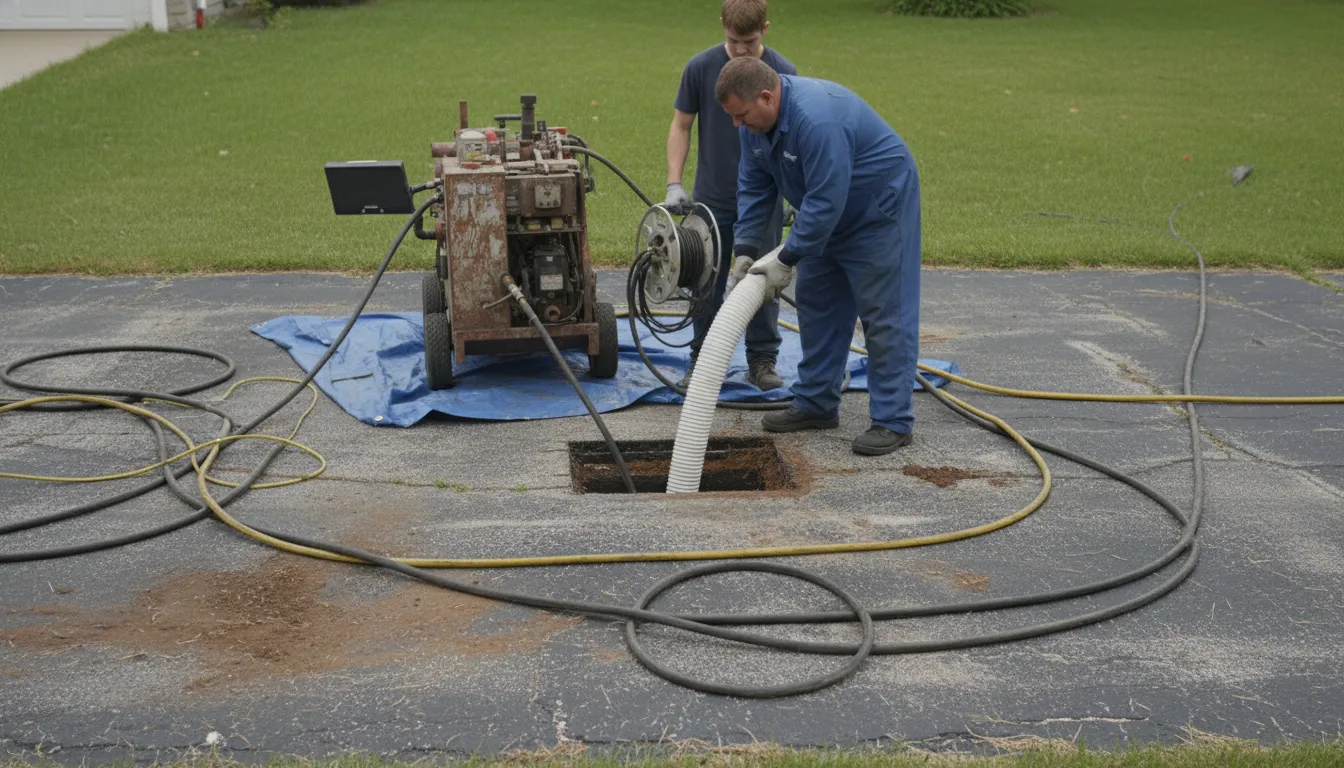
Find the Best Trenchless Sewer Repair Companies for Your Business
No obligation • Fast responses • Nationwide coverage

Why you can trust Search a Plumber
Search a Plumber is a leading United States resource for finding and evaluating professional plumbing services. Our team researches licensing, experience, and customer feedback to create unbiased, fact-driven overviews. Companies cannot pay to change ratings or placement, ensuring homeowners get trustworthy information.
Search providers near you
Top Trenchless Sewer Repair Companies in Clifton, New Jersey Ranked
A damaged sewer line is a serious problem for any Clifton homeowner, but the traditional solution-digging a massive trench across your yard-can be a nightmare. Trenchless sewer repair offers a modern, less invasive alternative to fix your underground pipes with minimal disruption to your property. This guide explains how trenchless technology works, when it's the right choice for your home, and what you can expect from the process, helping you connect with qualified local specialists who can assess and resolve your sewer issues efficiently.
Royal Rooter and Drain Cleaning LLC
74 Jefferson Ave, Lodi, NJ 07644
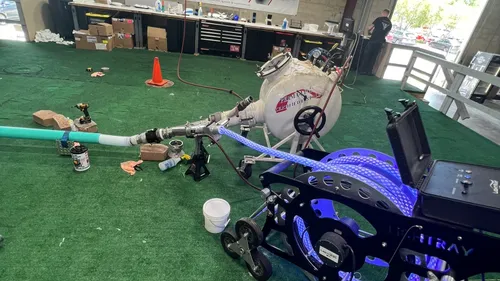
Royal Rooter and Drain Cleaning LLC provides plumbing services in New York, NY, specializing in sewer camera inspections, drain cleaning, hydro jetting, and sewer line repairs. Their team uses camera inspections to accurately locate sewer issues and offers trenchless repair methods such as UV lining to minimize property disruption. Hydro jetting is available when pipes are suitable for this powerful cleaning technique.
RDH Plumbing Sewer & Drain Specialist
99 US-46, Rockaway, NJ 07866
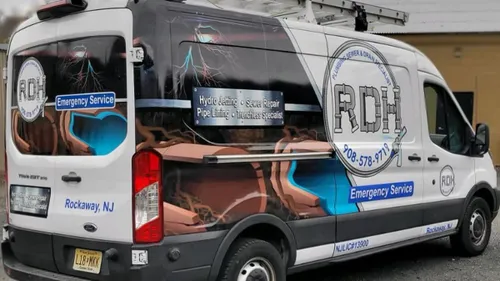
RDH Plumbing Sewer & Drain Specialist is a plumbing contractor based in New York, NY, serving Rockaway, NJ, and surrounding areas. They provide a range of services including sewer camera inspections, drain cleaning, hydro jetting, sewer line repair, and trenchless sewer repair using advanced technologies like Perma-Liner and LightRay systems. The company offers 24/7 emergency plumbing services and specializes in boiler installation and maintenance. RDH Plumbing is certified in Nu-Flow and Pow-R Mole technologies and emphasizes minimal disruption through trenchless methods. Their team is locally owned and committed to using high-quality equipment for residential and commercial plumbing needs.
Arrow Sewer and Drain
165 Union Ave, Middlesex, NJ 08846
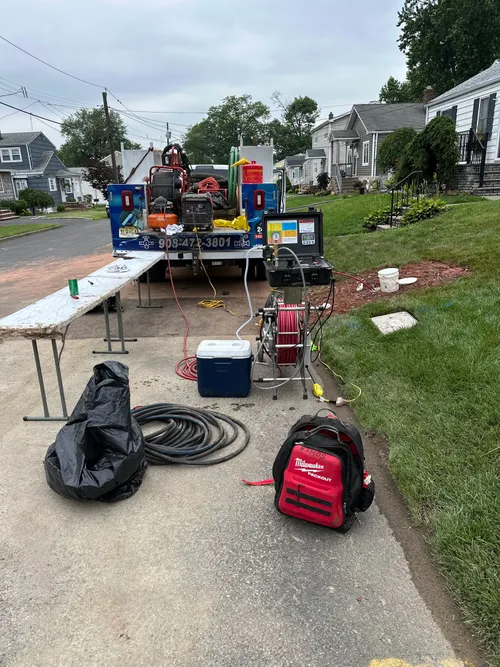
Arrow Sewer and Drain provides comprehensive plumbing and sewer services in New York, NY, with a focus on trenchless sewer repair, hydro jet drain cleaning, and emergency plumbing. Serving both residential and commercial clients, the company uses advanced technology such as sewer scopes, cured-in-place pipe (CIPP), and hydro excavation to deliver efficient, non-invasive repairs. With over 15 years of experience, Arrow Sewer and Drain offers 24/7 emergency plumbing services to address urgent issues at any time.
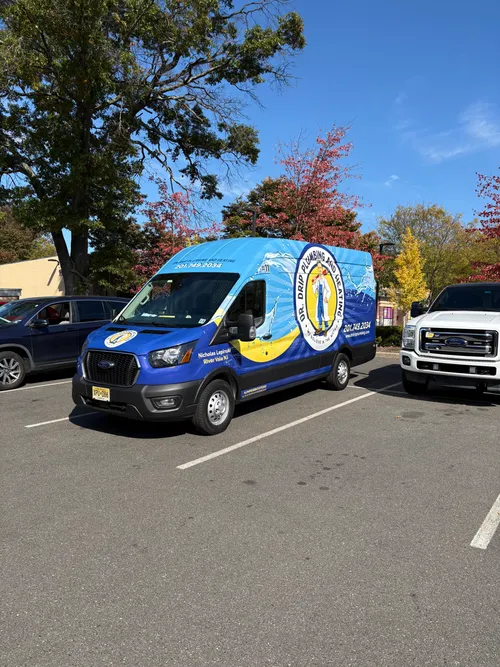
Dr. Drip Plumbing and Heating
123 Woodland Ave, Westwood, NJ 07675
Dr. Drip Plumbing and Heating is a family-run, veteran-owned plumbing and heating company serving New York, NY. They offer a wide range of services including water heater repair and installation, water softener and filtration systems, drain cleaning with hydro jetting, sewer line repair using trenchless methods, leak detection, and toilet repair. The company specializes in high-efficiency hot water systems such as condensing tankless water heaters and heat pump water heaters, as well as advanced leak detection and frozen pipe thawing. Founded by a master plumber with over 10 years of experience, Dr. Drip Plumbing and Heating focuses on comprehensive home water and heating solutions.
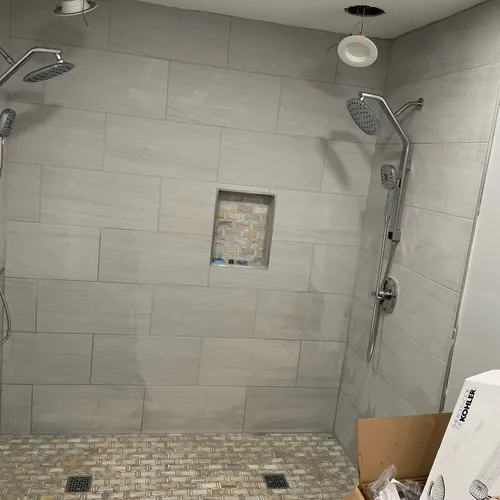
Freedom Plumbing Heating and Sewer Service LLC
64 Walters St, Rahway, NJ 07065
Freedom Plumbing Heating and Sewer Service LLC provides a range of plumbing and heating services in New York, NY. They handle water heater installation and repair, including tankless systems, as well as drain cleaning, hydro jetting, and sewer line repair. Their trenchless sewer repair techniques help restore sewer lines efficiently with minimal property disruption. The company serves both residential and commercial clients, offering expertise in complex plumbing issues and heating system maintenance.
What is Trenchless Sewer Repair?
Trenchless sewer repair is a collection of advanced techniques that allow plumbers to repair or replace damaged underground sewer lines without the need for extensive excavation. Instead of digging a long, deep trench to access the entire pipe, technicians use specialized equipment to perform the work through small access points, typically at the beginning and end of the problem section. The two primary methods used in Clifton are Cured-In-Place Pipe (CIPP) lining and pipe bursting.
This "no-dig" approach is revolutionizing how sewer line problems are handled. For homeowners, it means preserving landscaping, driveways, patios, and tree roots that would otherwise be destroyed by traditional digging. The core benefit is solving a major infrastructure problem with a fraction of the mess and restoration cost, often completing the job in just one to two days.
Common Problems Trenchless Repair Can Fix
Trenchless methods are an excellent solution for many common sewer line failures, particularly in Clifton's older neighborhoods with aging infrastructure. If you're experiencing frequent clogs, slow drains, or sewage backups, a video inspection can determine if your issue is suitable for a trenchless fix.
Key problems addressed by trenchless technology include:
- Root Intrusion: Tree roots seeking moisture can infiltrate pipe joints, causing blockages and cracks.
- Cracks and Fractures: Aging pipes made of cast iron, clay, or Orangeburg can crack due to ground shifting or corrosion.
- Holes and Leaks: Corroded or damaged sections can develop holes, allowing sewage to leak into the soil.
- Bellied or Sagging Sections: Pipes that have settled can create low spots where waste collects and causes repeated blockages.
- Minor Pipe Offsets: Sections where pipe joints have separated slightly but are not fully collapsed.
It's important to understand that trenchless repair is a rehabilitation technique. While it effectively seals cracks, stops leaks, and eliminates root intrusion, it requires a host pipe that is largely intact. For sections that are completely flattened, severely offset, or collapsed, traditional excavation may still be necessary to physically remove and replace the damaged segment.
Trenchless Methods: CIPP Lining vs. Pipe Bursting
Local plumbing specialists typically offer two main trenchless options. The best choice for your Clifton home depends on the condition and material of your existing sewer line, as determined by a professional video inspection.
Cured-In-Place Pipe (CIPP) Lining
Think of CIPP lining as creating a new pipe inside your old one. A flexible tube saturated with a resin (like epoxy) is inverted or pulled into the damaged pipe. It is then inflated, pressing the liner against the interior walls of the host pipe. The resin is cured using hot water or UV light, hardening into a strong, jointless, and corrosion-resistant new pipe. This method is ideal for repairing cracks, holes, and root-damaged pipes without changing the pipe's diameter 1.
Pipe Bursting
Pipe bursting is a trenchless replacement method. A conical bursting head is pulled through the old, damaged pipe, fracturing it outward into the surrounding soil. Simultaneously, a new high-density polyethylene (HDPE) pipe, which is extremely durable and resistant to roots, is pulled in behind the bursting head to replace the old line. This method is used when the old pipe is too damaged to line or when an increase in pipe diameter is desired.
Find the perfect trenchless sewer repair companies for your needs
Get personalized recommendations and expert advice
The Trenchless Repair Process in Clifton
Understanding the steps involved can demystify the process and set clear expectations when you hire a professional.
- Inspection & Diagnosis: The first and most critical step is a comprehensive video camera inspection. A specialized camera is fed through your sewer line to pinpoint the exact location, nature, and extent of the damage. This visual evidence determines whether trenchless repair is feasible and which method is most appropriate 2.
- Permitting: Reputable, licensed contractors will handle pulling all necessary permits from the City of Clifton or relevant municipality before work begins. This ensures the repair meets all local building and plumbing codes 3 4.
- Site Preparation & Access: Instead of a long trench, crews dig two small access pits (often called "pulling" and "receiving" pits). These are typically located at existing cleanouts or at the start and end points of the damaged section.
- Cleaning the Line: The existing pipe is thoroughly cleaned using high-pressure water jetting to remove debris, roots, and obstructions, ensuring a clear path for the liner or new pipe.
- Repair/Replacement: For CIPP lining, the resin-saturated liner is installed and cured. For pipe bursting, the old pipe is fractured and the new HDPE pipe is pulled into place.
- Reconnection & Final Inspection: All lateral connections are reinstated internally, and the system is tested. A final inspection, often involving the municipality, is conducted to approve the work 5.
Cost Considerations for Trenchless Sewer Repair
One of the most common questions from homeowners is about cost. While trenchless technology involves specialized materials and equipment, it often proves more cost-effective than traditional excavation when you consider the total project expense.
- Cost Per Foot: In Clifton, trenchless sewer repair typically ranges from $50 to $250 or more per linear foot 6 7. The final price depends on variables like the length of the repair, pipe diameter, depth, soil conditions, and the specific type of damage.
- The True Savings: The major financial advantage of trenchless methods lies in what you don't have to pay for. Traditional excavation requires massive costs for landscape restoration, concrete driveway or sidewalk repair, patio rebuilding, and potentially even deck or fence removal and replacement. Trenchless repair avoids nearly all of these ancillary costs, making the overall project price frequently lower despite a higher per-foot technical cost 8 9.
- Long-Term Value: A trenchless repair isn't just a patch. A CIPP liner or a new HDPE pipe can have a lifespan of 50 years or more, providing a durable, long-term solution that adds value to your property 10.
When is Traditional Excavation Still Needed?
While trenchless is a superior choice for many situations, it's not a universal fix. A professional will recommend traditional excavation in specific cases:
- Complete Collapse: If a section of pipe is fully flattened, a liner cannot pass through it, and pipe bursting may not be feasible.
- Severe Misalignment: Sections where pipes have become drastically offset, creating a "sheared" break.
- Multiple Major Failures: In lines with extensive damage over a very long run, excavation might be more practical.
- Access Limitations: If there is no viable path to create the necessary access pits for trenchless equipment.
A trustworthy specialist will always present all options-trenchless and traditional-after a video inspection, explaining the pros and cons of each for your specific situation 11 12.
Choosing a Trenchless Specialist in Clifton
Selecting the right contractor is crucial for a successful, code-compliant repair. Look for a licensed, insured plumbing company with specific experience and a proven track record in trenchless sewer repair. They should be willing to perform and show you the video inspection, provide a detailed written estimate that includes permit fees, and explain the entire process clearly. Checking online reviews and asking for local references in Clifton can also provide peace of mind.
Frequently asked questions
Sources
Footnotes
-
Residential Trenchless Pipe Lining and Repair in New Jersey - https://www.arrowsewernj.com/service/residential/trenchless/ ↩
-
ICUNJ: NJ Trenchless Sewer Line Repair & Replacement 24/7 - https://icunj.us/ ↩
-
Clifton Drain Cleaning | Sewer Inspections Clifton, NJ - Jersey Drains - https://www.jerseydrains.com/nj/clifton-drain-cleaning ↩
-
Sewer Line Repairs and Replacement - https://www.siteprep.com/sewer-repairs/ ↩
-
Trenchless Sewer Line Repairs in NJ, PA, DE : Harris - https://www.callharrisnow.com/sewer-drain/trenchless-repair/ ↩
-
Efficient Trenchless Sewer Line Repair in Northern New Jersey - https://russobrosplumbing.com/sewer/trenchless/ ↩
-
Empower Your Decision: Decoding Trenchless Sewer Repair Costs - Pipeliner Pros - https://pipelinerpros.com/trenchless-sewer-repair-cost/ ↩
-
Trenchless Sewer Repair vs. Traditional Excavation - AQUALIS - https://aqualisco.com/trenchless-sewer-repair-vs-traditional/ ↩
-
Trenchless vs. Traditional Sewer Repair - https://sewerlinesonly.com/trenchless-vs-traditional-sewer-repair-which-is-more-cost-effective-for-lakewood-homeowners/ ↩
-
Trenchless Sewer Replacement - https://allcountysewer.com/trenchless-sewer-replacement/ ↩
-
Trenchless Sewer Repairs in North & Central NJ - https://www.arrowsewernj.com/sewer-drain/trenchless/ ↩
-
Trenchless Sewer Line Repair vs. Sewer Line Excavation - https://dandfplumbing.com/sewer-line-repair-vs-sewer-line-excavation/ ↩