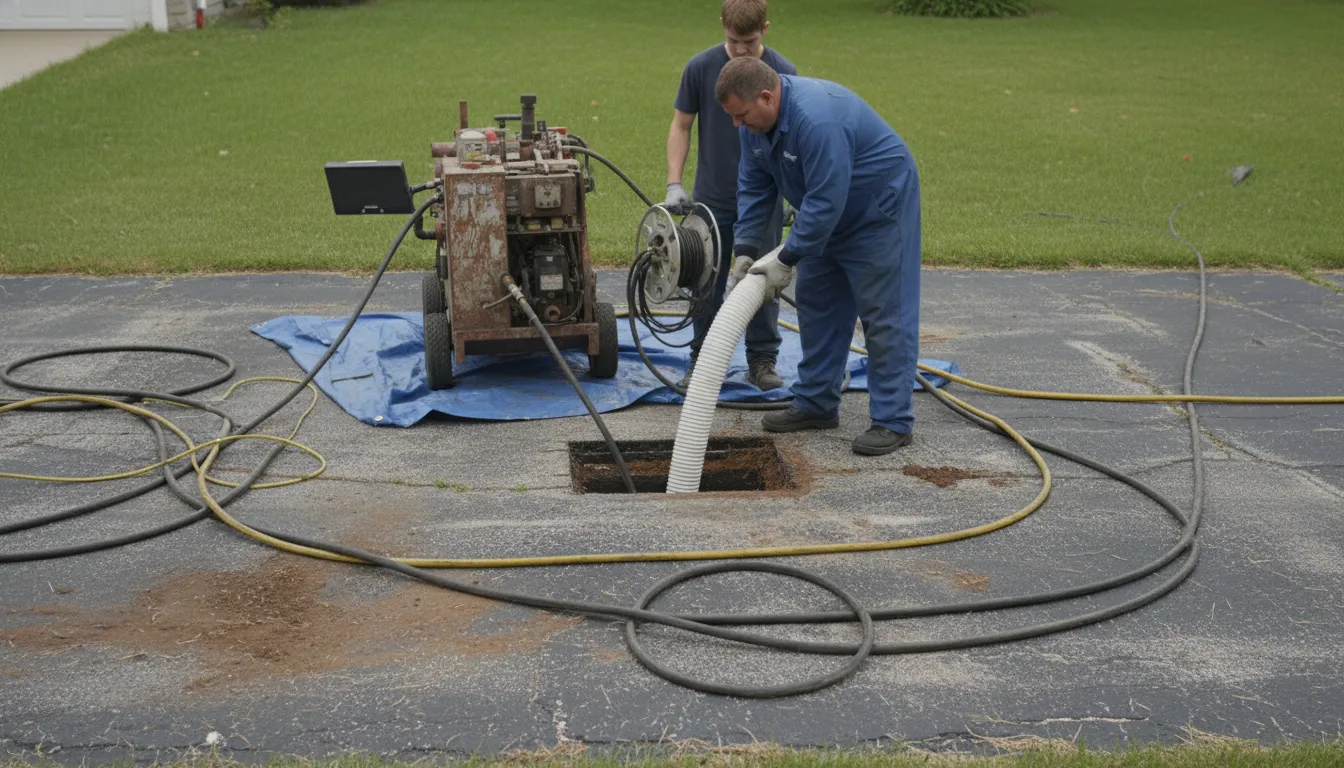
Find the Best Trenchless Sewer Repair Companies for Your Business
No obligation • Fast responses • Nationwide coverage

Why you can trust Search a Plumber
Search a Plumber is a leading United States resource for finding and evaluating professional plumbing services. Our team researches licensing, experience, and customer feedback to create unbiased, fact-driven overviews. Companies cannot pay to change ratings or placement, ensuring homeowners get trustworthy information.
Search providers near you
Top Trenchless Sewer Repair Companies in Grand Island, Nebraska Ranked
A damaged sewer line is a serious problem that can disrupt your home and threaten your property. Trenchless sewer repair is a modern, minimally invasive method for fixing underground pipes without the need for extensive, destructive digging. This approach is crucial for preserving your landscaping, driveway, and peace of mind. For Grand Island homeowners and business owners, understanding this technology is the first step to finding a qualified local professional who can efficiently restore your sewer system.
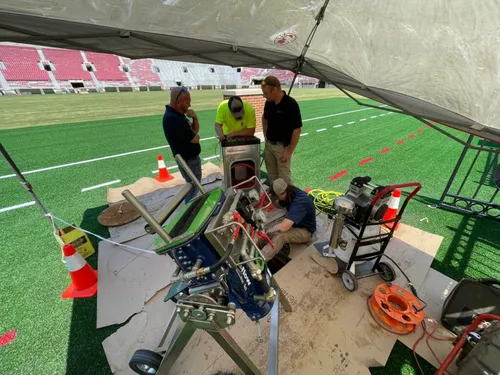
What is Trenchless Sewer Repair?
Trenchless sewer line repair is a collective term for advanced techniques that rehabilitate or replace damaged underground pipes with minimal excavation. Unlike traditional "dig-and-replace" methods that require long, deep trenches, trenchless technology typically requires only one or two small access pits. This modern approach is designed to solve common sewer issues like cracks, leaks, and root intrusion with significantly less disruption to your yard, hardscapes, and daily life.
The core principle involves creating a new, durable pipe within or in place of the old one. This is achieved through two primary methods: Cured-In-Place Pipe (CIPP) lining and pipe bursting. Both are engineered to provide a long-lasting solution, often with a structural lifespan of 50 years or more, making them a smart investment for your property in Grand Island.
Trenchless vs. Traditional Excavation: Which is Right for Your Situation?
Choosing the right repair method depends entirely on the condition of your existing sewer line and its location on your property.
When Trenchless Repair is Ideal: Trenchless methods like CIPP lining or pipe bursting are the preferred solution for most common sewer problems in Grand Island. They are specifically suited for:
- Pipes with cracks, holes, or leaks that are otherwise structurally sound.
- Lines suffering from root intrusion where the pipe's shape is largely intact.
- Pipes made of clay, cast iron, Orangeburg, or PVC that need rehabilitation.
- Sewer lines running under valuable or difficult-to-replace features like driveways, sidewalks, patios, gardens, and even house foundations 1 2.
The major advantage is the dramatic reduction in restoration work and cost. You avoid the expense and hassle of repairing a torn-up lawn, repaving a driveway, or rebuilding a patio.
When Traditional Excavation May Be Necessary: There are scenarios where a full excavation (dig-and-replace) is unavoidable. This is typically required when:
- The existing pipe has completely collapsed or is severely misaligned.
- The pipe is so degraded that it cannot support a new liner or bursting head.
- The line needs to be significantly re-routed or have its slope altered 3.
While more disruptive, excavation is sometimes the only viable option. A professional inspection will determine the best course of action for your specific case.
The Trenchless Repair Process: Step-by-Step
Understanding the workflow can demystify the project and set clear expectations. A professional trenchless repair in Grand Island generally follows these steps:
- Video Camera Inspection: The process always begins with a thorough sewer camera inspection. A specialized camera is sent through the line to pinpoint the exact location, nature, and extent of the damage. This diagnostic step is crucial for determining if trenchless repair is feasible and for planning the job.
- Access Point Excavation: Instead of a long trench, one or two small access pits (typically about 4 feet by 4 feet) are dug. These are usually located at existing cleanout points or at the beginning and end of the damaged section. This is the only significant digging involved.
- Pipe Cleaning: Before any repair can happen, the old pipe must be meticulously cleaned. High-pressure water jetting or mechanical scraping is used to clear debris, roots, and scale from the interior walls to ensure a proper bond for the new liner.
- The Repair Method:
- CIPP Lining: For this method, a flexible tube saturated with a resin (like epoxy) is inverted or pulled into the old pipe. It is then inflated and left to cure, either using ambient temperature, hot water, or steam. Once hardened, it forms a seamless, jointless "pipe-within-a-pipe" that is highly resistant to roots and corrosion 4.
- Pipe Bursting: This is a replacement method. A conical bursting head is pulled through the old pipe, fracturing it outward while simultaneously pulling a new, often larger-diameter, pipe into place behind it. This is excellent for upgrading pipe size or material 5.
- Final Connections and Inspection: After curing or installation, the new line is connected at the access points. The final step often involves a post-repair camera inspection to verify the work's quality. The small access pits are then backfilled and restored.
Find the perfect trenchless sewer repair companies for your needs
Get personalized recommendations and expert advice
Understanding Costs for Trenchless Sewer Repair in Grand Island
The cost of a trenchless sewer line project can vary widely based on several local and project-specific factors. Having a realistic budget expectation is important for Grand Island homeowners.
How Costs are Calculated: Most contractors price trenchless repairs on a per-foot basis. According to industry data, you can expect a range of $50 to $250 or more per linear foot 6. The final price depends on the chosen method (lining is often less expensive than bursting for straightforward repairs), the diameter and material of the existing pipe, and the complexity of the job.
Typical Project Range: For a standard residential sewer lateral repair in Grand Island, total project costs commonly fall between $2,000 and $10,000 7 8. Smaller jobs under 50 feet may be on the lower end, while longer runs (over 100 feet), lines under foundations, or those with multiple issues will trend toward the higher end of the spectrum.
Key Factors Influencing Your Final Price:
- Length of Damaged Pipe: The single biggest cost driver.
- Depth and Location: Pipes under driveways, foundations, or deep underground require more labor and specialized equipment.
- Pipe Diameter: Larger pipes require more material.
- Extent of Damage: Multiple problem areas or severe root damage can increase prep work.
- Local Labor Rates: Crew costs in the Grand Island area.
- Permits and Inspections: Required by the City of Grand Island for sewer work, permit fees can add a notable amount to the overall budget.
Permits and Regulations in Grand Island
Sewer line repairs are not a DIY project and are regulated for good reason. In Grand Island, a city permit is almost always required for any work performed on a private sewer lateral that connects to the public main 9. Reputable local professionals will handle this process for you.
The permit ensures the work is performed to current plumbing and building codes, protecting your property and the public sewer system. The cost for this permit varies but should be factored into your overall project estimate. Upon completion, a city inspector will typically review the work, which may include checking the before-and-after camera footage, to approve the repair before the access pits are finally closed up.
Signs You May Need Sewer Line Attention
How do you know if you need to explore trenchless repair options? Be alert to these common warning signs:
- Frequent drain clogs that can't be cleared with a plunger.
- Multiple fixtures backing up simultaneously (e.g., toilet flushing causes water to back up in a shower).
- Unpleasant sewage odors coming from drains or your yard.
- Soggy patches, sinkholes, or unusually lush grass in your yard, indicating a leak.
- Gurgling sounds coming from toilets or drains.
If you notice any of these issues, scheduling a professional video camera inspection is the most responsible next step to diagnose the problem accurately.
Frequently asked questions
Sources
Footnotes
-
Trenchless Sewer Repair vs Traditional Method - CPI Service - https://cpiservice.com/blog/trenchless-pipe-repair-vs-traditional-method/ ↩
-
What Are The Pros and Cons of Trenchless Sewer Repair? - https://www.southernairnow.com/blog/what-are-the-pros-and-cons-of-trenchless-sewer-repair/ ↩
-
Trenchless Sewer Line Repair vs. Sewer Line Excavation - https://dandfplumbing.com/sewer-line-repair-vs-sewer-line-excavation/ ↩
-
Trenchless Sewer Repair Services in Nebraska - https://nuflownebraska.com/trenchless-sewer-repair-services-in-nebraska-nuflow-nebraska/ ↩
-
How much does it cost to repair a sewer using trenchless methods? - https://sewerpros.com/trenchless-sewer-repair-cost/ ↩
-
How Much Does Trenchless Sewer Line Piping Cost? [2026 Data] - https://www.angi.com/articles/trenchless-sewer-line-replacement-cost.htm ↩
-
Cost Comparison: Trenchless vs. Traditional Sewer Line Repair - https://www.advancedtrenchlesssolutions.com/blog/cost-comparison-trenchless-vs-traditional-sewer-line-repair ↩
-
Empower Your Decision: Decoding Trenchless Sewer Repair Costs - Pipeliner Pros - https://pipelinerpros.com/trenchless-sewer-repair-cost/ ↩
-
Trenchless Sewer Repair vs Traditional - https://piperestorationsolutions.com/trenchless-sewer-repair-vs-traditional/ ↩