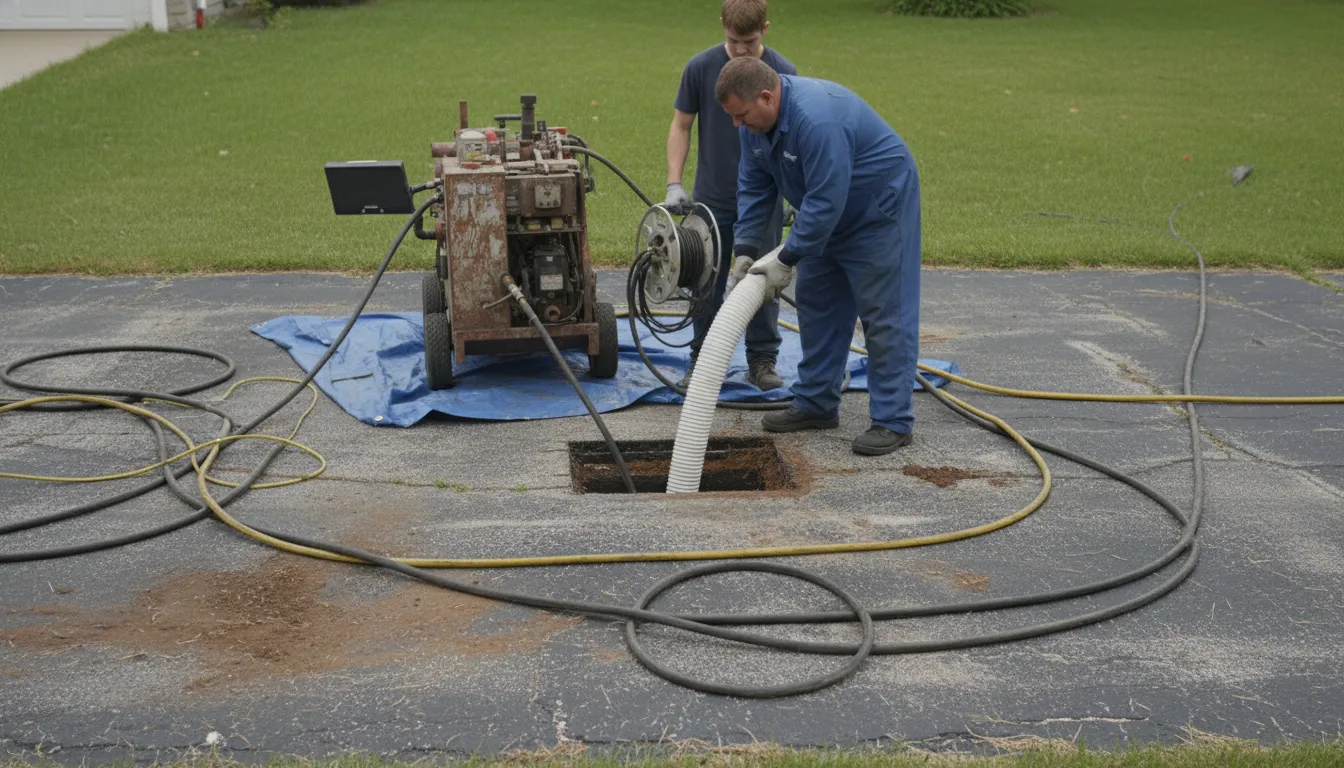
Find the Best Trenchless Sewer Repair Companies for Your Business
No obligation • Fast responses • Nationwide coverage

Why you can trust Search a Plumber
Search a Plumber is a leading United States resource for finding and evaluating professional plumbing services. Our team researches licensing, experience, and customer feedback to create unbiased, fact-driven overviews. Companies cannot pay to change ratings or placement, ensuring homeowners get trustworthy information.
Search providers near you
Top Trenchless Sewer Repair Companies in Kannapolis, North Carolina Ranked
A damaged sewer line is a serious problem for any homeowner, but the thought of a massive, yard-destroying excavation can be just as daunting. Trenchless sewer repair offers a modern solution, fixing underground pipes with minimal digging to preserve your landscaping, driveway, and peace of mind. This guide explains how trenchless pipe repair works in Kannapolis, helping you understand when it's the right choice, what the process entails, and how to find qualified local specialists for your sewer line project.
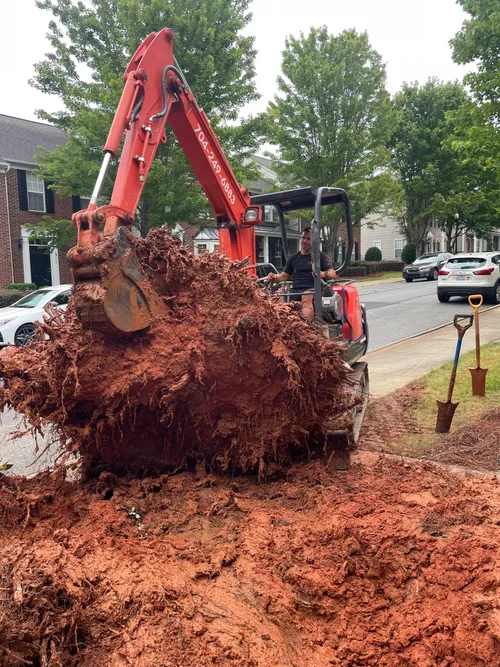
Service Pro Plumbing
6744 Drakestone Rd, Concord, NC 28027
Service Pro Plumbing is a family-owned and operated plumbing company serving Charlotte, NC, and surrounding areas including Concord, Kannapolis, and Mooresville. Established in 2008 with over 20 years of industry experience, they provide residential and light commercial plumbing services. Their offerings include water heater repair and installation, drain cleaning, leak detection, sewer line repair, hydro jetting, and trenchless sewer repair. They are certified in backflow testing and equipped for underground leak detection. Service Pro Plumbing is licensed, bonded, and insured, focusing on quality workmanship and customer satisfaction.
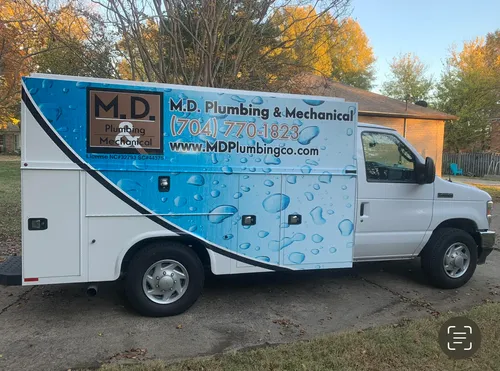
M.D. Plumbing & Mechanical
2240 Stevens Mill Rd, Matthews, NC 28104
M.D. Plumbing & Mechanical is a female-owned, family-run plumbing and mechanical service provider based in Charlotte, NC. With over 30 years of experience, they offer a wide range of residential and commercial plumbing services including water heater installation and repair, drain cleaning, sewer line repair, leak detection, and bathroom remodeling. The company uses advanced technologies such as trenchless sewer repair and state-of-the-art leak detection to minimize disruption and improve efficiency. Licensed and insured in both North and South Carolina, M.D. Plumbing & Mechanical emphasizes personalized service and expert care to meet the unique needs of their customers in Charlotte and surrounding areas.
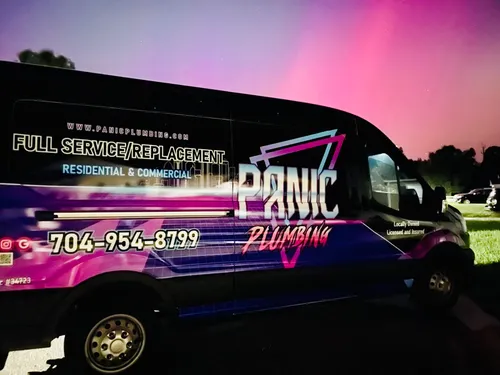
Panic Plumbing
Charlotte, NC
Panic Plumbing is a locally owned and licensed plumbing company serving Charlotte, NC, and surrounding areas. They provide a wide range of residential and commercial plumbing services including drain cleaning, water heater installation and repair, sewer line and trenchless sewer repair, leak detection, gas line installation, and hydro jetting. With over 40 years of experience, Panic Plumbing offers comprehensive diagnostics and repairs, utilizing advanced equipment to ensure accurate problem identification and resolution. The company emphasizes thorough workmanship and safety in all projects.
Jim Dickerson Plumbing, Electrical, Heating & Air
7832 Pence Rd, Charlotte, NC 28215
Jim Dickerson Plumbing, Electrical, Heating & Air has been serving Charlotte, NC, and nearby areas since 1977. They provide a wide range of home services including plumbing, electrical, heating, and air conditioning. Their plumbing services cover water heater repair and installation, including tankless models, drain cleaning, hydro jetting, sewer line repair, leak detection, repiping, and gas line installation. The company offers same-day service and has grown from a small operation to a large fleet of fully stocked trucks, emphasizing customer comfort and care.
Roto-Rooter Plumbing & Water Cleanup
115 Unionville - Indian Trail Rd W B5, Indian Trail, NC 28079
Roto-Rooter Plumbing & Water Cleanup provides comprehensive plumbing services in Charlotte, NC, including emergency plumbing, drain cleaning, water heater repair and installation, sewer line repair, and water softener installation. They offer 24/7 emergency service with same-day response to address urgent plumbing issues. Their capabilities include hydro jetting and trenchless sewer repair methods, allowing efficient and minimally disruptive sewer line restoration. Serving Indian Trail and surrounding areas, Roto-Rooter is fully licensed and insured to handle a wide range of plumbing needs.
Understanding Trenchless Technology: A Modern Alternative
Trenchless sewer repair, often called trenchless pipe lining or no-dig sewer repair, is a method for rehabilitating existing underground sewer pipes without the need for extensive excavation. Instead of digging a long, deep trench to expose the entire pipe, technicians create one or two small access holes. Through these, they insert specialized equipment to clean, inspect, and ultimately repair the pipe from the inside. The core benefit is dramatically reduced disruption to your property, saving you from the costly and time-consuming restoration of lawns, gardens, patios, and driveways that traditional methods require.
This approach is particularly valuable in established neighborhoods like those in Kannapolis, where mature trees, intricate landscaping, and concrete surfaces are common. The technology behind trenchless methods has evolved to address a wide range of common sewer line issues, providing a durable, long-lasting fix that can extend the life of your plumbing system by decades.
When is Trenchless Sewer Repair the Right Solution?
Not every sewer problem can be solved trenchlessly. Understanding the specific scenarios where this method excels will help you make an informed decision.
Opt for Trenchless Repair For:
- Root Intrusion: Tree roots seeking moisture are a leading cause of sewer line blockages and damage in Cabarrus County. Trenchless lining can seal off root-infiltrated joints and cracks.
- Minor Cracks, Leaks, or Corrosion: For pipes that have developed holes, fractures, or are suffering from corrosion but are not fully collapsed, trenchless methods create a seamless new pipe-within-a-pipe.
- Preserving Landscaping or Hardscapes: When the sewer line runs under a driveway, sidewalk, garden, or prized lawn, the no-dig advantage is a primary reason to choose this method.
- Leaking Joints: Older pipes with bell-and-spigot joints can separate over time, causing leaks and infiltration. A cured-in-place pipe (CIPP) liner seals these joints permanently.
Traditional Excavation May Be Necessary For:
- Completely Collapsed Pipes: If a section of pipe has fully imploded, it cannot act as a host for a liner or be burst apart. Excavation is required to remove and replace the collapsed segment 1.
- Severe Pipe Misalignment: Sections of pipe that have shifted dramatically may prevent trenchless equipment from passing through.
- Impossible Access: In some rare cases, the geometry of the existing line or the lack of viable access points makes a trenchless approach unfeasible.
The Trenchless Repair Process: Step-by-Step
A professional trenchless sewer repair follows a meticulous sequence to ensure a successful, code-compliant outcome.
- Camera Inspection: A high-resolution, waterproof video camera is snaked through the sewer line to pinpoint the exact location, nature, and extent of the damage (e.g., root masses, crack patterns, offset joints).
- Access Point Creation: Based on the inspection, technicians dig small, strategic holes (typically at existing cleanouts or at the beginning and end of the damaged section) to access the pipe.
- Pipe Cleaning: Using high-pressure water jetting or mechanical tools, the pipe is thoroughly cleaned of roots, grease, scale, and debris to prepare the interior surface for repair.
- Lining or Bursting: This is the core repair step.
- Cured-In-Place Pipe (CIPP): A flexible, resin-saturated felt tube is inverted or pulled into the old pipe. It is then inflated and cured using hot water or steam, hardening into a rigid, jointless "new" pipe 2.
- Pipe Bursting: A conical bursting head is pulled through the old, damaged pipe, fracturing it outward while simultaneously pulling in a new, high-density polyethylene (HDPE) pipe behind it 3.
- Curing and Cooling: For CIPP, the resin must cure completely. For bursting, the new pipe is secured. This stage is critical for structural integrity.
- Final Inspection and Testing: A post-repair camera inspection verifies the new liner or pipe is seamless, properly aligned, and allows for full flow. The system is then tested to ensure it is watertight.
Permits and Regulations in Kannapolis
Sewer line repair is regulated work. In Kannapolis, which falls under both city and Cabarrus County jurisdiction, a permit is required for sewer line repair or replacement 4. A reputable plumbing contractor will handle this process, which involves submitting plans, paying fees, and scheduling inspections. The permit ensures the work meets local building and plumbing codes, protecting your home's value and safety. Be aware that permit costs can add between $175 to over $1,000 to the total project cost, depending on the scope and local fee structures 5 4.
Find the perfect trenchless sewer repair companies for your needs
Get personalized recommendations and expert advice
Cost Factors for Trenchless Sewer Repair
The cost of trenchless sewer line repair in Kannapolis is influenced by several variables. While often having a higher upfront material cost than simple excavation, the overall project value can be better when restoration costs are considered.
- Cost Per Foot: Trenchless repair is frequently priced by the linear foot. For CIPP lining, costs can range from $135 to $500 or more per foot. Pipe bursting, which installs a entirely new pipe, tends to be on the higher end of that scale 6 7 8.
- Total Project Range: For a typical residential lateral repair of 20 to 30 feet, homeowners can expect total project costs to range from approximately $3,000 to $12,000 or more 9 10.
- Key Cost Drivers:
- Length and Diameter of Pipe: More pipe and larger diameters require more material.
- Extent and Type of Damage: Severe root intrusion or multiple cracks may require additional preparation.
- Access Difficulty: The need to create additional access points, or if the line runs under a concrete slab or deep underground, increases labor and complexity 11.
- Labor and Equipment: Costs for specialized trenchless equipment and skilled technicians.
- Permits and Inspections: Local fees as mentioned above.
The significant savings come from avoiding restoration expenses. Traditional excavation requires backfilling, re-compacting soil, and then repairing or replacing sod, sprinkler systems, fences, and hardscapes like driveways or walkways. These restoration costs, which are largely avoided with trenchless methods, can easily add thousands to an excavation project, making trenchless a cost-competitive or even more economical choice when the full picture is viewed 12.
Choosing a Local Trenchless Specialist
Selecting the right contractor is crucial for a successful trenchless repair. Look for a plumbing company with specific, proven experience in trenchless technologies. They should be licensed, insured, and willing to pull the necessary Kannapolis/Cabarrus County permits. Ask for references from past trenchless projects and inquire about the warranties they offer on both materials and labor. A trustworthy professional will always recommend a video inspection first to definitively diagnose the problem and confirm that trenchless repair is a viable solution for your specific situation.
Frequently asked questions
Sources
Footnotes
-
What Are The Pros and Cons of Trenchless Sewer Repair? | Southern Air - https://www.southernairnow.com/blog/what-are-the-pros-and-cons-of-trenchless-sewer-repair/ ↩
-
Determining Trenchless Sewer Repair Costs - https://www.trenchlessinnovations.com/determining-trenchless-sewer-repair-costs/ ↩
-
Trenchless Sewer Line Repair in Charlotte, NC & SC - https://brotherair.com/plumbing/sewer-lines ↩
-
Trenchless Sewer Repair & Replacement Greenwood Village CO - https://www.servicebyveteran.com/plumbing/trenchless-sewer-line-greenwood-village-co ↩ ↩2
-
Trenchless vs. Traditional Sewer Repair - https://sewerlinesonly.com/trenchless-vs-traditional-sewer-repair-which-is-more-cost-effective-for-lakewood-homeowners/ ↩
-
Trenchless Sewer Repair: Lower Cost, Lower Impact Sewer Repair - https://www.sewerflowllc.com/2025/03/06/trenchless-sewer-repair-lower-cost-lower-impact-sewer-repair/ ↩
-
Empower Your Decision: Decoding Trenchless Sewer Repair Costs - Pipeliner Pros - https://pipelinerpros.com/trenchless-sewer-repair-cost/ ↩
-
The Cost of Sewer Line Replacement: What to Expect - https://dirtcheapsewer.com/the-cost-of-sewer-line-replacement/ ↩
-
How Much Does Trenchless Sewer Line Piping Cost? [2026 ... - https://www.angi.com/articles/trenchless-sewer-line-replacement-cost.htm ↩
-
Trenchless Sewer Repair vs. Traditional Methods: A Kirkland ... - https://greenhouseplumbing.com/trenchless-sewer-repair-vs-traditional-methods-a-kirkland-comparison/ ↩
-
What Trenchless Sewer Repair Costs & What Impacts the Price - https://www.sunsethc.com/what-trenchless-sewer-repair-really-costs-and-what-impacts-the-price/ ↩
-
Sewer Repair Options: Trenchless vs. Traditional Methods | TYCO - https://tycoplumbingco.com/sewer-repair-options-trenchless-vs-traditional-methods/ ↩