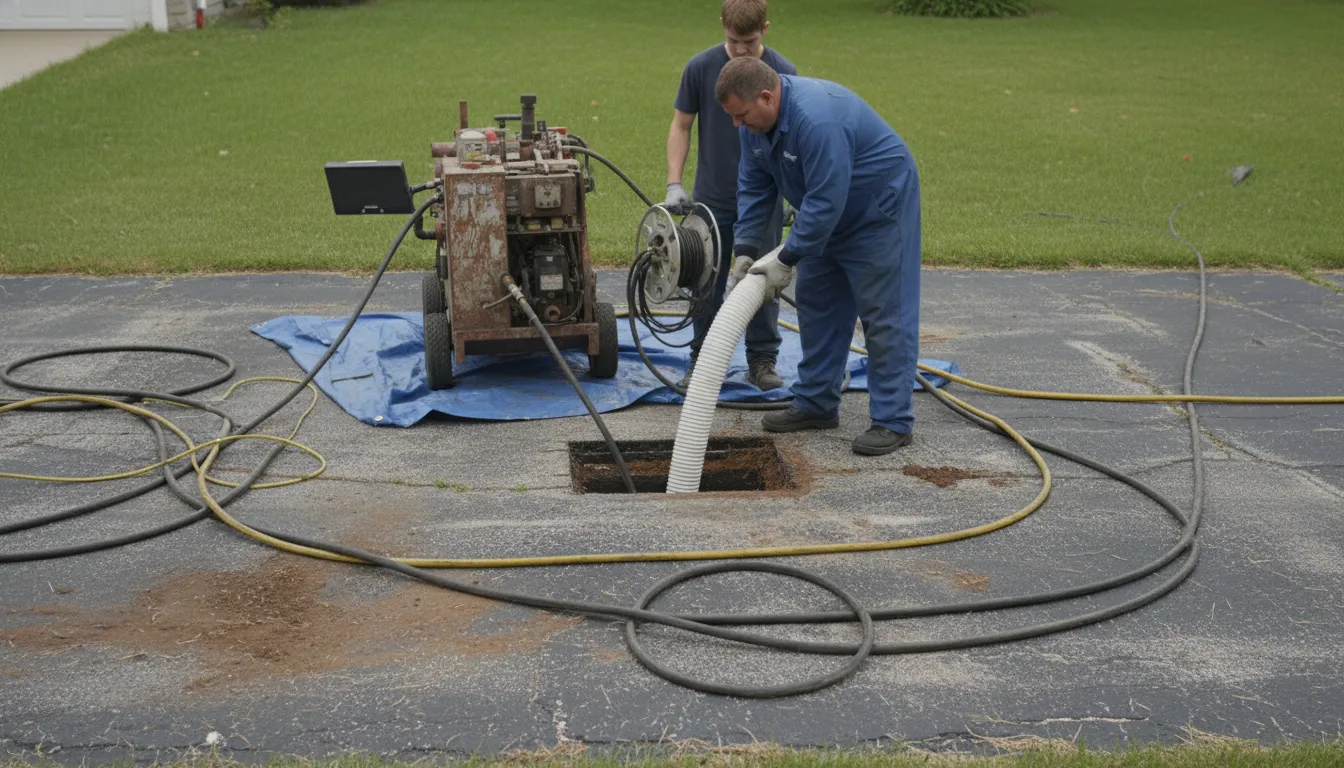
Find the Best Trenchless Sewer Repair Companies for Your Business
No obligation • Fast responses • Nationwide coverage

Why you can trust Search a Plumber
Search a Plumber is a leading United States resource for finding and evaluating professional plumbing services. Our team researches licensing, experience, and customer feedback to create unbiased, fact-driven overviews. Companies cannot pay to change ratings or placement, ensuring homeowners get trustworthy information.
Search providers near you
Top Trenchless Sewer Repair Companies in Huntersville, North Carolina Ranked
A damaged sewer line is a serious problem for any Huntersville homeowner, but the thought of a massive, yard-destroying trench can be just as daunting. Trenchless sewer repair offers a modern solution, fixing underground pipes with minimal excavation to preserve your landscaping, driveway, and peace of mind. This guide explains how trenchless methods like CIPP lining and pipe bursting work, when they are the right choice for your home, and how you can connect with experienced local professionals to assess and resolve your sewer issues efficiently.
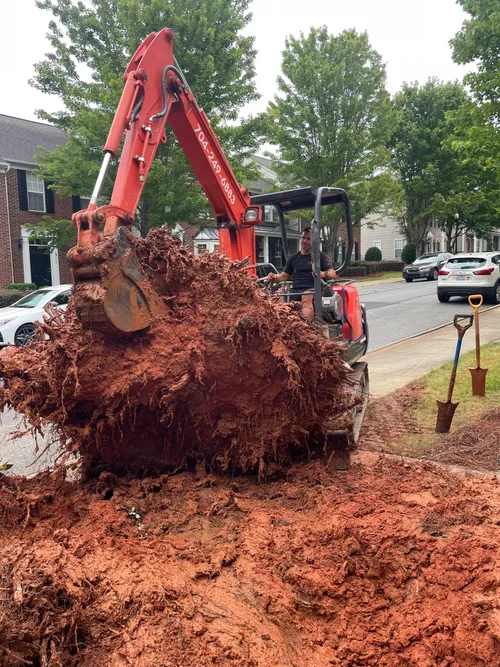
Service Pro Plumbing
6744 Drakestone Rd, Concord, NC 28027
Service Pro Plumbing is a family-owned and operated plumbing company serving Charlotte, NC, and surrounding areas including Concord, Kannapolis, and Mooresville. Established in 2008 with over 20 years of industry experience, they provide residential and light commercial plumbing services. Their offerings include water heater repair and installation, drain cleaning, leak detection, sewer line repair, hydro jetting, and trenchless sewer repair. They are certified in backflow testing and equipped for underground leak detection. Service Pro Plumbing is licensed, bonded, and insured, focusing on quality workmanship and customer satisfaction.
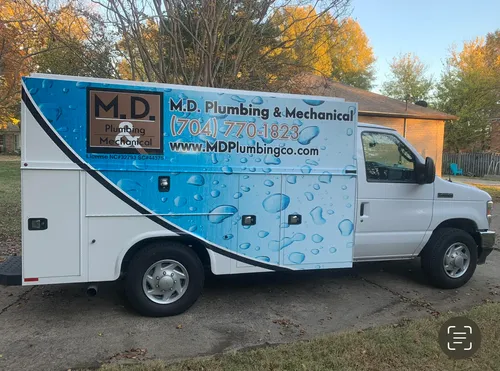
M.D. Plumbing & Mechanical
2240 Stevens Mill Rd, Matthews, NC 28104
M.D. Plumbing & Mechanical is a female-owned, family-run plumbing and mechanical service provider based in Charlotte, NC. With over 30 years of experience, they offer a wide range of residential and commercial plumbing services including water heater installation and repair, drain cleaning, sewer line repair, leak detection, and bathroom remodeling. The company uses advanced technologies such as trenchless sewer repair and state-of-the-art leak detection to minimize disruption and improve efficiency. Licensed and insured in both North and South Carolina, M.D. Plumbing & Mechanical emphasizes personalized service and expert care to meet the unique needs of their customers in Charlotte and surrounding areas.
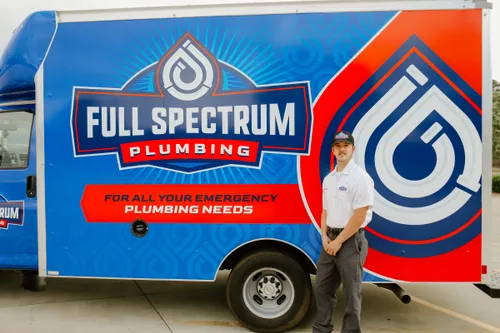
Full Spectrum Plumbing Services
150 B W Thomas Dr, Fort Mill, SC 29708
Full Spectrum Plumbing Services is a licensed plumbing contractor based in Fort Mill, SC, serving the local community and surrounding areas including Tega Cay, Indian Land, Riverview, and Baxter Village. With over 20 years of experience, they provide a wide range of plumbing services such as sewer line repair, tankless water heater installation, leak detection, repiping, and trenchless water line installation. Their team uses advanced equipment for tasks like camera inspections and hydro jetting to address drain and sewer issues efficiently. They also offer emergency plumbing and gas line services with same-day response available.
Panic Plumbing
Charlotte, NC
Panic Plumbing is a locally owned and licensed plumbing company serving Charlotte, NC, and surrounding areas. They provide a wide range of residential and commercial plumbing services including drain cleaning, water heater installation and repair, sewer line and trenchless sewer repair, leak detection, gas line installation, and hydro jetting. With over 40 years of experience, Panic Plumbing offers comprehensive diagnostics and repairs, utilizing advanced equipment to ensure accurate problem identification and resolution. The company emphasizes thorough workmanship and safety in all projects.
Jim Dickerson Plumbing, Electrical, Heating & Air
7832 Pence Rd, Charlotte, NC 28215
Jim Dickerson Plumbing, Electrical, Heating & Air has been serving Charlotte, NC, and nearby areas since 1977. They provide a wide range of home services including plumbing, electrical, heating, and air conditioning. Their plumbing services cover water heater repair and installation, including tankless models, drain cleaning, hydro jetting, sewer line repair, leak detection, repiping, and gas line installation. The company offers same-day service and has grown from a small operation to a large fleet of fully stocked trucks, emphasizing customer comfort and care.
Understanding Trenchless vs. Traditional Sewer Repair
When facing a sewer line problem, you generally have two paths: traditional excavation or trenchless technology. The right choice depends entirely on the condition of your pipe and your property's specific circumstances.
Traditional Excavation involves digging a large, open trench along the entire length of the damaged sewer pipe to expose it for repair or full replacement. This method is often necessary for completely collapsed pipes, severely offset joints, or situations where trenchless methods cannot navigate the extensive damage 1. While effective, it is highly invasive, requiring significant restoration of lawns, driveways, sidewalks, and landscaping.
Trenchless Sewer Repair, including Cured-In-Place Pipe (CIPP) lining and pipe bursting, fixes the pipe from the inside with only small access holes. This approach is ideal for common residential lateral issues like cracks, root intrusion, joint separation, and minor sags where the original pipe still retains its basic structure 2. The primary advantage is the dramatic reduction in surface disruption, saving your beautiful Huntersville yard, mature trees, and hardscapes.
Is Trenchless Repair Right for Your Huntersville Home?
Trenchless technology is a fantastic solution, but it's not a universal fix. A professional diagnosis is essential. Here are the typical scenarios where trenchless methods excel and where traditional excavation may be required.
Ideal Candidates for Trenchless Repair:
- Pipe Damage Type: Cracks, holes, root intrusions, corroded sections, or minor misalignments.
- Pipe Condition: The existing pipe must have a discernible shape and be navigable by a camera and liner. It cannot be fully collapsed.
- Access: There must be adequate access points, such as existing cleanouts or through toilets, to insert the repair equipment.
- Goal: To minimize property damage, preserve landscaping, and complete the repair more quickly.
When Traditional Excavation May Be Necessary:
- Complete Collapse: The pipe has fully flattened or collapsed.
- Severe Offsets: Sections of the pipe are severely misaligned, creating a blockage that trenchless equipment cannot pass.
- Multiple Major Failures: The pipe has extensive, compounded damage over a long section.
- Access Limitations: The necessary access points for trenchless work cannot be created or reached.
The only way to know for sure is with a professional video camera inspection. This critical first step provides a clear, real-time view inside your sewer line, pinpointing the exact location, type, and severity of the problem.
The Trenchless Sewer Repair Process: Step-by-Step
Understanding the process can help you feel confident when discussing options with a contractor. A professional trenchless repair in Huntersville typically follows these key stages:
- Video Camera Inspection: A specialized, waterproof camera is fed through your sewer line. This confirms the diagnosis, maps the pipe's path, and identifies all defects, which is crucial for planning the repair 3.
- Cleaning & Preparation: The pipe is thoroughly cleaned using high-pressure water jetting to remove debris, grease, roots, and obstructions. This ensures a clean surface for the new liner to adhere to.
- Creating Access Points: One or two small holes (typically 4x4 feet or smaller) are dug at strategic points to access the pipe. This is the only excavation required and is a fraction of the size of a traditional trench.
- The Repair Method:
- CIPP Lining: A flexible, resin-saturated felt tube (liner) is inverted or pulled into the damaged pipe. Using air or water pressure, it is expanded to fit tightly against the host pipe's walls. The resin is then cured using steam or UV light, forming a hard, durable "pipe within a pipe" that seals all cracks and holes 4.
- Pipe Bursting: Used when the old pipe needs to be replaced, not just lined. A conical bursting head is pulled through the old pipe, fracturing it outward. Simultaneously, a new, high-density polyethylene (HDPE) pipe is pulled in behind the head, replacing the old line in one step 5 6.
- Final Inspection & Restoration: A post-repair camera inspection verifies the repair's integrity and smoothness. The small access pits are then backfilled, compacted, and the surface (grass, concrete, etc.) is restored as closely as possible to its original condition 7 8.
Find the perfect trenchless sewer repair companies for your needs
Get personalized recommendations and expert advice
Permits, Inspections, and Local Regulations in Huntersville
Sewer line repair is regulated work. In Huntersville, permits are required for sewer line repairs and replacements. The permitting authority could be the Town of Huntersville Planning & Building Department or Mecklenburg County Land Use & Environmental Services Agency, depending on your property's location and specific circumstances.
Your licensed contractor will typically handle pulling the necessary permits, which involves submitting project details and paying a fee. These permits ensure the work meets local building and plumbing codes. The local authority will also schedule mandatory inspections at key stages-often after the access excavation and after the repair is complete but before final backfill. Never hire a contractor who suggests skipping permits; it can lead to fines and problems when you sell your home.
Understanding the Cost of Trenchless Sewer Repair
The cost of trenchless sewer line repair in Huntersville is not a flat fee; it varies based on several project-specific factors. While the following figures are based on national averages, they provide a helpful framework for budgeting 9 10 11.
Primary Cost Factors:
- Pipe Length & Depth: Longer and deeper pipes require more materials and labor.
- Damage Severity & Type: Simple cracks are less costly than multiple root intrusions or offsets.
- Chosen Method: CIPP lining is generally less expensive per foot than pipe bursting.
- Access Difficulty: Complexity in digging access pits can add cost.
- Permits & Inspections: Local permit fees are an additional line item.
- Restoration: The extent of surface restoration needed for the access holes.
Typical Cost Ranges (National Averages):
- CIPP Pipe Lining: Approximately $135 to $150 per linear foot.
- Pipe Bursting: Approximately $150 to $190+ per linear foot.
- Total Project Cost: For a typical residential line, total costs often range from $4,500 to $25,000, with most projects falling between $6,000 and $12,000. A relatively short, straightforward repair may start around $2,000 to $4,000.
- Permit & Inspection Fees: Typically range from $175 to $1,000+, depending on local rates.
While the per-foot cost of trenchless methods can be higher than simple excavation, the total project cost is often competitive when you factor in the thousands of dollars saved on landscape, driveway, and hardscape restoration that traditional digging necessitates.
Maintaining Your Repaired Sewer Line
Once your sewer line is repaired, a little preventative care can help ensure its longevity. Avoid planting trees with aggressive root systems near the line. Be mindful of what goes down your drains; grease, coffee grounds, and non-flushable items (even "flushable" wipes) can contribute to buildup. Consider periodic camera inspections every few years as part of your home maintenance plan, especially if you have mature trees on your property. A proactive approach is the best way to protect your investment and avoid future emergencies.
Frequently asked questions
Sources
Footnotes
-
What Are The Pros and Cons of Trenchless Sewer Repair? - https://www.southernairnow.com/blog/what-are-the-pros-and-cons-of-trenchless-sewer-repair/ ↩
-
Trenchless Sewer Line Repair vs. Sewer Line Excavation - https://dandfplumbing.com/sewer-line-repair-vs-sewer-line-excavation/ ↩
-
Trenchless Sewer Repair Services For Homeowners - CME - https://www.hksolutionsgroup.com/cmesewerrepair/services/trenchless-sewer-repair ↩
-
Empower Your Decision: Decoding Trenchless Sewer Repair Costs - https://pipelinerpros.com/trenchless-sewer-repair-cost/ ↩
-
Sewer Repair Options: Trenchless vs. Traditional Methods | TYCO - https://tycoplumbingco.com/sewer-repair-options-trenchless-vs-traditional-methods/ ↩
-
What Trenchless Sewer Repair Costs & What Impacts the Price - https://www.sunsethc.com/what-trenchless-sewer-repair-really-costs-and-what-impacts-the-price/ ↩
-
Trenchless Sewer Repair vs Traditional - https://piperestorationsolutions.com/trenchless-sewer-repair-vs-traditional/ ↩
-
How Much Does Trenchless Sewer Line Repair Cost? - https://www.sewerrepairs.com/how-much-does-trenchless-sewer-line-repair-cost/ ↩
-
How Much Does Trenchless Sewer Line Repair Cost? - https://alphaenvironmental.net/blog/how-much-does-trenchless-sewer-repair-cost/ ↩
-
How much does it cost to repair a sewer using trenchless methods? - https://sewerpros.com/trenchless-sewer-repair-cost/ ↩
-
How Much Does Trenchless Sewer Line Piping Cost? [2026 ... - https://www.angi.com/articles/trenchless-sewer-line-replacement-cost.htm ↩