Find the Best Trenchless Sewer Repair Companies for Your Business
No obligation • Fast responses • Nationwide coverage

Why you can trust Search a Plumber
Search a Plumber is a leading United States resource for finding and evaluating professional plumbing services. Our team researches licensing, experience, and customer feedback to create unbiased, fact-driven overviews. Companies cannot pay to change ratings or placement, ensuring homeowners get trustworthy information.
Search providers near you
Top Trenchless Sewer Repair Companies in Burlington, North Carolina Ranked
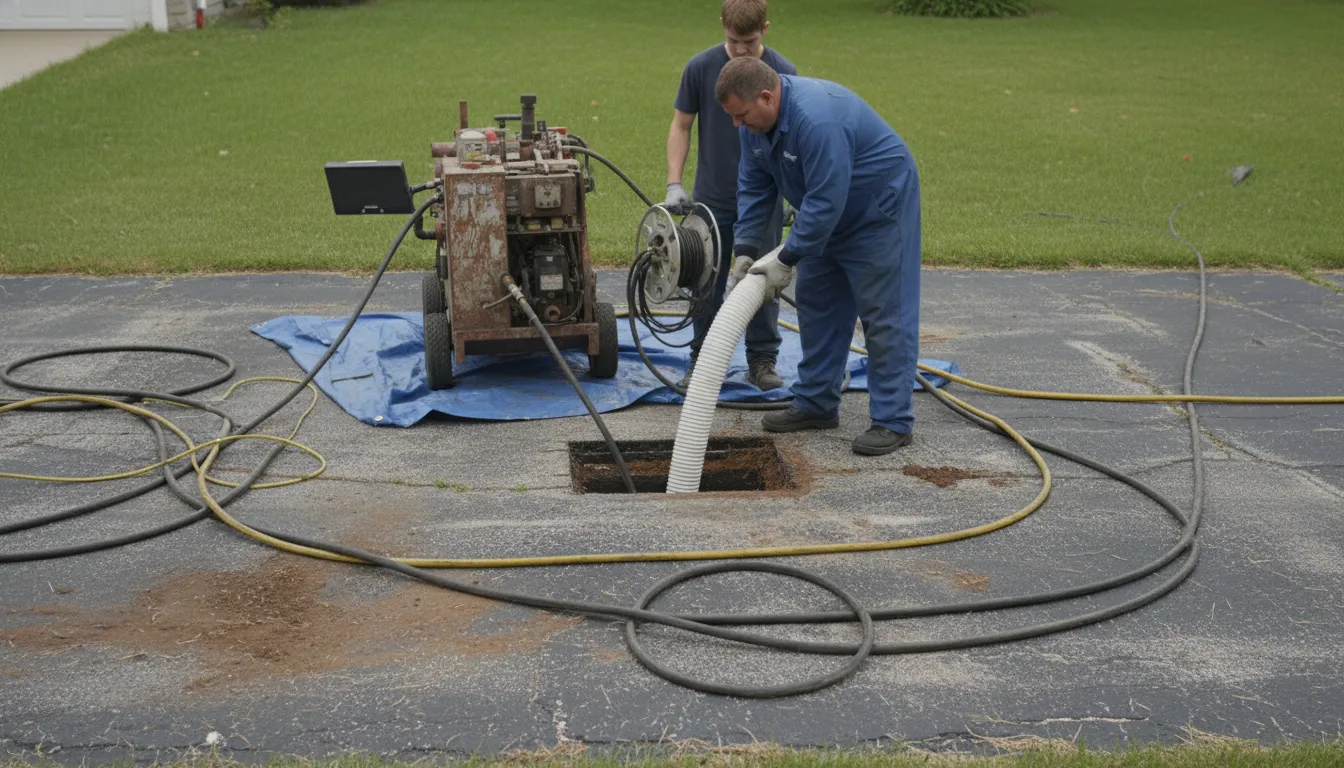
A damaged sewer line is a serious problem that can disrupt your home and threaten your property. Fortunately, modern trenchless sewer repair offers a solution that fixes the pipe with minimal digging, preserving your yard, driveway, and peace of mind. This no-dig method is a faster, often more cost-effective alternative to traditional excavation, making it a preferred choice for many homeowners in Burlington. This guide will help you understand how trenchless technology works, when it's the right option, and what to expect when finding a qualified professional for your sewer line project.
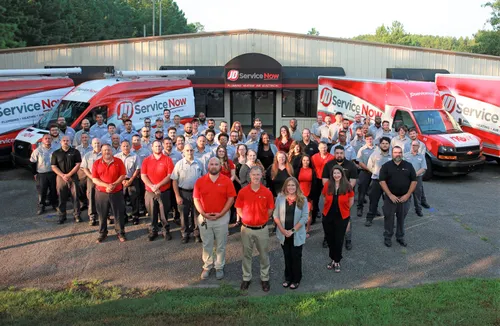
JD Service Now
4416 Bennett Memorial Rd STE 108, Durham, NC 27705
JD Service Now provides a range of home services in Durham, NC, including plumbing, heating, cooling, and electrical work. Their plumbing services cover water heater repair and installation, drain cleaning, hydro jetting, sewer line repair, trenchless sewer repair, leak detection, and repiping. The company is equipped to handle drain and sewer jobs of any size and offers trenchless pipe lining as a minimally invasive option. JD Service Now is known for its focus on integrity and customer service, serving the Durham area with a commitment to honest solutions and respect for customers' homes.
Roto-Rooter Plumbing & Water Cleanup
3329 Durham-Chapel Hill Blvd Suite 200 G, Durham, NC 27707
Roto-Rooter Plumbing & Water Cleanup provides a wide range of plumbing services in Durham, NC, including sewer camera inspections, water heater repairs and installations, drain cleaning, and sewer line repairs. They serve the Durham area with expertise in hydro jetting and trenchless sewer repair methods to minimize disruption during sewer line work. The company offers 24/7 emergency plumbing services to address urgent issues such as frozen pipes, sewer backups, and water heater problems. Roto-Rooter also installs and services water softeners and filtration systems to improve water quality for homes and businesses.
Roto-Rooter Plumbing & Water Cleanup
4 NE Court Square Unit E, Graham, NC 27253
Roto-Rooter Plumbing & Water Cleanup provides comprehensive plumbing services in Greensboro, NC, including sewer and drain cleaning, water heater repair and installation, leak detection, and trenchless sewer repair. They serve both residential and commercial clients, addressing issues from routine maintenance to emergency plumbing needs. The company uses advanced tools like video camera inspections and hydro jetting to diagnose and resolve problems efficiently. Roto-Rooter offers 24/7 emergency plumbing services to handle urgent situations any time of day or night.
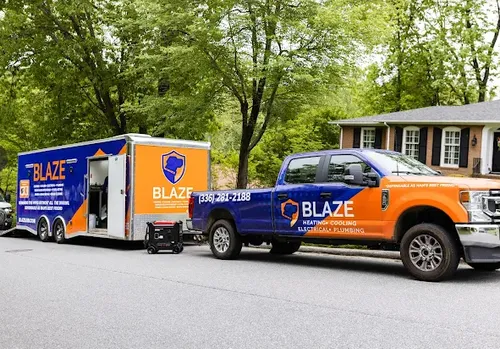
Blaze Heating, Cooling, Electrical & Plumbing - Triad
7 Lockheed Ct, Greensboro, NC 27409
Blaze Heating, Cooling, Electrical & Plumbing - Triad is a home service provider based in Greensboro, NC, offering a wide range of HVAC, plumbing, and electrical services. Their plumbing services include sewer camera inspections, water heater repair and installation, water softener installation, drain cleaning, sewer line repair including trenchless methods, leak detection, and repiping. Founded in 1979, Blaze has over 45 years of experience serving the Triad region of North Carolina. The company provides 24/7 availability for emergency services, ensuring assistance is available day or night.
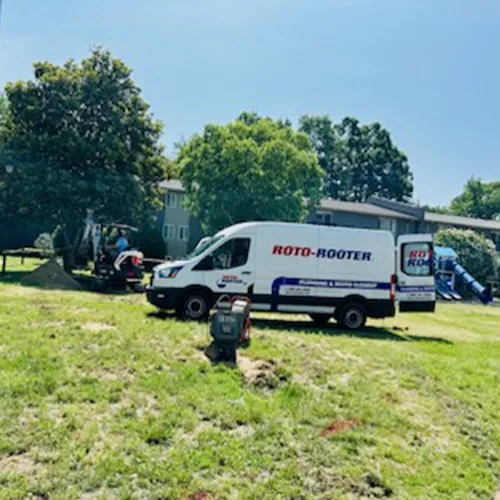
Roto-Rooter Plumbing & Water Cleanup
4248 Piedmont Pkwy, Greensboro, NC 27410
Roto-Rooter Plumbing & Water Cleanup provides comprehensive residential and commercial plumbing services in Greensboro, NC. Their offerings include sewer and drain cleaning, water heater repair and installation, leak detection, sewer line repair using trenchless methods, and emergency flood cleanup. The company uses advanced equipment such as hydro-jetting for drain cleaning and offers 24/7 emergency plumbing services to address urgent issues like burst pipes and sewer backups. Serving Greensboro and surrounding counties, Roto-Rooter is experienced in handling complex plumbing systems and environmental factors unique to the area.
Understanding Trenchless Sewer Technology
Trenchless sewer repair, often called cured-in-place pipe (CIPP) lining or pipe bursting, is a method for repairing or replacing underground pipes without the need for extensive excavation. Instead of digging a long, deep trench across your property, technicians use small access points to rehabilitate the pipe from the inside out. This approach is designed to address common issues like cracks, root intrusion, corrosion, and small holes where the pipe's main structure is still intact.
The core benefit is minimal disruption. Traditional sewer line replacement can turn your yard into a construction site for days or weeks, requiring heavy machinery to dig and then significant labor and expense to restore landscaping, concrete, and hardscapes. Trenchless methods, by contrast, typically involve just one or two small holes at the beginning and end of the pipe section, allowing the work to be completed in a day or two with little to no restoration needed afterward.
Is Trenchless Repair Right for Your Burlington Home?
Trenchless pipe repair is an excellent solution for many situations, but it's not a universal fix. Understanding the condition of your sewer lateral is key to determining the best approach.
Ideal Candidates for Trenchless Methods:
- Cracks and Fractures: Hairline or moderate cracks in clay, cast iron, or PVC pipes.
- Root Intrusion: Roots that have entered through joints or small cracks can be cleared, and the lining seals the entry points.
- Corrosion and Deterioration: Pipes that have lost interior diameter or strength due to age and corrosion but haven't collapsed.
- Misaligned Joints: Small offsets at pipe connections that cause blockages.
- Localized Breaks: Sections of pipe that are broken but the overall line is still in place.
When Traditional Excavation May Be Necessary:
- Complete Collapses: If a pipe section has fully collapsed, it cannot guide a lining tube or bursting head.
- Severe Offsets or Bellies: Major sags or misalignments that cannot be corrected from the inside.
- Extensive Damage: Large sections of pipe that are shattered or missing.
- Material Change Required: If code or situation requires switching to a different pipe material or significantly larger diameter that bursting cannot accommodate.
A professional diagnosis via a sewer camera inspection is the only way to know for sure which method is suitable for your specific line 1.
The Step-by-Step Trenchless Repair Process
A professional trenchless sewer repair in Burlington follows a systematic process to ensure a durable, long-lasting fix.
- Camera Inspection: The first and most critical step is a video camera inspection. A technician sends a high-resolution camera through your sewer line to pinpoint the exact location, nature, and extent of the damage. This diagnosis confirms whether trenchless methods are viable.
- Access and Preparation: Small access holes are dug at strategic points, typically at existing cleanouts or at the start and end of the damaged section. The existing pipe is then thoroughly cleaned using high-pressure water jets or mechanical tools to remove debris, roots, and scale, creating a smooth surface for the new liner.
- Lining or Bursting:
- For CIPP Lining: A flexible tube saturated with a resin epoxy is inverted or pulled into the old pipe. Once in position, it is inflated using air or water pressure, pressing the resin-coated liner against the host pipe's walls.
- For Pipe Bursting: A conical bursting head is pulled through the old, damaged pipe. As it moves, it fractures the old pipe outward while simultaneously pulling a new, high-density polyethylene (HDPE) pipe into place behind it 2.
- Curing: For CIPP lining, the resin must harden. This is often done using ambient temperature, steam, or UV light, a process that can take a few hours. Once cured, the liner forms a rigid, jointless "pipe-within-a-pipe" that is often more durable than the original 3.
- Final Inspection and Restoration: A final camera inspection verifies the new pipe is seamless and properly installed. The small access pits are then backfilled, requiring minimal, if any, landscaping restoration 4.
Find the perfect trenchless sewer repair companies for your needs
Get personalized recommendations and expert advice
Permits, Inspections, and Local Codes in Alamance County
Any significant sewer repair work in Burlington will require proper permits and inspections to ensure the work meets local building and plumbing codes. This protects you as a homeowner and ensures the system functions correctly for the long term.
- Permits: Contractors typically pull the necessary permits from the City of Burlington or Alamance County. If the repair work impacts the public right-of-way (like the section of pipe under the sidewalk or near the city main), a Right-of-Way (ROW) permit will also be required.
- Inspections: A city or county inspector will visit the site at key stages, often after the repair is complete but before the access holes are fully closed. They check that the new connection is sound, the pipe has proper slope for drainage, and the materials used meet code standards. Passing this inspection is crucial for closing out the permit 5.
A reputable trenchless sewer repair provider will handle all permit paperwork and coordinate the required inspections as part of their service.
Cost Considerations for Trenchless Sewer Repair
The cost of trenchless sewer line repair in Burlington is typically calculated per linear foot, with the total price depending on the length of the damaged section, the specific method used, the pipe's material and diameter, and the difficulty of access.
- Trenchless (CIPP Lining or Pipe Bursting): Costs generally range from $100 to $250 or more per linear foot 6 7 8. While the per-foot material cost can be higher than traditional pipe, the overall project cost is often lower because it eliminates thousands of dollars in excavation, backfill, and restoration expenses.
- Traditional Excavation: The cost of digging up and replacing a sewer line can vary widely but often reaches $12,000 to $25,000 or more for a full line replacement. A significant portion of this cost is for labor, machinery, and the extensive work required to restore your yard, driveway, or landscaping to its original condition 9 10.
When comparing quotes, it's essential to consider the total cost, including all restoration. The trenchless method's true value is its ability to solve the sewer problem while saving your property from major disruption, often making it the more economical choice overall 11.
Maintaining Your Repaired Sewer Line
After investing in a trenchless repair, proper maintenance will help ensure its longevity. While the new CIPP liner or HDPE pipe is highly resistant to roots and corrosion, it's not invincible. Avoid flushing anything other than toilet paper and human waste, and be mindful of what goes down kitchen drains to prevent grease buildup. Consider having a professional perform a routine camera inspection every few years to catch any new issues early, especially with older sections of pipe that weren't repaired. A little preventative care can protect your sewer line and your investment for decades to come.
Frequently asked questions
Sources
Footnotes
-
Sewer Pipe Lining vs Residential Excavation - 128 Plumbing - https://www.128plumbing.com/sewer-pipe-lining-vs-residential-excavation/ ↩
-
Sewer Repair Burlington, NC | Next Level Pipe Lining Inc. - https://nextlevelpipelining.com/service-areas/burlington-nc/sewer-repair-burlington-nc/ ↩
-
Trenchless Pipe Repair Burlington, NC - Next Level Pipe Lining - https://nextlevelpipelining.com/service-areas/burlington-nc/trenchless-pipe-repair-burlington-nc/ ↩
-
What Trenchless Sewer Repair Costs & What Impacts the Price - https://www.sunsethc.com/what-trenchless-sewer-repair-really-costs-and-what-impacts-the-price/ ↩
-
Permit and Code Essentials for Trenchless Projects: What Inspectors ... - https://www.wefixdrains.com/blog/permit-and-code-essentials-for-trenchless-projects-what-inspectors-check/ ↩
-
Trenchless Sewer Repair: Lower Cost, Lower Impact Sewer ... - https://www.sewerflowllc.com/2025/03/06/trenchless-sewer-repair-lower-cost-lower-impact-sewer-repair/ ↩
-
Empower Your Decision: Decoding Trenchless Sewer Repair Costs - https://pipelinerpros.com/trenchless-sewer-repair-cost/ ↩
-
How much does it cost to repair a sewer using trenchless methods? - https://sewerpros.com/trenchless-sewer-repair-cost/ ↩
-
Trenchless Sewer Line Repair vs. Sewer Line Excavation - https://dandfplumbing.com/sewer-line-repair-vs-sewer-line-excavation/ ↩
-
The Cost of Sewer Line Replacement: What to Expect - https://dirtcheapsewer.com/the-cost-of-sewer-line-replacement/ ↩
-
Sewer Repair Cost: Trenchless Vs Traditional Methods - https://www.superbrothers.com/sewer-repair-cost-trenchless-vs-traditional-methods/ ↩