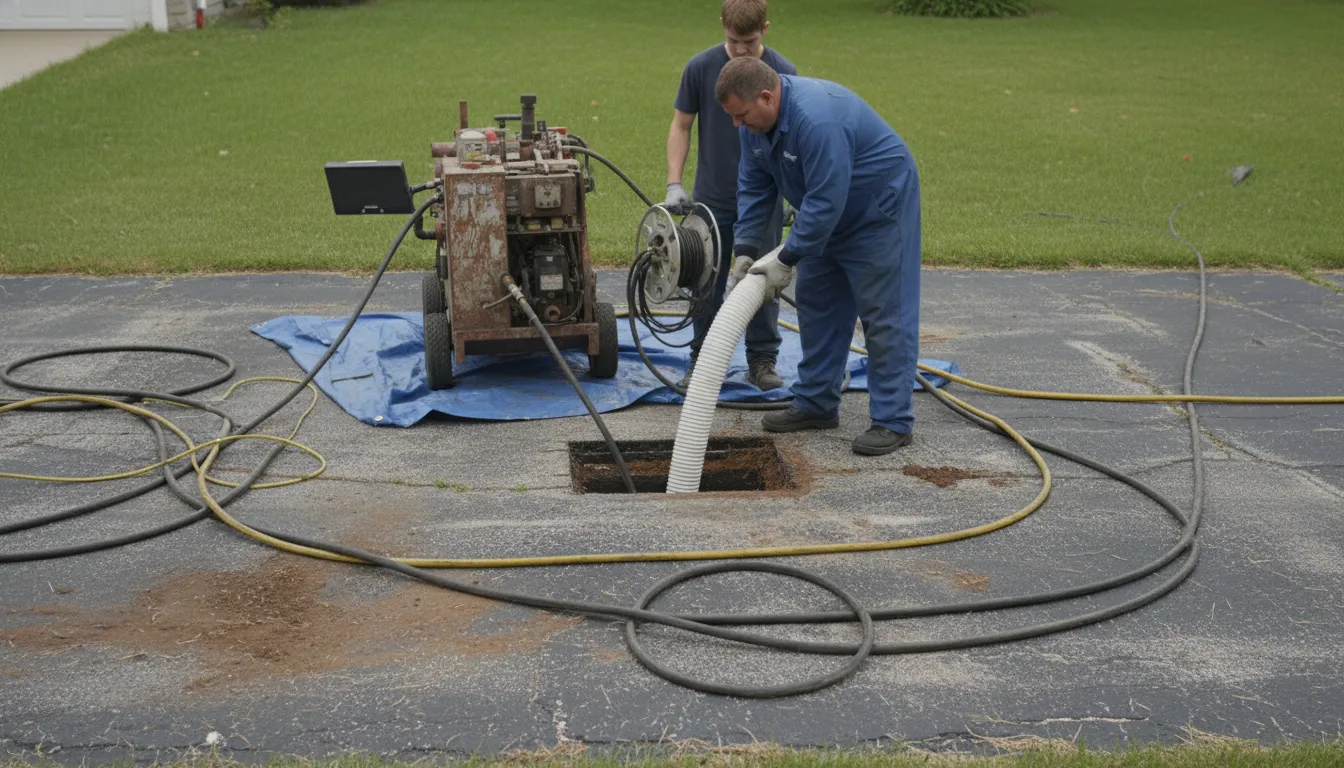
Find the Best Trenchless Sewer Repair Companies for Your Business
No obligation • Fast responses • Nationwide coverage

Why you can trust Search a Plumber
Search a Plumber is a leading United States resource for finding and evaluating professional plumbing services. Our team researches licensing, experience, and customer feedback to create unbiased, fact-driven overviews. Companies cannot pay to change ratings or placement, ensuring homeowners get trustworthy information.
Search providers near you
Top Trenchless Sewer Repair Companies in Winter Haven, Florida Ranked
A damaged sewer line is a serious problem that can disrupt your home and threaten your property. Trenchless sewer repair offers a modern, minimally invasive solution to fix broken pipes without the need for extensive, destructive digging across your yard or driveway. This guide explains how trenchless methods work, when they are the right choice for Winter Haven homes, and what you can expect from the process. You can use the information here to understand your options and connect with qualified local specialists who can assess your specific situation.
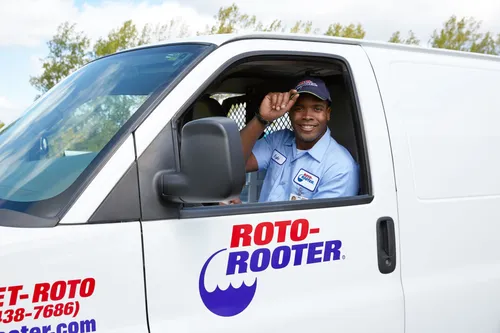
Roto-Rooter Plumbing & Water Cleanup
1234 S John Young Pkwy, Kissimmee, FL 34741
Roto-Rooter Plumbing & Water Cleanup is a plumbing service provider located in Orlando, FL, offering a wide range of plumbing and water-related solutions. Their services include sewer camera inspections, water heater repairs and installations, water softener installation, drain cleaning, hydro jetting, and sewer line repair using both conventional excavation and trenchless methods. They also provide water filtration system installations to improve water quality. Roto-Rooter serves the Kissimmee metro area and surrounding communities. The company is available 24/7 to address urgent plumbing emergencies and uses video camera inspections to diagnose sewer line issues accurately.
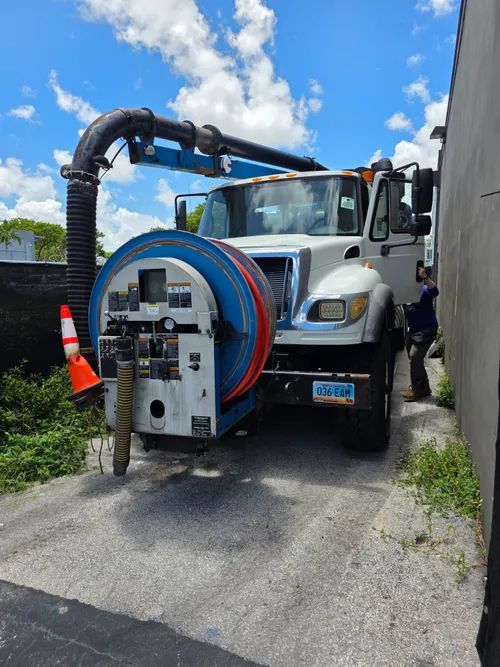
Orlando Trenchless Repairs
Orlando, FL
Orlando Trenchless Repairs provides sewer maintenance, inspection, repair, and replacement services for residential and commercial properties in Orlando, FL. They specialize in trenchless sewer line repair and replacement, which minimizes landscape disruption and improves pipe integrity and water flow. Their process includes cleaning, installation, and inspection, typically completed within two days. The company uses innovative cured-in-place pipe lining technology to repair old cast iron pipes without extensive digging. Customers have noted the professionalism and efficiency of their work.
Understanding Trenchless Sewer Line Solutions
Often called "no-dig" sewer repair, trenchless technology is a family of methods designed to rehabilitate existing underground pipes from the inside. The core principle is simple: instead of excavating a long, deep trench to remove and replace the old pipe, technicians access the line through small entry and exit pits. They then insert new structural piping inside the old, damaged conduit. This approach is particularly valuable in a city like Winter Haven, where preserving mature landscaping, patios, and driveways is a top priority for homeowners. The two most common trenchless techniques are Cured-in-Place Pipe (CIPP) lining and pipe bursting, both of which provide a durable, long-lasting repair with dramatically less surface disruption.
Is Trenchless Repair Right for Your Home?
Not every sewer problem can be solved with a trenchless method. Understanding the distinction helps set realistic expectations and ensures the correct solution is applied to your property's issue.
Ideal Candidates for Trenchless Repair
Trenchless pipe lining and bursting are excellent solutions for a range of common sewer line failures, especially when minimizing surface damage is crucial. This method is highly effective for:
- Root Intrusion: Tree roots seeking moisture can infiltrate pipe joints and cracks, causing blockages and damage.
- Cracks and Fractures: Aging pipes, ground movement, or corrosion can lead to cracks that leak wastewater into the surrounding soil.
- Leaky Joints: The seals between sections of older pipe can degrade, allowing seepage.
- Minor Breaks or Corrosion: Pipes that have lost structural integrity but are not fully collapsed.
- Pipes Under Obstacles: The prime application for trenchless technology is repairing lines that run under driveways, sidewalks, pools, gardens, or even house foundations 1.
When Traditional Excavation May Be Necessary
There are circumstances where full excavation and replacement remain the only viable option. A professional camera inspection is essential to identify these conditions. Excavation is typically required for:
- Severely Collapsed Pipes: If a pipe section is fully flattened or crushed, a liner cannot be passed through it.
- Extreme Misalignment: Sections of pipe that have shifted dramatically may prevent the passage of lining or bursting equipment.
- Complete Deterioration: Pipes that are so degraded they cannot support a new liner internally.
- Multiple Major Failures: In some cases, if the pipe has several large, separated failures, replacement might be more cost-effective 2.
The Trenchless Repair Process: Step-by-Step
A professional trenchless sewer repair follows a meticulous, multi-stage process to ensure a successful and code-compliant outcome.
- Comprehensive Camera Inspection: The process always begins with a detailed video inspection. A specialized camera is fed through the sewer line to pinpoint the exact location, nature, and extent of the damage. This diagnostic step is non-negotiable, as it confirms whether trenchless repair is feasible and determines the best technique to use.
- Thorough Pipe Cleaning: Before any repair can begin, the existing pipe must be meticulously cleaned. High-pressure water jetting or mechanical scraping is used to remove roots, grease, scale, and debris from the pipe walls. This ensures a clean surface for the new liner to bond to.
- Liner Preparation (for CIPP): For Cured-in-Place Pipe lining, a flexible tube made of felt or fiberglass is saturated with a special resin (often epoxy). This tube is custom-fabricated to match the length and diameter of the damaged pipe section.
- Liner Insertion and Curing: The resin-saturated liner is inserted into the host pipe through an access pit. Using air or water pressure, it is inverted or expanded so it presses tightly against the old pipe's interior walls. It is then cured in place using hot water, steam, or UV light, hardening the resin to form a rigid, jointless "pipe-within-a-pipe" 3.
- Final Inspection and Restoration: After curing, a final camera inspection verifies the new liner is seamless, properly sealed, and meets all structural requirements. The small access pits are then backfilled, resulting in minimal restoration work-often just sod or patch repairs, frequently completed within a single day.
Find the perfect trenchless sewer repair companies for your needs
Get personalized recommendations and expert advice
Permits, Inspections, and Local Codes in Winter Haven
Like any significant plumbing work, trenchless sewer repairs in Winter Haven are subject to local building codes and permit requirements. Reputable contractors handle this process for homeowners. Typically, a permit is required for sewer line repair or replacement. This may include a Right-of-Way (ROW) permit if the work involves a public easement. Contractors must also often obtain approval for any temporary discharge of cleaning water. Crucially, the finished repair will require a final inspection by a city or county official. This inspection usually involves reviewing the post-repair camera footage to confirm the new lining is sound and the repair complies with all local plumbing codes 4. Working with a licensed professional ensures this critical administrative and compliance work is handled correctly.
Understanding the Cost of Trenchless Sewer Repair
The investment in a trenchless sewer repair is influenced by several specific factors related to your property and the damage.
Cost Range and Factors
In the Winter Haven area, trenchless sewer repair costs generally range from $135 to $285 per linear foot. Total project costs often fall between $2,000 and $6,000 or more, depending on the project's scope 5 6 7. Key factors that influence the final price include:
- Length and Diameter of the Pipe: Longer repairs and larger diameter pipes require more material.
- Location and Depth: Pipes under obstacles or at greater depths can increase complexity.
- Severity and Type of Damage: The repair method (simple lining vs. pipe bursting) is chosen based on the damage.
- Pipe Material: The condition of the existing pipe material can affect preparation work.
- Local Labor and Permit Rates: These can vary by municipality.
Evaluating the Overall Value
While the per-foot cost of a trenchless method can sometimes be higher than traditional digging, it is crucial to consider the total project cost. Traditional excavation involves massive expenses that trenchless technology avoids: the cost of heavy equipment for digging, the labor for extensive excavation, and-most significantly-the high cost of restoring your landscape, concrete driveway, sprinkler systems, or decorative hardscaping. When these restoration costs are factored in, trenchless sewer repair often provides a superior overall value by preserving your property and saving thousands in landscaping bills 8.
Benefits of Choosing a Trenchless Method
Opting for a no-dig sewer repair offers compelling advantages beyond just cost considerations:
- Minimal Property Disruption: Your lawn, garden, and hardscapes remain largely intact.
- Speed: Many trenchless repairs are completed in just one or two days.
- Durability: The new pipe lining is resistant to root intrusion and corrosion, often with a lifespan of 50 years or more.
- Improved Flow: The smooth interior of the new liner can improve water flow compared to old, corroded pipes.
- Environmental Benefit: It generates far less waste material (the old pipe remains in the ground) and reduces soil disturbance 9 10 11.
Frequently asked questions
Sources
Footnotes
-
Trenchless Sewer Repair - Pipeliner Pros - https://pipelinerpros.com/lp-trenchless-sewer-repair/ ↩
-
What Homeowners Should Know About Trenchless Pipe Repairs - https://www.cdplumbing.net/blog/2024/february/what-homeowners-should-know-about-trenchless-pip/ ↩
-
Trenchless Pipe Repair in Central FL - Pipeflow Solutions - https://pipeflowsolutions.com/trenchless-pipe-repair/ ↩
-
Permit and Code Essentials for Trenchless Projects: What Inspectors ... - https://www.wefixdrains.com/blog/permit-and-code-essentials-for-trenchless-projects-what-inspectors-check/ ↩
-
How Much Does Trenchless Sewer Line Piping Cost? [2026 Data] - https://www.angi.com/articles/trenchless-sewer-line-replacement-cost.htm ↩
-
How much does it cost to repair a sewer using trenchless methods? - https://sewerpros.com/trenchless-sewer-repair-cost/ ↩
-
Trenchless vs Traditional Sewer Repair - LCS Lining Coating ... - https://liningcoatingsolutions.com/services/trenchless-vs-traditional/ ↩
-
Empower Your Decision: Decoding Trenchless Sewer Repair Costs - https://pipelinerpros.com/trenchless-sewer-repair-cost/ ↩
-
Trenchless Sewer Repair vs. Traditional Excavation - AQUALIS - https://aqualisco.com/trenchless-sewer-repair-vs-traditional/ ↩
-
What Are The Pros and Cons of Trenchless Sewer Repair? - https://www.southernairnow.com/blog/what-are-the-pros-and-cons-of-trenchless-sewer-repair/ ↩
-
Trenchless vs. Traditional Sewer Repair - https://sewerlinesonly.com/trenchless-vs-traditional-sewer-repair-which-is-more-cost-effective-for-lakewood-homeowners/ ↩