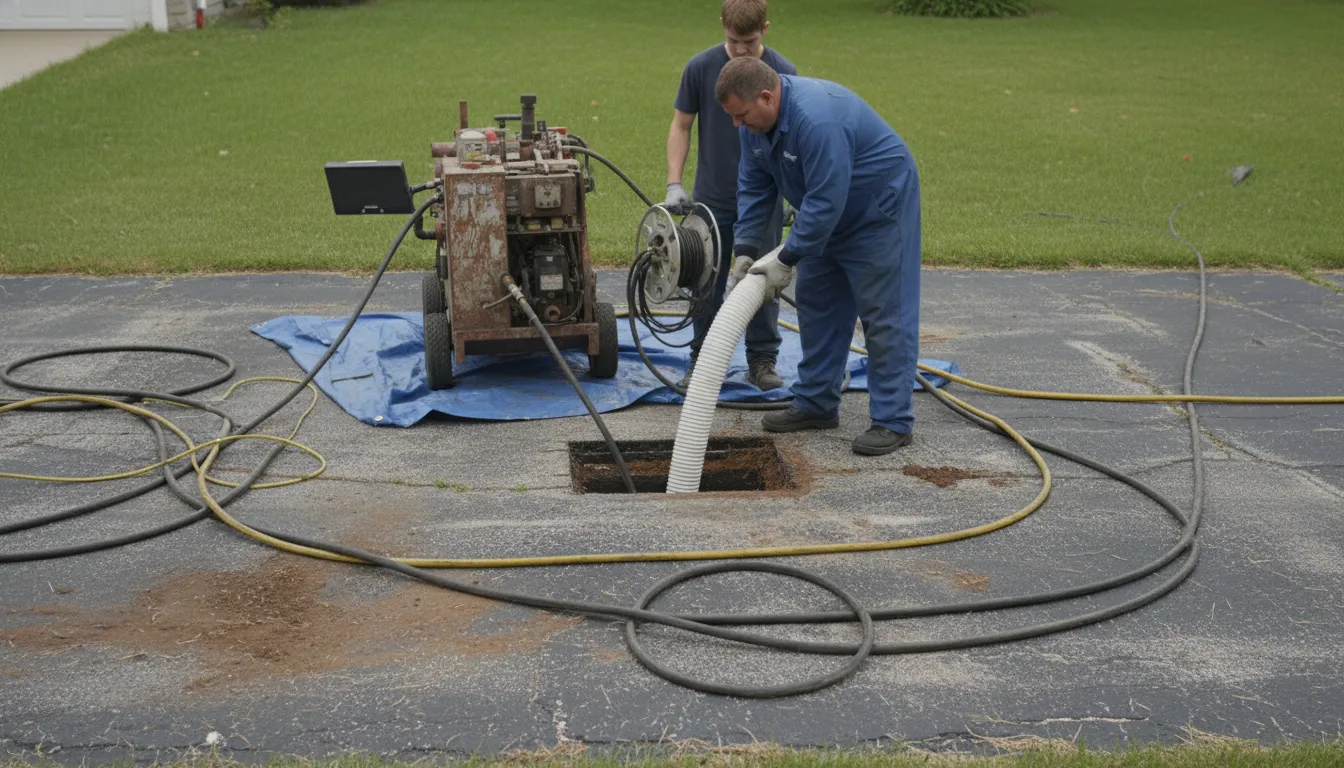
Find the Best Trenchless Sewer Repair Companies for Your Business
No obligation • Fast responses • Nationwide coverage

Why you can trust Search a Plumber
Search a Plumber is a leading United States resource for finding and evaluating professional plumbing services. Our team researches licensing, experience, and customer feedback to create unbiased, fact-driven overviews. Companies cannot pay to change ratings or placement, ensuring homeowners get trustworthy information.
Search providers near you
Top Trenchless Sewer Repair Companies in Deltona, Florida Ranked
A damaged sewer line is a serious problem for any Deltona homeowner, but the traditional solution-digging a massive trench across your yard-can be almost as disruptive as the initial issue. Trenchless sewer repair offers a modern alternative, fixing pipes from the inside with minimal excavation to preserve your landscaping, driveway, and peace of mind. This guide explains how no-dig sewer repair works, when it's the right choice for your property, and what you can expect from the process and investment.
Roto-Rooter Plumbing & Water Cleanup
1535 W Broadway St, Oviedo, FL 32765
Roto-Rooter Plumbing & Water Cleanup provides comprehensive plumbing services in Orlando, FL, including sewer camera inspections, water heater repair and installation, drain cleaning, and sewer line repair. They offer specialized capabilities such as hydro jetting and trenchless sewer repair methods to minimize disruption during sewer line work. The company serves a wide area around Orlando and is available 24/7 for emergency plumbing services. Their expertise includes installation and maintenance of various water softeners and filtration systems to address hard water issues common in the region.
Roto-Rooter Plumbing & Water Cleanup
109 W Commercial St Ste 107A, Sanford, FL 32771
Roto-Rooter Plumbing & Water Cleanup provides a wide range of plumbing services in Orlando, FL, including sewer camera inspections, water heater repairs and installations, drain cleaning, and sewer line repairs. They specialize in both conventional and trenchless sewer line repair methods and offer water softener and filtration system installations to address hard water issues common in the area. The company serves Sanford and nearby communities such as Apopka and Lake Mary. Roto-Rooter is available 24/7 for emergency plumbing services, ensuring prompt response to urgent issues like sewer backups and water heater failures.
The Leak Doctor Inc
421 W Robinson St, Orlando, FL 32801
The Leak Doctor Inc provides leak detection and trenchless sewer repair services in Orlando, FL. They use advanced technology such as ultrasound, endoscopic video, and thermography to locate leaks quickly and accurately, minimizing damage to homes. Their trenchless repair methods allow for efficient fixes without excavation, preserving property while addressing plumbing issues. With over 38 years of experience, The Leak Doctor Inc serves Central Florida with tailored solutions for leak detection, repair, and pipe assessment. They also offer emergency plumbing support and work with insurance companies to assist homeowners through the claims process.
We Fix Drains
421 W Robinson St STE C, Orlando, FL 32801
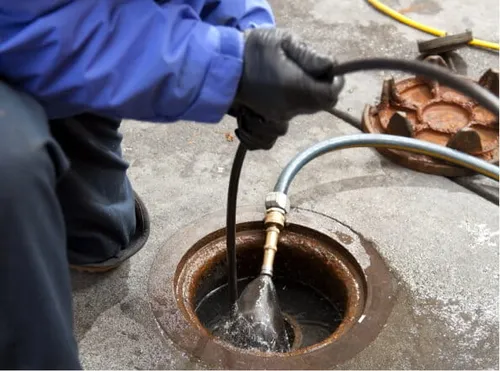
We Fix Drains is a plumbing service provider based in Orlando, FL, specializing in drain cleaning, sewer line repair, and trenchless pipe restoration. They serve Orlando and surrounding areas in Central Florida, addressing issues like slow drains, blockages, and deteriorating cast iron pipes. Their services include high-pressure hydro jetting to clear tough clogs and advanced video inspections to identify pipe damage. Using trenchless pipe repair technology, they restore pipes with epoxy lining, avoiding disruptive excavation. With over 30 years of experience, We Fix Drains offers long-lasting solutions designed to minimize property disruption.
Cloud 9 Services, A Wind River Company
1201 W Jackson St, Orlando, FL 32805
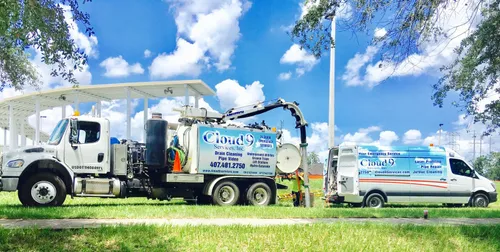
Cloud 9 Services, A Wind River Company, is an underground utilities expert based in Orlando, FL. They provide comprehensive septic and plumbing solutions for municipal, industrial, and commercial clients throughout Florida. Their services include drain cleaning, sewer line repair, video pipe inspections, and hydroexcavation, with a focus on addressing challenges like clogged sewer lines, grease buildup, and pipe corrosion common in the region. With over 20 years of local experience and backed by the legacy of Wind River Environmental since 1946, Cloud 9 offers reliable infrastructure maintenance and repair. The company is available 24/7 for emergency services, ensuring support whenever needed.
What is Trenchless Sewer Repair?
Trenchless sewer repair, often called no-dig pipe repair, is a method for rehabilitating damaged underground sewer lines without the need for extensive digging. Instead of excavating a long, deep trench to access the entire pipe, technicians use small access points at the beginning and end of the damaged section. Through these openings, they can insert a new, durable pipe liner or pull through a replacement pipe, effectively creating a new pipe within or in place of the old one. This approach is designed to address common issues like root intrusion, cracks, and corrosion while drastically reducing the impact on your property.
The core appeal of this method is its minimally invasive nature. For homes in Deltona with mature trees, landscaped gardens, or concrete driveways, the cost and hassle of restoring a yard after traditional excavation can be overwhelming. Trenchless technology sidesteps this problem, allowing for a faster repair with little to no landscape destruction 1.
Common Problems Trenchless Repair Can Fix
Not every sewer line issue requires a full excavation. Trenchless methods are highly effective for a range of common subsurface problems. Understanding what can be fixed helps determine if your home is a candidate for a no-dig solution.
- Root Intrusion: This is a frequent issue in Florida, where tree roots seek out moisture and nutrients from small cracks or pipe joints. Trenchless lining creates a seamless, jointless barrier inside the old pipe that roots cannot penetrate.
- Cracks and Fractures: Ground shifting, settling, or age can cause pipes to crack. Epoxy-saturated liners used in trenchless repair seal these cracks from the inside, restoring structural integrity.
- Corrosion and Deterioration: Older pipes, like cast iron or Orangeburg, can corrode and weaken over time. A new cured-in-place pipe (CIPP) liner acts as a new, corrosion-resistant pipe within the host pipe.
- Offset or Misaligned Joints: Sections of pipe can become offset due to soil movement. Pipe bursting, a specific trenchless method, can pull a new pipe through while simultaneously breaking apart the misaligned sections.
- Bellied Pipes: A low spot or "belly" in a line where waste collects can cause recurring clogs. While severe bellies may require excavation, many can be addressed during the cleaning and lining process.
When is Traditional Excavation Necessary?
While trenchless technology is versatile, there are situations where traditional, full excavation remains the necessary course of action. It's important for Deltona homeowners to know the limitations to set realistic expectations.
Trenchless repair is typically not suitable if the existing sewer pipe has completely collapsed. The methods require an existing, mostly intact pathway to guide the new liner or bursting head. Similarly, if there are major line breaks where large sections of pipe are missing or shattered, excavation is often the only reliable fix 2. The condition of the existing pipe material also matters; if it is too degraded, brittle, or crushed, it may not provide a stable host for a new liner.
A professional diagnosis via a sewer camera inspection is the only way to definitively determine which method is right for your situation. A qualified technician will be able to show you the exact condition of your line and recommend the most effective and economical repair strategy 3.
The Trenchless Repair Process: Step-by-Step
A professional trenchless sewer repair follows a systematic process to ensure a durable, long-lasting solution. Here's what you can expect from start to finish.
- Comprehensive Camera Inspection: The process always begins with a detailed video inspection. A high-resolution camera is fed through the sewer line to pinpoint the exact location, nature, and extent of the damage. This diagnostic step is crucial for planning the repair and confirming that trenchless methods are viable.
- Thorough Pipe Cleaning: Before any repair can happen, the existing pipe must be cleaned. Technicians use high-pressure water jetting or mechanical tools to remove debris, scale, roots, and obstructions. This creates a clean, smooth surface for the new liner to adhere to.
- Lining or Bursting: This is the core of the no-dig repair.
- Cured-In-Place Pipe (CIPP): A flexible, resin-saturated felt liner is inverted or pulled into the damaged pipe. It is then inflated and left to cure, often using hot water or ambient temperature, forming a rigid, jointless "pipe within a pipe" 4.
- Pipe Bursting: A conical bursting head is pulled through the old pipe, fracturing it outward while simultaneously pulling a new, high-density polyethylene (HDPE) pipe into place behind it. This method actually replaces the old pipe with a new one of equal or larger diameter 5.
- Curing and Final Inspection: For CIPP, the liner must fully harden (cure) to achieve its designed strength. Once cured, a final camera inspection is conducted to verify the new pipe's integrity, smooth interior, and proper flow. This provides proof that the repair is complete and up to standard 6.
Find the perfect trenchless sewer repair companies for your needs
Get personalized recommendations and expert advice
Understanding Permits and Inspections in Deltona
Sewer line repairs are not just a private matter; they involve public infrastructure that connects to city mains. In Deltona and surrounding Volusia County, permits are almost always required for sewer line work. The permitting process ensures the repair meets local building and plumbing codes, protecting your property and the municipal system.
The cost for these permits can vary but often adds between $500 and $1,000+ to the overall project cost 7. Your plumbing contractor will typically handle pulling the permits, which is a strong reason to hire a licensed and insured professional familiar with local regulations. Furthermore, city or county inspectors will likely need to visit the site, sometimes both before the work begins and after it is completed, to approve the connection and methods used. Factoring in these administrative steps is an important part of planning your sewer repair timeline and budget.
Trenchless Sewer Repair Cost Factors
The cost of trenchless sewer repair in Deltona is influenced by several key variables. While it can represent a significant investment, it's important to view it in comparison to the total cost of traditional excavation, which includes massive restoration expenses.
- Per Linear Foot Cost: The most common way to estimate cost is by the linear foot. For trenchless methods, you can generally expect a range of $135 to $285 or more per linear foot 8. The final price depends on the chosen method (CIPP vs. pipe bursting), the diameter and depth of the pipe, and the difficulty of access.
- Typical Project Range: For a standard shorter run (e.g., under 50 feet), a CIPP lining project might cost between $1,900 and $6,000 9 10. Longer runs common in Deltona, say 75 to 100 feet, can range from $4,500 to $25,000, with the higher end reflecting more complex situations or pipe bursting 11 10.
- The True Savings: While the upfront per-foot cost of trenchless repair can sometimes be higher than excavation alone, the overall cost is frequently lower. This is because traditional digging requires expensive restoration of landscaping, sod, irrigation systems, driveways, sidewalks, or patios. By avoiding this destruction, trenchless repair eliminates these substantial ancillary costs, making it a more economical choice in the vast majority of cases.
Advantages Over Traditional Digging
Choosing a trenchless solution offers benefits that extend beyond just cost considerations.
- Minimal Landscape Disruption: Your yard, garden, and hardscapes remain virtually untouched. This is the most significant advantage for homeowners who have invested in their outdoor living spaces.
- Faster Completion: Without the need for massive excavation and lengthy restoration, most trenchless repairs can be completed in one to two days.
- Increased Pipe Durability: The materials used in CIPP lining and HDPE pipe are highly resistant to corrosion, root intrusion, and chemical wear, often providing a longer lifespan than the original pipe.
- Improved Flow Capacity: The smooth interior of the new liner or pipe can improve flow efficiency, and pipe bursting can even increase the pipe diameter.
- Reduced Safety Risks: Eliminating deep, open trenches around your property reduces potential safety hazards for your family, pets, and the work crew.
Frequently asked questions
Sources
Footnotes
-
What Are The Pros and Cons of Trenchless Sewer Repair? - https://www.southernairnow.com/blog/what-are-the-pros-and-cons-of-trenchless-sewer-repair/ ↩
-
Trenchless Pipe Replacement Daly City - Discount Plumbing - https://discountplumbingrooterinc.com/services/trenchless-sewer-services-repairs/ ↩
-
Understanding Trenchless No-Dig Pipe Repair: An Introductory Guide - https://piperestorationsolutions.com/understanding-trenchless-no-dig-pipe-repair-an-introductory-guide/ ↩
-
Trenchless Sewer Pipe Repair - https://www.blueworkscompany.com/trenchless-sewer-pipe-repair/ ↩
-
Trenchless Sewer Repair vs. Traditional Excavation - AQUALIS - https://aqualisco.com/trenchless-sewer-repair-vs-traditional/ ↩
-
Trenchless Pipe Repair - Sewer Solutions - https://sewersol.com/trenchless-pipe-repair/ ↩
-
Trenchless Sewer Repair - Pipeliner Pros - https://pipelinerpros.com/lp-trenchless-sewer-repair/ ↩
-
Trenchless Sewer Repair: Lower Cost, Lower Impact Sewer ... - https://www.sewerflowllc.com/2025/03/06/trenchless-sewer-repair-lower-cost-lower-impact-sewer-repair/ ↩
-
Trenchless vs Traditional Sewer Repair - LCS Lining Coating ... - https://liningcoatingsolutions.com/services/trenchless-vs-traditional/ ↩
-
How much does it cost to repair a sewer using trenchless methods? - https://sewerpros.com/trenchless-sewer-repair-cost/ ↩ ↩2
-
How Much Does Trenchless Sewer Line Piping Cost? [2026 Data] - https://www.angi.com/articles/trenchless-sewer-line-replacement-cost.htm ↩