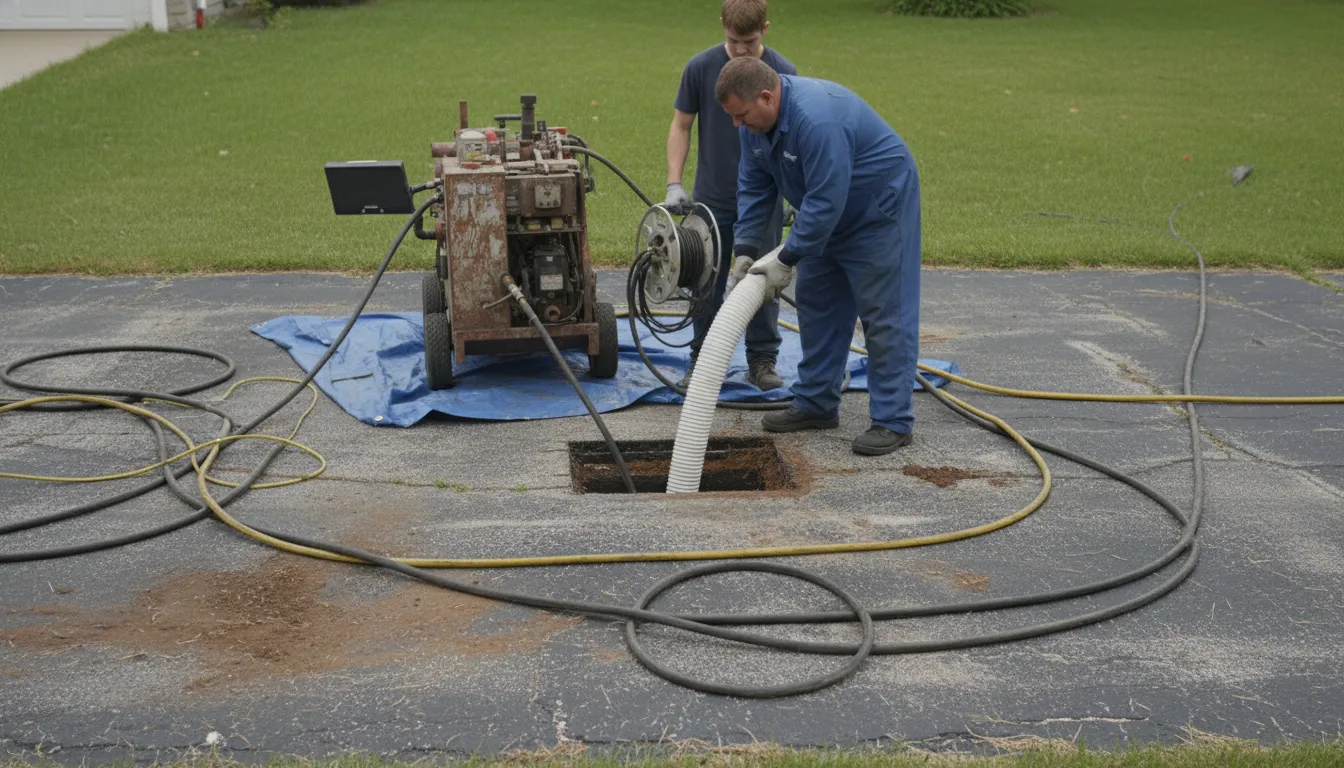
Find the Best Trenchless Sewer Repair Companies for Your Business
No obligation • Fast responses • Nationwide coverage

Why you can trust Search a Plumber
Search a Plumber is a leading United States resource for finding and evaluating professional plumbing services. Our team researches licensing, experience, and customer feedback to create unbiased, fact-driven overviews. Companies cannot pay to change ratings or placement, ensuring homeowners get trustworthy information.
Search providers near you
Top Trenchless Sewer Repair Companies in Ontario, California Ranked
A damaged sewer line is a serious problem that can disrupt your home and lead to costly property damage. Fortunately, homeowners and property managers in Ontario now have a modern, less invasive solution: trenchless sewer repair. This advanced method fixes cracked, corroded, or root-filled pipes with minimal digging, preserving your landscaping, driveways, and hardscapes. Understanding how this no-dig technology works and when it's the right choice can help you make an informed decision to efficiently restore your property's essential plumbing.
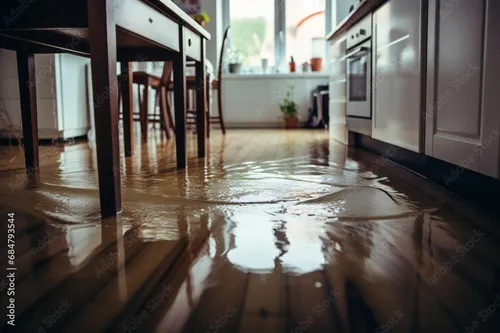
Dymek's Freedom Plumbing, Inc
2921 E Miraloma Ave #17, Anaheim, CA 92806
Dymek's Freedom Plumbing, Inc is a plumbing service provider based in Anaheim, CA, offering a wide range of residential and commercial plumbing solutions. Their services include sewer camera inspections, water heater installation and repair, drain cleaning, hydro jetting, trenchless sewer repair, leak detection, repiping, and garbage disposal repairs. They utilize advanced technology such as electronic slab leak detection and sewer video inspection to diagnose and address plumbing issues efficiently. With over 25 years of experience, the company emphasizes old-fashioned values combined with modern technology and is available 24/7 for emergency plumbing needs.
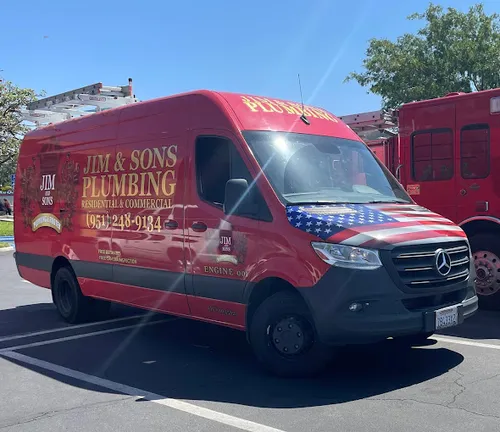
Jim & Sons Plumbing & Rooter
9345 Narnia Dr, Riverside, CA 92503
Jim & Sons Plumbing & Rooter is a family-owned plumbing company serving Riverside, CA, and the surrounding Inland Empire region. Since 1983, they have provided residential and commercial plumbing services including water heater repair and installation, drain cleaning, sewer line repair, leak detection, repiping, gas line installation, and garbage disposal repair. They specialize in trenchless sewer repair techniques such as pipe bursting and cured-in-place lining, which allow sewer line renewal without excavation, preserving landscaping and minimizing environmental impact. The company offers same-day service and is fully licensed and insured.
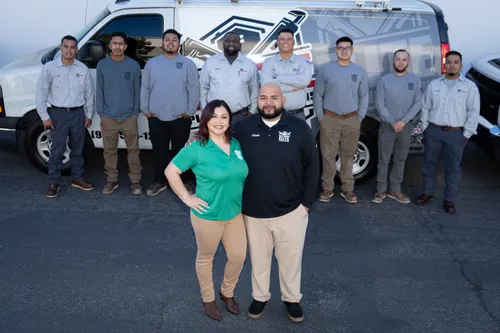
Elite Plumbing & Drains LLC
1440 3rd St Unit 20, Riverside, CA 92507
Elite Plumbing & Drains LLC is a plumbing company based in Riverside, CA, offering a range of services including sewer camera inspections, drain cleaning, sewer line repair, and trenchless sewer repair. They serve both residential and commercial customers in the Riverside area. The company uses advanced technology and trenchless methods to provide efficient, no-dig solutions for sewer and drain problems. Elite Plumbing & Drains LLC is available 24/7 for emergency services and provides a workmanship guarantee for their work.
SoCal Plumbing & Rooter Inc.
420 W Lambert Rd suite f, Brea, CA 92821
SoCal Plumbing & Rooter Inc. is a full-service plumbing company serving Anaheim, CA, and the surrounding Orange County area. They provide a wide range of plumbing services including sewer camera inspections, water heater repair and installation, drain cleaning, hydro jetting, leak detection, repiping, gas line installation, and sewer line repair with trenchless methods. The company offers 24/7 emergency plumbing services to address urgent issues such as burst pipes, overflowing toilets, and sewer backups. Their expertise includes advanced leak detection and hydro jetting to clear stubborn clogs and maintain plumbing system efficiency. SoCal Plumbing & Rooter Inc. is fully licensed and insured, committed to meeting industry standards and local codes.

Jetters 'N' Drains Sewer & Pipe Lining Experts
1801 S Raymond Ave, Anaheim, CA 92801
Jetters 'N' Drains Sewer & Pipe Lining Experts is a plumbing company based in Los Angeles, CA. They specialize in drain cleaning, hydro jetting, sewer line repair, and trenchless sewer repair. The company offers advanced sewer and pipe lining services to address various plumbing needs efficiently.
What is Trenchless Sewer Repair?
Trenchless sewer repair, often called no-dig or pipe lining, is a method for rehabilitating underground sewer pipes without the need for extensive excavation. Instead of digging a long, deep trench across your yard, technicians use small access holes at the beginning and end of the damaged section. Through these holes, they insert specialized equipment to either create a new pipe lining inside the old one or pull a new pipe through while simultaneously breaking apart the old line. This approach is designed to address common issues like cracks, root intrusion, and minor sags in pipes that are otherwise structurally intact.
The core appeal of this technology is its minimal disruption. Traditional "open-cut" sewer repair can turn your property into a construction zone, requiring the destruction and subsequent costly restoration of lawns, gardens, sidewalks, and patios. Trenchless methods bypass most of this chaos, focusing the work underground and leaving your above-ground property largely untouched 1. For homes in Ontario with mature landscaping, concrete driveways, or pool decks, this can mean the difference between a multi-day repair and a weeks-long reconstruction project.
How Does the Trenchless Process Work?
A professional trenchless repair follows a meticulous, multi-step process to ensure a lasting solution.
-
Video Camera Inspection: Every quality repair begins with a thorough diagnosis. A high-resolution, flexible camera is snaked through your sewer line to provide a real-time video feed of the pipe's interior. This inspection pinpoints the exact location, nature, and extent of the damage-whether it's a crack, a belly (sag), or root masses-and confirms the pipe's suitability for a trenchless solution.
-
Hydro-Jetting Cleaning: Before any repair can be made, the pipe must be clean. High-pressure water jetting is used to scour the interior walls, blasting away debris, grease, and root intrusions. This step ensures a clean surface for the new liner to adhere to and restores temporary flow.
-
The Repair Method: There are two primary trenchless techniques:
- Cured-in-Place Pipe (CIPP) Lining: A flexible, resin-saturated tube (liner) is inverted or pulled into the damaged pipe. Using air or water pressure, it is inflated to press tightly against the host pipe's walls. The resin is then cured, typically with hot water or UV light, forming a hard, seamless, and corrosion-resistant "pipe within a pipe".
- Pipe Bursting: This method is used for pipes that are too damaged for lining or need a larger diameter. A bursting head is pulled through the old pipe, fracturing it outward as it goes. Simultaneously, a new high-density polyethylene (HDPE) pipe is pulled in behind the head, immediately replacing the old line 2.
- Final Inspection and Restoration: A post-repair camera inspection verifies the integrity and smoothness of the new pipe. The small access pits are then backfilled, compacted, and restored with sod or concrete, completing the job with minimal visible evidence.
Trenchless vs. Traditional Excavation: Which is Right for Your Ontario Home?
Choosing between no-dig sewer repair and traditional excavation depends entirely on the condition of your existing sewer line and your property's layout.
When Trenchless Repair is the Ideal Choice:
- For Localized Damage: The pipe has cracks, holes, or corrosion but is not completely collapsed.
- Root Intrusion: Tree roots have infiltrated the pipe through joints or cracks.
- Minor Sags or Bellies: Sections of the pipe have settled, creating a low spot that collects waste, but the pipe still maintains its shape.
- Under Landscapes or Hardscapes: The sewer line runs under a driveway, patio, sidewalk, pool deck, or established garden where digging would be exceptionally destructive and expensive to restore 3 4.
- For Speed and Convenience: Most trenchless projects can be completed in one to two days, with significantly less disruption to your daily life.
When Traditional Excavation May Be Necessary:
- Complete Collapse: The pipe has fully collapsed or is severely crushed.
- Major Misalignment: Sections of the pipe have shifted dramatically and are no longer connected.
- Severe Bellies: A sag is so profound that lining cannot create an adequate slope for proper drainage.
- Certain Pipe Materials: Very old or uncommon materials like Orangeburg (bituminous fiber conduit) may not be suitable candidates for lining or bursting 5 6.
- Access Limitations: If there isn't sufficient space at both ends of the damaged section to create the necessary access pits, excavation might be the only option.
Find the perfect trenchless sewer repair companies for your needs
Get personalized recommendations and expert advice
Understanding Costs and Permits in Ontario
The cost of trenchless sewer line repair in Ontario typically ranges from $4,000 to $13,000 or more, which often translates to $135 to $285 per linear foot 7 8 9. While the upfront cost per foot can be higher than excavation, the total project cost is frequently lower because it avoids the massive expense of restoring landscaping, concrete, and other surfaces. Traditional excavation can cost between $6,000 and $12,000, but this can easily exceed $20,000 when extensive restoration of hardscapes and gardens is factored in 7 8.
Several key factors influence the final price:
- Length and Depth of the Pipe: Longer and deeper lines require more materials and labor.
- Diameter of the Pipe: Larger diameter pipes require more lining material.
- Type and Extent of Damage: Multiple points of damage or complex root systems add to the job's complexity.
- Access Difficulty: The ease of digging the required entry and exit pits.
- Local Labor Rates: Costs can vary based on the contractor and regional market conditions.
Permits and inspections are a critical part of the process in Ontario. The City of Ontario requires permits for all sewer line repair and replacement work. Your contractor should typically handle pulling these permits, but the cost (which can range from a few hundred to over a thousand dollars) will be part of your project estimate 10 11. City inspectors will also need to visit the site to approve the work at various stages, ensuring it meets all local plumbing and building codes.
The Long-Term Value of a Trenchless Solution
Investing in trenchless sewer repair offers benefits that extend far beyond the completion date. The new pipe lining created by the CIPP process is extremely durable, resistant to corrosion and root intrusion, and can extend the life of your sewer line by 50 years or more 12. Because the jointless, seamless liner improves flow characteristics, it can also help prevent future clogs.
Perhaps the most significant value is the preservation of your property. The aesthetic and financial cost of destroying and rebuilding a driveway, patio, or mature landscape is substantial. By choosing a trenchless method, you protect your property's curb appeal and value while solving a critical infrastructure problem. The faster project timeline also means less inconvenience for your household or business operations 13.
Frequently asked questions
Sources
Footnotes
-
Trenchless Sewer Repair vs. Traditional Excavation - AQUALIS - https://aqualisco.com/trenchless-sewer-repair-vs-traditional/ ↩
-
Trenchless Sewer Relining Services in Ontario, CA | All Pro - https://www.allproplumbers.com/drain-sewer/trenchless-sewer-relining/ ↩
-
Step-by-Step: What to Expect During a Trenchless Sewer Project - https://trenchfree.com/step-by-step-what-to-expect-during-a-trenchless-sewer-project/ ↩
-
What Are The Pros and Cons of Trenchless Sewer Repair? - https://www.southernairnow.com/blog/what-are-the-pros-and-cons-of-trenchless-sewer-repair/ ↩
-
Trenchless Sewer Repair Case Study - https://cacciaplumbing.com/blog/trenchless-sewer-repair-case-study/ ↩
-
Is trenchless sewer repair worth it? : r/Construction - Reddit - https://www.reddit.com/r/Construction/comments/1psvcf9/is_trenchless_sewer_repair_worth_it/ ↩
-
Trenchless Sewer Repair vs. Traditional Methods in the Bay ... - https://total-uc.com/trenchless-vs-traditional-sewer-repair/ ↩ ↩2
-
What Trenchless Sewer Repair Costs & What Impacts the Price - https://www.sunsethc.com/what-trenchless-sewer-repair-really-costs-and-what-impacts-the-price/ ↩ ↩2
-
How Much Does Trenchless Sewer Line Repair Cost? - https://alphaenvironmental.net/blog/how-much-does-trenchless-sewer-repair-cost/ ↩
-
Trenchless vs. Traditional Sewer Repair - https://sewerlinesonly.com/trenchless-vs-traditional-sewer-repair-which-is-more-cost-effective-for-lakewood-homeowners/ ↩
-
How Much Does Trenchless Sewer Line Piping Cost? [2026 Data] - https://www.angi.com/articles/trenchless-sewer-line-replacement-cost.htm ↩
-
What Is Trenchless Sewer Repair and How Does It Work? - https://ontariopipelining.com/2025/05/18/what-is-trenchless-sewer-repair/ ↩
-
Trenchless Sewer Line Repair vs. Sewer Line Excavation - https://dandfplumbing.com/sewer-line-repair-vs-sewer-line-excavation/ ↩