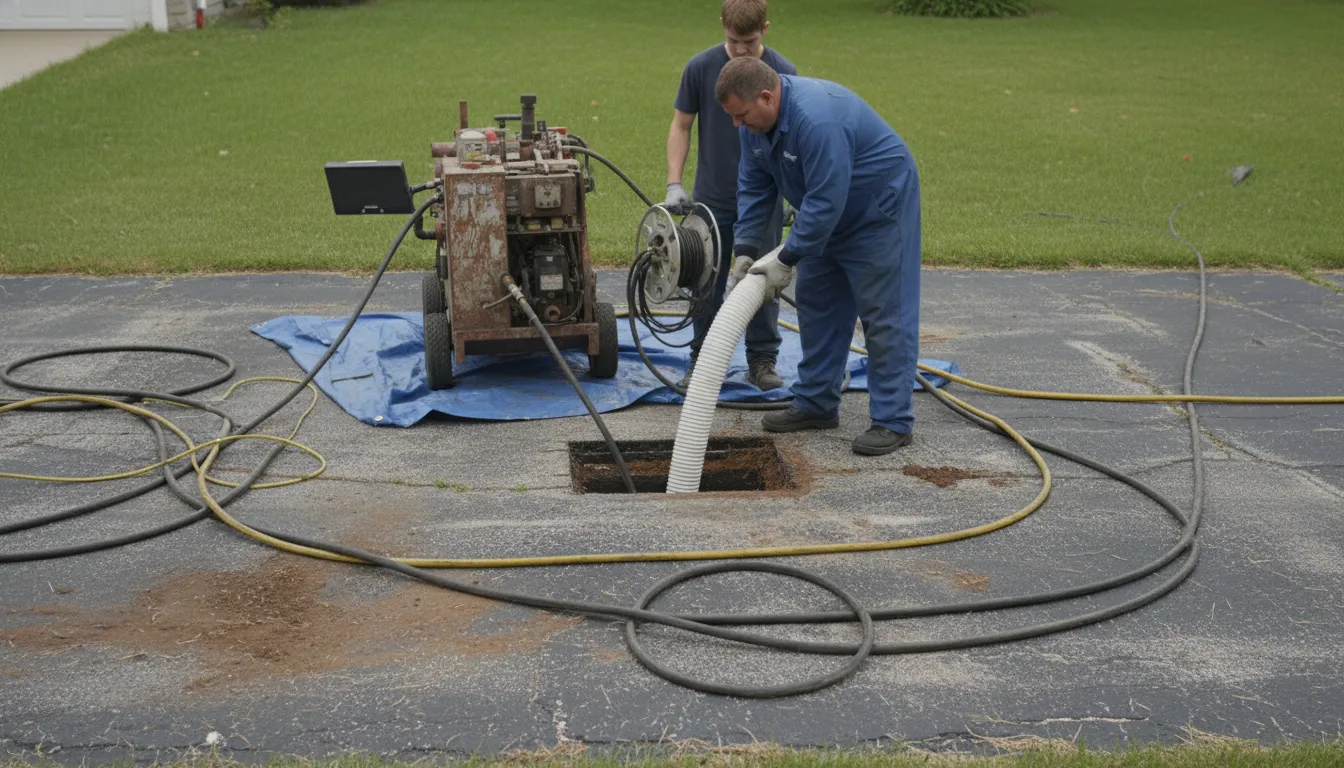
Find the Best Trenchless Sewer Repair Companies for Your Business
No obligation • Fast responses • Nationwide coverage

Why you can trust Search a Plumber
Search a Plumber is a leading United States resource for finding and evaluating professional plumbing services. Our team researches licensing, experience, and customer feedback to create unbiased, fact-driven overviews. Companies cannot pay to change ratings or placement, ensuring homeowners get trustworthy information.
Search providers near you
Top Trenchless Sewer Repair Companies in Alameda, California Ranked
A damaged sewer line is a serious problem that can disrupt your home and threaten your property. Fortunately, modern trenchless sewer repair offers a powerful solution that fixes pipes with minimal digging, preserving your yard, driveway, and landscaping. This guide explains how trenchless pipe repair works in Alameda, when it's the right choice, and what you can expect from the process. Use this information to understand your options and connect with qualified local specialists who can assess your specific situation.
Roto-Rooter Plumbing & Water Cleanup
1780 Whipple Rd Ste 203G, Union City, CA 94587
Roto-Rooter Plumbing & Water Cleanup provides comprehensive plumbing services in San Jose, CA, specializing in residential and commercial plumbing solutions. Their offerings include sewer and drain cleaning, water heater repair and installation, leak detection, gas line installation, and trenchless sewer repair. The company is equipped to handle emergency plumbing situations with 24/7 availability, ensuring prompt response to issues like burst pipes and sewer backups. With extensive experience and advanced technology, Roto-Rooter addresses complex plumbing challenges efficiently. They also offer floodwater cleanup and mold remediation services, supporting property restoration after water damage. Serving the San Jose area and nearby communities, Roto-Rooter is a licensed and insured provider known for its broad range of plumbing capabilities and emergency service availability.
Service Pros Plumbers, Inc.
1320 Willow Pass Rd, Concord, CA 94520
Service Pros Plumbers, Inc. is a family-owned plumbing company serving Oakland, CA, with over 25 years of experience. They provide a wide range of plumbing services for residential and commercial customers, including water heater repair and installation, drain cleaning, sewer line replacement with trenchless options, leak detection, and gas line installation. Their licensed plumbers also offer whole-house repiping to improve water pressure and system efficiency. Service Pros Plumbers offers 24/7 emergency plumbing services to address urgent issues such as burst pipes and clogged drains promptly.
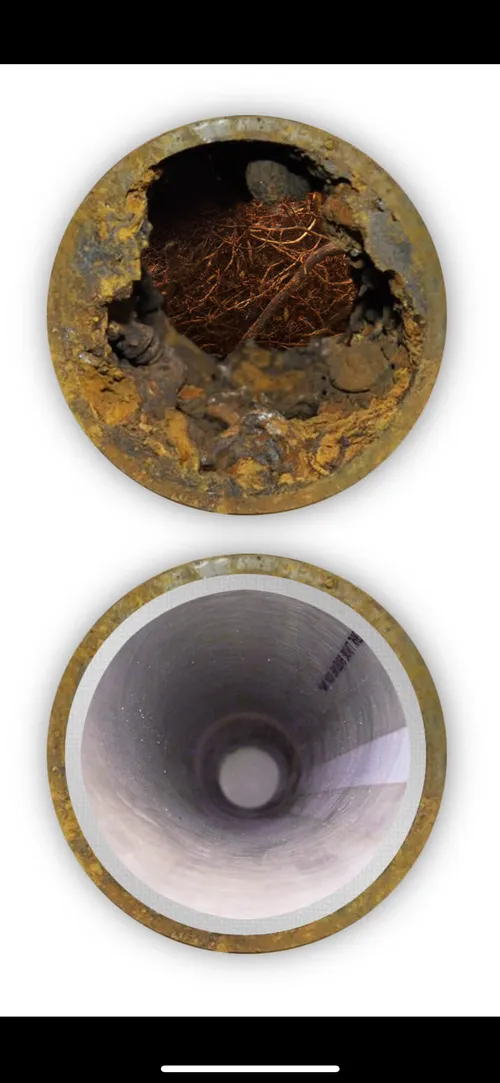
West Peak Trenchless & Plumbing
1030 Duane Ave, Santa Clara, CA 95054
West Peak Trenchless & Plumbing is a plumbing and trenchless repair company serving San Jose, CA. They provide services including water heater repair and installation, hydro jetting, sewer line repair, and trenchless sewer repair using advanced cure-in-place pipe (CIPP) technology. With over 15 years of experience, they serve both commercial and residential clients in the greater San Francisco area, delivering solutions that minimize disruption while addressing a variety of plumbing needs.
Roto-Rooter Plumbing & Water Cleanup
1070 Marina Village Pkwy UNIT 202, Alameda, CA 94501
Roto-Rooter Plumbing & Water Cleanup provides comprehensive plumbing services in San Francisco, CA, specializing in residential and commercial plumbing solutions. Their offerings include sewer and drain cleaning, water heater repair and installation, leak detection, sewer line repair using trenchless methods, and emergency flood cleanup. The company uses advanced equipment like hydro-jetting to address complex plumbing issues efficiently. Serving Alameda and nearby counties, Roto-Rooter is available 24/7 for emergency plumbing needs, ensuring prompt response to urgent situations.
The Tankless Guys Plumbing & Rooter
473 Sapena Ct, Santa Clara, CA 95054
The Tankless Guys Plumbing & Rooter provides a range of plumbing services in San Jose, CA, with over 20 years of experience in residential plumbing. Their services include sewer camera inspections, sewer line and trenchless sewer repairs, leak detection, water heater installation and repair-including tankless water heaters-and toilet repair. They focus on thorough sewer inspections and minimally invasive sewer line replacements to maintain safe and efficient plumbing systems. The company emphasizes clear communication and customized solutions tailored to each home.
What is Trenchless Sewer Repair?
Trenchless sewer repair, often called no-dig or pipe lining, is a method for repairing or replacing underground sewer pipes without the need for extensive excavation. Instead of digging a long, deep trench across your property, technicians use specialized equipment to access the pipe through small, strategically placed holes. There are two primary trenchless techniques: Cured-In-Place Pipe (CIPP) lining and pipe bursting.
CIPP lining involves inserting a flexible, resin-saturated tube into the damaged pipe. Once in position, the tube is inflated and cured (often with heat or steam) to form a hard, durable "pipe within a pipe." Pipe bursting is used for replacement, where a bursting head is pulled through the old pipe, fracturing it outward while simultaneously pulling a new high-density polyethylene (HDPE) pipe into place. Both methods effectively address common sewer issues while avoiding the massive disruption of traditional dig-and-replace operations.
Common Problems Trenchless Repair Can Fix
Trenchless methods are an excellent solution for a variety of sewer line failures, particularly those that don't involve a complete collapse. If you're experiencing frequent backups, slow drains, or notice soggy patches in your yard, your sewer line may have one of these issues:
- Root Intrusion: Tree roots seeking moisture can infiltrate pipe joints and cracks, causing blockages and damage.
- Cracks and Fractures: Shifting soil, age, or ground pressure can cause pipes to crack, allowing debris in and sewage out.
- Corrosion and Deterioration: Older pipes made of clay, cast iron, or Orangeburg (bituminous fiber) can corrode, bell, or become brittle over decades.
- Misaligned Joints: Sections of pipe can settle at different rates, creating offsets where waste collects.
- Minor Collapses or Bellies: Localized collapses or low spots (bellies) that trap water and waste.
For these scenarios, trenchless repair restores full function and structural integrity. However, if the pipe has suffered a major collapse, is severely misaligned, or is completely flattened, traditional excavation may be the only viable option. A professional camera inspection is the definitive way to determine the best repair strategy.
The Trenchless Repair Process: Step-by-Step
Understanding the workflow can demystify the project and set clear expectations. A reputable trenchless sewer specialist in Alameda will typically follow these key steps:
- Comprehensive Camera Inspection: The process always begins with a video camera inspection. A specialized waterproof camera is fed through the sewer line to provide a real-time, internal view of the damage. This critical step identifies the exact location, nature, and extent of the problem, forming the basis for an accurate repair plan and estimate.
- Access Point Preparation: Based on the inspection, technicians determine the best access points. They then dig two small, targeted holes-typically at existing cleanouts or at the beginning and end of the damaged section. This is a far cry from the long trench required for full excavation.
- Pipe Cleaning (Hydro-Jetting): Before any repair, the existing pipe must be thoroughly cleaned. High-pressure water jetting scours the interior, removing roots, grease, scale, and debris to create a clean surface for the new liner or to allow for pipe bursting.
- Lining or Bursting: For CIPP lining, the epoxy-saturated felt liner is inverted or pulled into the old pipe and inflated. It is then cured using steam or UV light, hardening into a seamless new pipe. For pipe bursting, the bursting head is launched from one access hole, breaks the old pipe apart, and drags the new HDPE pipe behind it into the resulting space. 1
- Final Cure and Inspection: After curing, the ends of the new CIPP liner are trimmed. A final camera inspection is conducted to verify the repair is seamless, smooth, and fully functional. 2 The small access holes are backfilled, leaving your property nearly untouched.
Find the perfect trenchless sewer repair companies for your needs
Get personalized recommendations and expert advice
Trenchless vs. Traditional Excavation in Alameda
Choosing between trenchless technology and traditional excavation is a significant decision for any Alameda homeowner. The right choice depends heavily on the condition of your pipe and the layout of your property.
When Trenchless is Ideal:
- The pipe is damaged but structurally intact (cracks, roots, corrosion).
- The pipe runs under driveways, patios, sidewalks, or mature landscaping.
- You want to minimize disruption, save time, and avoid costly landscape restoration.
- The goal is a long-term, durable repair with a modern pipe material.
When Traditional Excavation May Be Necessary:
- The pipe has completely collapsed or is severely misaligned.
- There are multiple, widespread failures along a long section.
- The existing pipe material (like some concrete) is not suitable for bursting or lining.
- There are no viable access points for trenchless equipment. 3 4
For most homes in Alameda, especially those with older infrastructure or valuable landscaping, trenchless repair offers a compelling advantage by protecting your property's aesthetics and saving on restoration costs that can easily add thousands to an excavation project. 5
Understanding Costs and Permits
The cost of trenchless sewer repair in Alameda varies based on the method used, the length of the damaged section, and the depth and location of the pipe.
- Diagnostic Camera Inspection: Typically costs between $175 and $350.
- Trenchless Repair/Replacement: Costs are often calculated per linear foot, ranging from $135 to $285. A complete project using CIPP lining or pipe bursting commonly falls between $4,000 and $13,000.
- Traditional Excavation: Due to the labor, machinery, and extensive restoration required (sod, concrete, hardscaping), traditional dig-and-replace projects can easily exceed $12,000 to $25,000 or more. 6
Permits and Inspections: Sewer line work in Alameda almost always requires a permit from the City of Alameda or Alameda County Public Works, depending on your location and where the pipe connects to the main public sewer line. 7 8 Reputable plumbing professionals will handle this process. The permit ensures the work meets local codes, and inspections will be scheduled at key stages, such as after the access excavation and before final backfill. Permit fees can add approximately $500 to $1,000+ to the project cost. 9
Key Benefits for Alameda Homeowners
Why has trenchless sewer repair become the preferred method for so many? The benefits are substantial, particularly in a community like Alameda where property values and landscaping are important.
- Minimal Property Disruption: This is the most significant advantage. Your lawn, gardens, trees, and hardscapes remain largely intact. There's no massive trench to refill and restore. 10
- Speed and Efficiency: Many trenchless repairs can be completed in a single day, compared to the week or more that a major excavation might require when including restoration. 11
- Long-Term Durability: The new pipe materials-either epoxy resin liner or HDPE-are highly resistant to root intrusion, corrosion, and cracking. They can have a lifespan of 50 years or more.
- Cost-Effectiveness: While the upfront repair cost can be similar, you save significantly by eliminating landscape and hardscape restoration expenses. This makes trenchless repair a more cost-effective solution over the total project lifecycle. 12
Frequently asked questions
Sources
Footnotes
-
Understanding Trenchless No-Dig Pipe Repair: An Introductory Guide - https://piperestorationsolutions.com/understanding-trenchless-no-dig-pipe-repair-an-introductory-guide/ ↩
-
Trenchless Sewer Line Replacement Oakland, CA - Pipe Spy - https://www.pipespy.com/services/trenchless-sewer-line-repair-replacement ↩
-
Trenchless Sewer Line Repair vs. Sewer Line Excavation - https://dandfplumbing.com/sewer-line-repair-vs-sewer-line-excavation/ ↩
-
Trenchless Sewer Repair Case Study - Caccia Home Services - https://cacciaplumbing.com/blog/trenchless-sewer-repair-case-study/ ↩
-
Trenchless Sewer Repair vs. Traditional Excavation - AQUALIS - https://aqualisco.com/trenchless-sewer-repair-vs-traditional/ ↩
-
Empower Your Decision: Decoding Trenchless Sewer Repair Costs - https://pipelinerpros.com/trenchless-sewer-repair-cost/ ↩
-
Trenchless Sewer Repair vs. Traditional Methods in the Bay ... - https://total-uc.com/trenchless-vs-traditional-sewer-repair/ ↩
-
Alameda Trenchless Sewer Replacement - Streamline Plumbing - https://www.streamlineplumbingco.net/alameda-trenchless-sewer-replacement ↩
-
How Much Does Trenchless Sewer Line Piping Cost? [2026 Data] - https://www.angi.com/articles/trenchless-sewer-line-replacement-cost.htm ↩
-
Sewer Line Replacement in Contra Costa County, CA - https://www.gotrenchless.com/services/sewer-line-replacement/ ↩
-
Trenchless Sewer Repair & Service - Oakland - Harry Clark Plumbing - https://hcplumbing.com/trenchless-sewer-repair-service/ ↩
-
Trenchless vs. Traditional Sewer Repair - https://sewerlinesonly.com/trenchless-vs-traditional-sewer-repair-which-is-more-cost-effective-for-lakewood-homeowners/ ↩