Find the Best Toilet Repair & Replacement Contractors for Your Business
No obligation • Fast responses • Nationwide coverage

Why you can trust Search a Plumber
Search a Plumber is a leading United States resource for finding and evaluating professional plumbing services. Our team researches licensing, experience, and customer feedback to create unbiased, fact-driven overviews. Companies cannot pay to change ratings or placement, ensuring homeowners get trustworthy information.
Search providers near you
Top Toilet Repair & Replacement Contractors in Grand Prairie, Texas Ranked
Dealing with a malfunctioning toilet is more than just an inconvenience; it can lead to water waste, higher utility bills, and potential water damage to your home. Whether you're facing a persistent clog, a mysterious leak, or considering an upgrade to a more efficient model, understanding your options for toilet repair and replacement is key. This guide is designed to help Grand Prairie homeowners navigate common toilet issues, understand the repair process, and connect with skilled local professionals who can provide reliable solutions.
GPS Plumbing
3064 Kentshire Ln, Frisco, TX 75034
GPS Plumbing is a family owned and operated residential plumbing company serving Garland, TX, and the surrounding North Dallas area. With over 26 years of experience, they provide a wide range of plumbing services including water heater repair and installation, drain cleaning, leak detection, gas line installation, and toilet repair. Their team is skilled in slab leak detection and gas leak repairs, helping to maintain safety and prevent costly damage. GPS Plumbing has built a reputation for dependable service across multiple communities in Denton and Collin counties.
Bow Tie Plumbing
1285 N Main St Suite 306, Mansfield, TX 76063
Bow Tie Plumbing is a family-owned plumbing company serving Arlington, TX, and the broader DFW area. With over 50 years of combined experience, they offer a wide range of services including water heater installation and repair, drain cleaning, sewer line repair, leak detection, repiping, and toilet repair. The company uses advanced techniques such as hydrostatic and smoke testing to identify plumbing issues and provides specialized services like tunneling for foundation access. Bow Tie Plumbing is known for transparent pricing, free estimates within 24 hours, and a 1-year labor warranty on their work.
DFW PipePros
1350 E Arapaho Rd Suite 130, Richardson, TX 75081
DFW PipePros is a locally owned plumbing company serving Dallas, TX. They provide a wide range of plumbing services including water heater repair and installation, tankless water heater services, drain cleaning, hydro jetting, leak detection, toilet repair, and garbage disposal repair. The company uses advanced techniques such as sewer camera inspections to accurately diagnose plumbing issues. DFW PipePros emphasizes transparent pricing and offers 24/7 emergency service to address urgent plumbing needs promptly.
Adr plumbing Co
Plano, TX
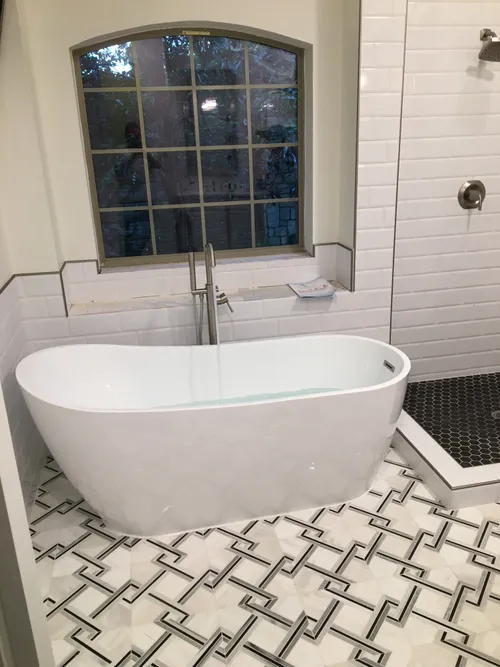
Adr Plumbing Co is a plumbing service provider based in Plano, TX, offering a wide range of services including water heater repair and installation, tankless water heater services, drain cleaning, sewer line repair, leak detection, repiping, toilet repair, and garbage disposal repair. They serve residential and property management clients with expertise in trenchless sewer repair and tunneling for under-slab repairs. Established in 2019, Adr Plumbing Co combines over 20 years of industry experience with well-stocked service vehicles to efficiently handle plumbing issues from minor leaks to major sewer line replacements. The company operates around the clock to address plumbing emergencies and routine maintenance needs.
Workman Plumbing
2310 N Henderson Ave #522, Dallas, TX 75206
Workman Plumbing is a family-owned plumbing company serving Dallas, TX, and the broader Dallas-Fort Worth area. They offer a wide range of plumbing services including water heater installation and repair, drain and sewer cleaning, leak detection, repiping, and repairs for toilets and garbage disposals. The team is equipped to locate leaks at various depths and handle both residential and commercial plumbing needs. Workman Plumbing is recognized for its quality workmanship and has earned a strong reputation with over 300 five-star reviews. The company is licensed and insured, providing upfront pricing and professional service with advanced equipment.
Common Toilet Problems in Grand Prairie Homes
Toilets are sturdy fixtures, but they are not immune to wear and tear. In Grand Prairie, several issues frequently prompt calls for professional toilet repair services.
Persistent Clogs: A clog that resists a plunger often indicates a deeper blockage in the drain line. While a standard plunger can handle minor obstructions, deeper clogs typically require a plumbing auger or "snake" to clear the pipe effectively.
Leaking at the Base: Water pooling around the toilet's base is a serious concern. This usually signals a failed wax ring seal or a damaged flange-the piece that connects the toilet to the drainpipe. This type of leak can damage your subfloor and requires the toilet to be removed for proper repair.
A Constantly Running Toilet: The sound of water continuously running from the tank into the bowl is often caused by a worn-out flapper, a faulty fill valve, or an improperly adjusted float. This problem can waste hundreds of gallons of water daily.
Cracks in Porcelain: Hairline cracks in the tank or bowl can lead to slow, hard-to-detect leaks. A cracked toilet usually cannot be reliably repaired and will need to be replaced to prevent sudden failure and flooding.
Understanding Repair Solutions and Components
Knowing what's involved in common fixes can help you communicate effectively with a plumbing professional. Here's a breakdown of typical repair scenarios.
Fixing a Leaky Toilet Base
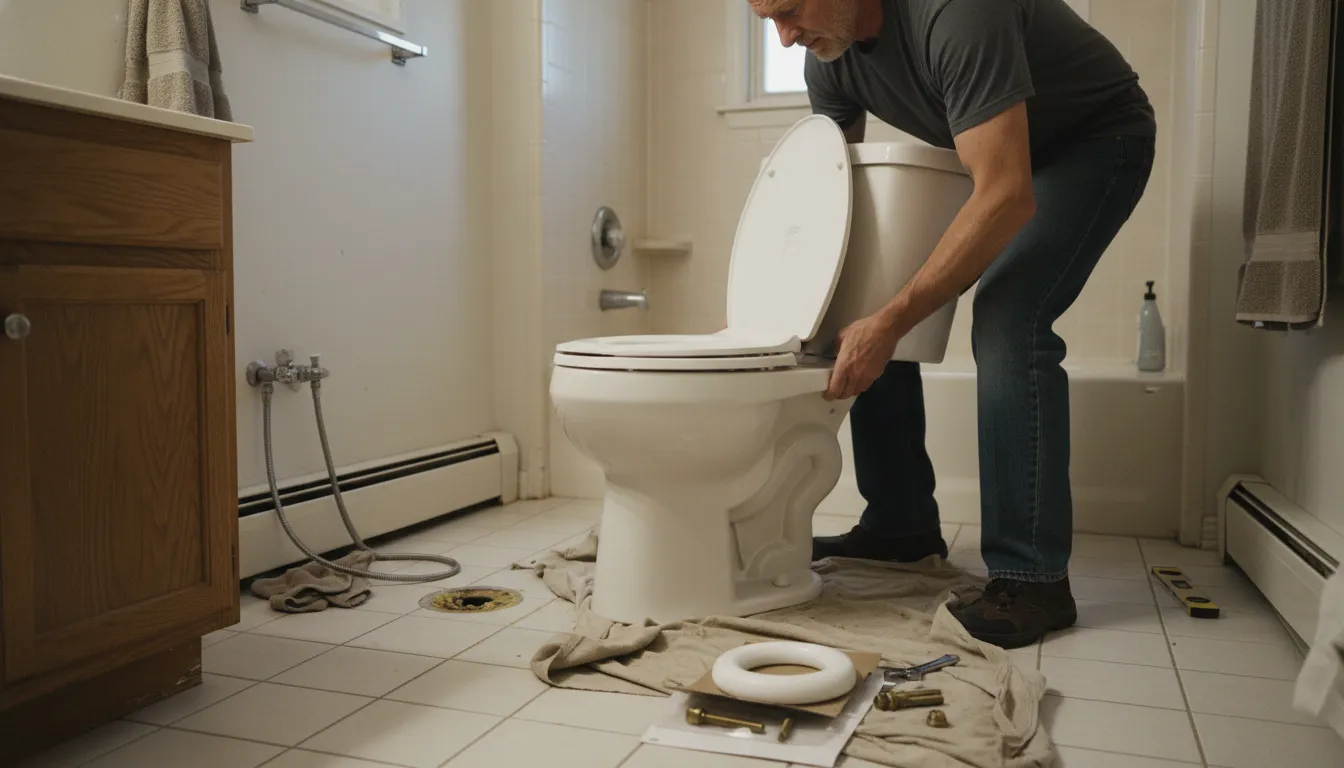
Repairing a leak at the base is a multi-step process. The plumber will shut off the water, drain the toilet, and disconnect it from the floor. They will then inspect and clean the area, replacing the wax ring-a crucial seal that prevents sewer gases and water from escaping. If the underlying flange is cracked or corroded, it will also need to be replaced, which may involve more extensive work, especially in homes with slab foundations common in Texas. After installing new components, the toilet is carefully reset and sealed.
Resolving Internal Tank Issues
Fixing a running toilet often involves working inside the tank. Common replacements include:
- Flapper: A rubber valve that lifts to release water during a flush. It can warp or decay over time.
- Fill Valve: The mechanism that refills the tank after flushing. It can fail or become clogged with mineral deposits.
- Float: Adjusts the water level in the tank; an incorrect setting causes continuous running.
These are generally straightforward repairs with relatively low-cost parts, but proper diagnosis is essential.
Clearing Stubborn Blockages
For clogs that a plunger can't fix, a plumber will use a closet auger-a specialized tool designed to navigate the toilet's trap without scratching the porcelain. For blockages deeper in the drain line, a motorized drain snake may be necessary to reach and break up the obstruction.
Find the perfect toilet repair & replacement contractors for your needs
Get personalized recommendations and expert advice
When to Consider Toilet Replacement vs. Repair
While repair is often the best first step, there are times when replacing your toilet is the more practical and cost-effective long-term choice.
Age and Inefficiency: Older toilets, particularly those installed before 1994, can use 3.5 to 7 gallons per flush. Replacing them with a modern WaterSense-labeled model (using 1.28 gallons or less) can significantly reduce your household water consumption.
Recurring Problems: If you are repeatedly fixing the same issue-like constant clogs in an old, low-flow model-it may indicate a design flaw or underlying problem that a new unit would solve.
Visible Damage or Cracks: As mentioned, any crack in the ceramic is a failure point. Replacement is the only safe option to avoid a catastrophic leak.
Home Renovation or Upgrade: A bathroom remodel is an ideal time to install a new toilet. You can choose from a variety of styles, including one-piece designs for easier cleaning, comfort-height models, and units with advanced features like bidet functions or dual-flush mechanisms.
The Toilet Installation Process
Installing a new toilet is a precise job. A professional will ensure it is done correctly to prevent future leaks and ensure optimal operation. The process involves:
- Removing the old toilet and disposing of it properly.
- Thoroughly cleaning and inspecting the flange and drain opening.
- Placing a new wax ring or modern rubber gasket onto the flange.
- Carefully setting the new toilet bowl onto the flange, aligning it with the floor bolts.
- Securing the toilet to the floor without overtightening, which can crack the porcelain.
- Attaching the tank (if it's a two-piece model), connecting the water supply line, and installing the seat.
- Turning the water back on, checking for leaks at all connections, and testing the flush mechanism.
Labor for a standard toilet installation typically adds to the cost of the new fixture itself.
Cost Considerations for Toilet Services in Grand Prairie
Service costs can vary based on the complexity of the job, the time of day (emergency rates are higher), and the specific plumber. Here are general price ranges based on local data:
- Toilet Unclogging: Professional snaking for a standard clog typically ranges from $60 to $250, depending on the tools required and the severity of the blockage.
- Wax Ring or Flange Repair: Repairing a leak at the base, which includes removing the toilet, replacing the seal (and flange if needed), and reinstalling, generally costs between $150 and $400 1.
- Internal Tank Repairs: Replacing a flapper, fill valve, or other internal components is often on the lower end of the spectrum, with professional service for parts and labor often around $50 to $100.
- New Toilet Installation: Labor for installing a new toilet you provide can range from approximately $100 to $200, not including the cost of the toilet itself or any unforeseen complications like repairing a damaged subfloor 2 3 4.
It's important to note that older Grand Prairie homes, particularly those with slab foundations, may face additional costs if water damage from a long-term leak requires floor repair around the flange area 5.
Frequently asked questions
Sources
Footnotes
-
Why Is Water Leaking from the Base of My Toilet? | Causes & Fixes - https://anchorplumbingservices.com/why-is-water-leaking-from-the-base-of-my-toilet/ ↩
-
Toilet seal replacement: signs, costs & DIY tips. - Dr Rooter - https://www.drrooterlexington.com/blog-posts/toilet-seal-replacement-essential-guide-for-homeowners ↩
-
Plumbing Repair in Grand Prairie, TX - Costs 11 / 2025 - https://www.homeyou.com/tx/plumbing-repair-grand-prairie-costs ↩
-
Toilet Repair Cost | Plumber Cost to Repair Toilet - Fixr.com - https://www.fixr.com/costs/toilet-repair ↩
-
Repipe Cost Calculator | How Much to Repipe a House in Texas - https://www.repipesolutionsinc.com/repipe-calculator/ ↩